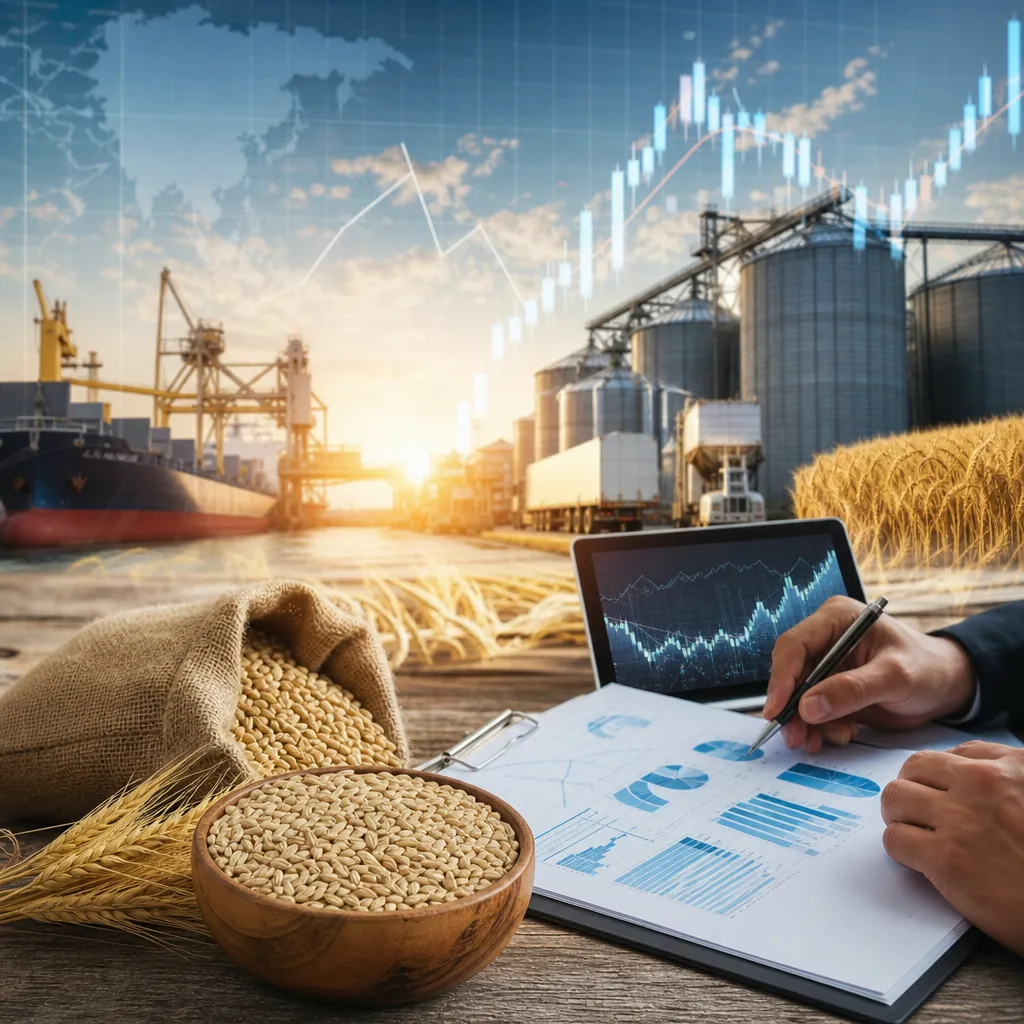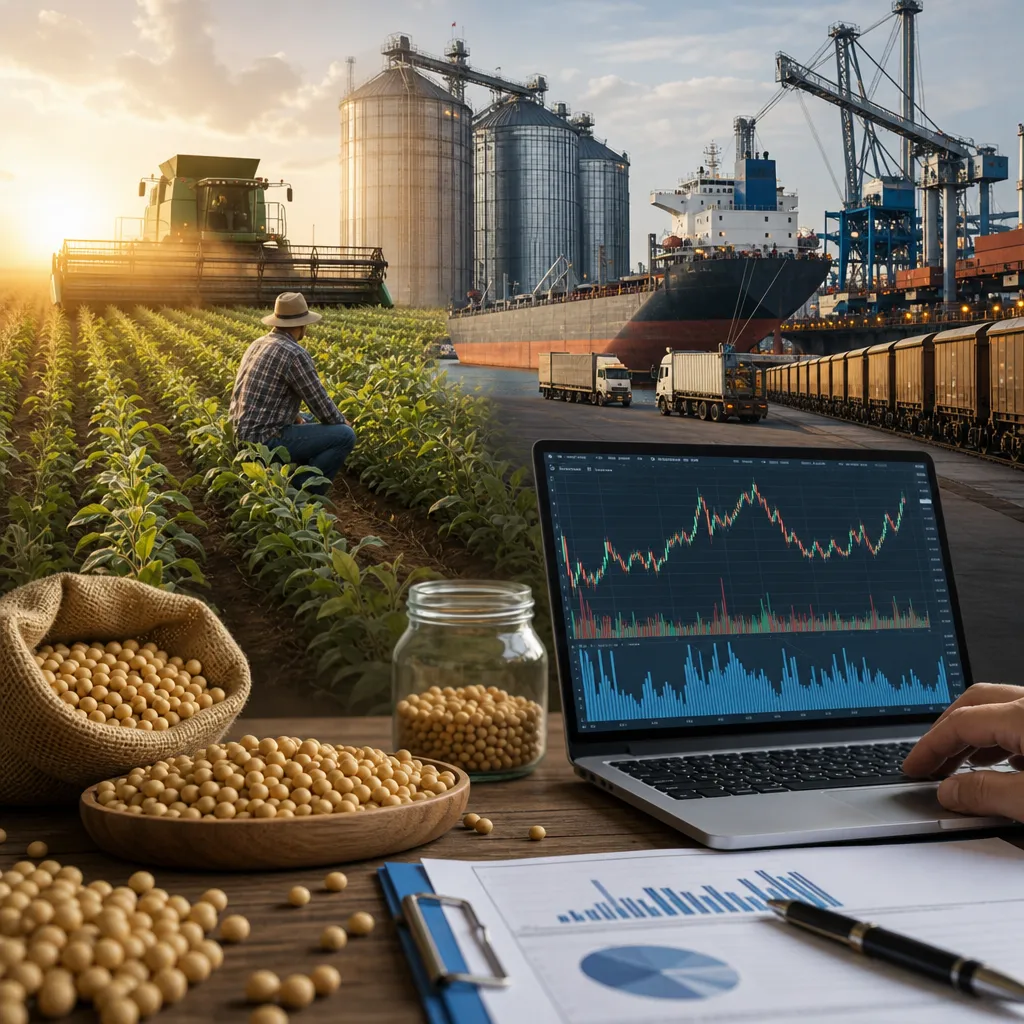
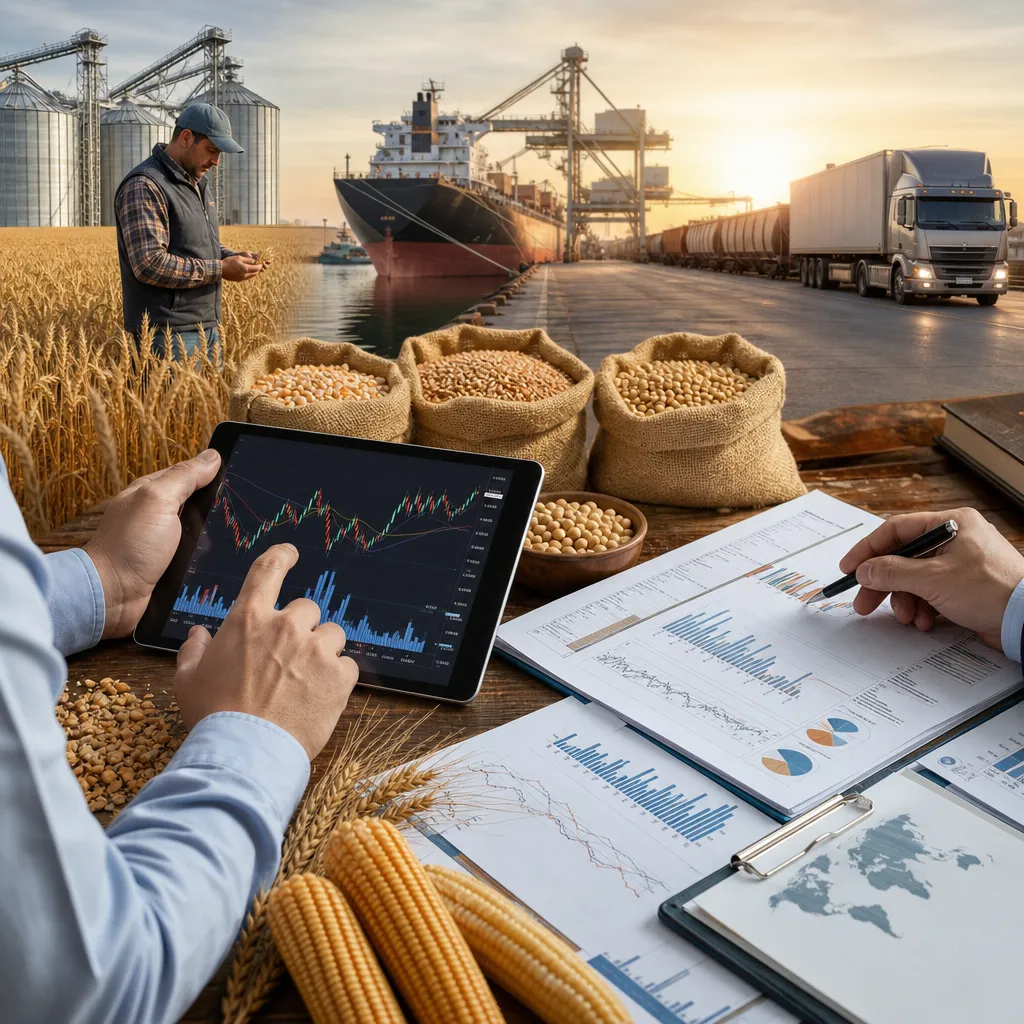
Grain prices today depend on which market you are looking at. A futures quote on an exchange such as CME Group is not the same as the cash price offered by a local elevator, feed mill, crusher, exporter, or rice mill. If you need the current market, the practical approach is to check both: exchange futures for the benchmark and local bids for the real physical price at your delivery point. The difference between the two is usually driven by basis, freight, quality, storage, local supply, and nearby demand.
For wheat, corn, soybeans, rice, barley, oats, rye, sorghum, canola, rapeseed, and sunflower seed, the most useful question is not just “what is the price today?” but “which price, where, in what unit, for what quality, and for delivery when?” That is how farmers, grain buyers, merchandisers, processors, and traders actually use market information. Understanding where each price comes from makes the market much easier to read and much safer to trade.
What “grain prices today” usually means
In practice, grain prices are quoted in several different ways:
- Futures price: the exchange-traded benchmark for a standardized contract month.
- Cash price: the price for physical grain at a specific location, grade, and delivery period.
- Basis: the difference between the local cash price and the relevant futures contract.
- Delivered price: price including freight to a processor, mill, port, or feed plant.
- Bid and offer: the price a buyer is willing to pay versus the price a seller is asking.
For example, a corn futures quote may represent a benchmark on a regulated derivatives exchange, while the actual local bid a farmer sees may come from a grain elevator or cooperative in a specific county or river terminal. The futures market helps discover value, but it does not automatically equal the farmgate price.
| Price type | Where it is found | What it represents | Who uses it |
|---|---|---|---|
| Futures | Commodity exchange data and broker platforms | Standardized benchmark contract for a delivery month | Traders, hedgers, analysts, merchants |
| Local cash bid | Elevators, cooperatives, merchant bid sheets, processor bids | Actual physical buying price at a location | Farmers, local buyers, truckers, merchandisers |
| Basis | Cash bid sheets, hedge accounts, merchandising reports | Local premium or discount versus futures | Hedgers, elevators, producers, processors |
| Delivered market price | Direct contracts, tenders, brokered physical deals | Price at destination after transport terms are considered | Feed mills, exporters, crushers, flour mills |
Where to check grain prices today
If you need a current benchmark, the most common place to start is exchange data. For many internationally watched grain contracts, CME Group is one of the main reference points for futures and options. Exchange data normally shows the contract month, unit, trading session information, and quoted currency. Brokerage platforms and market-data vendors also redistribute this information, sometimes with charting, delayed quotes, or analytics.
If you need the price you can actually sell grain for, local bid sources matter more. Farmers and physical grain sellers typically check:
- grain elevator bid sheets,
- cooperative websites or mobile apps,
- processor bid pages,
- merchant procurement offices,
- local cash market reporting services,
- regional agricultural media,
- government market reporting systems where available.
In the United States, USDA Agricultural Marketing Service publishes cash market reports for many grain locations and uses. USDA reports are often practical because they show location-specific spot or nearby trade information rather than only futures benchmarks. In other countries, similar information may come from agriculture ministries, commodity boards, port authorities, statistical agencies, or exchanges.
For oilseeds and region-specific grains, price discovery may also come from crushers, feed compounders, exporters, malsters, or importers. Canola and rapeseed users, for example, often monitor both futures benchmarks and crusher bids because the real physical market depends heavily on local processing demand and freight to plant or port.
How futures prices work versus local cash prices
Futures are standardized contracts traded on regulated exchanges. They specify a quantity, quality standard, delivery month, and contract rules. A wheat, corn, soybean, oat, or rough rice futures contract is mainly used as a benchmark and risk-management tool, not because every participant wants trucks of grain delivered to them.
Cash grain is different. It is an actual physical transaction between seller and buyer. The final price depends on:
- crop and grade,
- protein, moisture, test weight, damage, foreign material, or oil content,
- delivery location,
- delivery window,
- transport mode and freight cost,
- storage availability,
- local demand from mills, feed users, crushers, ethanol plants, or exporters.
The link between futures and cash is basis. If futures rise but local basis weakens, the local cash bid may not rise by the same amount. The reverse is also true. During harvest, basis often weakens when grain supplies are heavy and storage is tight. Later, basis may strengthen if local users need grain and on-farm stocks become less available.
| Market | How it works | Where it happens | Main risk |
|---|---|---|---|
| Futures market | Standardized exchange-traded contract | Regulated exchange through a futures broker | Price volatility and margin calls |
| Cash market | Negotiated or posted physical grain transaction | Elevator, cooperative, processor, merchant, exporter | Basis, quality discounts, freight, counterparty terms |
| Forward contract | Physical grain sold for future delivery | Direct contract with buyer or through merchant | Production shortfall and contract performance |
| Options market | Right, not obligation, to buy or sell futures | Exchange via futures broker | Premium cost and timing risk |
Where grain is actually bought and sold in the physical market
Most physical grain does not move through a retail-style online checkout. It is usually traded through agricultural supply chains.
Typical physical market participants include:
- Farmers: primary sellers after harvest or from storage.
- Grain elevators and cooperatives: local aggregation points that post bids, receive grain, and resell to larger users.
- Merchants and trading houses: originators and resellers handling logistics, hedging, and export flows.
- Processors: flour mills, feed mills, maltsters, oilseed crushers, ethanol plants, rice mills.
- Exporters: buyers assembling cargoes for ports.
- Importers and end users: buyers in deficit regions or countries.
A normal transaction flow may look like this: a farmer checks local bids, chooses a buyer, confirms the contract type, delivers grain to the stated location, has the grain weighed and graded, receives deductions or premiums based on quality, and is paid according to the agreed payment terms. In some cases the grain is sold spot; in others the farmer uses a forward contract, hedge-to-arrive contract, basis contract, or delayed pricing arrangement, depending on local market practice.
Storage and logistics matter as much as nominal price. A stronger bid 100 kilometers away may not be better after trucking, waiting time, shrink, and unload fees are considered. Port prices may also look attractive on paper but are only relevant if the seller can actually access export handling channels and meet contract specs.
What moves grain prices day to day
Short-term and medium-term grain price changes usually reflect changing expectations rather than only confirmed supply. The market reacts quickly to weather maps, crop-condition updates, export demand, policy changes, and freight disruptions.
Main drivers include:
- Weather: drought, excessive rain, frost, heat during pollination, planting delays, harvest interruptions.
- Crop size: planted area, harvested area, yield, and production estimates.
- Stocks: old-crop carryout and new-crop stock expectations.
- Trade flows: export sales, tenders, import demand, trade restrictions.
- Currency moves: a weaker exporter currency can improve competitiveness.
- Energy and biofuels: important for corn, soybeans, rapeseed, and sunflower seed markets.
- Freight and logistics: river levels, rail constraints, port congestion, ocean freight.
- Government policy: tariffs, quotas, subsidies, biofuel mandates, phytosanitary restrictions.
Different crops respond to different demand channels. Corn may react strongly to feed demand and ethanol economics. Soybeans and canola can be heavily shaped by crush margins and vegetable oil demand. Milling wheat depends not only on volume but also on quality, especially protein and falling number where those standards matter.
Which reports and data sources professionals use
Reliable grain pricing does not come from a single website. Professionals combine exchange prices, official reports, and local market intelligence.
Key public sources often include:
- USDA WASDE: broad supply and demand balance sheets for major crops.
- USDA Crop Progress: weekly crop condition, planting, and harvest updates in the United States.
- USDA Export Sales: export commitments and shipments that help measure demand.
- USDA Agricultural Marketing Service: many physical market cash reports and transportation indicators.
- CFTC Commitments of Traders: futures and options positioning by trader category.
- CME Group: futures and options contract information, settlement data, and contract specifications.
- FAO: useful international context, especially for food-grain and oilseed market monitoring.
- National agriculture ministries and statistical agencies: regional crop, price, and trade information.
Commercial data providers, broker platforms, and farm-management systems can add real-time quotes, basis maps, charting, alerts, inventory tracking, and hedge analytics. Their usefulness depends on whether the user needs exchange trading, physical merchandising, risk management, or farm accounting. A futures charting platform is not the same thing as grain-marketing software, and neither is the same as a local merchandise bid board.
How hedging works for farmers, buyers, and processors
Hedging is used to reduce price risk, not to guarantee the best possible price. A farmer may sell futures or use options to protect against a price drop before physical grain is sold. A feed manufacturer may buy futures to reduce the risk of rising feed grain costs. A crusher or mill may hedge input purchases and sometimes product sales.
To hedge with exchange-traded futures or options, the user normally needs a futures brokerage account. Trading takes place on a regulated exchange through that intermediary, and margin is required for futures positions. Because futures are leveraged, losses can occur quickly and margin calls can force extra funding. Options can cap some risk but require paying a premium.
Physical hedging is not the same as speculative trading. If a farmer sells cash wheat later but sells wheat futures now, the aim is usually to offset part of the adverse move in the market. However, basis risk remains. The hedge may work against the benchmark price while the local basis changes unexpectedly.
Many producers who do not want a direct futures account use contracts offered by elevators, cooperatives, or merchants. These may include fixed-price agreements, basis-only contracts, or forward delivery contracts. The seller still needs to read the contract carefully, especially quality clauses, delivery periods, cancellation terms, and what happens if production falls short.
Storage, quality, and logistics: why the local price changes
Two buyers in the same region can post different bids on the same day because their logistics and demand are different. One buyer may need immediate nearby supplies; another may be full. One may serve a feed market; another may need export-grade grain with tighter quality standards.
Key local pricing factors include:
- available bin space at elevator or processor,
- on-farm storage capacity,
- drying needs and moisture discounts,
- rail access, barge access, or truck freight,
- port lineups and vessel schedules,
- quality tests such as moisture, protein, damaged kernels, dockage, oil, or impurity levels.
Storage can improve marketing flexibility, but it is not free. Holding grain adds financing cost, shrink risk, spoilage risk, aeration and handling expense, and exposure to weaker carry or weaker basis. The real question is whether the market is paying enough carry or basis improvement to justify keeping grain in storage.
Practical steps to check or use grain prices today
- Identify the crop and market: for example corn, milling wheat, feed barley, soybeans, rough rice, canola, or sunflower seed.
- Check a benchmark: use the relevant exchange or official market source for the futures reference if one exists for that crop.
- Check local bids: review elevator, cooperative, processor, or merchant bids for your exact location and delivery period.
- Confirm units and currency: grain may be quoted in bushels, metric tons, hundredweight, or local units; currencies also differ.
- Review basis and freight: ask whether the price is ex-farm, delivered, FOB, or another trade basis.
- Verify quality terms: know the grade and discount schedule before making a decision.
- Choose the transaction type: spot sale, forward contract, hedge, basis contract, or storage.
- Check counterparty and payment terms: especially for direct private deals or unfamiliar buyers.
This process applies whether the market is viewed online or in person. The online quote gives speed and transparency; the physical channel determines whether grain can really move, at what quality, and on what terms.
FAQ
Where can I check grain prices today?
Check exchange futures data for the benchmark and local elevator, cooperative, processor, or merchant bids for the actual physical cash market. Official cash reporting services such as USDA Agricultural Marketing Service can also help in regions where they publish grain reports.
Why is my local grain bid different from the futures price?
Because local cash bids include basis, freight, local supply and demand, quality adjustments, and handling conditions. Futures are standardized benchmarks, while your local bid reflects a real delivery point and buyer need.
Can I buy physical grain on a futures exchange?
Most participants use futures exchanges for hedging or speculation, not for taking physical grain delivery. If you want actual grain, transactions usually happen through elevators, cooperatives, merchants, processors, feed mills, exporters, or brokers in the physical market.
What do I need to trade grain futures?
You normally need a futures brokerage account with access to the relevant exchange. You should understand margin, leverage, contract months, expiry, and delivery rules before trading. Futures involve significant risk and are different from buying grain physically.
Which reports matter most for grain price direction?
Common high-impact reports include USDA WASDE, USDA Crop Progress, USDA Export Sales, and CFTC Commitments of Traders. Exchange contract data and national agricultural statistics are also important, especially for regional crops and local supply conditions.
How do farmers usually sell grain in practice?
Most commonly through a local elevator, cooperative, processor, or merchant. The seller checks bids, agrees on contract terms, delivers grain, has it weighed and graded, and is paid according to the contract and local commercial practice.
Is storing grain always a good way to get a better price?
No. Storage only helps if later price improvement or basis strengthening is enough to cover storage, financing, shrink, quality, and handling risk. In some years, immediate sale can be economically better.
Which unit should I pay attention to when comparing grain prices?
Always compare the same unit and currency. Grain may be quoted in bushels, metric tons, or hundredweight depending on the crop and country. A price comparison is not meaningful until units, grade, and delivery terms match.
Sources
- USDA Agricultural Marketing Service
- CME Group
- U.S. Commodity Futures Trading Commission