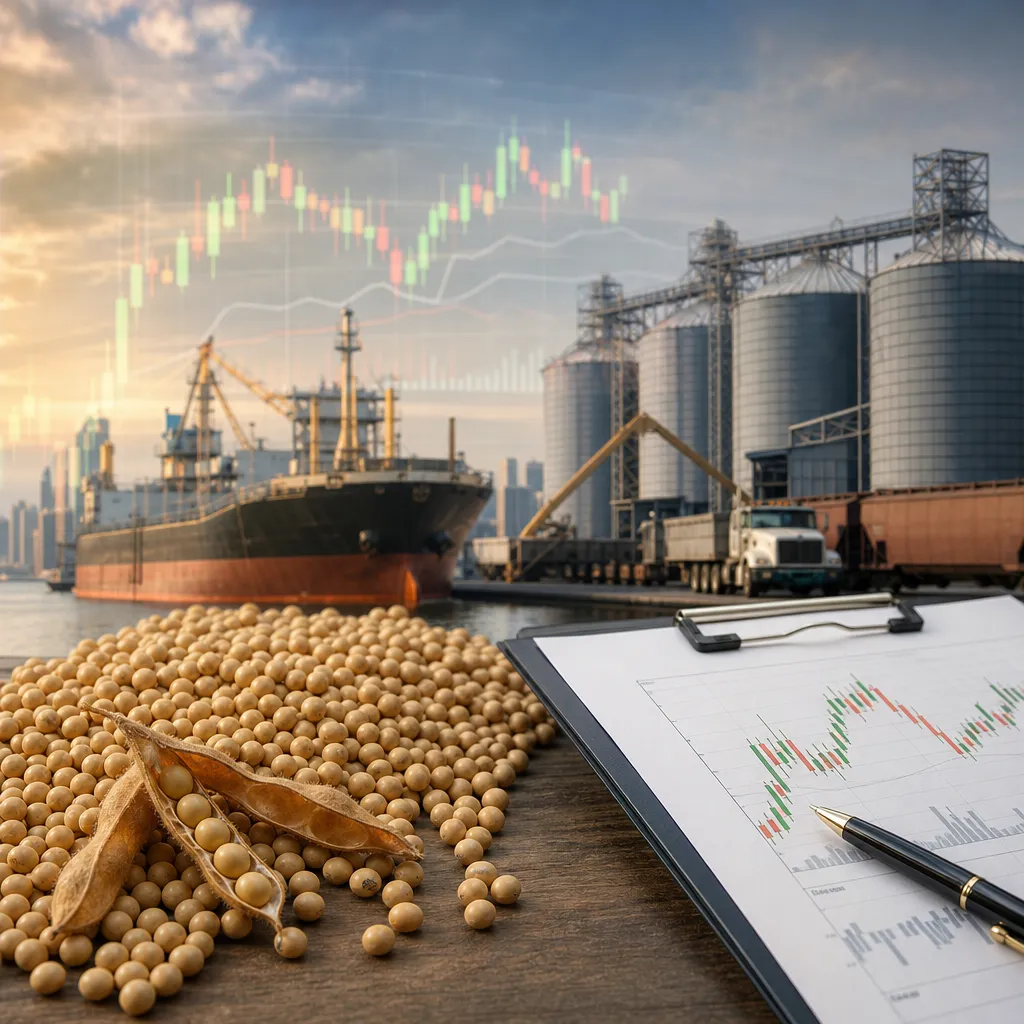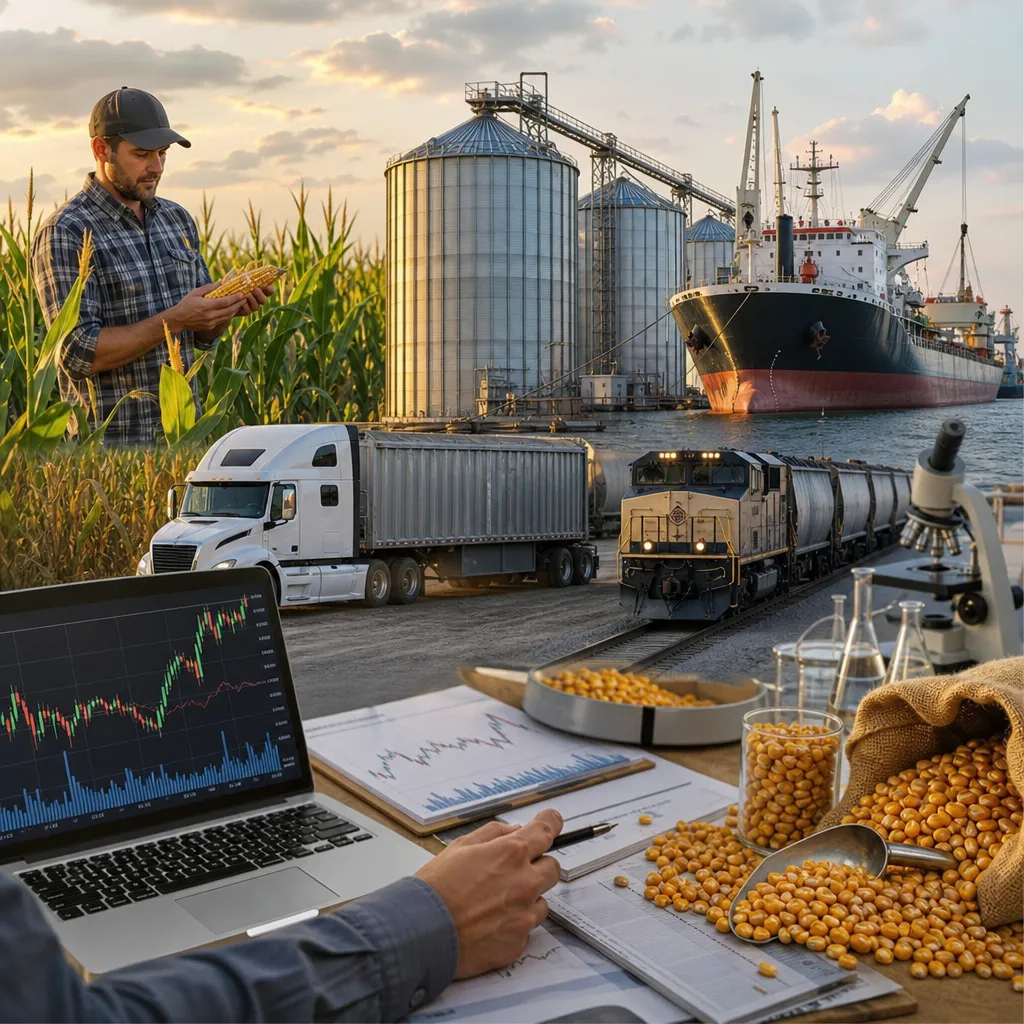





Romania grain prices today usually refers to the cash and export values for wheat, corn, barley, sunflower seed, and sometimes rapeseed traded inside Romania or shipped through its Black Sea export system. Romania is one of the European Union’s important grain-producing and grain-exporting countries, so its local prices are influenced both by domestic harvest conditions and by wider European and Black Sea market moves. In practice, there is no single official “Romania grain price” for all buyers and all locations on a given day. Prices vary by commodity, quality, region, delivery point, timing, currency, and whether the quote is farm-gate, inland delivered, port delivered, or export FOB.
Geographically, the Romanian grain market spans inland crop regions and the export corridor leading to the Port of Constanța on the Black Sea. Cash trade inside the country is often discussed in Romanian leu per metric tonne or euro per metric tonne, while export trade is commonly compared with European benchmarks and Black Sea values in euro or U.S. dollars per tonne. For wheat and corn, Euronext wheat and corn futures are relevant reference points for many market participants, but futures are not the same thing as the exact price a Romanian farmer receives. Understanding Romania grain prices today means understanding both the online benchmark market and the real physical cash market.
What “Romania grain prices today” means
In Romania, “grain prices today” can mean several different things depending on who is asking.
- Farm-gate cash price: what a farmer may be offered at the farm, before transport.
- Inland delivered price: what a mill, feed plant, crush facility, or merchant pays if grain is delivered to a local facility.
- Port delivered price: what a trader or exporter may pay for grain delivered into the export chain, often linked to Constanța.
- FOB export price: the value of grain loaded for export at port, excluding the buyer’s ocean freight.
- Futures benchmark: an exchange-traded reference price, often on Euronext, used for hedging and valuation.
Because these are different price types, two people can both quote “the wheat price in Romania today” and still be talking about different markets. A port trader may discuss export parity, while a farmer may focus on a local collector’s cash bid. A broker may refer to Euronext futures, while a flour mill may care most about delivered milling wheat quality in a specific county.
Where the Romanian grain market operates
Romania is a southeastern European country on the Black Sea and a major agricultural producer within the EU. Grain production is spread across several crop-growing regions, with inland movement flowing by truck, rail, river where relevant, and port logistics toward export channels. The Port of Constanța is the key reference point in Romanian grain trade because it connects domestic grain supply to international buyers.
Romania matters not only as a domestic producer but also as a Black Sea and Danube-connected trade location. The country produces large crops of corn and wheat in many years, along with barley, sunflower seed, and rapeseed. It serves both internal users such as mills, feed manufacturers, and processors, and export buyers in Mediterranean, Middle Eastern, and other international destinations.
This geographical position means Romanian prices are shaped by:
- domestic crop size and quality,
- competition between inland buyers and exporters,
- the economics of moving grain to Constanța,
- EU market conditions,
- Black Sea competition,
- currency movements between leu, euro, and U.S. dollar reference markets.
How grain prices in Romania are formed
Romanian grain prices are formed from a combination of benchmark values and local market adjustments. For wheat and corn especially, Euronext futures often provide the main European reference. However, the final local cash price depends on much more than a futures chart.
| Price type | Where quoted | What it means |
|---|---|---|
| Futures price | Exchange market, commonly Euronext for EU grain reference | A tradable benchmark for a standardized contract, not a farm-gate cash bid |
| Local cash bid | Elevator, cooperative, merchant, processor, local buyer | Actual physical purchase value for grain in a specific place and time |
| Delivered inland price | Mill, feed plant, crusher, warehouse | Price paid if the seller transports grain to the buyer’s facility |
| Port delivered price | Export corridor, often linked to Constanța | Value of grain delivered into the port supply chain before export loading |
| FOB export price | Export trade market | Price of grain loaded on board for export, excluding ocean freight for the importer |
The gap between a benchmark futures price and a Romanian physical price is often described as basis. Basis reflects location, handling costs, supply and demand, quality, buyer competition, and logistics. If trucks are scarce, if port capacity is tight, or if local feed demand is unusually strong, local prices can diverge significantly from exchange values.
Key drivers include:
- Quality: milling wheat, feed wheat, protein, moisture, test weight, contamination, and mycotoxin issues can all change value.
- Location: grain near port or near major domestic consumers may price differently from more remote areas.
- Transport: truck, rail, and handling costs are critical in Romania because export parity depends heavily on logistics.
- Storage: if farmers can store grain, they may delay selling; if not, harvest pressure can weaken bids.
- Currency: Romanian trade often references euro values, while domestic transactions may be settled in leu.
- Export demand: stronger international demand can lift port bids and, indirectly, inland cash prices.
- Competing origins: prices in wider Black Sea and EU markets influence how much buyers are willing to pay.
Where to check Romania grain prices online
If you need Romania grain prices today, the most reliable approach is to check several types of sources rather than expecting one perfect national quote.
For benchmark futures, Euronext is the main exchange reference for European wheat and corn futures. That helps readers understand the broader market direction, but it does not replace local cash bids.
For official crop and market context, the European Commission and Eurostat provide valuable information on EU grain production, trade, and market developments. For global balance sheets and export competition, the USDA is widely used by grain traders and analysts.
For practical Romanian cash market information, the best real-world sources are often:
- local grain merchants and exporters,
- cooperatives and collectors,
- mills, feed manufacturers, and crushers,
- agricultural market news services and brokerage desks active in the region,
- commercial market platforms that aggregate bids or indications.
Because physical grain is negotiated by quality and delivery point, many Romanian cash values are not published as a single transparent national screen price. Instead, sellers typically call multiple buyers, compare bids, and negotiate freight, quality discounts, payment timing, and delivery terms.
| Source type | What you can check | Practical use |
|---|---|---|
| Euronext | European grain futures benchmarks | Track market direction and hedging reference levels |
| European Commission | EU market reports, crop and trade context | Understand broader policy and market conditions |
| USDA | Global supply, demand, trade, and Black Sea context | Compare Romania with competing exporters |
| Local merchants and processors | Cash bids by commodity, quality, and delivery point | Get actionable physical selling or buying prices |
Romania’s main grains and market roles
Romania is especially important in wheat and corn, with barley, sunflower seed, and rapeseed also relevant. Not all commodities trade the same way.
Wheat prices often split between milling and feed quality. Protein and other quality criteria matter. For export-oriented wheat, port economics and international demand can be decisive.
Corn is a major Romanian crop and can be heavily influenced by harvest size, moisture, drying costs, feed demand, and export competitiveness. Corn values may react quickly to weather, late-season crop conditions, and logistical bottlenecks.
Barley can have separate feed and malting demand, though actual premium structures depend on buyer requirements and crop quality.
Sunflower seed and rapeseed are oilseeds rather than grains, but they are often covered in the same farm marketing discussions. Their pricing is influenced by crusher demand, vegetable oil markets, and trade flows as much as by local harvest conditions.
How grain is actually bought and sold in Romania
Physical grain trade in Romania usually happens through merchants, collectors, cooperatives, processors, exporters, or direct industrial users. A farmer does not normally need an exchange account to sell physical grain. Instead, the usual process is commercial and logistical.
- A seller requests bids from local buyers or exporters.
- The buyer specifies commodity, quality terms, quantity, delivery window, and delivery location.
- The parties negotiate price, moisture rules, discounts, freight responsibility, and payment terms.
- The grain is sampled, weighed, and delivered according to the contract.
- Final settlement reflects actual quality and agreed conditions.
Common contract structures may include spot sales, forward contracts before harvest, storage arrangements, or delivered contracts into domestic industry or export chains. Counterparty quality and payment discipline matter. In practical terms, the best price is not always the highest nominal quote if the buyer applies harsh discounts, delays pickup, or has weak payment performance.
Buyers in Romania typically include:
- country elevators and local collectors,
- international trading houses and exporters,
- flour mills,
- feed manufacturers,
- oilseed crushers,
- livestock integrators in some cases.
Constanța and the export market
The Port of Constanța is central to understanding Romanian grain pricing because export demand often sets the ceiling for inland values. If exporters can sell wheat or corn competitively into international destinations, they may bid more aggressively for grain inland. If export margins weaken, inland bids usually soften as well.
Port market language differs from farm language. Exporters may discuss FOB, while inland traders may discuss delivered Constanța or equivalent logistics-adjusted values. The inland price can be thought of as the export value minus freight, handling, storage, finance, and margin.
Romania’s export role also means its prices are sensitive to:
- Black Sea competition,
- freight market conditions,
- buyer demand from import-dependent countries,
- regional weather and crop prospects,
- trade policy or corridor disruptions affecting nearby origins.
That is why a Romanian port-linked price can move even when local field conditions are unchanged. The market is not isolated; it is connected to larger EU and Black Sea trade flows.
Forecasts and price outlook: what to watch
Any forecast for Romania grain prices should be treated as a scenario rather than a certainty. The country’s grain market can change quickly with weather and export conditions.
| Factor | Potential effect on Romanian prices | Why it matters |
|---|---|---|
| Weather and yields | Can raise or lower cash and export prices | Romania is highly sensitive to crop size and quality outcomes |
| Harvest pressure | Often weakens nearby bids if supply floods the market | Storage and logistics constraints can force sales |
| Euronext futures | Changes benchmark values used by traders | Romanian grain is often priced relative to wider EU market moves |
| Black Sea competition | Can compress or improve export parity | Importers compare Romania with other nearby origins |
| Currency movements | Affect local equivalents of export and benchmark values | Romanian grain trade sits between leu, euro, and dollar influences |
| Domestic demand | Can support local basis even if futures weaken | Mills, feeders, and crushers compete with exporters for supply |
In a bullish scenario, smaller crops, good export demand, stronger benchmark futures, or congested port pipelines that pull grain aggressively can support prices. In a bearish scenario, large harvests, weak import demand, strong competitor supplies, or poor export margins can weigh on bids. The timing of farmer selling also matters: heavy post-harvest movement often pressures the market, while tighter farmer holding can support basis later.
Futures, hedging, and online trading versus physical grain
It is important to separate physical grain trading from futures and options trading.
Physical grain in Romania is bought and sold through merchants, processors, cooperatives, and exporters. The seller owns actual grain, must manage quality and logistics, and is paid according to contract performance.
Futures and options are financial tools used for price risk management or speculation. A Romanian trader, processor, or large producer may monitor or hedge using Euronext grain futures through an authorized broker. That does not mean they are selling the exchange contract as their exact farm output. They are managing price exposure against a benchmark and still face local basis risk.
In other words:
- a farmer may watch Euronext online but sell physical wheat to a local merchant;
- an exporter may buy grain in Romania and hedge benchmark risk through futures;
- a speculator may trade grain futures without ever handling Romanian grain.
Anyone considering futures access should understand margin, leverage, contract expiry, basis risk, and brokerage rules. Futures are not a substitute for arranging storage, trucking, quality checks, and payment collection in the physical market.
Frequently asked questions
Where can I check Romania grain prices today?
For benchmark direction, check Euronext grain futures. For Romanian physical prices, contact local merchants, collectors, processors, or exporters, because actual cash bids depend on location, quality, and delivery point.
Are Euronext prices the same as Romanian farm prices?
No. Euronext is a futures benchmark. A Romanian farm-gate or inland delivered price will differ because of basis, freight, quality, local demand, storage, and currency effects.
What currency and unit are usually used in Romania grain trade?
Domestic trade may be discussed in Romanian leu per metric tonne, while export and benchmark discussions often use euro per tonne, and some international trade comparisons also use U.S. dollars per tonne.
Why does Constanța matter so much for Romanian grain prices?
Constanța is Romania’s main grain export gateway. Export economics at the port influence how much traders can afford to pay inland, especially for wheat and corn.
How do Romanian farmers usually sell grain?
Most sell physically to local buyers, merchants, cooperatives, processors, or exporters under spot or forward contracts. They do not usually need direct exchange access for normal physical sales.
Can Romanian grain be hedged with futures?
Yes, benchmark price exposure can be hedged through futures, commonly using European grain contracts where relevant. But hedging does not remove local basis risk or physical contract risk.
What are the biggest short-term drivers of Romania grain prices?
Weather, harvest progress, crop quality, port demand, Black Sea competition, Euronext futures, transport costs, and farmer selling pace are usually the main short-term drivers.
Sources
- Euronext
- European Commission
- USDA Foreign Agricultural Service