
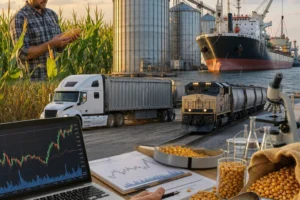
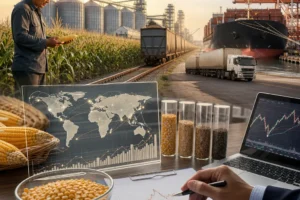
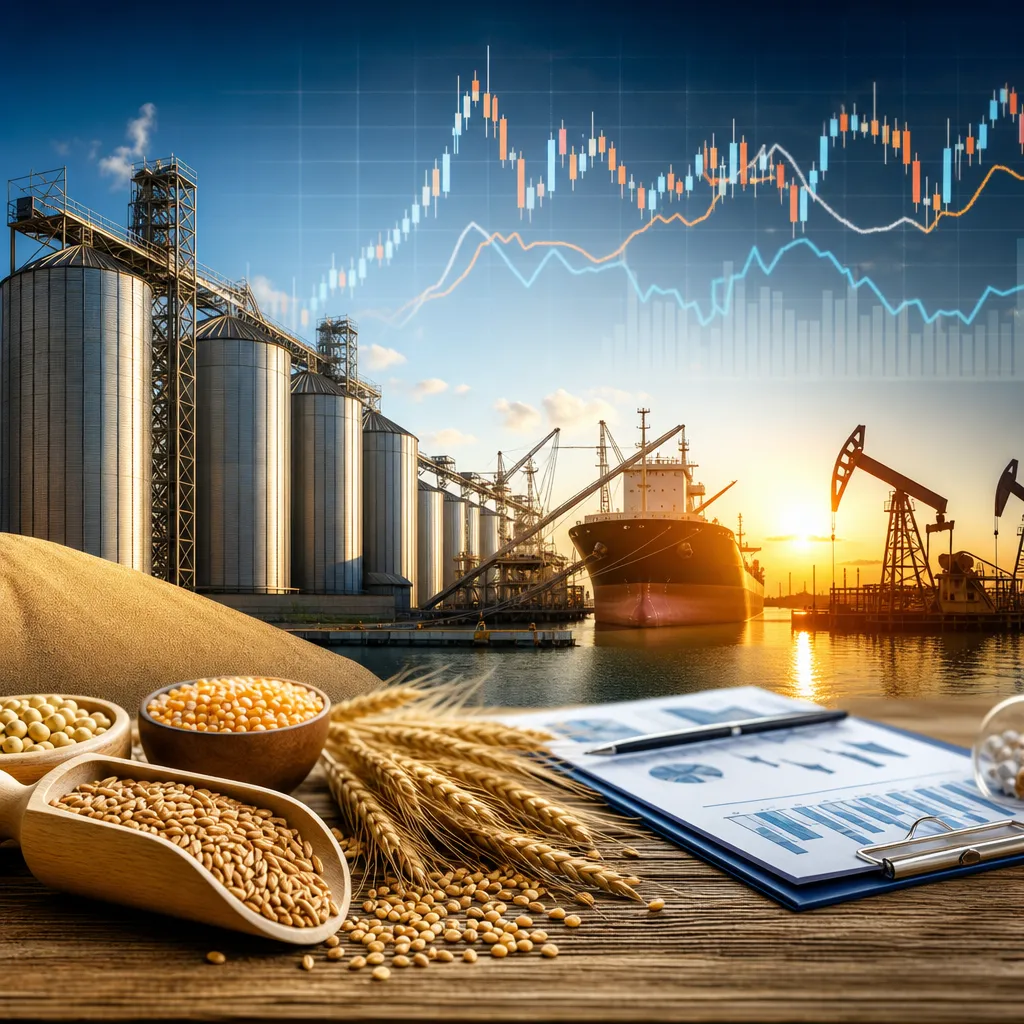
Energy costs are one of the fastest ways to change grain prices, farm margins, and trading behavior. They affect grain markets directly through fuel, fertilizer, drying, storage, and freight, and indirectly through biofuels, currency pressure, and wider inflation. In practice, a rise in oil, natural gas, diesel, or electricity can support some grain prices while still hurting farmers, processors, and buyers if local costs rise faster than selling prices. To understand grain prices properly, readers need to separate exchange futures from local cash bids and then track how energy moves through the physical supply chain.
For wheat, corn, soybeans, barley, rice, canola, and other grains or oilseeds, energy costs matter at almost every step: field operations, fertilizer production, grain drying, truck and rail freight, barge logistics, port handling, crushing, milling, and export shipping. This is why grain markets often react not only to crop reports and weather, but also to oil prices, natural gas availability, power prices, and biofuel policy. The effect is not always simple; higher energy can be bullish for some futures contracts but bearish for local end-user demand or farm profitability.
Anyone checking the market should use both financial and physical sources. Futures prices are normally quoted on regulated exchanges such as CME Group for major U.S.-linked grain benchmarks, while local cash prices are commonly checked through grain elevators, cooperatives, merchants, processors, feed mills, exporters, and agricultural market reporting services. The difference between the exchange price and the local cash bid is critical, because energy costs often change basis, freight spreads, and handling margins even when the futures board moves only modestly.
Why energy costs matter in grain markets
Energy is not just one expense line. It is embedded in the cost structure of grain production and movement. Diesel powers tractors, combines, irrigation pumps, and trucks. Natural gas is a major input in nitrogen fertilizer. Electricity runs elevators, fans, conveyors, mills, crush plants, and storage systems. Fuel prices also affect ocean freight, rail tariffs, and barge economics.
The result is that energy can influence grain prices through both cost-push and demand-pull channels. Cost-push means production and logistics become more expensive, which may support prices if supply becomes harder to produce or move. Demand-pull means energy-linked demand rises, especially when corn, soy oil, canola oil, or vegetable oils are pulled into ethanol, biodiesel, or renewable diesel markets.
| Energy factor | Market effect | How it works |
|---|---|---|
| Diesel | Raises production and freight costs | More expensive fieldwork, trucking, harvest logistics, and basis-sensitive movement |
| Natural gas | Affects fertilizer economics | Nitrogen fertilizer costs can change acreage decisions and yield potential |
| Electricity | Changes storage and processing margins | Elevators, mills, dryers, and crush plants face higher operating costs |
| Crude oil | Influences biofuel demand and wider inflation | Higher fuel prices can improve blending economics for ethanol or biodiesel in some conditions |
| Marine fuel and transport energy | Changes export competitiveness | Freight to port and vessel costs can widen or narrow destination spreads |
How energy costs feed into grain prices
The relationship is usually strongest through four channels: input costs, logistics, processing margins, and biofuel demand.
1. Input costs at the farm level
When fuel and fertilizer costs rise, the break-even price for corn, wheat, canola, or other crops usually rises as well. Farmers may respond by changing acreage, reducing input intensity, or altering marketing plans. For example, if nitrogen becomes expensive relative to crop revenue, some producers may shift away from fertilizer-intensive crops. That can affect planted area and eventually supply.
2. Grain drying and storage
Energy costs have a practical effect after harvest too. Wet corn and some other crops may require drying, which can be a major cost when gas or propane prices are high. Storage also consumes electricity for aeration, temperature control, handling, and insect management. If on-farm or commercial storage becomes more expensive, some holders sell earlier, which can pressure nearby cash markets.
3. Freight and basis
Futures prices are standardized exchange prices. Physical grain is priced at a specific location with a specific quality and delivery point. The local cash price is often expressed as futures plus or minus basis. Energy costs can widen basis if trucking, rail, barge, or port charges rise. That means a farmer may see decent futures prices on a screen but receive a weaker elevator bid locally because the buyer’s transport costs increased.
4. Biofuels and crush margins
Energy can increase demand for some crops. Corn is linked to ethanol, while soybean oil, canola, rapeseed, and sunflower oil can be linked to biodiesel or renewable diesel demand. If crude oil prices rise and policy conditions remain supportive, processors may have stronger incentives to buy feedstocks. That can support oilseed prices and indirectly influence acreage competition with grains.
Where prices are quoted and how to interpret them
Readers should not rely on a single price source. The most important distinction is between futures prices and cash prices.
Futures are standardized exchange-traded contracts. For many globally watched grain benchmarks, these are quoted through CME Group markets. Traders, analysts, and hedgers can view contract months, volumes, settlement data, and contract specifications through exchange data distributors, broker platforms, financial terminals, and market information services.
Cash prices are physical bids or offers for real grain at a specific location. These are commonly found through:
- Local grain elevators
- Agricultural cooperatives
- Grain merchants and exporters
- Flour mills, feed mills, crushers, and processors
- Government or regional agricultural market reporting systems
- Brokered physical markets in some regions
A local bid reflects much more than the futures board. It may include basis, protein or oil premiums, moisture discounts, freight, drying charges, storage, handling, location spreads, and immediate supply-demand pressure. Energy costs often show up first in these local adjustments before they are obvious in headline futures.
| Market type | Where it exists | What price means | Who uses it |
|---|---|---|---|
| Futures market | Regulated commodity exchanges and broker platforms | Benchmark for a standardized future delivery month | Hedgers, traders, funds, processors, merchants |
| Cash market | Elevators, co-ops, mills, exporters, merchants, feed buyers | Price for actual grain at a real location and quality | Farmers, consumers, local buyers, merchandisers |
| Forward cash contract | Direct agreement with elevator, cooperative, merchant, or processor | Future delivery of physical grain under agreed terms | Producers and commercial buyers |
| OTC physical trade | Merchant-to-merchant or brokered physical market | Negotiated price with quality, freight, and delivery terms | Exporters, importers, mills, feed companies |
How farmers, buyers, and traders actually use this information
In practice, each market participant watches energy differently.
Farmers usually monitor local bids, fertilizer replacement cost, drying costs, diesel, and basis trends. A farm may decide whether to sell at harvest, store grain, or use futures or options based partly on whether rising energy will tighten later basis or increase carrying costs too much.
Elevators and cooperatives watch freight spreads, storage economics, drying demand, and merchandising margins. If trucking or rail costs rise sharply, they may lower bids or widen basis to protect margins.
Processors such as ethanol plants, feed mills, flour mills, crushers, and malting plants watch both grain input costs and energy-intensive operating costs. Their buying behavior can change quickly if margins compress.
Exporters and merchants compare inland grain values with port values and destination demand. Energy matters in rail, barge, terminal handling, and ocean shipping. Even if world grain prices are stable, export competitiveness can weaken if logistics costs increase.
Futures traders and hedgers often watch cross-market relationships. Corn may react to ethanol economics. Soybean oil or canola can react to fuel markets and biofuel policy. Wheat may move partly on freight and fertilizer impacts across exporting regions.
Where to check the relevant data online
Reliable grain and energy analysis starts with official and exchange-based data, then moves to local commercial quotes.
- CME Group: futures contract specifications, delayed market data, settlement information, and educational material for corn, wheat, soybeans, soybean oil, and related contracts.
- USDA: WASDE for supply and demand, Crop Progress for field conditions, Grain Transportation Report for logistics, Export Sales for demand, and NASS data for acreage and production.
- CFTC: Commitments of Traders, useful for understanding speculative and commercial positioning in futures markets.
- FAO: broader international food and commodity context, especially useful for global grain and oilseed balance interpretation.
- National agriculture ministries or statistical agencies: domestic production, stocks, trade, and market reporting for local regions.
- Local elevators, cooperatives, merchants, and processors: current cash bids, delivery windows, basis offers, quality discounts, and contract options.
For energy itself, commercial market platforms often provide faster data, but many users can still build a strong framework by following official reports and exchange benchmarks. The key is to avoid mixing stale futures settlements with live local buying conditions.
Futures, options, and hedging when energy is volatile
Higher energy volatility often leads to higher grain volatility. Some farmers, merchandisers, and processors respond by hedging. That does not remove all risk, but it can help manage price exposure.
A futures contract is a standardized obligation traded on an exchange. To trade it, a user normally needs an account with a regulated futures broker or introducing broker connected to the exchange clearing system. This is financial trading, not the same as selling physical grain to a local elevator. Futures require margin, and losses can exceed initial expectations because leverage magnifies moves.
Options on futures can provide another tool. A put option, for example, is often used to establish a downside price floor while leaving some upside open, though the buyer pays a premium. Calls and puts are used by both hedgers and speculators, but users need to understand expiry, strike price, time value, and volatility effects.
Physical market participants still face basis risk. A farmer can hedge futures price risk and still receive a disappointing local cash price if freight costs rise and basis weakens due to energy-driven logistics pressure. That is why many commercial users hedge futures and monitor basis separately.
Physical grain trade: where energy costs show up on actual deals
In the physical market, grain is bought and sold through a chain of counterparties. A producer may sell to an elevator, cooperative, merchant, feed mill, miller, crusher, ethanol plant, or exporter. The buyer then resells, stores, blends, processes, or ships it onward.
Energy costs can affect almost every contract term:
- Delivery point: farm pickup versus delivered-to-elevator versus delivered-to-processor
- Freight allowance: especially important if trucking or rail prices shift
- Storage decision: holding grain may become less attractive if drying and aeration costs rise
- Quality terms: wetter grain may face steeper discounts when drying fuel is expensive
- Payment timing: cash flow pressure may increase if farm operating costs jump
Large export trades also incorporate logistics and contract structure. In international markets, merchants and end users may trade under standard commercial practices and agreed shipment terms, often with quality inspection, weight certification, vessel scheduling, and trade finance considerations. The online quote does not capture all of that. Real export competitiveness depends on inland origination cost, port capacity, fuel, freight availability, and destination demand.
Practical ways to analyze the relationship
A useful workflow is to track grain and energy together rather than separately.
- Check benchmark grain futures on the exchange or through a broker data feed.
- Check local elevator, cooperative, or processor bids for the same crop and delivery period.
- Compare the basis to recent norms in your area.
- Monitor diesel, fertilizer, drying fuel, and electricity costs relevant to your operation or region.
- Review USDA supply-and-demand reports and transportation updates.
- For oilseeds and corn, watch biofuel policy and processing margins.
- If hedging, separate futures risk from basis and storage-cost risk.
Common mistakes include assuming a rise in crude oil automatically means higher farm profits, using only headline futures prices, ignoring freight, or storing grain without calculating energy and shrink costs. Another frequent error is treating exchange prices as directly tradable physical prices without checking moisture, protein, delivery location, and local buyer terms.
What usually matters most by crop
Not all grains respond to energy in the same way. Corn tends to be highly sensitive because of both nitrogen intensity and ethanol linkages. Wheat is affected through fertilizer and freight. Soybeans are influenced by diesel and logistics, but soybean oil can have a stronger energy link through biodiesel or renewable diesel than soybean meal does. Canola and rapeseed can react strongly to vegetable oil and fuel policy dynamics.
Rice, oats, barley, rye, and sorghum may be more regional in price behavior, but they still feel energy through irrigation, drying, local freight, and substitution effects. For example, if corn values rise because of energy-linked demand, feed users may shift among grains where formulation allows it.
Where should I check grain prices if energy costs are moving quickly?
Use both exchange futures and local cash sources. Check benchmark futures through CME Group data or a futures broker platform, then compare them with bids from local elevators, cooperatives, processors, or merchants. The local bid is what reflects freight, drying, and basis changes tied to energy costs.
Why can grain futures rise while my local cash bid stays weak?
Because futures and cash are different markets. If fuel, drying, trucking, rail, or export handling becomes more expensive, local buyers may widen basis or apply larger discounts. That can offset a futures rally.
Where does physical grain buying and selling normally take place?
Mostly through grain elevators, cooperatives, merchants, mills, feed manufacturers, crushers, ethanol plants, and exporters. Some business is negotiated directly, some through brokers, and some through formal forward contracts. The transaction usually specifies quality, quantity, delivery point, and payment terms.
Can I hedge energy-related grain risk without selling physical grain?
Yes, through futures or options accessed via a regulated futures broker. But that is financial trading, not a physical grain sale. You still have basis risk, margin risk, and contract expiry considerations, so hedging should be matched to the physical exposure.
Which reports are most useful for tracking grain and energy effects?
USDA WASDE is the core report for supply and demand. USDA Crop Progress helps with production risk, USDA Grain Transportation Report helps with logistics, and CFTC Commitments of Traders helps interpret futures positioning. CME contract pages help users understand the benchmark market being referenced.
How do higher natural gas prices affect grain markets?
Mainly through fertilizer. Nitrogen production is energy-intensive, so high natural gas can raise fertilizer costs, alter crop budgets, affect planted area decisions, and influence yield expectations if application rates are reduced.
Does higher oil always mean higher corn prices?
No. Higher oil can support ethanol economics in some situations, but corn prices also depend on acreage, yield, stocks, exports, feed demand, currency moves, and policy. Energy is important, but it is only one part of the balance sheet.
Is storing grain during high energy-cost periods a good strategy?
Sometimes, but only if expected carry and basis improvement exceed storage, aeration, drying, shrink, finance, and quality risks. High electricity or fuel costs can reduce the value of holding grain longer, especially if local basis does not improve enough.
Sources
- USDA World Agricultural Supply and Demand Estimates
- CME Group agricultural futures contract specifications and market data
- U.S. Commodity Futures Trading Commission Commitments of Traders