


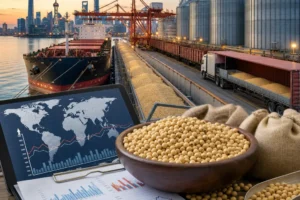





Brazil grain prices today usually refers to current indications for soybeans, corn, and sometimes wheat in Brazil’s cash market, export market, and futures market. Brazil is one of the world’s most important grain suppliers, especially for soybeans and corn, so local prices are shaped by both domestic conditions and global benchmarks. In practice, there is no single national “Brazil grain price” because values differ by state, inland delivery point, processor, cooperative, and export corridor. Readers looking for today’s price need to know which commodity, which location, which delivery basis, and which currency and unit they are checking.
Brazilian grain prices are commonly discussed in Brazilian reais and often quoted in physical markets on a per 60-kilogram bag basis for soybeans and corn, while export and international trade discussions often use U.S. dollars per metric ton. Global reference prices, especially Chicago Board of Trade soybean and corn futures, matter a great deal, but they are not identical to farm-gate or inland cash prices in Brazil. Exchange rates, freight, port demand, local supply, and buyer competition can all widen or narrow the gap between futures and physical bids.
What “Brazil grain prices today” usually means
In Brazil, grain pricing can refer to several different markets at the same time. A farmer in Mato Grosso may be watching local soybean bids from a cooperative, while an exporter at Santos or Paranaguá may be pricing FOB cargoes, and a trader may be monitoring soybean or corn futures for hedging.
The most relevant grains are:
- Soybeans – Brazil is a major global producer and exporter, and soybean prices are closely tied to export demand and CBOT soybean futures.
- Corn – Brazil is also a major corn exporter, with domestic feed, ethanol, and export demand all affecting local values.
- Wheat – More regional and more dependent on domestic milling demand and import relationships, especially in the south.
Because Brazil is geographically large, the market is fragmented. Prices in Mato Grosso, Goiás, Paraná, Rio Grande do Sul, Bahia, or at export ports can differ significantly on the same day.
| Price type | Where quoted | What it means |
|---|---|---|
| Local cash bid | Farm region, cooperative, elevator, processor, merchant | Price a buyer is willing to pay at a specific inland location, often subject to quality and delivery terms |
| Delivered price | Plant, mill, feed user, terminal, warehouse | Value for grain delivered to a named destination, including transport responsibility defined in the contract |
| Port or export bid | Export corridors such as Santos or Paranaguá | Bid linked to export demand; often used as a reference that inland traders adjust for freight and handling |
| Futures price | Exchange market | Financial benchmark used for price discovery and hedging, not the same as a local immediate cash bid |
| FOB export price | Port export market | Price of grain loaded for export at the port, before ocean freight |
| CIF import price | Import market when relevant | Delivered import value including cost, insurance, and freight to destination under agreed terms |
Where the Brazilian grain market operates
Brazil’s grain market operates across several layers. The physical market starts in producing regions, where grain is sold by farmers to cooperatives, trading companies, processors, feed manufacturers, mills, and local intermediaries. Key producing areas include the Center-West for soybeans and corn, the South for soybeans, corn, and wheat, and parts of the Northeast in expanding grain regions.
Export pricing becomes especially important at major port corridors. Santos and Paranaguá are among the most visible reference locations in Brazilian grain trade, while northern export routes have also become commercially important in moving grain from interior production areas to export channels. Inland prices often move in relation to export parity, but the final local bid depends heavily on transport cost from the producing region to the port.
Financial price discovery also takes place through futures markets. For soybeans and corn in Brazil, international traders often watch CBOT futures because they are the main global benchmark for these crops. In domestic market discussions, participants also monitor Brazilian market information providers and local forward contracts that reflect export demand, currency movements, and freight.
How grain prices are formed in Brazil
Brazil grain prices are formed by combining international benchmark values with local market realities. For soybeans and corn, the starting point is often the global futures market, especially CBOT. Then the market adds or subtracts a basis, which is the difference between the benchmark futures price and the local cash or export price.
In practical terms, a Brazilian grain buyer may consider:
- International futures direction
- Brazilian real versus U.S. dollar movement
- Port demand and exporter margins
- Freight from farm region to terminal or processor
- Storage availability
- Harvest pace and farmer selling
- Crop quality and moisture
- Competition among exporters, crushers, ethanol plants, feed users, or mills
The exchange rate is especially important in Brazil. Since export grain is effectively priced against world values in U.S. dollars, a weaker real can support local prices in reais even when global futures are unchanged or weaker. A stronger real can have the opposite effect.
Seasonality also matters. During harvest, local cash pressure can appear if storage is tight or logistics are congested. Later in the season, basis may strengthen if farmers hold back sales or if exporters and domestic users need coverage.
| Factor | Typical effect on Brazil grain prices | Why it matters |
|---|---|---|
| CBOT soybean or corn futures | Can pull export-linked prices up or down | These are widely used international benchmarks for price discovery |
| BRL/USD exchange rate | Changes local prices in reais even if dollar prices do not move | Brazil exports large grain volumes priced against world markets |
| Freight and logistics | Can weaken inland bids when transport is expensive | Brazil’s distances from interior farms to ports are significant |
| Harvest progress | Often increases spot supply pressure | More immediate selling can soften local cash markets |
| Domestic demand | Can support local bids away from ports | Crushers, feed users, ethanol plants, and mills compete for grain supply |
| Weather and crop conditions | Can change expectations for production and selling behavior | Production risk affects both local and export availability |
Where to check Brazil grain prices online
If you need today’s prices, the safest approach is to use established market sources and verify whether the figure is a futures quote, port indication, or local physical bid. Reliable current quotes can vary by subscription level and by market segment, but readers can normally check the following institutions and types of sources.
- CEPEA – Widely followed for Brazilian agricultural price indicators and market commentary, including key grain references.
- B3 – Brazil’s exchange, relevant for domestic derivatives and official market data where applicable.
- CME Group – Reference source for CBOT soybean and corn futures, which are central global benchmarks for Brazilian export-linked grain pricing.
- CONAB – Official Brazilian crop supply, production, and market information source useful for understanding domestic fundamentals.
- USDA – Important for global supply-demand reports, trade balance context, and Brazil crop monitoring from an international benchmark perspective.
- Cooperatives, merchants, crushers, mills, feed companies, and grain elevators – Often the most relevant place to check actual local bids available to a farmer or physical seller.
When checking prices, confirm these details:
- Commodity: soybean, corn, wheat, or another grain
- Location: state, city, warehouse, plant, or port
- Price basis: farm pickup, delivered plant, port, FOB, or futures
- Currency: Brazilian reais or U.S. dollars
- Unit: 60-kg bag or metric ton
- Date and time: old quotes are often still circulated after the market has moved
A common mistake is to compare a live CBOT quote directly with a local Brazilian interior bid. That ignores basis, freight, taxes and commercial terms, currency conversion, and quality adjustments.
How grain is actually bought and sold in Brazil
Most physical grain in Brazil is not bought by clicking a futures screen. It is sold through commercial channels in the real market. Farmers may sell spot at harvest, forward contract part of production before harvest, store grain and sell later, or deliver under agreements tied to processors or exporters.
Physical grain trade
In the physical market, grain is commonly traded through:
- Cooperatives
- Local grain merchants
- Export trading companies
- Soybean crushers
- Feed manufacturers
- Corn ethanol plants where relevant
- Wheat mills
A physical contract normally specifies commodity, quantity, quality rules, delivery window, location, payment terms, and penalties or adjustments for quality differences. Moisture, foreign material, damaged grain, and test or industrial quality standards can all affect the final settlement price.
Some transactions are simple spot cash deals. Others are forward contracts priced in reais, U.S. dollars, or formulas linked to futures plus basis. Counterparty risk matters, so commercial participants usually pay attention to the buyer’s credibility, delivery obligations, and contract enforceability.
Export trade
When grain is destined for export, pricing tends to be built from international demand and port values. Exporters buy inland grain, manage transport to the port, assemble vessel capacity, and price cargoes using export terms such as FOB when relevant. Inland bids are often calculated from the expected port value minus freight, handling, finance, and risk.
That is why a strong port market does not always translate into equally strong farm prices in distant producing areas. If trucking costs rise or logistics tighten, the producer’s local bid may lag the export market.
Futures and hedging versus the physical market
Futures and options are risk-management tools, not the same thing as owning grain in a warehouse. A producer, merchant, or processor can hedge price risk using exchange-traded contracts while buying or selling the physical commodity separately.
For Brazilian soybeans and corn, global participants frequently hedge using CBOT futures because these contracts are internationally liquid and central to export pricing. Domestic market participants may also use instruments available through Brazil’s financial market infrastructure where suitable.
The key concepts are:
- Hedging – Using futures or options to reduce price risk on expected or owned physical grain
- Speculation – Taking a market position without a matching physical exposure
- Margin – Funds required to hold futures positions
- Basis risk – The risk that local cash prices do not move exactly in line with the futures benchmark
Access to futures normally requires a brokerage account and understanding of leverage, margin calls, and contract expiry. This is very different from delivering physical grain to a cooperative or exporter. A farmer may watch futures online every day and still sell actual grain only to a local buyer in a cash contract.
Brazil’s role in supply, demand, and trade
Brazil is one of the most important global grain origins, especially for soybeans and corn. That means local prices are highly sensitive to world demand, trade flows, and competition with other exporting countries. Chinese buying interest, U.S. crop expectations, Black Sea grain developments for corn or wheat, and ocean freight conditions can all influence Brazilian values.
Domestic demand also matters. Soybean crushing supports meal and oil demand. Corn demand comes from livestock feeding and increasingly industrial use such as ethanol in some regions. Wheat is more regionally concentrated and more connected to milling demand and import competition.
Because Brazil is both a major producer and a major exporter, the market constantly balances two forces: internal consumption and export parity. In some regions, domestic users set the best bid. In others, the port export chain is the main price leader.
Price outlook: what to watch next
Any forecast for Brazil grain prices should be treated as a scenario, not a certainty. The most useful way to think about the market is to identify the variables that can shift pricing over the next weeks or months.
- Weather – Rainfall, planting timing, and yield conditions are major drivers for soybeans and both first and second corn crops.
- Harvest progress – Fast harvest can pressure cash markets; delays can support basis if nearby supply tightens.
- BRL/USD exchange rate – One of the fastest channels through which local prices can change.
- Export demand – Port demand and vessel lineup expectations can strengthen export-linked bids.
- Storage and freight – Tight logistics can reduce farm-level realization even when global benchmarks are firm.
- Government and policy signals – Credit, infrastructure, trade, or biofuel policy can affect sentiment and local demand.
A bullish scenario for local prices would typically involve supportive world futures, firm export demand, a weaker real, and tighter farmer selling. A softer scenario could emerge if harvest pressure increases, logistics improve enough to release supply quickly, world futures weaken, or the real strengthens materially.
Frequently asked questions
Where can I check Brazil grain prices today?
For practical market monitoring, use CEPEA for Brazilian price indicators, B3 for relevant domestic market data, CME Group for benchmark soybean and corn futures, CONAB for domestic crop and market context, and local cooperatives or grain buyers for actual cash bids.
Are Brazil grain prices quoted in reais or dollars?
Both are used. Physical inland prices are often discussed in Brazilian reais, while export trade commonly uses U.S. dollars per metric ton. The market may also use a 60-kilogram bag unit in domestic trade.
Why is the local cash price different from Chicago futures?
Because local cash prices include basis, freight, location, quality, buyer demand, storage pressure, and currency effects. Chicago futures are a benchmark, not a direct quote for a Brazilian farm or warehouse.
What is the most important benchmark for Brazilian soybean and corn prices?
CBOT soybean and corn futures are the main international benchmarks. However, the price actually paid in Brazil depends on port values, exchange rate, and inland basis.
How do Brazilian farmers usually sell grain?
Mostly through cooperatives, merchants, processors, or exporters using spot sales, forward contracts, or stored-grain marketing. The physical deal is negotiated locally even if the seller follows futures prices online.
Can an investor trade Brazil grain prices without buying physical grain?
Yes. Financial participation usually happens through futures or options via a broker. That gives price exposure, but it is not the same as purchasing, storing, or exporting grain.
Do port prices matter for inland Brazil?
Yes. Port prices often anchor export parity, but inland bids are adjusted for freight, handling, and regional supply-demand conditions. The farther the grain is from the export corridor, the larger logistics can matter.
Which crops matter most for Brazil grain pricing?
Soybeans and corn are the most important nationally. Wheat matters too, especially in southern Brazil, but its market structure is more regional and more influenced by domestic milling and import dynamics.
Sources
- CEPEA – Centro de Estudos Avançados em Economia Aplicada
- CONAB – Companhia Nacional de Abastecimento
- CME Group