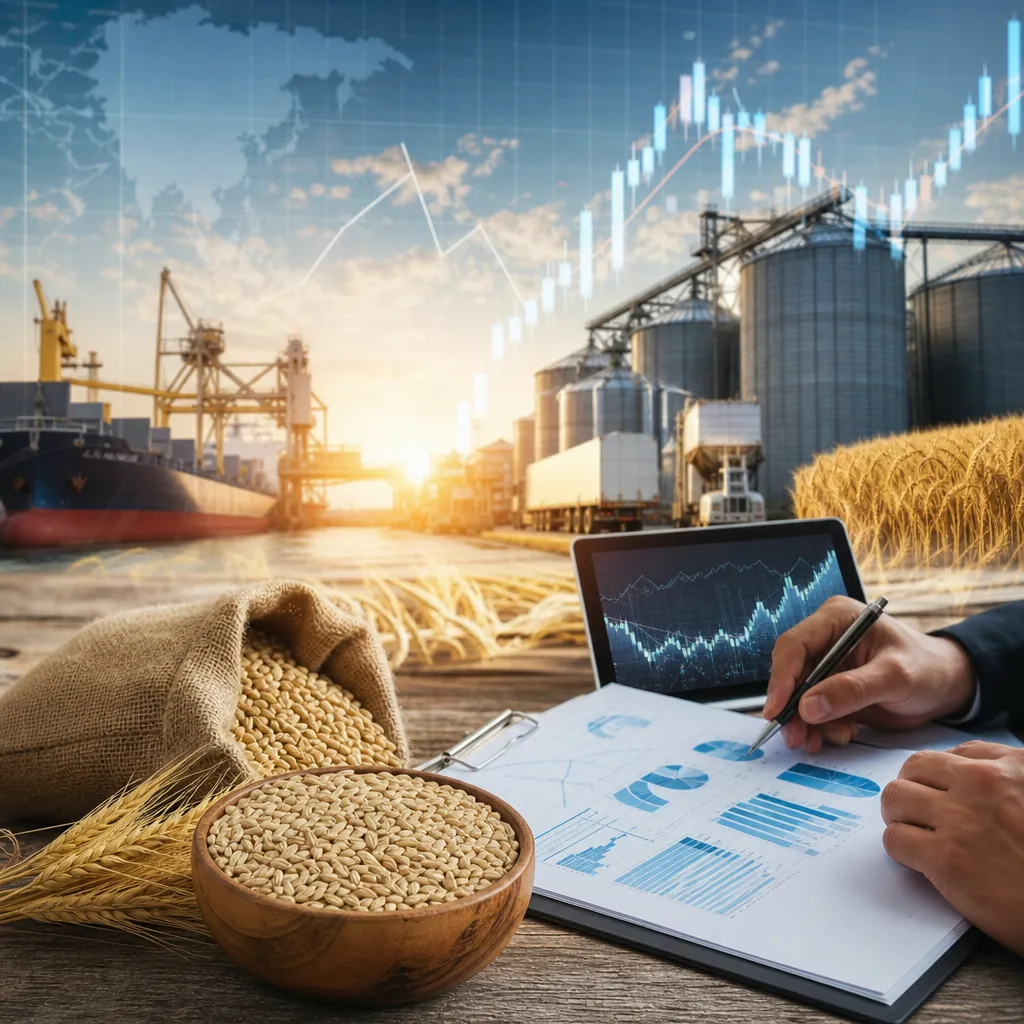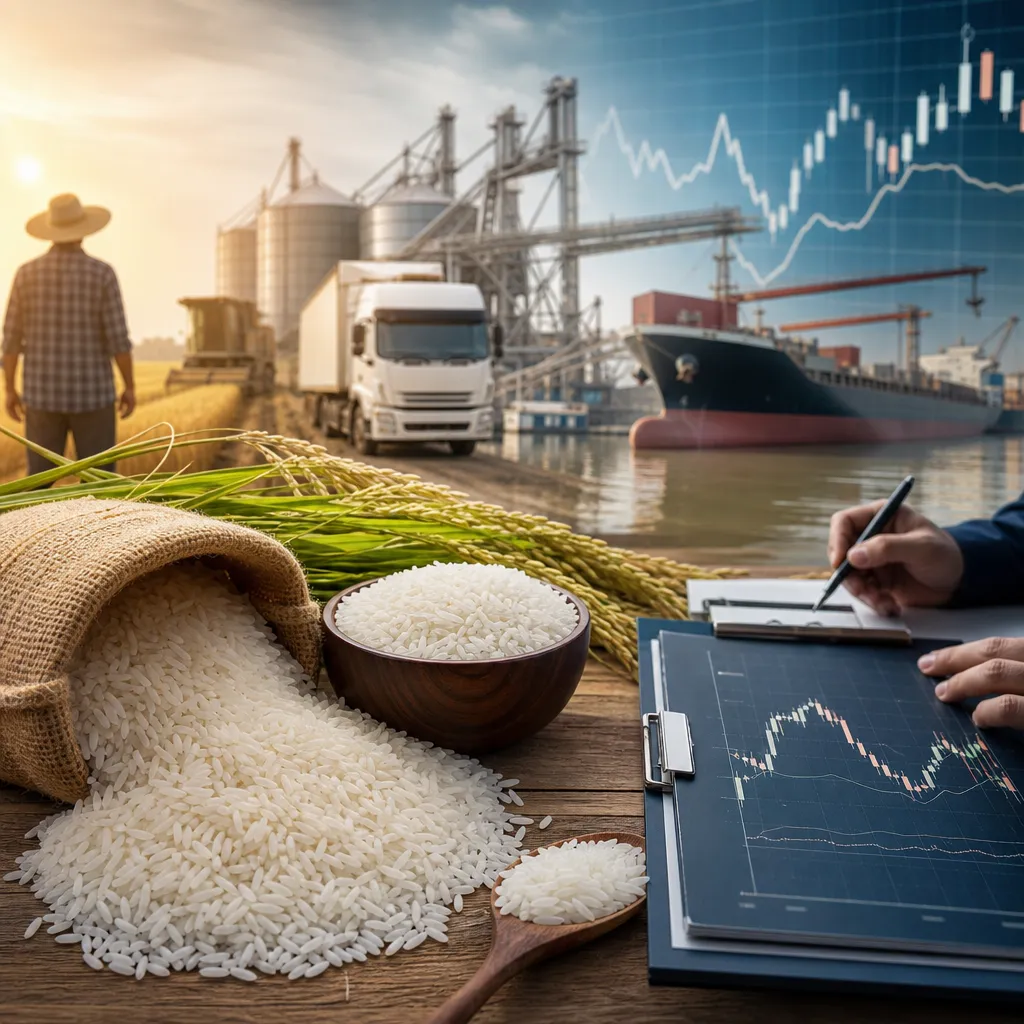



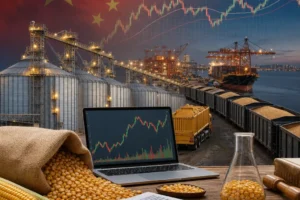

Grain market prices are not a single number. The price a trader sees on a futures screen, the bid posted by a local elevator, and the delivered price paid by a mill or exporter can all differ at the same time. To understand grain prices in practice, you need to separate exchange futures from local cash prices, then connect both to quality, freight, storage, and supply-and-demand conditions. The most reliable approach is to check official exchange data for benchmark prices and compare it with bids from elevators, cooperatives, merchants, processors, or port buyers in your region.
For wheat, corn, soybeans, barley, rice, oats, rye, sorghum, canola, rapeseed, and sunflower seed, prices are shaped by weather, crop size, exports, stocks, currency moves, energy costs, and logistics. But the way a farmer sells physical grain is different from the way a speculator or hedger trades a futures contract. Knowing where each price exists, who uses it, and how transactions are actually done is essential.
What grain market prices actually mean
In grain markets, the word price can refer to several different things:
- Futures price: a standardized contract traded on a regulated exchange.
- Cash price: the price for physical grain in a local market.
- Basis: the difference between local cash price and the relevant futures contract.
- Delivered price: the price after freight, handling, or destination terms are included.
- Forward contract price: a price agreed today for delivery later.
A Chicago corn futures quote is not automatically the price a farmer receives at a local elevator. The local bid may be above or below futures depending on basis. Basis reflects local supply, transportation capacity, storage availability, quality, processor demand, export competition, and distance to final use.
For crops that may not have a liquid local futures benchmark in every country, physical trade often relies more heavily on merchant bids, export parity, import parity, or formulas linked to broader oilseed or feedgrain benchmarks.
Where grain prices are quoted and checked
Benchmark futures prices are commonly quoted through regulated exchanges and market-data vendors. In the United States, a major reference point is CME Group for contracts such as corn, wheat, soybeans, soybean meal, soybean oil, oats, and rough rice. In Europe, grain market participants may also watch Euronext contracts for milling wheat, corn, and rapeseed. These exchange prices are typically shown in standardized contract units and currencies, not as farmgate prices.
Local physical prices are usually checked through:
- Grain elevators posting daily bids
- Agricultural cooperatives offering spot and forward contracts
- Grain merchants and exporters quoting origin or port values
- Processors such as mills, crushers, ethanol plants, maltsters, or feed manufacturers
- Government or market reporting systems publishing regional cash prices or price summaries
- Broker and data platforms that aggregate bids, futures, basis, and spreads
In practice, farmers often compare several bids on the same day because the best price depends on delivery point, moisture, protein or oil content, test weight, dockage, and timing. A strong nearby bid from a processor may beat a higher headline number from a distant buyer once freight is deducted.
| Price type | Where it exists | Who uses it | Main limitation |
|---|---|---|---|
| Futures price | Regulated exchange and broker platforms | Traders, hedgers, analysts, merchandisers | Not the same as local cash grain value |
| Cash bid | Elevators, cooperatives, merchants, processors | Farmers, local buyers, feed users | Can vary by location and quality |
| Forward contract | Direct agreement with elevator, coop, merchant, or processor | Farmers and commercial users | Carries delivery and counterparty obligations |
| Delivered physical price | Negotiated in physical trade chain | Exporters, mills, feed companies, importers | Depends heavily on freight and contract terms |
How futures prices work versus physical grain prices
Futures contracts are standardized agreements traded on an exchange. They specify quantity, quality framework, delivery month, and other contract terms. Most participants do not make or take physical delivery; they use futures to hedge price risk or speculate on price direction, then offset positions before expiry.
To trade futures, a participant normally needs:
- a futures account with a regulated broker,
- margin funds,
- understanding of contract size, tick value, expiry, and delivery rules,
- risk controls for leverage and volatility.
Physical grain trading works differently. A farmer selling wheat or corn usually contracts with a local elevator, cooperative, merchant, feed mill, flour mill, crusher, exporter, or livestock integrator. The transaction includes quality terms, delivery window, moisture tolerances, discounts, location, and payment terms. The grain moves through trucks, rail, barges, containers, or vessels; a futures position does not by itself move physical grain.
Hedging connects these two markets. A producer may sell futures to reduce the risk of falling prices before harvest, while still planning to sell physical grain later in the local cash market. A mill or feed buyer may buy futures to protect against rising raw material costs. The hedge reduces futures price risk, but basis risk remains because local cash prices do not move exactly the same way as the benchmark contract.
How farmers, buyers, and traders use grain prices in practice
Farmers usually use grain prices for three decisions: when to sell, whether to store, and whether to hedge. Merchants and processors use them to manage procurement, inventory, crushing or milling margins, and customer sales. Exporters use them to assess origin competitiveness at ports relative to other countries.
A typical physical sale flow may look like this:
- The seller checks local bids from several elevators, cooperatives, processors, or merchants.
- The buyer specifies delivery point, crop year, grade, moisture, and discount schedule.
- The parties agree on spot, forward, basis, or hedge-to-arrive style pricing where available.
- The grain is delivered and weighed, sampled, and graded.
- Freight, storage, drying, or quality deductions are applied if relevant.
- Payment is made according to the contract terms.
For larger commercial trade, especially export or processor supply, contracts may also include inspection certificates, loading terms, tolerance provisions, and trade rules. In cross-border business, Incoterms may define who pays for transport, insurance, and risk transfer. The quoted price can therefore differ significantly depending on whether it is ex-farm, delivered elevator, rail origin, barge terminal, or FOB port.
Main drivers of grain market prices
Grain prices move because supply and demand expectations change. The most important drivers are not the same every day, but the market usually reacts to a core set of variables.
| Driver | How it affects prices | Where to monitor it |
|---|---|---|
| Weather | Changes yield expectations and quality risk | Official meteorological agencies, crop progress reports, commercial weather services |
| Acreage and production | Determines available supply | USDA, national statistical agencies, agriculture ministries |
| Stocks and stocks-to-use | Measures how tight or comfortable supply is | USDA WASDE, national balance sheets, FAO |
| Exports and imports | Shows international demand and competitiveness | USDA Export Sales, customs data, official trade statistics |
| Currency and freight | Shifts export parity and local buyer economics | FX markets, freight assessments, merchant bids |
| Energy and biofuels | Affects corn, soy, canola, rapeseed, and sunflower complex demand | Energy markets, policy announcements, industry reports |
Weather is often the fastest driver during planting and growing seasons, but logistics can matter just as much during harvest or export bottlenecks. A full crop in one region does not always create low local prices if transport is disrupted, while a smaller crop may still bring weak prices if demand falls or imports increase.
Where to find reliable grain market data and reports
For benchmark prices and contract specifications, exchanges are the primary reference. CME Group provides futures and options data, contract details, delivery months, and educational materials for major U.S.-linked grain and oilseed markets. Traders often use broker platforms or licensed market-data terminals for real-time quotes; public exchange pages may provide delayed data depending on the channel.
For supply-and-demand analysis, USDA is one of the most important public sources. Key reports include:
- WASDE for global and U.S. balance sheets
- Crop Progress for weekly planting and condition updates
- Grain Stocks for inventory data
- Acreage and Prospective Plantings for seeded area expectations
- Export Sales for weekly U.S. export demand indicators
For positioning in futures markets, the U.S. Commodity Futures Trading Commission publishes Commitments of Traders data. This helps analysts see how commercial hedgers, managed money, and other trader categories are positioned. It does not predict price direction by itself, but it provides useful context about market crowding and sentiment.
For international context, FAO and national agriculture ministries or statistical agencies can be useful, especially in markets where local cash conditions differ from U.S. benchmarks. Customs databases and official trade statistics help track import and export flows, while port lineups, rail performance, and barge conditions are monitored more closely by commercial traders and logistics teams.
How grain is bought, sold, and delivered in the physical market
Physical grain trade starts with counterparties and location, not with a chart. A seller may be a farmer, cooperative, country elevator, or merchant. A buyer may be a mill, feed company, oilseed crusher, maltster, biofuel plant, exporter, or another trading house.
Important transaction elements include:
- Delivery point: farm pickup, elevator, warehouse, processor, rail terminal, river terminal, or port
- Quality and grade: protein, moisture, test weight, foreign material, damage, oil content, falling number, or other crop-specific measures
- Quantity and tolerance: exact tonnage or shipment range
- Timing: spot, nearby, harvest, or deferred delivery
- Freight responsibility: seller-delivered or buyer-collected
- Storage terms: on-farm, commercial warehouse, or elevator storage
- Payment terms: immediate settlement, weighed-and-graded settlement, or contract schedule
Warehouse receipts, inspection certificates, grades, and weighbridge tickets may be part of the documentation flow, depending on the region and transaction size. Counterparty risk matters: before accepting a forward sale or deferred payment arrangement, growers and buyers usually assess buyer reliability, contract terms, and dispute-resolution procedures.
Storage, basis, and logistics: why local prices diverge
Local grain prices often move differently from exchange futures because physical grain must be stored and transported. If harvest arrives quickly and nearby storage is tight, basis can weaken even if futures are stable. If a processor needs immediate supply, basis can strengthen even when futures are falling.
On-farm storage gives sellers timing flexibility, but it is not free. The true cost includes interest on inventory, aeration, drying, shrink, quality risk, and handling losses. Commercial storage may add explicit charges plus loadout, conditioning, or blending costs. Storage makes sense only if expected carry or later basis improvement is enough to cover these costs and risks.
Logistics also matter. Truck availability, rail service, barge traffic, port congestion, road bans, fuel prices, and export lineups can all change local bids. A port market may look strong online while interior bids weaken because transport cannot move grain efficiently. Electronic market data is useful, but it does not replace knowledge of actual freight and space conditions.
Risks, common mistakes, and practical limits
The biggest mistake in grain pricing is treating one reference number as the whole market. Futures, local cash bids, and delivered prices each answer different questions.
Common mistakes include:
- assuming the exchange quote equals the local farmgate price,
- ignoring basis and freight,
- selling without confirming quality discounts,
- using futures or options without understanding margin or expiry,
- storing grain without calculating cost of carry,
- relying on a single buyer instead of comparing bids,
- watching national headlines while missing local logistics constraints.
Options can be useful for hedging because they set a floor or cap while limiting downside to the premium paid, but they still involve cost, time decay, and contract selection risk. Futures provide direct price exposure and flexible hedging, yet leverage means losses can accumulate quickly if the market moves against the position. Physical contracts avoid margin calls but create delivery obligations and counterparty exposure.
Where can I check grain market prices today?
Check regulated exchanges such as CME Group for benchmark futures and then compare those prices with local elevator, cooperative, merchant, or processor bids. For physical grain, local bids are usually the most relevant starting point because they reflect basis, freight, and quality.
What is the difference between a futures price and a cash grain price?
A futures price is a standardized exchange-traded benchmark. A cash price is the actual price for physical grain at a specific location and quality. The difference between them is basis.
Where do farmers usually sell grain?
Most farmers sell through grain elevators, agricultural cooperatives, processors, feed manufacturers, or grain merchants. In some markets they may also contract directly with exporters, mills, crushers, or livestock operations.
Can I buy grain online like a financial asset?
You can trade grain futures or options online through a regulated futures broker, but that is financial trading, not the same as purchasing truckloads or vessel cargoes of physical grain. Physical grain purchases normally require a direct contract with a merchant, elevator, processor, or supplier.
Which reports matter most for grain price analysis?
Widely used reports include USDA WASDE, USDA Crop Progress, USDA Export Sales, USDA Grain Stocks, and CFTC Commitments of Traders. They help market participants track production, demand, exports, inventories, and trader positioning.
Why do local grain bids change even when futures are quiet?
Local bids can move because basis changes. Basis is affected by harvest pressure, nearby demand, storage availability, freight costs, rail or barge conditions, and competition among local buyers.
How do storage decisions affect the price a seller ultimately receives?
Storage can improve selling flexibility and sometimes capture stronger basis or seasonal futures carry, but it also adds costs and quality risk. A higher later price is only beneficial if it exceeds the total cost of storing and financing the grain.
Are grain futures useful for hedging physical grain?
Yes, many producers, merchants, mills, and feed users hedge with futures or options to reduce price risk. But hedging does not eliminate basis risk, and futures accounts require margin and careful risk management.
Sources
- USDA Foreign Agricultural Service and USDA World Agricultural Outlook Board
- CME Group
- U.S. Commodity Futures Trading Commission