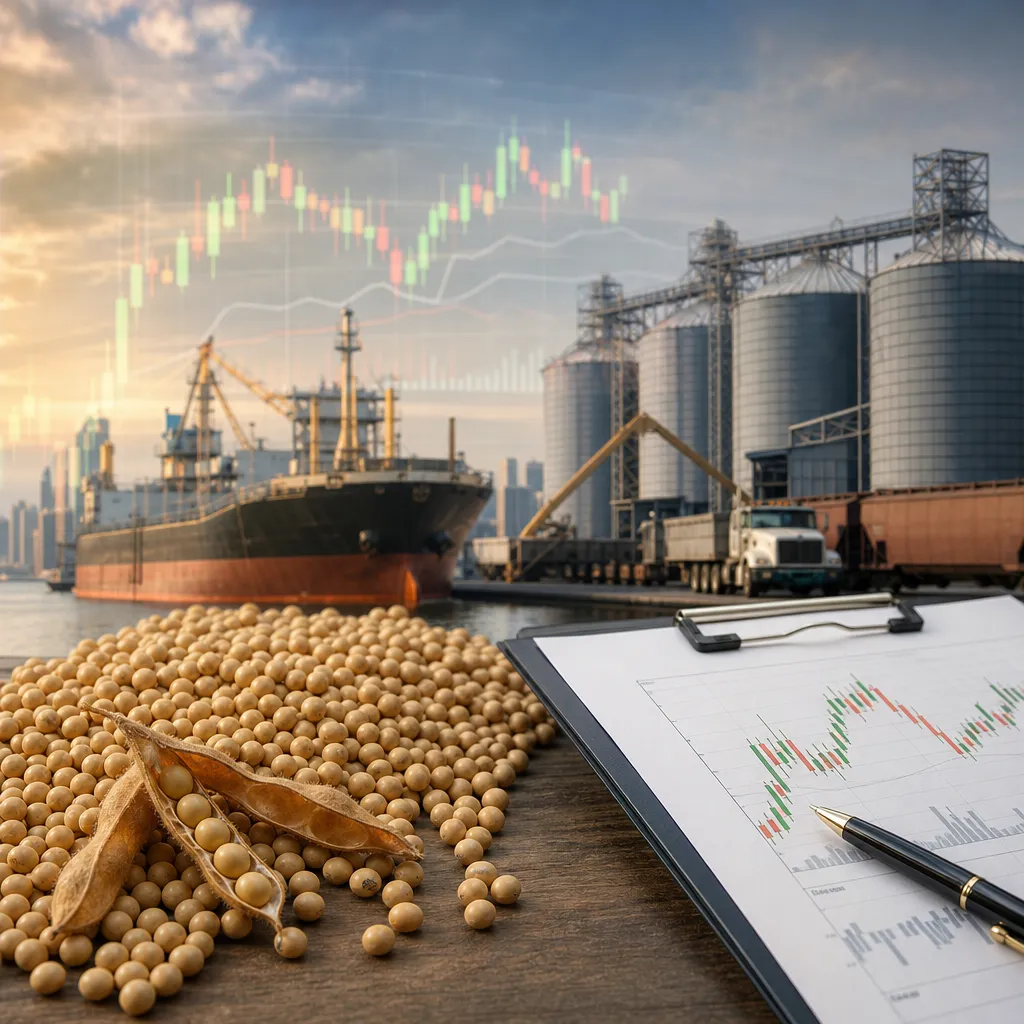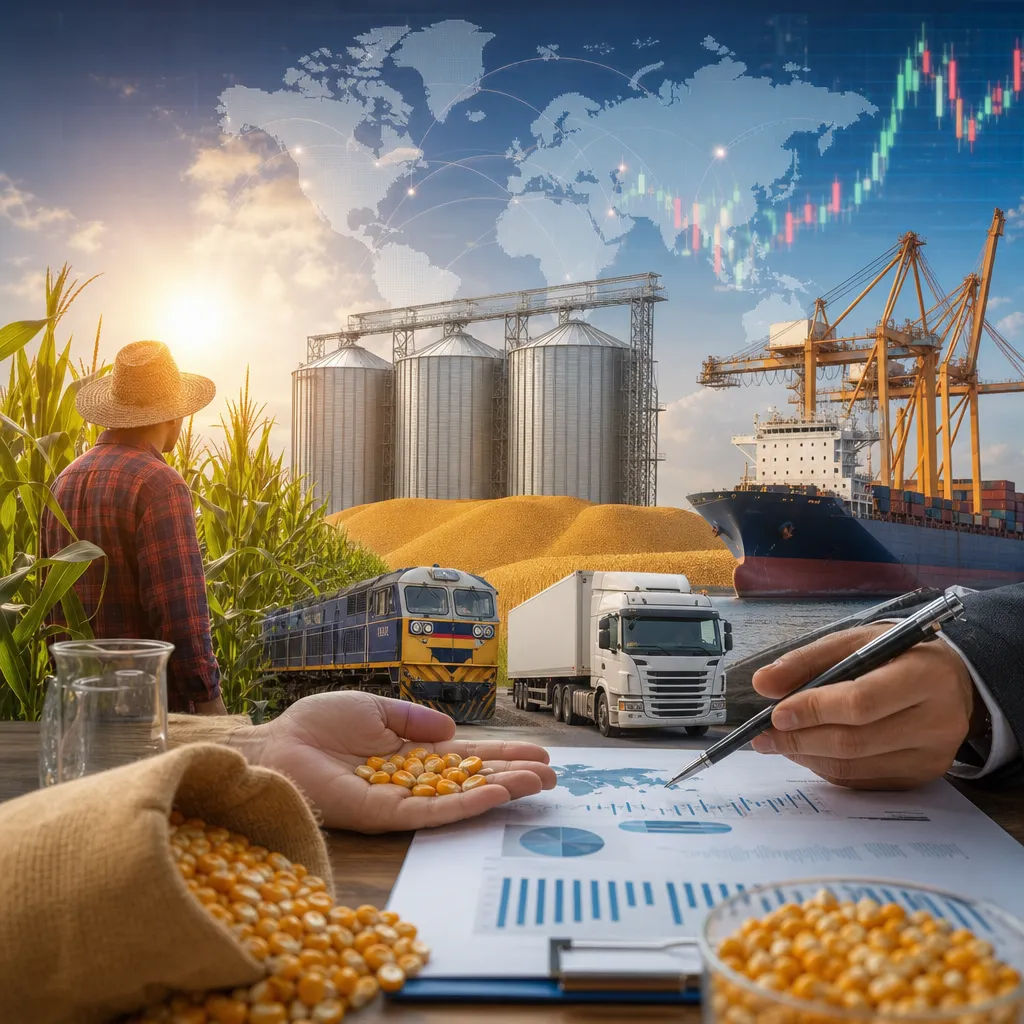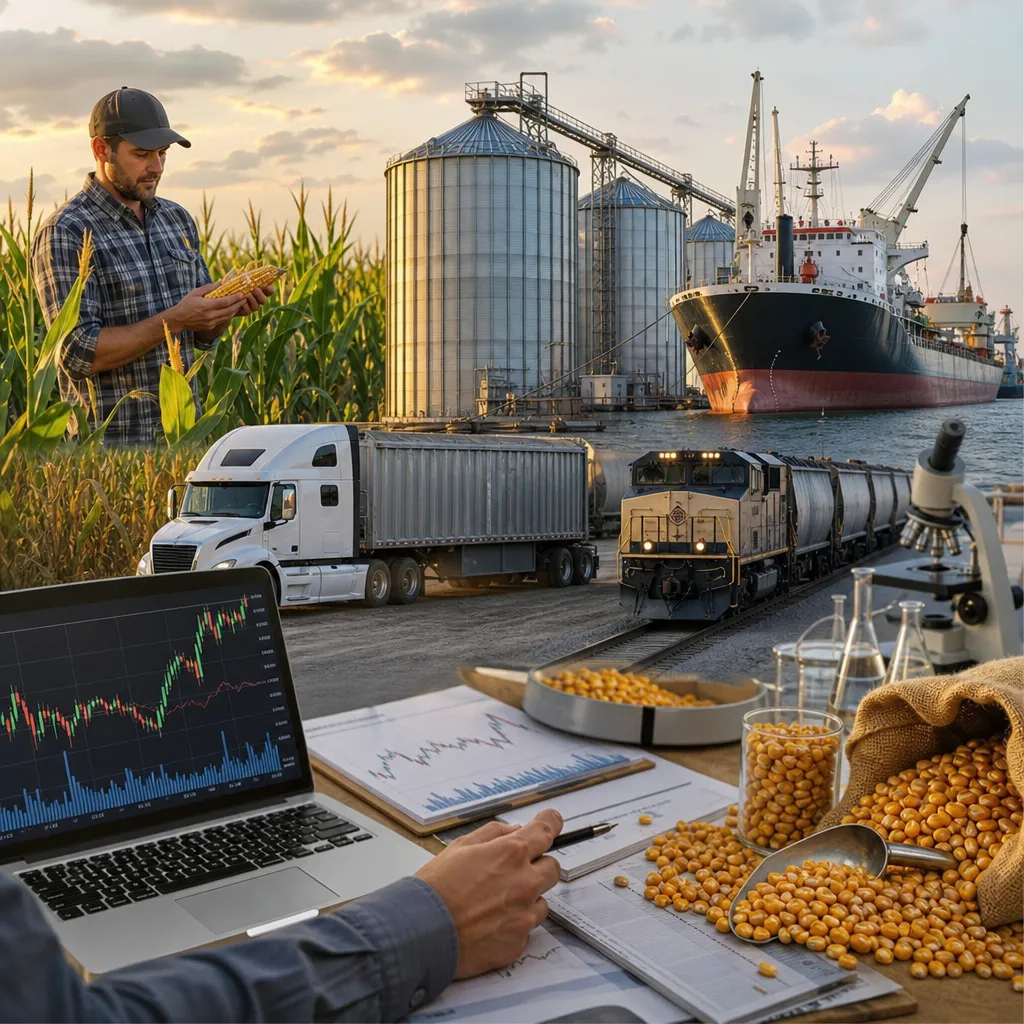

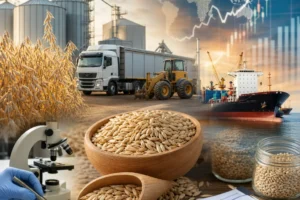
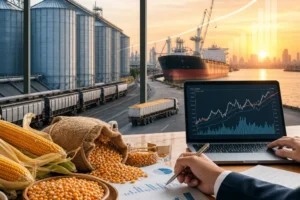
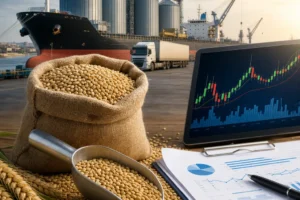
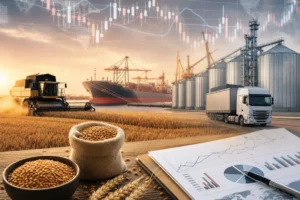
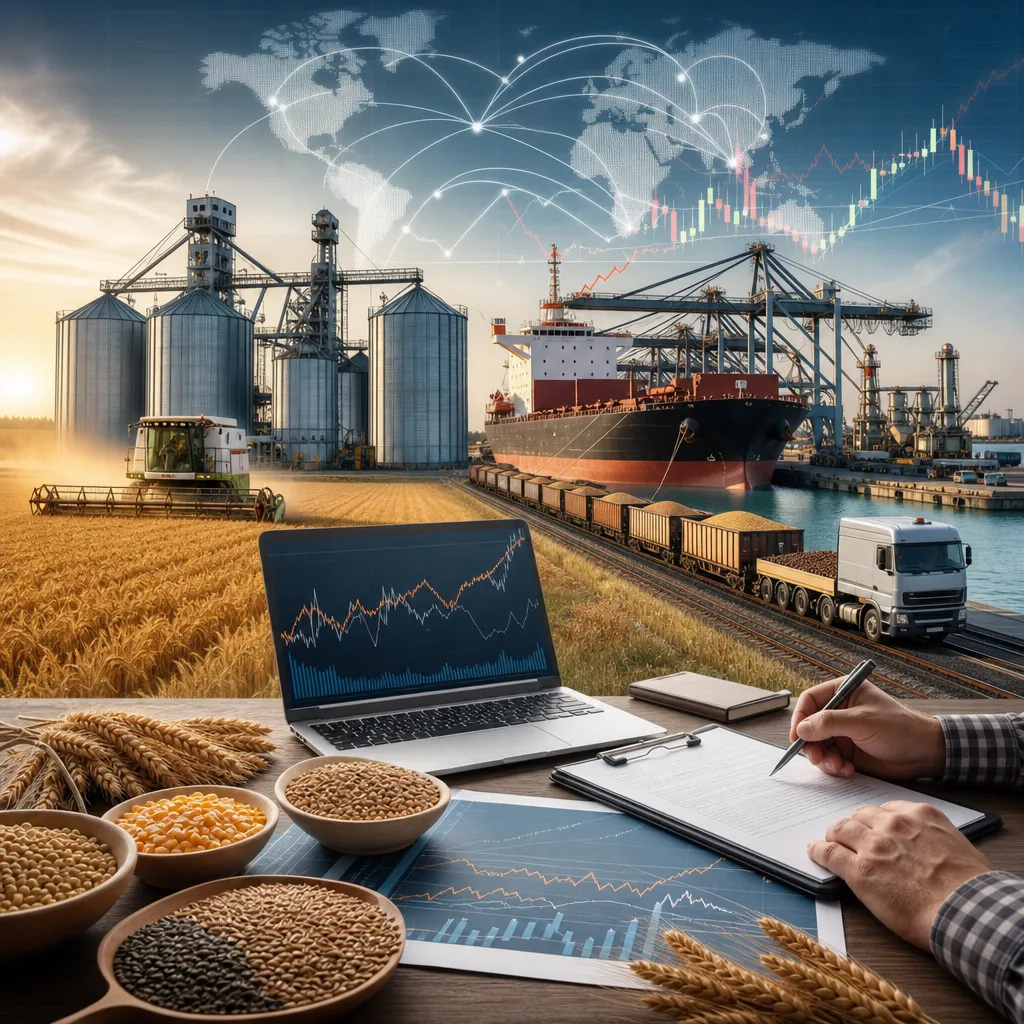
Grain prices and freight rates are tightly linked, but they are not the same thing. A grain futures quote on an exchange reflects a standardized financial market, while a freight rate reflects the cost of moving grain by truck, rail, barge, or vessel between real locations. In practice, freight changes the local cash price a farmer receives, the delivered cost a buyer pays, and the export competitiveness of a country or region. To understand the market properly, readers need to track both the grain benchmark and the logistics cost between origin and destination.
For most users, the practical workflow is simple: check the futures market on a major exchange if the crop is exchange-traded, check local elevator or merchant bids for the cash market, and then evaluate freight, basis, and quality adjustments for the actual delivered value. Exporters, processors, feed manufacturers, traders, and farmers all use this framework, but each focuses on a different leg of the chain.
What grain prices and freight rates each represent
Grain prices usually mean one of two things: an exchange-traded benchmark or a physical cash price. Exchange benchmarks are visible on regulated futures exchanges such as CME Group for major U.S.-linked grain contracts including corn, soybeans, Chicago wheat, Kansas wheat, and oats. These prices are quoted for standardized contracts with specified delivery terms, contract size, and delivery months.
Freight rates are the costs of transporting grain from one point to another. They can be quoted per truckload, per metric ton, per bushel equivalent, per railcar, per barge, or per ocean vessel shipment. Freight is not one single market. It depends on route, equipment availability, fuel, season, river conditions, rail congestion, port capacity, labor, and export demand.
The same wheat can therefore have several valid prices at once: a futures price on an exchange, a cash bid at a country elevator, a delivered mill price, a FOB export price at port, and a CIF import price in the destination country. Freight is one of the main reasons these prices differ.
How freight affects grain prices in the real market
Freight affects grain values through basis, location spreads, and delivered margins. Basis is the difference between the local cash price and the relevant futures contract. If freight from farm to processor rises, the local buyer may lower the bid unless the end user is willing to absorb the added cost. If export freight becomes more expensive, a port bid may weaken relative to futures, especially when competing origins are cheaper.
For exporters, freight is part of the offer price. A seller may buy grain inland, move it by truck or rail to a terminal, load it to a vessel, and sell it at a port or destination basis. Every transport leg matters. For domestic users such as mills or feed plants, inbound freight changes the delivered cost of grain and can alter whether they source locally or from a distant surplus area.
When harvest is large, inland freight may tighten because many trucks, railcars, or barges are needed at once. When storage is limited, producers may accept lower nearby prices because freight and handling systems are congested. Conversely, when logistics improve or demand strengthens near origin, local basis can firm.
| Market element | What it represents | Where it is checked | Why it matters |
|---|---|---|---|
| Futures price | Standardized exchange benchmark | Exchange data, broker platform, market-data vendor | Sets the reference for hedging and price discovery |
| Cash bid | Actual local buying price at a delivery point | Elevator, cooperative, merchant, processor | Determines what the seller can actually receive |
| Basis | Cash price minus futures benchmark | Calculated from local bid and exchange quote | Reflects location, freight, quality, and nearby demand |
| Freight rate | Transport cost between origin and destination | Carrier, logistics provider, merchant, brokered quote | Changes delivered cost and export competitiveness |
Where to check grain prices and where to check freight
For exchange-traded grain prices, the first reliable reference is the relevant exchange. CME Group publishes contract information and market data for major grain futures and options. Many brokers and commercial data platforms redistribute these quotes, sometimes with analysis, charting, options chains, and spread tools. Delayed data may be public; real-time data often depends on the provider.
For cash grain prices, farmers and physical traders normally check local bids from:
- Country elevators and grain cooperatives
- Regional grain merchants and exporters
- Processors such as flour mills, ethanol plants, crushers, feed mills, and maltsters
- Government or quasi-official agricultural market reporting services where available
These are the prices that matter for actual physical sale, not the headline futures quote alone. A local cash bid can differ significantly from the futures market because of freight, quality, moisture, protein, storage demand, and local supply pressure.
For freight rates, there is usually no single universal public screen equivalent to a grain futures board. Freight is commonly checked through:
- Direct quotes from trucking firms, rail operators, barge operators, or shipping agents
- Merchants, elevators, exporters, and logistics departments that arrange movement daily
- Brokered freight markets or shipping brokers in ocean freight
- Government transportation reports and monitoring services where available
In the United States, market participants often review USDA transportation-related reporting and regional grain transportation indicators alongside commercial freight quotes. For ocean shipping, exporters and importers also monitor vessel availability, port congestion, and charter conditions in addition to flat freight numbers.
Online benchmark prices versus physical grain transactions
It is essential to separate online market data from physical trade. A trader can buy a corn futures contract online through a regulated futures broker without ever taking delivery of physical corn. That is a financial transaction on an exchange. By contrast, a farmer selling grain to an elevator enters a physical transaction involving grade, moisture, delivery window, weight, inspection, settlement, and often freight responsibility.
Physical grain is bought and sold through commercial channels such as:
- Elevators and cooperatives collecting grain from farms
- Merchants aggregating grain for domestic use or export
- Processors buying grain for food, feed, biofuel, or crushing
- Brokers arranging cash transactions between counterparties
- Warehouses and terminals handling storage and onward shipment
The contract may be spot, forward, basis-only, fixed-price, minimum-price, or linked to a futures hedge. The place where the transaction occurs may be partly online, partly by phone, and partly through signed commercial documents. But the economics still depend on the physical route and the freight to that route’s delivery point.
| Feature | Futures market | Physical grain market |
|---|---|---|
| Where it trades | Regulated exchange through a broker | Elevator, merchant, processor, exporter, brokered cash deal |
| What is traded | Standardized contract | Actual grain with location and quality terms |
| Key price driver | Market expectations and benchmark supply-demand | Local demand, basis, freight, grade, and timing |
| Main risk | Price volatility, margin calls, leverage | Counterparty, quality disputes, logistics, basis changes |
| Typical users | Hedgers, speculators, managed funds, commercial traders | Farmers, elevators, exporters, mills, feed companies, crushers |
How grain companies and farmers use freight in pricing decisions
A buyer does not usually start with freight alone. The buyer starts with a target delivered value. For example, a mill may know the maximum delivered wheat value it can pay given flour margins. It then works backward: delivered mill value minus freight minus handling minus margin equals the bid at origin. If inbound trucking becomes expensive, the origin bid often falls unless the mill can raise product prices.
Farmers use the same logic in reverse. If two elevators offer different cash bids, the apparent higher bid may not be the better return if the haul is longer, drying charges differ, or turnaround time is poor. Net farmgate value matters more than headline bid.
Merchants and exporters often compare multiple logistics chains:
- Truck direct to processor
- Truck to rail loader, then rail to terminal
- Truck to river terminal, then barge to export position
- Truck to local elevator, with title transferred there
The best route can change seasonally. During harvest, local receiving lines and truck shortages can widen nearby basis. During low river periods, barge freight can rise and weaken bids upriver. During strong export demand, terminal bids may rise enough to pull grain from further inland despite higher transport costs.
Futures, options, and hedging when freight is uncertain
Futures and options help manage benchmark price risk, but they do not remove freight risk. A farmer can hedge corn futures through a futures broker and protect against a decline in the board price, yet still face weaker local cash bids if truck rates rise or if a local elevator is oversupplied. That remaining difference is basis risk.
Commercial firms often hedge the futures component on an exchange and manage freight separately through logistics contracts, route optimization, storage timing, or negotiated transportation arrangements. Some also use basis contracts with suppliers, leaving the futures price to be fixed later. Others fix futures first and wait to set the local basis if they expect freight or regional demand to improve.
Options can be useful when a seller wants downside protection without fully giving up upside if the market rallies. But options involve a premium cost, and both futures and options require understanding contract month, contract specifications, and the relationship between the hedge instrument and the physical grain being priced.
Anyone using futures or options normally needs a regulated futures brokerage account. That is different from a cash grain account with an elevator or processor. In the physical market, no exchange account is needed to sell grain locally, but the seller still needs to understand grading terms, payment terms, and delivery obligations.
Reports and data sources that matter most
Reliable analysis of grain prices and freight rates depends on combining benchmark pricing with official and commercial reporting. The most widely used public sources differ by purpose.
- USDA WASDE: global and U.S. balance sheets for major crops, useful for broad supply-demand context.
- USDA Crop Progress: pace and condition of planting and crop development, important during the growing season.
- USDA Export Sales: weekly demand signal for U.S. grain and oilseeds.
- CFTC Commitments of Traders: positioning data in futures and options markets.
- CME Group contract pages: contract specifications, delivery months, and benchmark futures data.
- FAO and national statistical agencies: international production, trade, and food market context.
- Government transportation reports: indicators for rail, barge, and export logistics where available.
These sources are used differently. Farmers may focus on local bids, basis, and crop progress. Exporters may watch WASDE, export sales, and freight conditions. Analysts often pair futures charts with crop balance sheets and transportation status to understand whether a move is financial, local, or structural.
Practical steps to evaluate a real grain sale or purchase
If you are selling grain, buying grain, or comparing delivered market values, use a structured process.
- Identify the reference market. Match the crop to the most relevant benchmark, if one exists, and note contract month, unit, and currency.
- Get local cash bids. Check elevators, cooperatives, merchants, and processors for the specific delivery point and time period.
- Clarify quality terms. Ask about moisture, protein, test weight, damage, foreign material, and any discount schedule.
- Estimate freight precisely. Compare trucking, rail, barge, or delivered contract alternatives. Include loading, waiting time, and any handling charges where relevant.
- Check basis and delivery window. A strong basis may be tied to prompt shipment. Delayed delivery might carry storage implications.
- Review payment and title terms. Know when payment is due, when title transfers, and who bears loss in transit.
- Consider hedge needs. If physical movement will happen later, decide whether futures or options are needed to manage price risk while freight remains open.
Common mistakes include comparing a futures quote directly with a local cash bid, ignoring quality deductions, assuming freight is stable, or failing to distinguish a delivered bid from an ex-farm pickup bid.
Limits, risks, and what readers should not assume
Freight rates can move independently from grain futures. A bearish futures market can coincide with stronger local cash prices if regional supply is tight and inbound logistics are difficult. Likewise, a strong futures rally may not fully reach the farmgate if transportation bottlenecks widen basis.
Readers should also avoid assuming that publicly visible market data captures the full physical market. Many commercial freight deals are negotiated privately. Some cash grain transactions are relationship-based and may include terms not visible in headline bids, such as volume commitments, storage arrangements, drying, or seasonal programs.
Finally, not every crop has a liquid global futures benchmark that perfectly matches local quality and logistics. Rice, barley, sorghum, canola, sunflower seed, and region-specific wheat classes may depend more heavily on local merchant pricing, export parity, and domestic processing demand than on a single universally used futures screen.
Where can I check grain prices today?
Check the relevant futures exchange for benchmark prices and local elevators, cooperatives, merchants, or processors for actual cash bids. The futures market shows the board price, but the physical selling price depends on basis, freight, and quality at your delivery point.
Where can I find freight rates for grain?
Freight is usually obtained from transport providers, grain merchants, logistics teams, truckers, rail operators, barge operators, or shipping brokers. Public transportation reports can provide context, but real executable rates are often route-specific commercial quotes.
Why does my local grain bid differ from the futures price?
The local bid includes basis, which reflects location, freight, storage demand, local supply, and quality adjustments. Futures are a benchmark; they are not automatically the farmgate or delivered price.
Can I trade grain prices online without buying physical grain?
Yes. Grain futures and options can be traded through a regulated futures broker. That is financial trading and does not necessarily involve loading, storing, or delivering physical grain unless a contract is held into delivery and the participant is structured to handle it.
How do exporters use freight in grain pricing?
Exporters build freight into the total cost chain from inland origin to export terminal and sometimes onward to destination market terms such as FOB or CIF. Freight affects whether an origin is competitive against other exporting countries.
What reports are most useful for understanding grain and freight markets?
USDA WASDE, Crop Progress, Export Sales, and transportation-related reports are widely used, along with CME benchmark pricing and CFTC positioning data. These help separate supply-demand changes from logistics-driven price changes.
Does hedging remove freight risk?
No. Hedging with futures mainly addresses benchmark price risk. Freight, basis, and quality differences remain and must be managed separately through physical contracts, logistics planning, and timing.
Who usually buys physical grain from farmers?
Common buyers include country elevators, cooperatives, grain merchants, feed mills, flour mills, crushers, ethanol plants, maltsters, exporters, and sometimes livestock or poultry integrators. The right outlet depends on crop, quality, location, and freight economics.
Sources
- USDA Agricultural Marketing Service
- CME Group
- CFTC Commitments of Traders