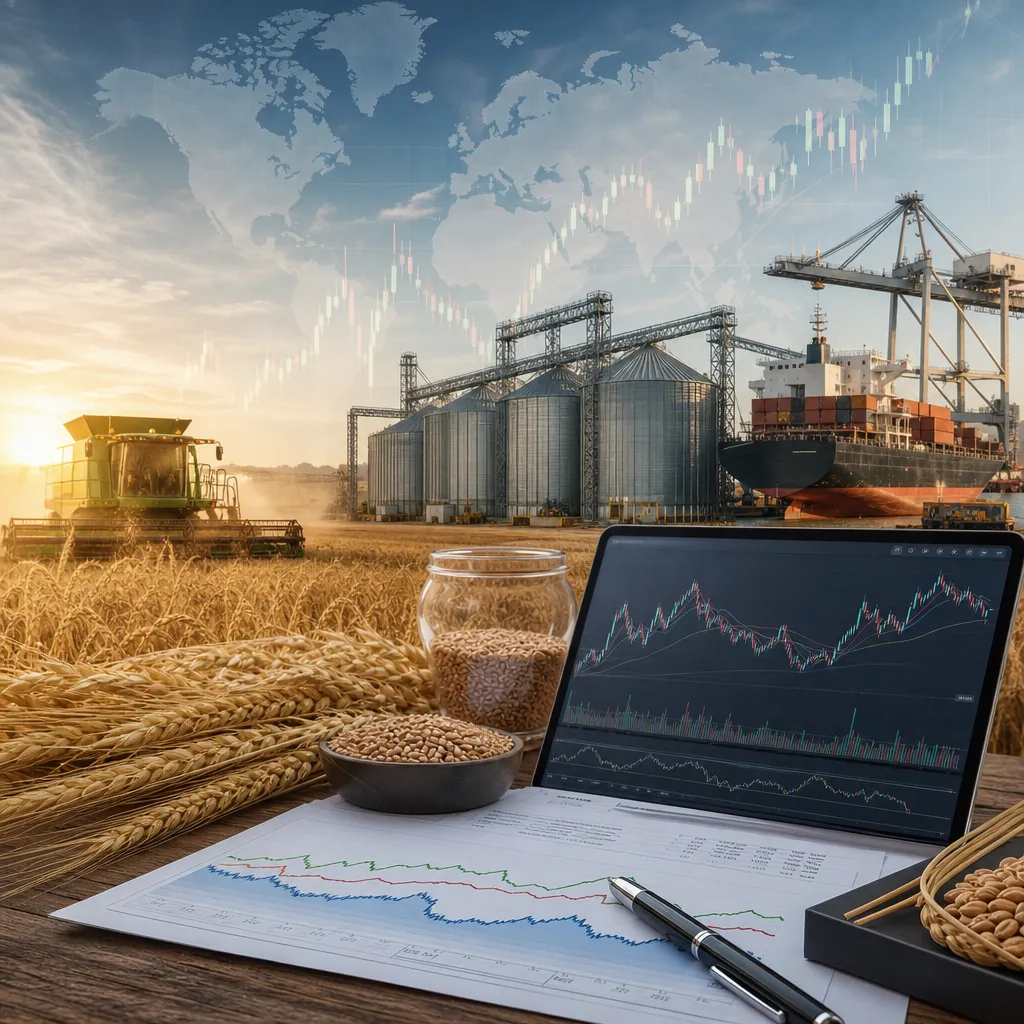







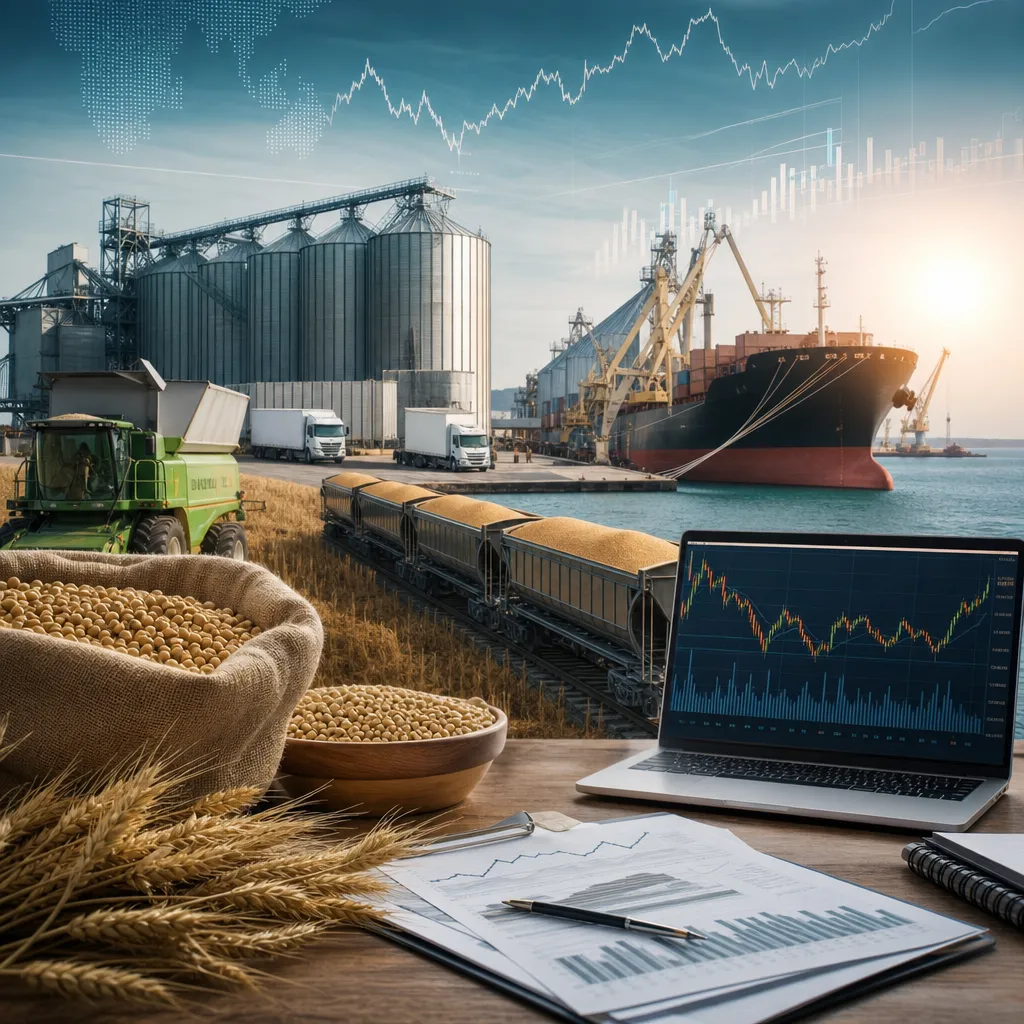
Chicago grain futures prices refer primarily to the benchmark agricultural contracts traded in Chicago, Illinois, on the Chicago Board of Trade, now part of CME Group. In practice, these prices are watched far beyond Chicago because they are a core reference for North American corn, soybean, wheat, soybean oil, and soybean meal markets, and they influence cash grain values around the world. The Chicago market is a futures market, not a farm-gate cash market, so a quoted futures price is not the same as the price a farmer, elevator, processor, or exporter actually pays for physical grain. To use Chicago prices correctly, readers need to understand the exchange location, contract month, unit of quotation, and the difference between futures and basis.
Chicago futures are quoted in U.S. dollars, typically in cents per bushel for corn, soybeans, and wheat. While the contracts are standardized and traded electronically, their economic role is tied to the physical grain trade across the U.S. Midwest, domestic processors, feed users, ethanol plants, export channels on the Gulf and Pacific Northwest, and international importers who price grain relative to U.S. benchmarks. That is why Chicago futures are both a trading instrument and a price discovery tool.
What “Chicago Grain Futures Prices” Means
When market participants say “Chicago grain prices,” they usually mean futures prices for grain and oilseed contracts listed on the Chicago Board of Trade division of CME Group. The most widely followed contracts are:
- Corn futures
- Soybean futures
- Chicago wheat futures for soft red winter wheat
- Soybean meal futures
- Soybean oil futures
These contracts are not simply local Illinois prices. They are standardized financial and commercial instruments used by hedgers and traders across the United States and internationally. A futures price reflects the market’s current valuation for a specific contract month under exchange rules, not the exact value of a truckload of grain at a local elevator today.
Chicago matters because the U.S. is a major producer and exporter of corn and soybeans, and because the CBOT complex has long served as a central benchmark for world feed grain and oilseed pricing. For wheat, Chicago soft red winter wheat futures are important, but for some physical wheat markets other benchmarks such as Kansas City wheat or Minneapolis wheat may be more relevant depending on class and protein.
Where the Market Operates
The exchange benchmark is rooted in Chicago, Illinois, but the market itself operates electronically through CME Group’s trading system and is accessed globally through futures brokers and trading platforms. Historically, Chicago developed as a grain merchandising and transport hub because of its central location between Midwest production regions and U.S. domestic and export distribution systems.
Today, the price discovery function still starts with exchange trading, but physical grain flows are spread across a much wider geography:
- Production areas across the U.S. Corn Belt and Plains
- River systems moving grain toward export channels
- Domestic users such as feed mills, flour mills, crushers, and ethanol plants
- Export terminals, especially in the Gulf and other shipping regions
So while the benchmark is “Chicago,” the actual commercial impact extends to local cash bids in Iowa, Illinois, Indiana, Nebraska, the Delta, Gulf export elevators, and import tenders overseas.
| Market term | Where it operates | What it represents |
|---|---|---|
| CBOT futures | CME Group exchange benchmark linked to Chicago | Standardized contract price for a defined commodity and delivery month |
| Local cash bid | Elevator, processor, feed mill, or merchant in a local market | Actual physical purchase bid adjusted for basis, freight, and quality |
| Export bid | Export terminal or merchant trading desk | Price for grain positioned into export channels, often related to futures plus basis |
| FOB export price | Port loading point | Price of grain loaded for shipment, excluding ocean freight beyond the port |
How Chicago Grain Futures Prices Are Formed
Chicago grain futures prices are formed through continuous buying and selling by commercial hedgers and non-commercial participants. The market reflects expectations about supply, demand, stocks, weather, acreage, yields, export pace, feed usage, crushing margins, biofuel demand, freight conditions, and broader financial sentiment.
The key point is that futures are an exchange price for a standardized contract. The final price for physical grain depends on more than the board price. In grain merchandising, the usual structure is:
Cash price = Futures price + or – basis
Basis is the local adjustment to the benchmark futures market. It can be positive or negative depending on regional supply and demand, transport costs, quality, storage pressure, buyer competition, and timing. A strong basis usually means local demand is relatively firm compared with available supplies. A weak basis can reflect burdensome stocks, costly freight, or poor nearby demand.
Other practical price layers include:
- Futures price: the exchange benchmark for a contract month
- Cash bid: the local spot or forward price offered by a buyer for physical grain
- Delivered price: the price including movement to the buyer’s facility
- FOB price: grain available free on board at an export point
- CIF price: an import-side or destination-inclusive trade structure, used more in international trade contexts
Chicago futures can rise while a local cash price barely moves if basis weakens at the same time. The reverse can also happen: futures may decline, but local cash values remain resilient if a processor or exporter is short nearby supplies and basis strengthens.
What Commodities and Units Matter Most
The main Chicago grain and oilseed contracts are commonly quoted in U.S. cents per bushel for corn, soybeans, and wheat. That unit is standard in the U.S. futures market and widely recognized in agricultural trade reporting. International physical trade, however, often uses U.S. dollars per metric ton or local currency per ton.
This matters because readers comparing Chicago futures with physical import or export offers need to make sure they are comparing like with like. A bushel-based futures quote is a benchmark, while many global cargoes, domestic tenders, and processing contracts are negotiated in tonnes. Quality differences also matter, especially in wheat.
| Commodity | Chicago market role | Usual quotation style | Physical market note |
|---|---|---|---|
| Corn | Major global feed grain benchmark | U.S. cents per bushel | Local bids depend heavily on basis and nearby demand from feed, ethanol, and export channels |
| Soybeans | Key oilseed benchmark | U.S. cents per bushel | Cash price reflects crusher demand, export pace, and logistics |
| Soft red winter wheat | Benchmark for one U.S. wheat class | U.S. cents per bushel | Not all physical wheat markets track Chicago equally; class and protein matter |
| Soybean meal and oil | Processed product benchmarks | Exchange-specific U.S. pricing format | Used by crushers, feed users, traders, and hedgers in product markets |
Where to Check Chicago Grain Futures Prices Online
For current or live Chicago futures prices, the most relevant place to start is CME Group, which is the exchange operator for CBOT agricultural contracts. CME provides contract information, delayed quotes, settlement data, expiration calendars, and contract descriptions. Market participants also use brokerage platforms and professional market data services for real-time prices.
For broader market context, especially supply and demand fundamentals, readers commonly use USDA reports. The most important are the World Agricultural Supply and Demand Estimates, weekly export sales, crop progress reports, grain stocks reports, and acreage-related publications. These reports do not provide live futures quotes, but they heavily influence price formation.
For cash and basis context, market participants usually check:
- Local elevators and cooperatives
- Grain merchants and processors
- Feed mills, ethanol plants, or crushers posting bids
- USDA Agricultural Marketing Service cash grain and basis reports where relevant
If you are looking for “today’s Chicago grain futures price,” always confirm:
- The commodity
- The contract month
- Whether the quote is delayed or real-time
- The unit and currency
- The date and market session
A nearby corn futures quote and a new-crop soybean futures quote answer different commercial questions. Neither should be treated as the exact price available at a country elevator or export terminal without checking basis and delivery terms.
How Physical Grain Is Actually Bought and Sold Around This Benchmark
Physical grain trade linked to Chicago futures happens mostly outside the exchange. Farmers rarely “sell on CBOT” in the same way they sell grain physically. Instead, they usually sell to an elevator, cooperative, processor, feed manufacturer, ethanol plant, crusher, or merchant. The buyer then may hedge its price risk using futures.
Common physical contract structures include:
- Spot cash sale: grain sold for nearby delivery at a posted cash bid
- Forward cash contract: a future delivery commitment with a fixed cash price
- Basis contract: basis fixed now, futures price fixed later
- Hedge-to-arrive contract: futures component fixed first, basis fixed later
In export channels, merchants assemble grain from inland origins, move it by truck, rail, or barge, position it into export terminals, and sell it into international trade structures such as FOB sales. The inland cash market often moves in response to export demand because terminal bids influence what merchants can afford to pay upstream after freight and handling costs.
Physical grain ownership, quality terms, moisture, test weight, protein, delivery windows, storage charges, and payment terms all matter in the real market. Futures alone do not settle those commercial details.
How Futures and Options Trading Works in Chicago
Futures and options on Chicago grain contracts are financial tools used for hedging and speculation. Access normally comes through a licensed futures broker or brokerage platform. A participant does not need to own grain to trade futures, and many contracts are closed out before delivery rather than carried to expiration.
Commercial users include:
- Farmers and producer hedgers
- Country elevators and cooperatives
- Exporters and import-oriented trading houses
- Feed manufacturers and livestock firms
- Processors such as crushers, millers, and ethanol plants
Non-commercial users include proprietary traders, funds, and individual speculators. Their activity adds liquidity, but it can also increase short-term volatility.
Hedging is not the same as buying or selling physical grain. A corn grower may sell futures to protect against falling prices while keeping physical grain in storage. A processor may buy futures to protect against rising input costs before purchasing cash grain. In both cases, there is still basis risk, because local cash values do not move perfectly in line with futures.
Options add flexibility by giving the right, but not the obligation, to take a futures position at a specified strike price. Some commercial firms use options to define downside or upside exposure while preserving part of the opportunity if the market moves favorably.
Main Drivers of Chicago Grain Futures Trends
Chicago grain futures respond to both U.S. fundamentals and world competition. For corn and soybeans especially, U.S. weather during planting, pollination, and harvest periods is critical. Acreage intentions, crop condition ratings, and end-of-season yields can move prices sharply because the U.S. remains central to global supply.
Other major drivers include:
- Export demand: especially from major importing countries
- Stocks levels: tighter balances generally increase price sensitivity
- Competing exporters: South America, the Black Sea region, and others can alter trade flows
- Currency movements: a stronger or weaker U.S. dollar affects export competitiveness
- Energy markets: relevant for ethanol and biofuel-linked demand
- Freight and logistics: river conditions, rail performance, and port congestion matter
- Policy changes: trade policy, biofuel rules, sanctions, or phytosanitary barriers
Forecasting Chicago grain futures should be done in scenarios rather than certainty. A weather-friendly crop, comfortable stocks, and sluggish exports can pressure futures. Weather stress, stronger-than-expected demand, or logistics disruptions can tighten nearby supply expectations and support prices. The market often reprices quickly as new data arrives.
Why Local Cash Prices Can Differ Sharply From Chicago Futures
Many misunderstandings come from assuming that Chicago futures and local grain prices should move one-for-one. In reality, local values can diverge significantly due to basis. A processor in a deficit region may bid aggressively even when futures are weak. Conversely, harvest pressure in a surplus area can depress local cash bids even when futures are stable.
Important local pricing influences include:
- Distance to end users or export channels
- Truck, rail, or barge freight costs
- Storage availability
- Harvest pressure and farmer selling pace
- Quality discounts or premiums
- Competition among local buyers
This is why a producer should check both the board and the basis. A trader focused on export arbitrage may watch Chicago futures, Gulf basis, and ocean competitiveness all at once. The benchmark is essential, but it is only one part of commercial price formation.
Practical FAQ
Where can I check Chicago grain futures prices?
The most direct official source is CME Group, which lists CBOT agricultural contracts, settlement information, and contract details. Many brokers and market data vendors also display the same market, often with better live functionality. For physical context, check local buyer bids and USDA market reporting where available.
Are Chicago grain futures the same as the cash price at an elevator?
No. Chicago futures are a benchmark price for a standardized contract month. A local elevator cash bid is the futures price adjusted by basis, plus any quality, delivery, and location factors.
What is the main benchmark in Chicago for wheat?
The Chicago contract is for soft red winter wheat. It is an important benchmark, but some physical wheat transactions may relate more closely to other U.S. wheat futures depending on wheat class, protein, and destination market.
How do farmers use Chicago futures if they do not deliver grain to the exchange?
Farmers often use futures to hedge price risk while selling physical grain to elevators, cooperatives, processors, or merchants. The hedge manages board price exposure, while the physical sale is arranged separately in the cash market.
Can an importer or exporter use Chicago futures?
Yes. Exporters, importers, and trading companies use Chicago futures to hedge price exposure tied to physical grain shipments. They still need to manage basis, freight, quality, timing, and currency risk separately.
Why do Chicago futures influence grain prices outside the United States?
Because the U.S. is a major participant in global grain and oilseed trade, and Chicago contracts are liquid and widely recognized. International buyers and sellers often compare offers against U.S. benchmarks even when the final trade is priced in tonnes or against another origin.
What should I look at besides the futures quote?
Check the contract month, basis, local buyer demand, USDA supply-and-demand reports, export pace, weather, and currency trends. For a physical transaction, also verify quality terms, delivery window, and payment conditions.
Sources
- CME Group
- USDA Agricultural Marketing Service
- USDA World Agricultural Outlook Board