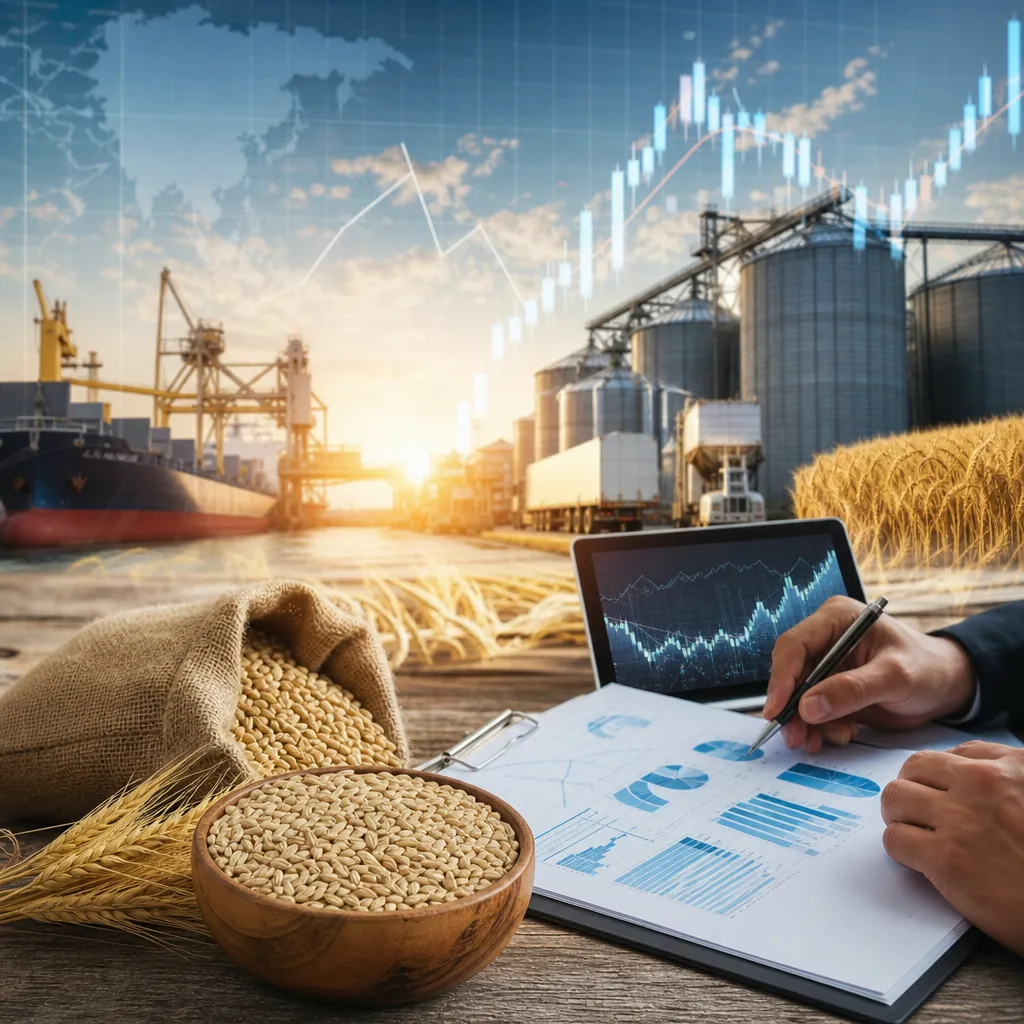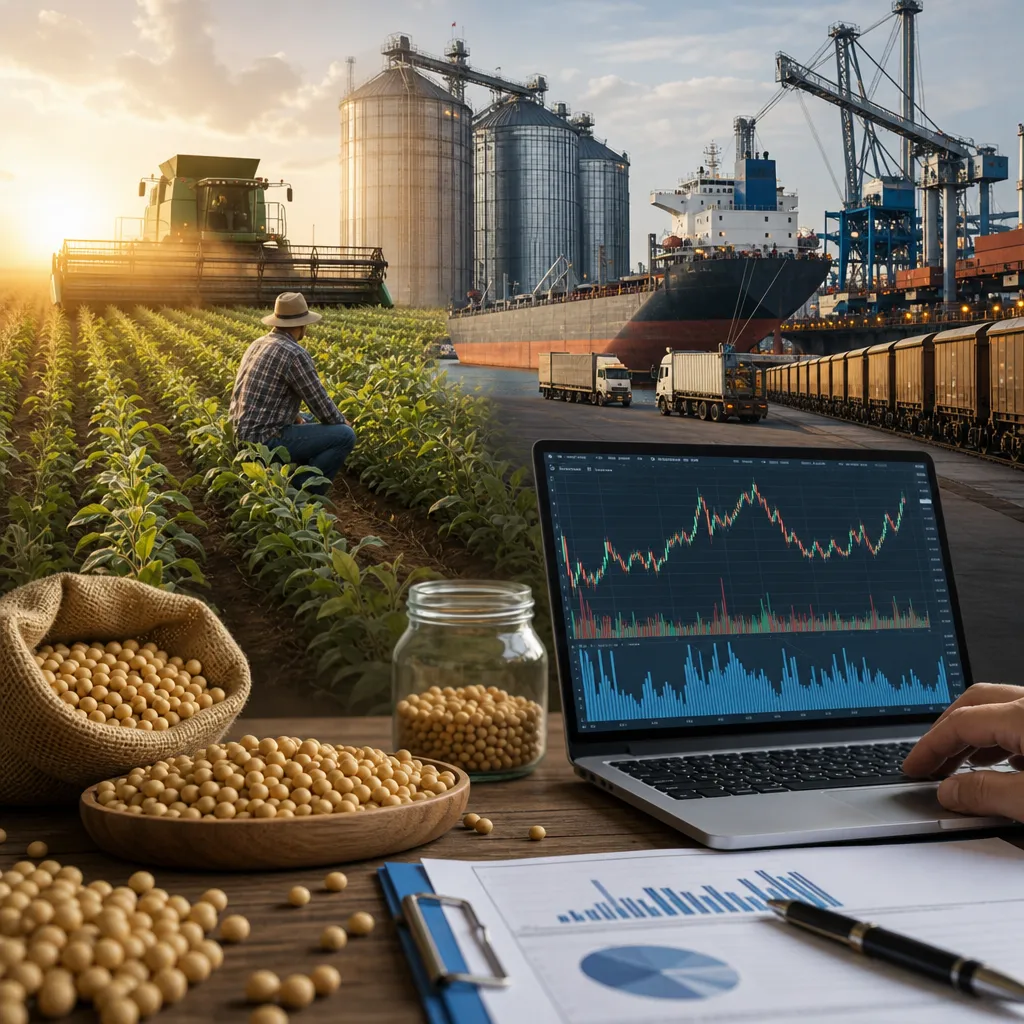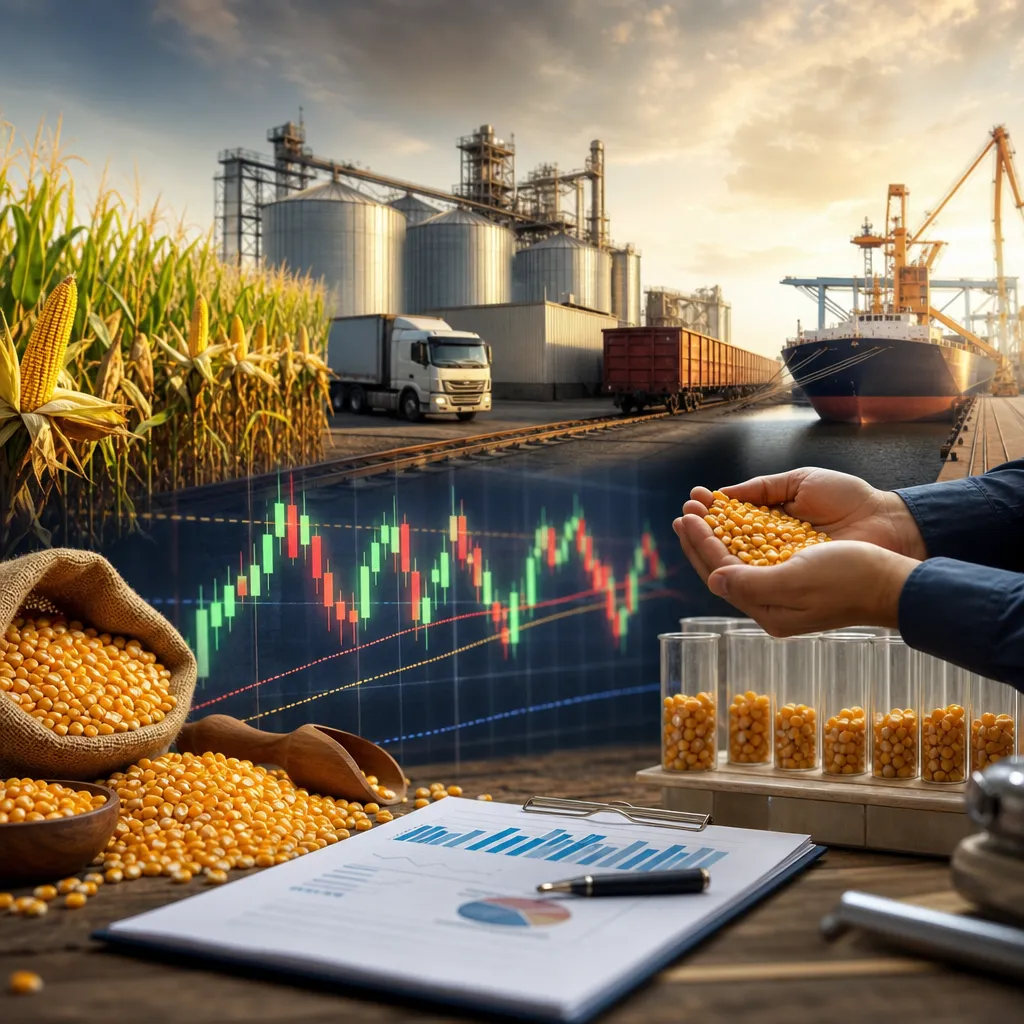
Market intelligence has become the decisive edge in grain trading because the market now moves faster, reacts to more variables, and punishes delayed information more severely than ever. In practical terms, better intelligence means seeing changes in weather, exports, freight, basis, crop quality, policy, and futures positioning early enough to act before competitors do. For a farmer, merchant, processor, or trader, that can mean pricing grain sooner, sourcing from a different region, adjusting hedge coverage, changing storage plans, or avoiding a bad contract. The advantage is not just having more data, but knowing which data matters, where to find it, and how to turn it into buying, selling, hedging, and logistics decisions.
Why grain trading now rewards information quality more than scale
Grain trading used to reward local relationships, storage ownership, and freight access above almost everything else. Those still matter, especially in physical markets, but they are no longer enough on their own. A regional grain merchant may know local farmers and truckers well, yet still lose margin if a sudden export tender, a crop downgrade, a river disruption, or a policy change shifts spreads and basis before they react.
The modern grain market is tightly connected across futures exchanges, export channels, feed demand, biofuels, currencies, and weather systems. Wheat in the Black Sea region, corn in the US Midwest, soybeans in Brazil, canola in Canada, and rice in Asia can all influence trade flows and relative prices elsewhere. Market intelligence is the process of collecting, checking, interpreting, and acting on those signals.
What makes it a competitive advantage is speed plus context. Many participants can see a headline. Fewer can judge whether it changes nearby basis, deferred carry, crush margins, vessel lineups, or farmer selling behavior. The best traders combine public data, local market color, logistics visibility, and risk management tools.
What market intelligence actually includes in grain markets
Market intelligence is broader than a price screen. It brings together exchange prices, local cash bids, fundamental reports, weather, quality, logistics, and positioning data.
| Intelligence area | What it shows | Where it is commonly found | Who uses it |
|---|---|---|---|
| Futures prices | Benchmark price for standardized contracts | Commodity exchanges such as CME Group and broker market-data platforms | Hedgers, speculators, merchants, analysts |
| Cash bids and basis | What local buyers are willing to pay relative to futures | Elevators, cooperatives, processors, merchants, local bid sheets | Farmers, grain originators, feed buyers |
| Crop reports | Production, stocks, acreage, yield, export pace | USDA and other government agriculture agencies | All market participants |
| Weather data | Rainfall, temperature, drought, planting and harvest risk | National weather agencies, private meteorological services, satellite tools | Traders, analysts, input suppliers |
| Logistics data | River levels, rail performance, port congestion, vessel movement | Port authorities, transport operators, merchant networks, government transport data | Exporters, importers, merchants |
| Trade flow data | Exports, imports, destinations, tender activity | Customs statistics, government export sales reports, official trade databases | Exporters, global traders, processors |
| Positioning and sentiment | Managed money exposure, hedging activity, market concentration | CFTC Commitments of Traders and broker research | Futures traders, risk managers |
Using these inputs together is what separates intelligence from raw information. A corn futures rally means one thing if local basis weakens because harvest pressure is heavy, and something very different if basis strengthens because processors need immediate supply.
How it works in practice: from data to decision
Good grain intelligence follows a sequence. First, collect reliable data. Second, compare benchmark prices with local physical realities. Third, identify what has changed. Fourth, decide whether that change affects price risk, procurement, sales timing, or logistics. Finally, execute through the right market channel.
Consider a wheat merchant. They may start the day with futures quotes from a regulated exchange, crop condition updates from a government report, weather maps for key producing regions, and fresh local elevator offers. If export demand appears stronger while port freight tightens and protein premiums rise, the merchant may widen bids for higher-quality wheat, hedge futures exposure, and redirect grain from one warehouse to another.
This is where the difference between online information and the physical market matters. A futures screen can move instantly. Physical grain does not. Grain has to be bought, sampled, graded, hauled, stored, financed, and delivered. A merchant who sees a price opportunity but cannot secure trucks, barge space, railcars, or usable inventory may not capture it.
Where to find reliable grain market intelligence
The strongest sources are usually official reports, regulated exchanges, and direct market participants. Public information is essential, but so is verification through the commercial chain.
Official and exchange sources
USDA is one of the most important sources for global grain intelligence. It publishes reports widely used in wheat, corn, soybean, rice, sorghum, and barley markets. Traders watch reports covering world supply and demand, acreage, grain stocks, export sales, and crop progress. These are used to frame supply-demand balance sheets and test whether market price action is justified.
CME Group provides futures and options information for major agricultural contracts including corn, wheat, soybeans, soybean meal, soybean oil, oats, rough rice, and canola through related markets. It is the main reference point for benchmark pricing and hedging in many international grain transactions, even when the physical grain itself is traded elsewhere.
CFTC provides Commitments of Traders data, which helps market participants understand how commercial hedgers, managed money, and other reporting groups are positioned in futures and options markets. This does not predict prices on its own, but it helps identify crowded trades and sentiment extremes.
Physical market sources
Local cash intelligence comes from elevators, cooperatives, processors, feed mills, exporters, grain merchants, and brokers. Farmers often check local bids directly on elevator websites, mobile apps, text bid services, or by phone. Buyers compare offers across delivery points because a strong nearby bid may disappear once freight and discounts are considered.
In export markets, merchants also watch port bids, inspection certificates, warehouse availability, vessel schedules, inland freight, and quality spreads. These can exist in internal commercial systems rather than on public websites. The physical market often remains partly negotiated and relationship-driven, even when benchmark pricing is transparent.
Data services and software
Private market-data vendors, agricultural analytics firms, and broker platforms aggregate futures, spreads, options, charts, weather overlays, and sometimes local basis networks. Farm management and grain marketing software may help producers track inventory, contracts, average sales price, and hedge positions. The key distinction is this: market-data software helps analyze prices and risk, while a grain merchant or elevator actually buys or sells physical grain.
Why futures prices are not enough
One of the most costly mistakes in grain marketing is treating exchange futures as if they were the same as a farmgate or elevator price. They are not. Futures are standardized financial contracts traded on a regulated exchange. Local cash prices are physical offers for grain at a specific place, with a specific quality, at a specific time.
| Market type | How it trades | What price means | Main risk |
|---|---|---|---|
| Futures market | Through a regulated exchange via a broker account | Benchmark price for a standardized contract month | Margin calls, volatility, basis mismatch |
| Options market | Through a regulated exchange via a broker account | Right, not obligation, to buy or sell futures | Premium cost, time decay, strategy complexity |
| Cash market | Through elevators, cooperatives, merchants, processors, exporters, or direct contracts | Actual physical grain bid or offer at a location | Quality discounts, freight, counterparty and delivery risk |
| OTC physical contract | Privately negotiated between commercial parties | Customized terms for quantity, quality, basis, delivery, and payment | Contract performance and documentation risk |
A local cash bid usually reflects futures plus or minus basis. Basis is the local price difference caused by freight, storage pressure, nearby demand, export competition, quality, and handling costs. A trader with better market intelligence understands when basis is likely to strengthen, weaken, or diverge from futures.
This matters directly in wheat, corn, soybeans, rice, barley, canola, sorghum, oats, and rye. During harvest, futures may be stable while local bids weaken because storage is full. At another time, futures may fall while local basis improves because a mill or crusher needs immediate supply.
How market intelligence improves hedging and trading decisions
For hedgers, intelligence improves timing and contract choice. For speculators, it improves trade selection and risk control. For commercial firms, it helps align futures, basis, storage, and logistics.
In regulated futures markets, grain traders usually access contracts through a licensed broker or futures commission merchant. They need an approved trading account and must post margin. This is financial trading, not the same as buying a truckload of corn from a producer or delivering soybeans to a crush plant.
A farmer or cooperative might hedge new-crop corn using futures if they want to reduce exposure to falling benchmark prices. A processor might buy futures or call options to protect against rising input costs. An exporter may hedge flat price risk while negotiating physical basis with suppliers and freight with carriers.
But intelligence is what makes the hedge practical. Traders need to know:
- which contract month best matches the physical purchase or sale period,
- whether local basis is likely to move independently of futures,
- whether storage carry justifies holding grain longer,
- whether crop quality may reduce deliverable supply,
- whether export demand or policy changes could alter spreads.
Without that context, a hedge can reduce one risk while leaving another unmanaged. That is why sophisticated firms monitor both exchange markets and physical market signals continuously.
Physical grain trading: where intelligence creates real commercial value
In physical grain, the margin often comes from execution rather than prediction alone. A merchant may buy from farms, country elevators, or cooperatives; move grain into storage; blend for specification; hedge futures exposure; and resell to a mill, feed manufacturer, biofuel plant, crusher, exporter, or importer.
At every step, intelligence matters. Quality data determines whether grain can meet milling, malting, crushing, or feed requirements. Logistics data determines whether grain can reach the delivery point. Basis intelligence determines whether to buy now or wait. Freight intelligence determines whether one origin is more competitive than another.
A physical transaction often involves these elements:
- seller and buyer identity,
- commodity and quantity,
- grade or quality specifications,
- delivery point or pickup point,
- delivery window,
- price structure such as flat price or futures plus basis,
- freight responsibility,
- inspection terms,
- payment timing and counterparty protections.
These deals may be arranged through an elevator, cooperative, merchant, broker, or direct processor contract. In export channels they may include warehouse receipts, port lineups, phytosanitary compliance, and Incoterms for cross-border trade. The exact terms differ by country and company, so participants should use the actual contract form and confirm quality, delivery, and payment obligations before trading.
The specific intelligence signals experienced grain traders watch
Not all information has equal value. The most useful signals are usually the ones that change near-term trade flow or alter the balance between available supply and immediate demand.
Important examples include:
- Weather during critical crop stages: planting, pollination, grain fill, harvest.
- Government balance-sheet revisions: acreage, yield, stocks, and export changes.
- Basis shifts: often the earliest sign of tightening or oversupply in a local market.
- Quality spreads: for example protein in wheat, damage, moisture, test weight, or oil content.
- Logistics disruptions: river closures, rail bottlenecks, port congestion, road restrictions.
- Policy changes: export taxes, tariffs, quotas, biofuel mandates, sanctions.
- Currency moves: especially for export competitiveness.
- Fund positioning: useful when futures prices are moving on sentiment faster than cash demand.
The best use of intelligence is comparative. A trader asks not only, “Is this bullish or bearish?” but also, “Bullish or bearish relative to what the market already expected?” That is often where price opportunity lies.
Limits, costs, and risks of relying on market intelligence
Market intelligence is powerful, but it does not remove risk. Reports can be delayed, revised, or interpreted differently by the market. Weather models can change quickly. Local bids may vanish before a deal is confirmed. Physical execution can fail because of quality disputes, freight shortages, or counterparty issues.
There is also a cost issue. High-quality real-time data, analytics, and broker tools may require paid subscriptions or commercial relationships. Smaller firms often rely more heavily on public data and local contacts. That is workable, but they need a disciplined process for checking multiple sources instead of relying on rumors or a single headline.
Another limitation is false precision. Grain trading is scenario-based, not certain. A strong market intelligence process does not forecast the future perfectly. It improves probabilities and shortens reaction time.
Where should I check grain prices first?
Start with the relevant futures exchange for benchmark prices and your local elevator, cooperative, processor, or merchant for actual cash bids. Futures show the exchange-traded market, while local bids show what a nearby buyer will pay for physical grain at a specific delivery point.
What is the difference between market intelligence and market data?
Market data is the raw information, such as futures quotes, export numbers, or local bids. Market intelligence is the interpretation of that data in commercial context, including what changed, why it matters, and what action it suggests.
Where does physical grain trading actually take place?
Usually through elevators, cooperatives, grain merchants, brokers, processors, mills, feed companies, exporters, and importers. Transactions may be negotiated by phone, email, internal trading systems, or direct contracts rather than on a public exchange screen.
Can I hedge grain without selling my physical crop immediately?
Yes. Many producers and commercial users hedge benchmark price risk in futures or options while keeping physical grain unpriced or in storage. However, this leaves basis, storage, quality, and margin risks that still need to be managed.
Which reports matter most for grain traders?
Commonly used reports include USDA supply and demand reports, acreage and stocks reports, crop progress reports, export sales reports, and exchange data from CME Group. Futures traders also watch CFTC Commitments of Traders for market positioning.
Why can local grain prices move differently from futures?
Because local cash prices reflect basis. Basis changes with freight, storage capacity, harvest pressure, processor demand, export competition, and grain quality. A futures rally does not guarantee a stronger local bid.
What are the biggest risks in using market intelligence for trading?
The main risks are acting on unverified information, confusing benchmark prices with executable cash prices, underestimating logistics and quality constraints, and using leverage in futures or options without a disciplined risk plan.
Sources
- USDA Foreign Agricultural Service and World Agricultural Outlook Board
- CME Group
- U.S. Commodity Futures Trading Commission