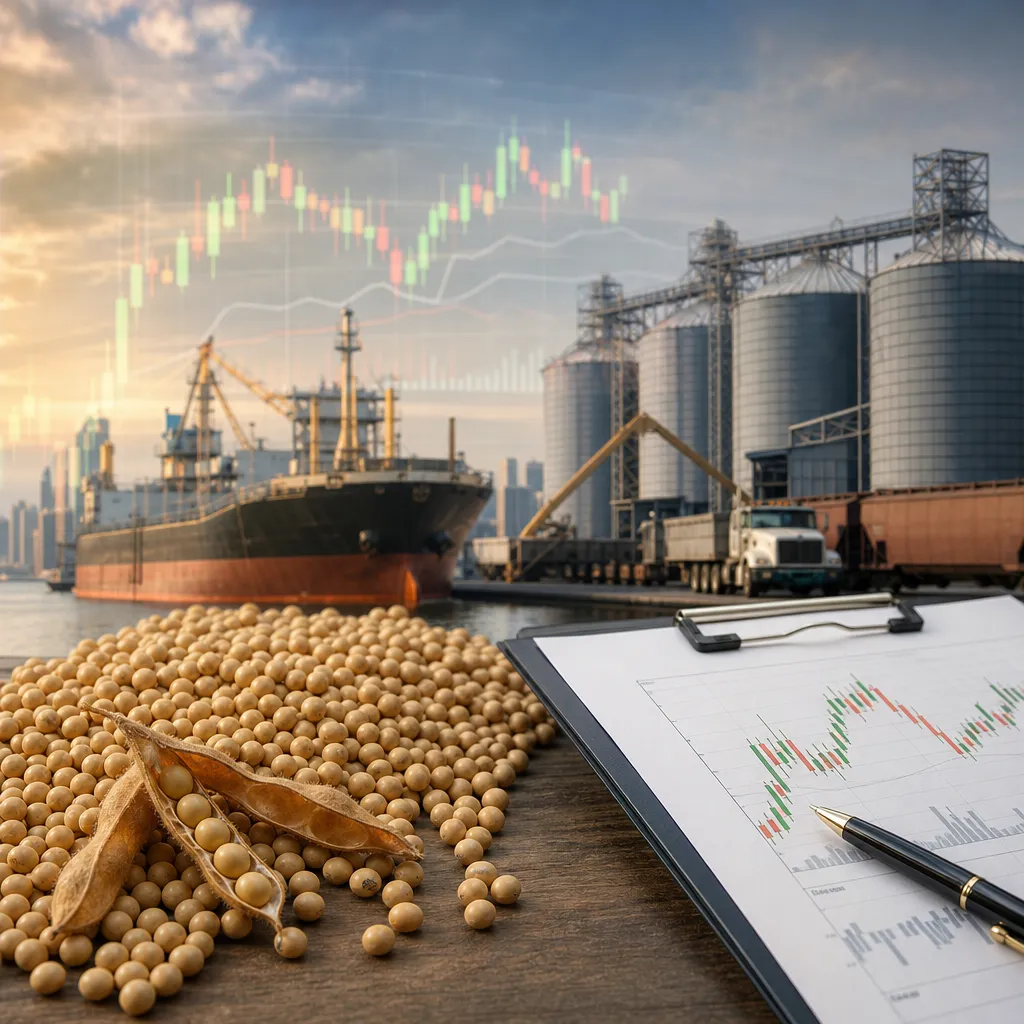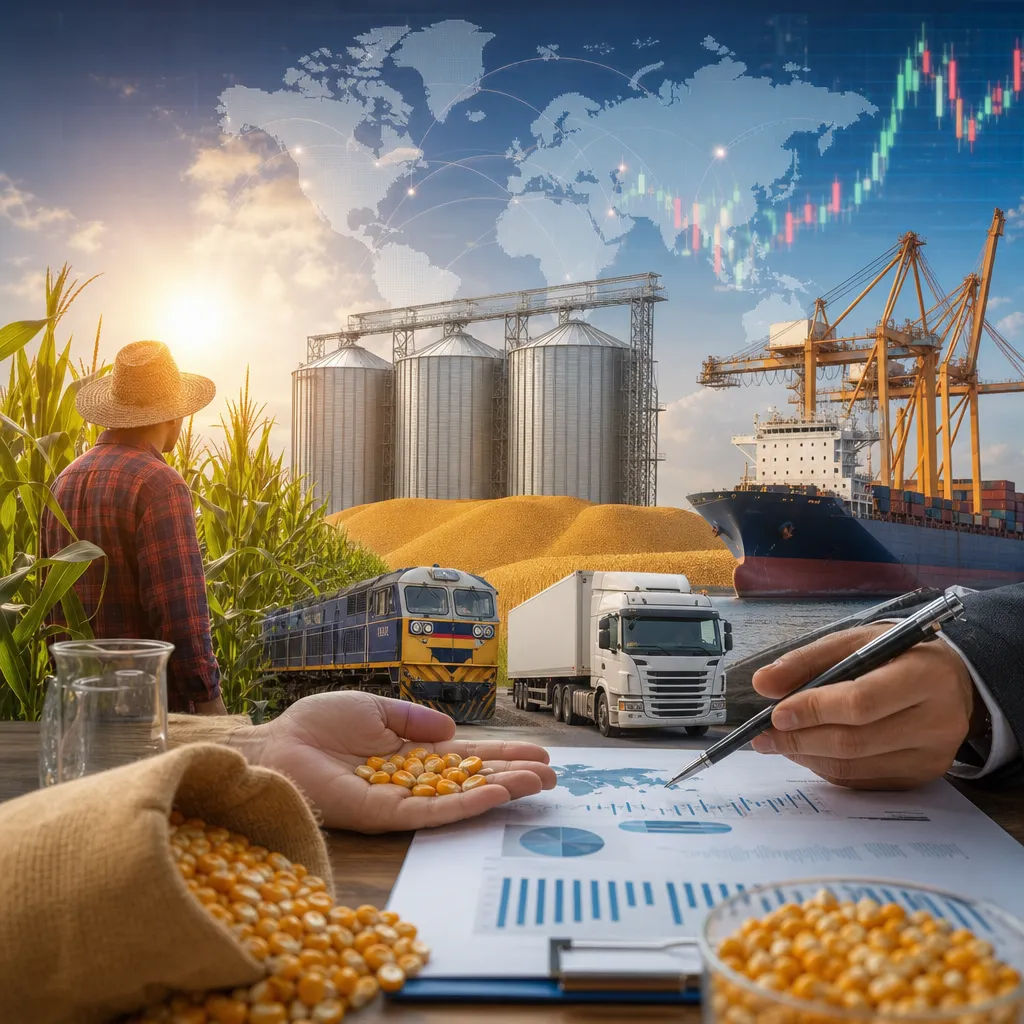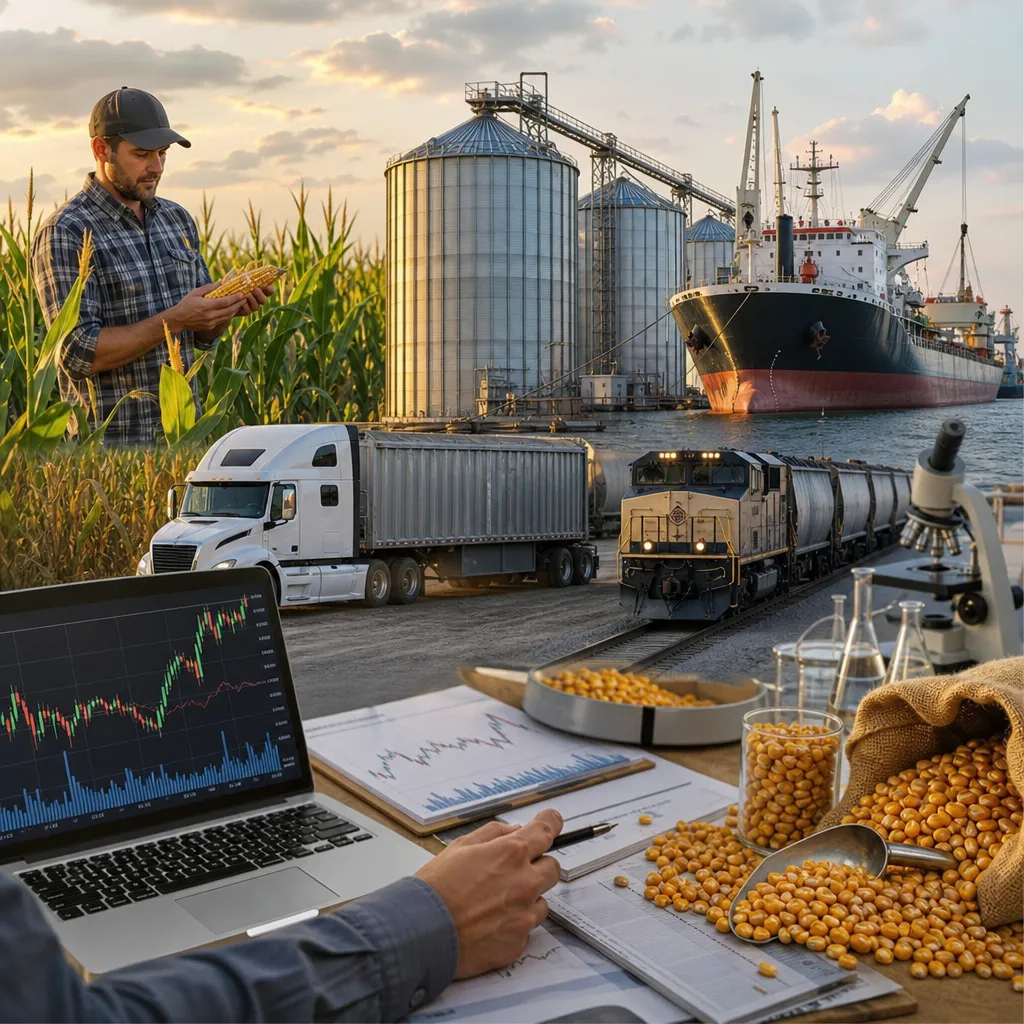

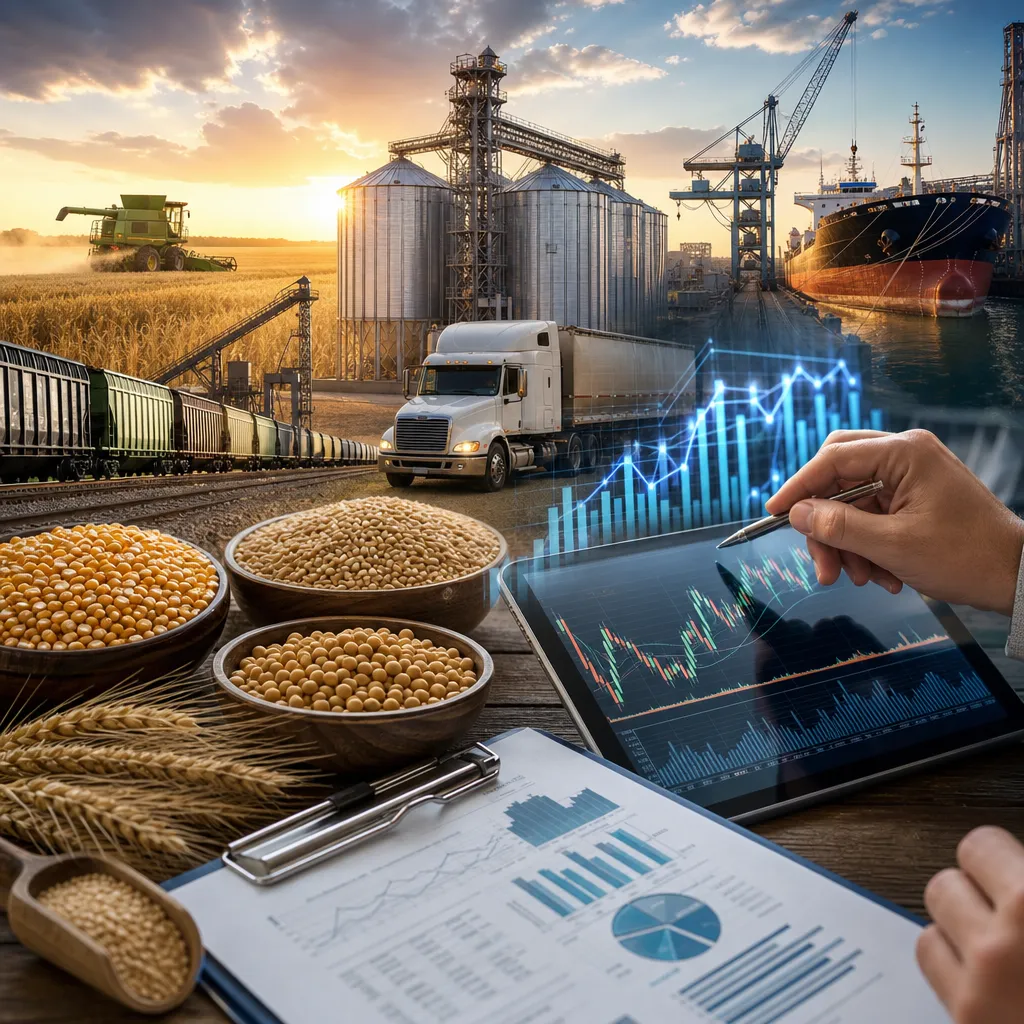
Grain prices and crop yields are linked, but not in a simple one-way formula. Higher yields often increase supply and can pressure prices, while lower yields can tighten supply and support prices, yet demand, stocks, exports, currency moves, freight, and policy can easily outweigh yield alone. In practice, the price a farmer sees at a local elevator is usually not the same as the headline futures quote shown online. To understand grain markets properly, readers need to separate exchange prices from local cash bids and then connect both to yield expectations, logistics, and end-user demand.
For wheat, corn, soybeans, rice, barley, sorghum, canola, and other grains or oilseeds, the most useful approach is to track three things together: benchmark futures, local basis or cash bids, and crop-yield fundamentals from official and commercial reports. That combination explains not just what the market is doing, but where grain is actually being bought, sold, stored, hedged, and delivered.
How crop yields affect grain prices
Crop yield is the amount harvested per acre or hectare. When yields rise above trend, production can increase sharply even if planted area is unchanged. If demand does not grow at the same pace, ending stocks build and prices often weaken. When yields fall because of drought, heat, flood, disease, or harvest losses, the market may bid prices higher to ration demand or attract imports.
However, yield is only one part of the supply side. Total production depends on both harvested area and yield. A lower yield can still coincide with a large crop if planted acreage is high. Likewise, an excellent yield may not weigh on prices if stocks were already tight or if export demand is unexpectedly strong.
Markets usually respond not to yield alone, but to yield versus expectations. If traders expected a poor crop and actual yields are merely average, prices may fall because the result is better than feared. That is why market reaction around crop reports can look disconnected from headline yield numbers.
| Factor | Typical effect on price | Why it matters |
|---|---|---|
| Higher-than-expected yield | Often bearish | Adds supply and can increase ending stocks |
| Lower-than-expected yield | Often bullish | Reduces production and may tighten availability |
| Large beginning stocks | Can offset lower yield | Stored grain cushions a production shortfall |
| Strong exports or feed demand | Supportive | Pulls grain out of the market faster |
| Weak logistics or port congestion | Mixed | Can weaken local cash bids even if benchmark futures stay firm |
Where grain prices are quoted and how to read them
Most widely followed benchmark grain prices are quoted on regulated futures exchanges. In the United States, Chicago grain benchmarks are commonly referenced through CME Group futures, including corn, wheat, soybeans, soybean meal, and soybean oil. These exchange prices are financial benchmarks for standardized contracts. They are not automatically the farmgate or elevator price.
Physical grain is priced in the cash market. Farmers and commercial sellers usually check local bids from grain elevators, cooperatives, merchants, feed mills, ethanol plants, crushers, flour mills, exporters, or processors. These bids reflect the relevant futures month plus or minus basis, which is the local adjustment for freight, storage pressure, handling, local supply, and nearby demand.
A corn futures quote may rise while a local cash bid falls if harvest pressure widens basis. The reverse can also happen near a processor or export terminal that needs prompt grain. That is why local merchandising conditions matter as much as futures direction for physical sellers.
Readers normally find prices in several places:
- Exchange websites: benchmark futures and options data, delayed or real-time depending on access.
- Broker platforms: tradable futures and options quotes for account holders.
- Elevator and cooperative bid sheets: local cash bids by delivery period and location.
- Government or market reporting services: regional cash price summaries in some countries.
- Commercial market-data vendors and farm software: consolidated futures, basis, charts, and portfolio tools.
Futures prices versus local cash prices
The difference between futures and cash is essential. Futures trading takes place on an exchange through a registered broker and margin account. Physical grain sales take place through commercial counterparties such as elevators, merchants, processors, mills, feed companies, or exporters. One is a standardized financial market; the other is a negotiated or posted commercial market tied to actual grain movement.
In practice, a cash grain transaction usually includes crop, grade or quality, quantity, delivery point, delivery window, basis or flat price, freight responsibility, and payment terms. A posted elevator bid may simplify this for routine deliveries, but the economics still depend on those underlying terms.
| Market type | Where it occurs | What price represents | Typical users |
|---|---|---|---|
| Futures market | Regulated exchange via broker platform | Standardized benchmark contract | Hedgers, traders, funds, processors, merchants |
| Local cash market | Elevator, cooperative, processor, merchant, mill, exporter | Actual buying or selling price at a specific location | Farmers, local buyers, feed users, handlers |
| Forward physical contract | Private agreement with commercial buyer | Future delivery terms for physical grain | Farmers, merchants, processors, exporters |
| OTC risk contract | Private commercial arrangement | Customized risk transfer, not exchange-standardized | Larger commercial participants |
How physical grain is bought, sold, and delivered
Physical grain trade starts with a seller and a buyer, but intermediaries are common. A farmer may deliver wheat to a local elevator, sell corn to an ethanol plant, contract soybeans to a crusher, or move grain through a cooperative that markets on behalf of members. Larger volumes may go through merchants and exporters to ports, then to overseas importers, feed manufacturers, or millers.
The transaction flow usually works like this:
- The seller checks nearby bids or requests an offer from one or more buyers.
- The parties agree on quantity, quality, delivery period, price structure, and payment terms.
- Grain is delivered to the named location or picked up under agreed freight terms.
- The grain is weighed, sampled, and graded.
- Discounts or premiums may be applied for moisture, test weight, protein, damage, oil content, foreign material, or other quality specifications.
- The buyer settles payment according to the contract and local regulation.
Where physical trade occurs depends on the crop and region. Wheat often moves to country elevators, flour mills, feed mills, or ports. Corn moves heavily through feed channels, ethanol plants, and export systems. Soybeans are commonly bought by crushers and exporters. Rice, barley, oats, rye, sorghum, canola, rapeseed, and sunflower seed each have their own processor and feed relationships, and local demand can dominate price formation when futures benchmarks are less liquid or less directly applicable.
Important practical checks in physical trade include delivery point, scale weights, grade standards, inspection authority, shrink rules, drying charges, settlement timing, and counterparty reliability. For export trade, Incoterms, port elevation, vessel loading terms, and origin certification can matter just as much as the nominal grain price.
How storage changes the price and yield decision
Storage connects yield and price across time. A large crop at harvest often depresses local cash bids because elevators fill quickly and freight systems become congested. If a farmer or merchant can store sound grain safely, they may wait for basis improvement or for futures carry to compensate for time.
But storage is not automatically profitable. The seller must compare expected price improvement with storage cost, interest cost, shrink, spoilage risk, quality loss, and handling. Grain that goes out of condition can lose far more value than any expected seasonal gain.
Storage exists in several forms: on-farm bins, commercial elevators, flat storage in some regions, warehouse systems, and processor-held inventory. Warehousing may also support finance in certain markets, but warehouse receipts and collateral rules depend on local law and provider practices.
Yield quality matters here. A high-yield crop with poor moisture, low test weight, vomitoxin, mold, sprout damage, or insect damage may be difficult to store and may attract steep discounts. Good merchandising is not just about tons harvested; it is about selling grain with acceptable quality into the right channel.
Which reports and data sources matter most
Official crop and market reports are central to price discovery. For U.S.-linked grain trade, USDA is usually the starting point. The World Agricultural Supply and Demand Estimates report is widely used for global and U.S. balance sheets. Crop Progress provides weekly planting, emergence, condition, and harvest context during the season. Grain Stocks, Acreage, and Small Grains reports can reset supply expectations. Export Sales helps readers judge international demand.
For futures positioning and sentiment, many traders watch the CFTC Commitments of Traders report. It shows how different participant categories are positioned in regulated futures and options markets. It does not predict price directly, but it helps readers understand how crowded a market may be.
For benchmark market prices, contract specifications, delivery rules, settlement procedures, and futures calendars, CME Group is a key reference for U.S. grain contracts. For international supply and food-market context, FAO can be useful, especially for broad cereal balances and policy-related developments. National agriculture ministries, statistical offices, and customs agencies are also relevant for domestic production and trade flows outside the U.S.
Commercial data vendors and farm software can combine these official sources with local cash bids, basis history, weather maps, and charting tools. These are useful for analysis, but users should still verify the underlying source and timestamp, especially around report days.
How traders, farmers, and buyers use futures and options
Futures and options are mainly risk-management tools, though speculators also trade them. A futures contract represents a standardized quantity and quality at exchange-defined delivery terms. Most users do not make or take delivery. They offset the position before expiry and keep the physical transaction separate.
A farmer may sell futures to hedge a crop that will later be sold in the cash market. If futures fall, gains on the hedge may offset a weaker cash sale, although basis can still change. A processor or feed buyer may buy futures to protect input costs. Options can provide price insurance-like features: buying a put can establish downside protection for a seller, while buying a call can help a buyer protect against rising prices.
Access normally requires a regulated futures broker and a funded account approved for the relevant products. Futures involve margin and daily mark-to-market. Options involve premiums and time decay. Neither removes basis risk in the physical market, and neither guarantees profitability.
It is important to distinguish hedging from simply delaying a cash sale. A hedge manages exposure to benchmark price changes; it does not solve local storage problems, quality deterioration, freight disruptions, or weak nearby basis.
Where yield information comes from and how to interpret it
Yield information comes from several channels: farmer reports, satellite and remote-sensing analysis, field tours, agronomic surveys, government sampling, and harvest results. Early-season yield ideas are usually uncertain because they depend heavily on weather during pollination, grain fill, and harvest. As the season advances, estimates tend to improve, but surprises remain possible.
Readers should focus less on single-point numbers and more on scenarios. For example:
- Bullish scenario: lower yield, tighter stocks, firm exports, and weather losses in multiple producing regions.
- Neutral scenario: near-trend yield, adequate stocks, and steady domestic use.
- Bearish scenario: large acreage, above-trend yield, weak exports, and comfortable carryout.
Regional differences matter. A national corn yield may look strong while basis strengthens in a deficit livestock area. A global wheat market can stay firm even if one origin has a large crop, because protein, freight, and political risk can shift buying toward other origins.
Practical mistakes to avoid when analyzing grain prices and yields
- Confusing futures with cash: a board rally does not guarantee a better local selling price.
- Ignoring basis: local oversupply or strong processor demand can matter more than the headline market.
- Watching yield without stocks: production matters, but beginning inventory and consumption determine tightness.
- Assuming all bushels are equal: quality discounts can erase gains from higher nominal yield.
- Overlooking logistics: rail, barge, truck, and port constraints affect real trade flows and local bids.
- Using stale data: crop estimates and market quotes should be checked for issue date, contract month, unit, and currency.
- Underestimating hedging risk: futures and options can reduce price exposure, but leverage, margin calls, and basis risk remain real.
Where can I check grain prices today?
Check benchmark futures on the relevant exchange website or through a broker platform, then compare them with local cash bids from elevators, cooperatives, merchants, processors, mills, or exporters. For a farmer, the local posted bid is usually more actionable than the exchange headline price.
Why is my local grain price different from the futures quote?
Because local cash price equals the benchmark market adjusted by basis and commercial terms. Basis reflects freight, storage pressure, nearby demand, quality, and location-specific logistics.
Where do farmers usually sell physical grain?
Most sales occur through grain elevators, agricultural cooperatives, local merchants, processors such as crush plants or ethanol plants, feed mills, flour mills, or exporters. The right buyer depends on crop type, volume, quality, and distance to delivery point.
Can I trade grain prices online without buying physical grain?
Yes. Futures and options are traded online through a regulated broker on an exchange. That is financial trading, not the same as delivering truckloads or railcars of grain into the physical market.
What reports are most important for grain yield and price analysis?
USDA WASDE, Crop Progress, Acreage, Grain Stocks, and Export Sales are among the most followed reports for U.S.-linked markets. Many analysts also watch CFTC Commitments of Traders for market positioning and national statistics agencies for local crop data.
How do storage decisions affect grain prices received by farmers?
Storage can allow a seller to wait for a stronger basis or better seasonal pricing, but only if expected improvement exceeds storage, financing, and quality-risk costs. Poor-condition grain can make storage a losing decision.
Do higher yields always mean lower grain prices?
No. Prices respond to yield relative to expectations, total acreage, beginning stocks, export demand, currency moves, and logistics. A high yield in one region can coincide with firm prices if global supply is still tight or demand is unusually strong.
What should a buyer or seller confirm before agreeing a physical grain deal?
Confirm crop type, quantity, quality or grade, delivery point, delivery window, price structure, basis or flat price, freight responsibility, inspection method, and payment timing. Those details determine the true value of the transaction.
Sources
- USDA World Agricultural Supply and Demand Estimates
- CME Group Agricultural Products
- U.S. Commodity Futures Trading Commission Commitments of Traders