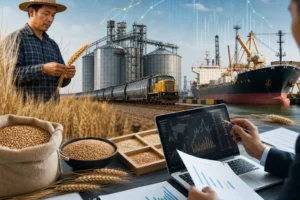
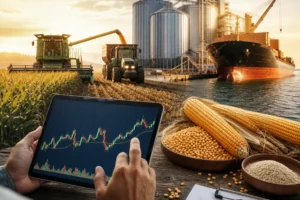

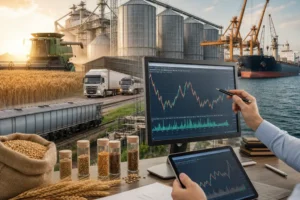

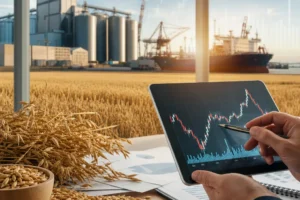
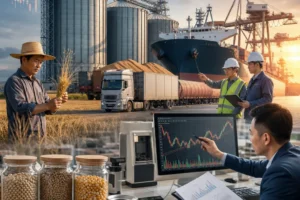

The efficacy of grain markets hinges on timely intelligence and robust management frameworks. Early Warning Systems (EWS) have emerged as pivotal tools for anticipating price swings, enabling governments, traders, and agribusinesses to enact measures that safeguard food security. This article delves into the technical, analytical, and policy-oriented dimensions of EWS, examining their capacity to mitigate volatility and strengthen market resilience.
Foundations of Early Warning Systems for Grain Markets
An effective EWS combines field data, market signals, and advanced analytics to generate actionable insights. At its core, the system must continuously monitor supply chain variables—such as production forecasts, inventory levels, and transportation logistics—and correlate them with macroeconomic indicators.
Data Collection and Monitoring
- Remote sensing and satellite imagery to assess crop health and projected yields.
- Survey networks gathering price quotations from wholesale buyers and local markets.
- Weather stations that feed real-time climate variables into forecasting models.
- Trade data aggregation for import/export volumes, tariff changes, and logistical delays.
Integrating this diverse dataset demands robust IT infrastructure, cloud-based storage, and high-throughput pipelines. The incorporation of machine learning pipelines for predictive analytics hinges on data quality, frequency of updates, and interoperability standards. Ensuring data integrity is critical for maintaining market transparency and fostering trust among stakeholders.
Analytical Techniques and Market Signal Interpretation
Advanced modeling frameworks power the core of EWS intelligence. By applying econometric approaches alongside artificial intelligence, analysts can detect anomalies and forecast short-term price movements with greater accuracy. Sophisticated modelling methods—such as time series analysis, Bayesian networks, and ensemble learning—enable forecasters to handle nonlinear interactions among variables.
Key Analytical Components
- Forecasting algorithms that predict price trajectories based on historical patterns and real-time shocks.
- Scenario analysis to simulate policy changes, weather disruptions, or supply chain breakdowns.
- Risk scoring matrices that assign probabilities to adverse events, guiding mitigation strategies.
- Automated alert systems that trigger notifications when price thresholds or volatility indexes breach predefined limits.
Interpretation of these signals demands domain expertise. Agricultural economists, data scientists, and market operators collaborate to calibrate threshold settings and refine model sensitivity. Such collaboration fosters continuous improvement, ensuring that the EWS remains responsive to emerging threats and evolving market paradigms. This dynamic synergy enhances long-term sustainability of grain supply chains, while also enabling rapid intervention when prices spiral out of control.
Policy Integration and Future Challenges
Translating technical outputs into actionable policy requires clear communication channels and governance frameworks. Policymakers rely on EWS outputs to design price support measures, adjust tariffs, or coordinate market interventions. Establishing institutional linkages among ministries of agriculture, trade regulators, and emergency management agencies is essential for prompt decision-making.
Governance and Institutional Coordination
- Memoranda of understanding that define roles, data sharing protocols, and confidentiality clauses.
- Multi-agency task forces charged with assessing EWS alerts and executing pre-approved contingency plans.
- Capacity-building programs to enhance analytical skills among public-sector analysts and local extension officers.
Challenges persist in scaling EWS across regions with disparate technological infrastructures and data governance regimes. Bridging the digital divide remains a priority: remote areas often lack high-speed networks, hindering real-time data transmission. Public–private partnerships are emerging as vital mechanisms to finance infrastructure upgrades and knowledge transfer. Moreover, fostering community-level engagement ensures that smallholder farmers receive early price signals, thus protecting livelihoods and promoting market inclusivity.
Looking ahead, EWS evolution will be shaped by innovations in big data analytics, Internet of Things (IoT) sensors, and blockchain-enabled traceability. Such advancements promise to enhance system accuracy, drive down latency, and bolster end-to-end integration. By uniting technical excellence with robust governance, EWS will continue to be instrumental in fortifying global grain markets against future shocks.