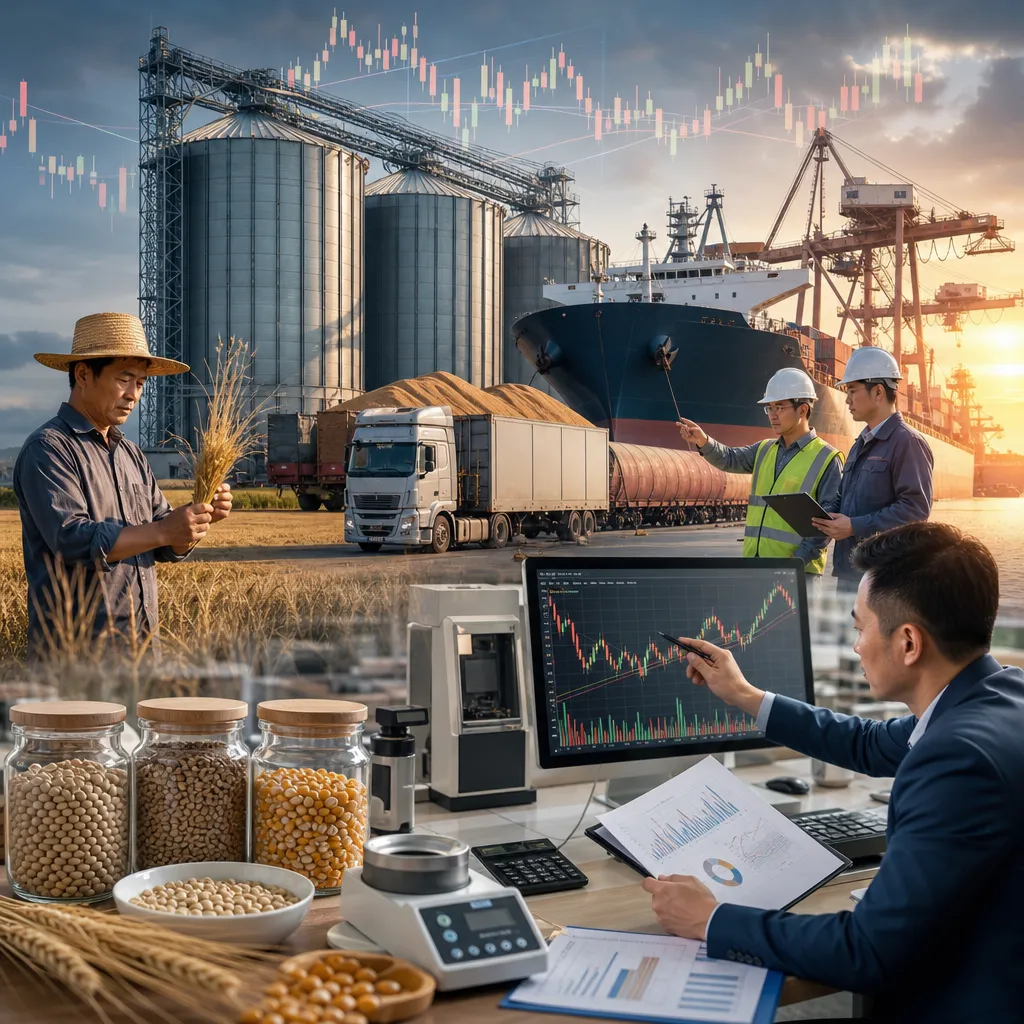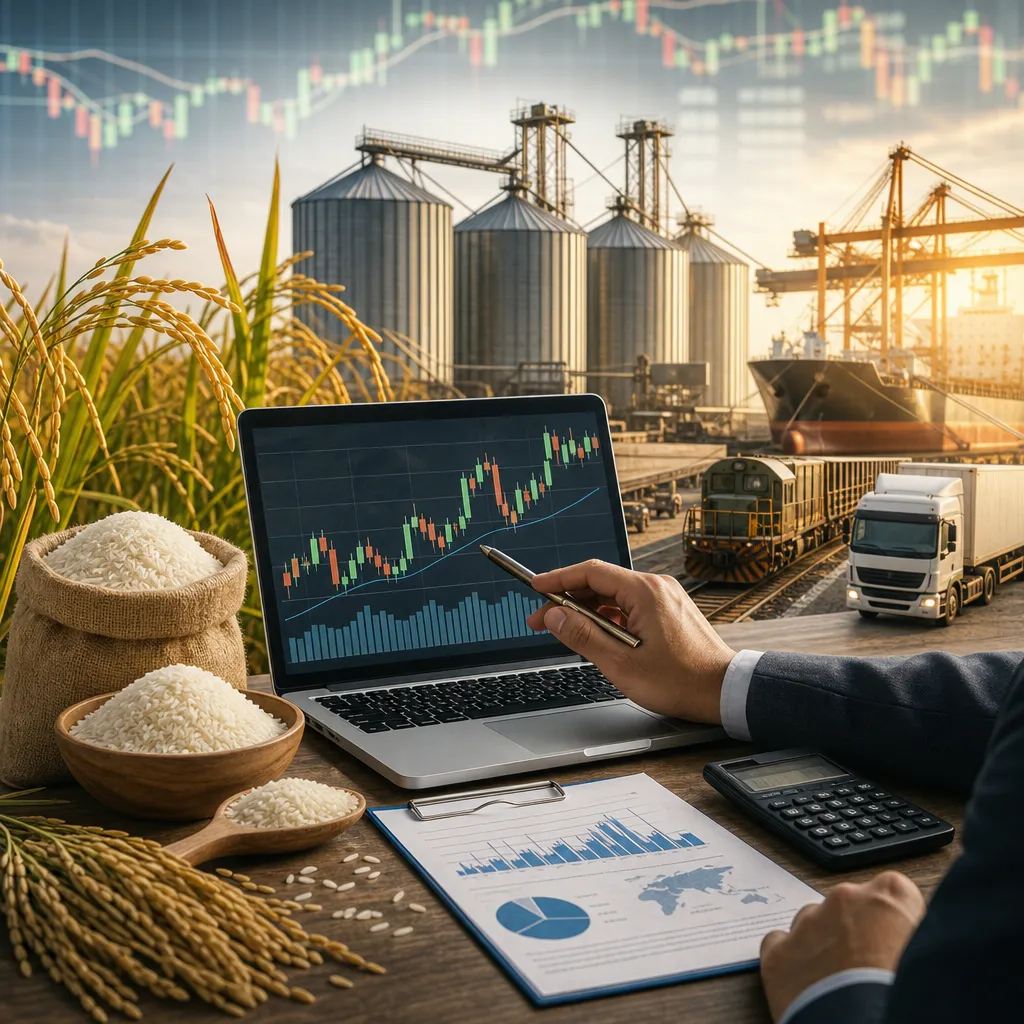


Oat futures prices are exchange-traded benchmark prices for oats, used by merchants, processors, speculators, and some producers to track the market and manage price risk. They are not the same as the local cash price paid by an elevator, feed mill, or grain buyer, because local bids also include basis, freight, quality, and regional supply-demand conditions. If you need the current market, the practical place to check is the relevant futures exchange for the benchmark contract and then compare that with local bid sheets from elevators, cooperatives, or grain buyers. Understanding oat futures means knowing both the financial market where the contract trades and the physical grain market where actual oats are bought, sold, stored, and delivered.
What oat futures prices are
Oat futures prices represent the market value of a standardized oats contract traded on a regulated futures exchange. The best-known benchmark is the oats futures contract listed by CME Group. A futures contract is an agreement to buy or sell a set quantity and quality of grain for delivery in a specified future month, although many participants close the position financially before delivery.
In practice, oat futures prices are used in three main ways:
- Price discovery: they provide a transparent reference price visible to the market.
- Hedging: they help physical market participants reduce exposure to price moves.
- Speculation and spread trading: traders use them to take views on oats or on the relationship between oats and other grains.
The quoted futures price is a benchmark, not a guaranteed farmgate or delivered price. A farmer selling physical oats or a mill buying oats will usually negotiate or accept a cash price, often expressed as futures plus or minus basis.
Where oat futures prices are quoted and how to check them
The main public reference for oat futures prices is CME Group, which lists contract specifications, delayed quotes, trading months, and settlement information. Many market data vendors, broker platforms, charting services, and agricultural software packages also display oats futures, but access level varies. Some services provide delayed data publicly, while real-time exchange data may require a brokerage account or market-data subscription.
If you want to check the market properly, use both exchange data and local cash market sources:
- Exchange benchmark: CME Group futures quotes and contract details.
- Broker platform: futures brokers usually provide live or near-live quotes, charting, and order entry for account holders.
- Local cash bids: elevators, cooperatives, feed companies, mills, or grain merchants post bids online, by mobile app, email, or phone.
- Government reports: USDA reports help explain broader price moves, even when they are not oat-specific every week.
If current live pricing is essential, check the contract month, the unit, and whether the quote is delayed. Also confirm whether you are looking at the front month, a deferred month, or the final settlement value.
| Source type | What it shows | Who uses it | Main limitation |
|---|---|---|---|
| CME Group | Benchmark futures quotes, contract specs, settlements | Traders, analysts, hedgers | Does not show your local cash bid |
| Futures broker platform | Tradable quotes, charts, account tools | Active futures traders and hedgers | Usually requires an account and market-data permissions |
| Elevator or cooperative bid sheet | Local cash bids for physical oats | Farmers, truckers, local buyers | Reflects one location and specific quality terms |
| USDA market and crop reports | Supply, demand, acreage, stocks, exports | Analysts, traders, farm managers | Not a live tradable quote |
Oat futures versus local cash oat prices
This distinction is critical. The futures market is a centralized financial market with standardized contract rules. The cash market is a decentralized physical market where actual grain changes hands. A local elevator may bid above or below the futures market depending on freight, storage demand, nearby supply, processing demand, export pull, and grain quality.
The difference between the local cash price and the futures price is called the basis. A common cash price formula is:
- Cash price = futures price + basis
Basis can be positive or negative. It may strengthen when local buyers need grain urgently or weaken when harvest pressure, transportation bottlenecks, or quality issues reduce demand. Oats can be especially sensitive to local basis because the market is smaller than corn or soybeans and because regional feed and milling demand matters a lot.
For a farmer or grain merchant, the exchange quote is only the first layer of pricing. The actual sale depends on:
- grade and test weight,
- moisture and foreign material,
- delivery period,
- elevator or mill location,
- truck or rail freight,
- whether the grain is stored on-farm or delivered spot,
- regional demand from feed users or oat processors.
How oat futures trading works
Oat futures trading takes place through a regulated futures exchange, normally accessed through a licensed futures broker or futures commission merchant. An individual trader or commercial hedger does not buy directly from the exchange; they open an account with a broker, deposit funds for margin, and place orders through a platform or with a broker desk.
Key mechanics include:
- Contract months: futures expire in designated delivery months.
- Margin: traders post initial and maintenance margin rather than paying the full contract value upfront.
- Mark-to-market: gains and losses are credited or debited daily.
- Delivery rules: contracts have delivery procedures, but many positions are offset before first notice or expiration.
- Leverage: small price moves can create large percentage gains or losses relative to margin posted.
That makes futures useful but risky. For hedgers, the goal is usually to reduce cash-market risk, not to maximize leveraged returns. For speculators, liquidity, slippage, and volatility matter, especially in a smaller market like oats where trading volume may be thinner than in corn or wheat.
| Market | What is traded | Where it happens | Typical users |
|---|---|---|---|
| Futures market | Standardized oat contracts | Regulated exchange via broker platform | Hedgers, traders, funds, analysts |
| Cash market | Physical oats meeting buyer specs | Elevators, cooperatives, mills, merchants, direct contracts | Farmers, processors, feed buyers, exporters |
| OTC forward contract | Private agreement on future physical sale | Directly with merchant, elevator, or processor | Producers and commercial grain buyers |
How farmers, mills, and grain buyers use oat futures
A farmer with physical oats may sell futures to hedge downside price risk before harvest or while holding inventory in storage. If cash prices later fall, the futures gain may offset part of the weaker physical sale price. A mill or feed buyer may buy futures to hedge input costs if they expect to purchase physical oats later.
In practice, many commercial users do not hedge every tonne or bushel exactly. They often combine tools:
- cash sales to a local elevator,
- forward contracts with a grain buyer,
- basis contracts,
- hedge-to-arrive style arrangements where available,
- exchange futures,
- options when they want price protection with upside flexibility.
Options on grain futures can cap risk differently from outright futures, but they involve a premium cost and still require understanding expiry, strike selection, and liquidity. They are normally accessed through the same kind of futures brokerage relationship used for futures.
For physical buyers, the process usually starts with identifying a delivery point and quality requirement. Oats for milling may have tighter specifications than oats for feed use. That means the local cash market can diverge sharply from the headline futures price if quality premiums or discounts are significant.
Main drivers of oat futures prices
Oat futures respond to both broad grain-market forces and crop-specific conditions. Because oats are a smaller market than corn, soybean, or wheat, regional shifts can have an outsized effect. Weather in key producing regions, acreage decisions, yield risk, and quality all matter.
- Planted area: fewer oat acres can tighten supply if yields do not compensate.
- Weather: drought, excessive moisture, frost, and harvest delays affect both volume and quality.
- Stocks: low carry-in stocks make the market more sensitive to production problems.
- Feed demand: oats compete with other feed grains, so corn and barley prices can matter.
- Food processing demand: strong oat milling demand supports quality-sensitive cash markets.
- Transportation and logistics: rail performance, truck availability, and freight costs influence basis.
- Currency moves: exchange rates can affect competitiveness in export or import flows.
Price forecasting should be viewed as scenario analysis, not certainty. For example, a larger crop with normal quality and weak feed demand may pressure futures and basis, while weather damage, lower acreage, or strong processor demand can tighten the market quickly.
Where physical oats are bought, sold, and stored
Physical oats are commonly marketed through country elevators, agricultural cooperatives, grain merchants, feed manufacturers, oat processors, and sometimes direct farm-to-buyer contracts. In export-oriented channels, merchants may assemble grain through inland facilities and move it by truck or rail to terminal elevators or ports.
A typical physical transaction may include:
- The seller requests a bid from an elevator, merchant, cooperative, broker, or processor.
- The buyer quotes a cash price or a basis against futures, subject to quality and delivery terms.
- The parties agree on quantity, delivery window, location, and payment terms.
- The grain is delivered, weighed, graded, and sometimes sampled for moisture, test weight, and other quality factors.
- Final settlement is made according to contract terms, including any quality discounts or premiums.
Storage can be on-farm, at a commercial elevator, or within a merchant or processor system. Storage decisions matter because oats can lose value if condition deteriorates or if off-spec grain misses milling quality. Costs to check include drying, handling, shrink, interest on inventory, warehouse charges, and the risk that basis weakens even if futures improve.
Reports and data that matter for oat futures analysis
No single report explains the entire oat market. Traders and commercial users usually combine exchange data, government reports, and local cash-market intelligence.
- CME Group: contract specifications, settlements, volume, and open interest.
- USDA WASDE: broad supply and demand context for grains and oilseeds, useful for intermarket analysis and U.S. balance-sheet thinking.
- USDA Acreage and Grain Stocks reports: important for supply expectations and inventory tightness.
- USDA Crop Progress: useful during planting and growing season where relevant.
- CFTC Commitments of Traders: shows positioning of major trader categories in futures and options markets.
Analysts often compare oats with corn, wheat, and barley because substitution in feed rations and acreage competition can influence pricing. For a practical market view, combine national reports with local buyer conversations and actual bid sheets.
Practical risks and limitations
Oat futures can be useful, but they are not a perfect hedge for every physical transaction. Basis risk is the main limitation: your local cash market may move differently from the exchange. Liquidity can also be thinner than in larger grain contracts, which can widen bid-ask spreads and make precise execution harder.
Other risks include:
- Margin calls: a hedger can be right on the physical market and still face short-term futures losses that require cash funding.
- Contract mismatch: quality, timing, or location of physical oats may not track the standardized futures contract closely.
- Delivery misunderstanding: futures trading is not the same as arranging truck delivery to a local elevator.
- Data confusion: delayed quotes, wrong contract month, or misunderstanding units can lead to bad decisions.
The practical solution is to define your objective first. If you want to know what your crop is worth locally, start with elevator bids. If you want a benchmark or hedge, start with oat futures and then calculate basis. If you want physical grain, contact merchants, mills, or elevators rather than opening a futures account.
FAQ
Where can I check current oat futures prices?
The benchmark place is CME Group, which provides contract information and market data. Many futures brokers and market-data vendors also display oat futures. For a farm-level decision, compare the exchange quote with local elevator or cooperative bids.
Is the oat futures price the same as the cash price I receive locally?
No. The local cash price depends on futures plus or minus basis, and basis reflects freight, location, quality, storage demand, and local supply-demand conditions.
How do I trade oat futures?
You normally need a futures brokerage account. Trading takes place on a regulated exchange through a broker platform or broker desk. This is a financial transaction and does not automatically mean you are buying or selling physical oats.
How do farmers usually sell physical oats?
Most physical sales are made to country elevators, cooperatives, grain merchants, feed mills, or processors. Sales may be spot cash, forward contracts, or basis-related contracts depending on the buyer and region.
Can oat futures be used for hedging?
Yes, but the hedge is not perfect. Futures can reduce exposure to broad price moves, while basis risk remains. Hedging also requires capital for margin and a clear plan for how the futures position relates to the physical grain.
What reports are most useful for analyzing oat prices?
CME Group market data, USDA WASDE, USDA Acreage, USDA Grain Stocks, USDA Crop Progress where relevant, and CFTC Commitments of Traders are all useful. Local bid sheets and direct conversations with buyers remain important for understanding basis and quality demand.
Where are physical oats stored before sale or processing?
They may be stored on-farm, at commercial elevators, in cooperative systems, or within merchant and processor facilities. Storage value depends on carrying cost, grain condition, and whether basis or futures improve enough to cover those costs.
What is the biggest mistake when reading oat futures prices?
The biggest mistake is assuming the futures quote is the same as a local deliverable price. Always confirm the contract month, whether the quote is delayed, and what basis and quality terms apply in your physical market.
Sources
- CME Group
- USDA World Agricultural Supply and Demand Estimates
- U.S. Commodity Futures Trading Commission