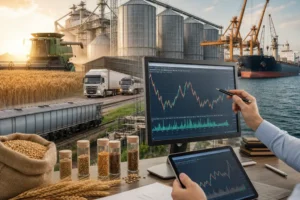



Rice futures trading is the buying and selling of standardized rice contracts on a regulated commodity exchange rather than the direct purchase of physical rice. It is used by hedgers such as mills, merchants, importers, and producers to manage price risk, and by speculators who want exposure to rice prices without handling the crop. In practice, the most widely watched exchange-traded benchmark is rough rice futures at CME Group, while physical rice is bought and sold separately through mills, merchants, exporters, cooperatives, and negotiated cash contracts. The key point is that a futures quote is not the same as the local cash price for rice at a specific mill, warehouse, or export point.
To understand rice futures trading, you need to separate two markets. The futures market is financial and standardized: contracts trade through a futures broker on an exchange platform, require margin, and have expiry months. The physical rice market is commercial and location-specific: actual rice changes hands based on grade, quality, freight, storage, and local supply-demand conditions.
For most readers, the practical questions are: where are rice futures traded, how do you access them, what contract is being priced, how does it relate to local cash rice values, and what reports or tools help you analyze risk. Those are the parts that matter most in real decision-making.
What rice futures trading is and where it takes place
Rice futures trading usually refers to exchange-traded contracts for rough rice. In the United States, the main benchmark is the rough rice futures contract listed by CME Group. Trading takes place electronically through approved futures brokerage firms that provide access to exchange markets.
A futures contract is a legal agreement for a standardized quantity and quality of a commodity for delivery in a specific month, although many participants close or roll their positions before delivery. Exchange rules define the contract specifications, delivery terms, tick size, trading hours, and acceptable delivery locations or procedures.
This is different from buying or selling truckloads, containers, or bulk vessel cargoes of rice in the physical market. Physical transactions are usually arranged through:
- rice mills,
- grain merchants,
- exporters and importers,
- cooperatives,
- brokers in the cash grain trade,
- processors and food manufacturers.
These physical deals are negotiated based on actual commercial terms such as variety, moisture, milling yield, broken percentage, grade, packaging, delivery point, and payment timing. A futures contract does not automatically reflect all of those physical details.
| Market type | What is traded | Where it is accessed | Typical users |
|---|---|---|---|
| Futures market | Standardized rough rice contracts | Regulated exchange via futures broker platform | Hedgers, traders, funds, commercial firms |
| Physical cash market | Actual rice by grade, variety, and shipment terms | Mills, merchants, cooperatives, exporters, direct contracts | Farmers, mills, food companies, exporters, importers |
| OTC forward market | Privately negotiated price agreements | Direct counterparty negotiation | Commercial counterparties with specific physical needs |
How rice futures contracts work in practice
When you trade rice futures, you are not normally paying for the full value of physical rice upfront. Instead, you post margin, which is a performance bond required by the broker and clearing system. Because only margin is posted, futures are leveraged, which means gains and losses can be much larger than the initial cash committed.
The contract has a delivery month. If you buy a futures contract, you are long; if you sell one, you are short. Most financial traders offset the position before the contract enters delivery. Commercial firms may use the contract as part of a hedge against physical purchase or sale exposure.
Daily profit and loss is settled through mark-to-market. If the market moves against your position, you may need to deposit additional funds. That is one of the main operational risks for hedgers and speculators alike.
Before trading, a user normally needs:
- a futures brokerage account,
- approval for commodity futures trading,
- sufficient funds for initial and maintenance margin,
- access to exchange quotes and contract specifications,
- a clear plan for exit, hedge ratio, and risk limits.
This process is usually done online through a regulated broker, but the legal and financial obligations are real. A futures position is not a casual way to “check the rice market.” It is a binding market exposure.
Where to check rice futures prices and what those prices mean
Rice futures prices are normally checked through CME Group market data, futures broker platforms, professional market terminals, and agricultural data services. Exchange websites usually provide delayed quotes or contract information, while brokers and market-data vendors may offer more detailed charts, depth, and order tools depending on the service level.
When checking a quote, make sure you know:
- the exchange,
- the contract month,
- whether the quote is delayed or real-time,
- the contract unit and currency,
- whether you are looking at rough rice futures or a cash market bid.
For physical rice prices, local values are usually checked with:
- nearby mills,
- grain buyers,
- cooperatives,
- merchants,
- regional market reporting services,
- export houses or procurement desks.
A farmer or merchant should not assume that the futures price equals what a local buyer will pay. The difference is called basis, which reflects location, freight, quality, local demand, storage, and handling conditions. In rice, basis can be especially important because quality characteristics and nearby milling or export demand can strongly affect local values.
How hedging with rice futures is actually used
Hedging is the use of futures to reduce price risk in an existing or expected physical position. It is not the same as speculation. A hedge is designed to offset business exposure, not to bet blindly on market direction.
Examples include:
- a producer selling futures to protect the value of expected production,
- a rice mill buying futures to defend against rising input prices before physical purchases are secured,
- an exporter using futures against forward sales commitments,
- a merchant managing inventory price risk while rice is in storage or transit.
The practical hedge process usually looks like this:
- Estimate the physical exposure: quantity, timing, and quality.
- Choose the futures month that most closely matches the cash exposure period.
- Place the hedge through a futures broker.
- Track basis separately from futures movement.
- Lift or adjust the hedge when the physical sale or purchase occurs.
The main limitation is basis risk. Even if the futures hedge works, the local cash price may not move in perfect step with the exchange. That is why commercial users monitor both futures and local bids.
| Use case | Typical futures action | Physical exposure being managed | Main risk that remains |
|---|---|---|---|
| Producer hedge | Sell futures | Falling rice prices before harvest sale | Basis, yield shortfall, margin calls |
| Mill procurement hedge | Buy futures | Rising cost of future physical purchases | Basis, quality mismatch, timing mismatch |
| Merchant inventory hedge | Usually sell futures against owned stock | Value decline while holding inventory | Basis, storage cost, financing cost |
| Speculation | Buy or sell futures without physical offset | No underlying commercial position | Full market risk and leverage risk |
Rice futures versus physical rice trade
Physical rice trade is much more detailed than a futures screen quote. Commercial transactions depend on whether the rice is rough, milled, parboiled, fragrant, long-grain, medium-grain, or another market class. The buyer will usually care about grade, moisture, test weight, milling yield, kernel quality, foreign material, broken percentage, packaging, and shipment terms.
In the physical market, transactions may occur:
- at farm gate,
- through a country elevator or receiving station,
- through a cooperative pool or direct cash contract,
- at a mill,
- through warehouse receipts,
- through domestic truck or rail movement,
- through export container or bulk shipment.
International rice trade often uses negotiated contract terms covering origin, quality specification, shipment window, inspection, payment method, and trade terms such as FOB or CIF where applicable. Those terms are not embedded in a standard futures quote.
So, if a buyer says “rice is up on the board,” that means the exchange futures market has moved. It does not automatically mean every local physical price has risen by the same amount.
Main market drivers behind rice futures
Rice futures respond to many of the same forces as other grain markets, but with some rice-specific features. The market is shaped by supply, demand, policy, and logistics.
Key drivers include:
- Planted area and yield: acreage and crop condition affect expected production.
- Weather: drought, flood, heat, storms, and irrigation issues matter greatly.
- Stocks and stocks-to-use: low carryout can increase price sensitivity.
- Export demand: tenders, import policy, and destination-country demand can shift values.
- Government policy: export restrictions, tariff changes, or support programs can affect trade flows.
- Currency movement: exchange rates influence competitiveness in world markets.
- Freight and logistics: river conditions, port congestion, container availability, and inland freight costs affect basis and export parity.
- Substitution within grains: not perfect, but feed and acreage competition with other crops can matter indirectly.
Forecasting should be scenario-based rather than certain. A bullish scenario might involve lower production, tighter exportable supply, or stronger import demand. A bearish scenario might involve larger acreage, improved weather, higher stocks, or weaker export competitiveness. Traders should watch how these factors affect both futures and basis, not just headline crop estimates.
Reports, data, and tools that matter most
Good rice futures analysis depends on combining exchange data with government reports and physical market intelligence.
The most useful official sources usually include:
- CME Group for contract specifications, delivery rules, and benchmark futures pricing information.
- USDA for rice balance sheets, acreage, production, stocks, export sales, and broader grain market context.
- CFTC for Commitments of Traders, which shows how different trader categories are positioned in futures and options markets.
- FAO for global food and rice market context, especially for international supply-demand and trade developments.
Commercial users may also rely on merchant intelligence, local bid sheets, processor offers, customs data, shipping information, and private analytics. These are important because official reports can lag real-time commercial shifts.
| Source type | What it provides | How it is used |
|---|---|---|
| Exchange data | Contract months, quotes, settlements, specs, delivery rules | Trade execution, hedge design, technical analysis |
| USDA reports | Production, stocks, acreage, trade, balance sheets | Fundamental analysis and market outlook scenarios |
| CFTC positioning data | Trader category positioning in futures and options | Sentiment and positioning analysis |
| Local cash market information | Actual bids, offers, basis, freight, quality premiums or discounts | Physical selling, buying, and hedge effectiveness tracking |
Practical risks, costs, and limitations
The biggest mistake in rice futures trading is to treat it like a simple price bet without understanding contract mechanics. The second biggest is to confuse futures with physical grain merchandising.
Main risks include:
- Leverage risk: a small price move can create a large gain or loss relative to margin posted.
- Margin call risk: even a valid hedge may require additional cash before the physical offset occurs.
- Basis risk: local physical prices may not track futures exactly.
- Liquidity risk: some contract months may trade less actively than major corn or soybean futures.
- Delivery risk: holding contracts too long without understanding notice and delivery procedures can create serious operational problems.
- Quality mismatch: exchange-standard rough rice may not match the exact quality exposure in a physical deal.
- Execution costs: commissions, exchange fees, spreads, financing, and data costs all matter, even if they vary by provider.
Anyone using rice futures commercially should also coordinate futures with storage, shipping, financing, and insurance decisions. A hedge can protect price direction, but it does not eliminate warehouse losses, quality deterioration, freight disruption, or counterparty problems in the cash market.
FAQ
Where can I check rice futures prices?
You can normally check benchmark rough rice futures through CME Group market information, a futures broker platform, or a professional commodity data service. Always confirm the contract month and whether the quote is delayed or real-time.
Where do farmers or buyers check actual rice cash prices?
They usually check with local mills, elevators, cooperatives, merchants, exporters, or regional agricultural market reporting services. These local bids can differ materially from futures because of basis, quality, freight, and local demand.
Do rice futures mean I am buying physical rice?
No. In most cases, trading rice futures gives you financial exposure to a standardized contract. Physical rice buying and selling is a separate commercial process involving negotiated quality, delivery, and payment terms.
How do I trade rice futures?
You normally need a regulated futures brokerage account, exchange access, and sufficient margin funds. Trading is usually done online through the broker’s platform, but you must understand contract size, expiry, daily mark-to-market, and delivery rules before entering a trade.
Who uses rice futures for hedging?
Users may include producers, mills, grain merchants, exporters, importers, and processors. They use futures to reduce the risk of adverse price moves in expected production, inventory, or forward sales and purchase commitments.
What reports are most important for rice market analysis?
USDA rice-related supply-and-demand reports, acreage and stocks reports, export sales data, CME contract data, and CFTC Commitments of Traders are among the most useful public sources. Global context can also be supplemented with FAO market information.
Why can my local rice bid move differently from futures?
Because local cash prices include basis. Basis reflects transportation cost, storage, local demand, quality premiums or discounts, processing margins, and export logistics. Futures track the exchange benchmark, not every local physical market.
Can I store rice and hedge it with futures?
Yes, commercial firms often hedge stored inventory, but storage introduces additional considerations such as warehouse cost, financing cost, insurance, moisture control, quality deterioration, and the possibility that basis changes may offset part of the hedge benefit.
Sources
- CME Group
- United States Department of Agriculture
- U.S. Commodity Futures Trading Commission