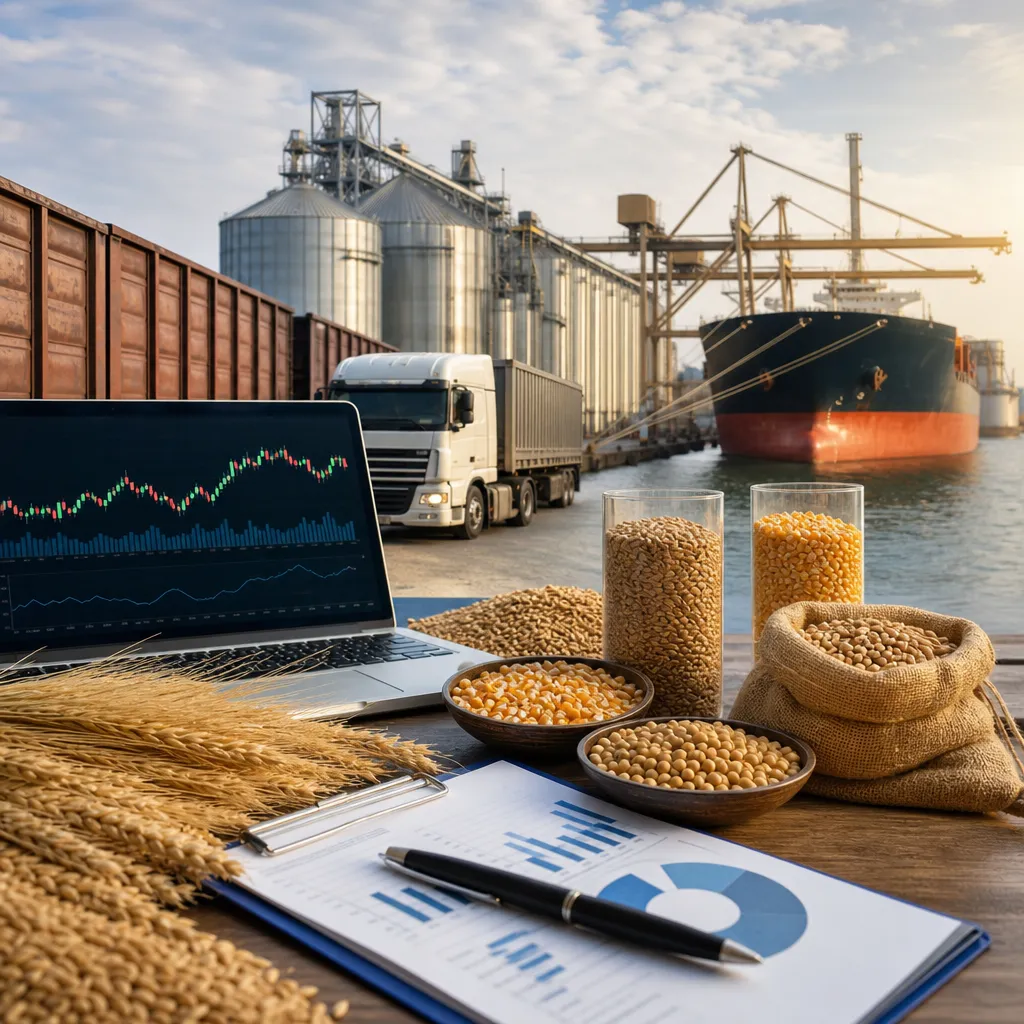










China wheat prices today usually refers to the price of wheat in China’s domestic cash market, the price signals from Chinese wheat futures, or imported wheat values offered into Chinese buyers. China is one of the world’s largest wheat producers and consumers, so its market matters primarily as a domestic grain and food security market rather than as a consistently dominant wheat export origin. Prices are commonly discussed in renminbi (RMB, yuan) per metric ton in the physical market, while futures are quoted on Chinese commodity exchanges under exchange-specific contract rules. Anyone tracking “today’s” wheat price in China should separate exchange prices from actual local cash bids, because the price paid to a farmer, mill, feed buyer, or trader can differ significantly from a futures screen quote.
In practice, China does not have a single national wheat cash price. Prices vary by province, quality, logistics, buyer type, and policy conditions, with major wheat areas including Henan, Shandong, Hebei, Anhui, Jiangsu, and parts of Hubei and Shaanxi. Imported wheat values can also matter for large users, but domestic policy, reserve management, and regional procurement often have a stronger effect on inland physical prices than international benchmarks alone.
What “China wheat prices today” means
When market participants use this phrase, they may be referring to several different things:
- Domestic cash wheat price: the price paid in a province or local market for physical wheat meeting certain quality specifications.
- Delivered mill price: the price a flour mill pays with transport included to its plant or collection point.
- Wholesale or market reference price: a published regional indication, often used for comparison rather than as a firm tradeable bid.
- Futures price: the price of a standardised wheat contract traded on a Chinese commodity exchange.
- Imported wheat cost: typically assessed on a delivered basis into China, influenced by global wheat benchmarks, ocean freight, insurance, and import policy.
Because the Chinese market is large and regionally diverse, “today’s price” is not a single number. A trader in Henan, a flour mill in Shandong, and an importer evaluating overseas cargoes may all be looking at different price references.
Where the China wheat market operates
China’s wheat market is primarily a domestic inland grain market. Production is concentrated in the North China Plain and nearby provinces, with Henan and Shandong especially important. Wheat moves from farms to local collectors, cooperatives, state-linked grain channels, private merchants, storage operators, flour mills, and feed users.
For price discovery and risk management, the futures market is relevant. In China, wheat futures have been associated with domestic commodity exchange activity, and futures quotations are part of the broader pricing conversation. However, physical grain still trades through real commercial channels: procurement stations, grain depots, mills, merchants, and reserve-related mechanisms.
On the trade side, China can import wheat depending on domestic supply, quality needs, feed substitution economics, and policy. Imported wheat values matter most for coastal users and major industrial buyers, but inland domestic wheat prices remain heavily influenced by internal logistics and local availability.
| Market segment | Where it operates | Typical quotation idea | Main users |
|---|---|---|---|
| Farm and local cash market | Producing provinces such as Henan, Shandong, Hebei, Anhui, Jiangsu | RMB per metric ton for physical wheat | Farmers, local merchants, collectors, mills |
| Delivered mill market | Flour and feed processing regions | Delivered price including transport and quality terms | Mills, feed companies, industrial users |
| Futures market | Chinese commodity exchanges via brokers and trading platforms | Exchange-traded standardised contract price | Hedgers, traders, financial participants |
| Import market | Coastal import channels and large end-users | CIF or delivered import value | Importers, mills, trading houses |
How wheat prices are formed in China
China wheat prices are formed by a mix of domestic supply and demand, quality, policy, logistics, and international influences. This is not a simple one-benchmark market.
Domestic supply starts with harvest size, regional yields, weather, and grain quality. Protein content, test weight, moisture, and sprouting damage can all affect the discount or premium on a local bid. A strong crop in major provinces can weigh on new-crop cash prices, while weather damage or poor quality can tighten supply for specific milling grades.
Domestic demand comes mainly from flour milling, food use, and in some periods feed demand. If wheat becomes competitive against corn in feed rations, demand can strengthen. If flour consumption is soft or mills are well covered, spot buying can slow.
Policy and reserves are particularly important in China. State grain reserve activity, auction sales, stocking incentives, procurement guidance, and broader food security policy can influence market tone and available supply. Even when world wheat prices move sharply, Chinese inland prices may respond differently if domestic policy and reserve channels are stabilising the market.
Logistics matter because wheat must move from producing areas to consuming areas. Freight costs, road and rail capacity, and storage conditions all affect delivered values. Coastal imported wheat may be price-competitive for some users, but inland users still face transport and handling realities.
Currency and global benchmarks also matter. Imported wheat into China is influenced by international wheat values, often compared indirectly with Chicago, Kansas City, Minneapolis, or other export market references, plus freight and the RMB exchange rate. But imported values do not automatically become the same as domestic farm prices.
Futures price versus local cash price
This distinction is essential. A futures price is a standardised exchange-traded value for a contract month. A local cash price is what a real buyer offers for real wheat at a specific place and quality today.
The difference between the two is often described through basis. Basis is the local cash price relative to the relevant futures benchmark. It reflects:
- quality differences,
- distance from delivery points or consuming centers,
- storage costs,
- local supply tightness or surplus,
- buyer competition,
- policy and auction effects,
- regional transport costs.
For example, if a futures contract rises, a local mill bid may not rise by the same amount. The mill may already be covered, quality may be lower than exchange standards, or transport bottlenecks may reduce local demand. Likewise, local cash prices can firm even when futures are quiet if mills suddenly need nearby wheat.
| Price type | What it means | Usually quoted as | Why it differs from other prices |
|---|---|---|---|
| Futures price | Exchange-traded contract value | RMB per ton under exchange contract terms | Standardised contract, not local physical wheat |
| Local cash bid | Spot offer for physical wheat in a specific area | RMB per ton at farm, warehouse, or collection point | Depends on region, quality, and nearby demand |
| Delivered price | Physical wheat price including freight to buyer | RMB per ton delivered to mill or plant | Includes transport, unloading, and buyer specs |
| CIF import value | Imported wheat cost including freight and insurance | Usually compared in import trade terms | Reflects world prices, freight, currency, and policy |
Where to check China wheat prices online
If you need a reliable “today” reference, use official or established market sources and verify whether the quote is futures, auction-related, wholesale, or local cash.
Useful places to check include:
- Zhengzhou Commodity Exchange: for official futures market information where relevant to wheat pricing and hedging in China.
- National Bureau of Statistics of China: for broader production, consumption, and macro context rather than live local bids.
- USDA Foreign Agricultural Service: especially for China grain market analysis, import outlook, and policy context affecting wheat.
- Large domestic mills, grain merchants, and procurement networks: for actual spot buying ideas in specific provinces.
- Regional grain market reporting services and government grain information channels: often used by local traders to monitor bids, auctions, and sentiment.
Readers should be careful with third-party websites or social feeds that post a single “China wheat price today” without stating the province, quality, contract month, or delivery basis. A futures screen quote is not the same as a Henan farm-gate bid, and a mill-delivered quote is not the same as an import parity estimate at a coastal port.
How wheat is actually bought and sold in China
Physical grain trade
Most physical wheat in China is bought and sold through domestic commercial channels. Farmers often sell after harvest to local collectors, cooperatives, grain depots, merchants, or directly to mills if logistics and scale allow. Buyers usually care about moisture, impurity, falling number or sprouting risk where relevant, and milling characteristics.
Common practical steps in a physical transaction include:
- Price inquiry with one or more local buyers.
- Quality testing or grading.
- Agreement on basis: ex-farm, warehouse, or delivered.
- Agreement on weight, moisture deductions, and acceptance standards.
- Delivery scheduling and transport arrangement.
- Payment terms and counterparty verification.
For a mill or processor, purchase decisions often depend on nearby inventory, replacement cost, and whether imported wheat or substitute grains are competitive. For merchants, storage economics and expected seasonal price movements matter.
Imports and exports
China is mainly important as a wheat-consuming and sometimes importing market. Imports are handled by authorised importers, trading firms, and major industrial users under China’s policy and inspection framework. Imported wheat is often assessed on a CIF basis, meaning cost, insurance, and freight to the destination port, before inland handling and domestic transport are added.
Exports are not the central feature of China’s wheat market in most years. The more practical commercial question is usually whether domestic wheat is cheaper or more expensive than imported alternatives after freight, currency, and policy considerations.
How futures and hedging work in the China wheat market
Futures are not the same as buying grain. They are financial contracts used for price risk management or speculation.
A flour mill, merchant, or other commercial participant may use futures to hedge the risk of rising or falling wheat prices. For example, a buyer concerned about higher prices may use futures to protect input costs, while a grain holder worried about lower prices may hedge against a decline. But the hedge is never perfect because local physical wheat can move differently from the futures contract. That is basis risk.
Normal access to futures is through a licensed broker or approved trading channel, not by simply calling a local elevator. A trader needs an account, margin funds, and an understanding of contract expiry, mark-to-market, and leverage. Many market participants monitor futures online every day without ever taking physical delivery.
Physical ownership and financial exposure should be kept separate:
- Physical market: real wheat, real quality, real freight, real storage, and payment risk.
- Futures market: standardised contract, margining, expiry, liquidity, and basis risk.
Main factors to watch for China wheat price trends
Any forecast for China wheat prices should be treated as a scenario rather than a certainty. The most important variables are usually domestic crop conditions, policy signals, milling demand, and import competitiveness.
Key drivers include:
- Weather and harvest quality: rain at harvest or heat stress can change both yield and milling quality.
- Government reserve and procurement activity: auctions, stock releases, and support-oriented actions can change availability.
- Feed demand versus corn: if wheat is economically attractive in feed rations, demand can rise.
- Flour consumption: food demand affects mill buying behaviour.
- Import economics: world wheat prices, ocean freight, and RMB movements affect replacement cost for imported wheat.
- Logistics and regional spreads: surplus wheat in one province does not always quickly pressure prices elsewhere if transport costs are high.
A bullish scenario would usually involve weather or quality problems, firmer mill or feed demand, and limited cheap import competition. A bearish scenario would more often involve a good domestic crop, comfortable stocks, soft flour demand, and steady reserve supply.
Practical guidance for readers following the market today
If you need a usable daily market view, start by deciding which price actually matters to you.
- If you are a farmer or local merchant, the relevant number is usually the nearby cash bid from local buyers.
- If you are a mill or processor, compare local delivered offers with alternative regional supply and import parity.
- If you are a trader or analyst, watch futures, basis, reserve-related signals, and regional spot spreads.
- If you are an international observer, avoid assuming that a global benchmark or headline futures move immediately defines China’s domestic wheat price.
The most practical workflow is to monitor exchange prices online, read official market reports, then confirm real physical bids with merchants, mills, or local grain channels. That is how online price discovery connects to actual grain trade.
What is the main benchmark for China wheat prices?
There is no single benchmark for all physical wheat in China. Domestic cash prices are often compared with Chinese futures where relevant, while imported wheat values are influenced by international wheat benchmarks and freight.
Where can I check China wheat prices today?
Check official exchange information for futures, then compare it with regional grain market reports, mill procurement indications, and official market analysis from institutions such as USDA Foreign Agricultural Service. For actual spot trade, local buyer quotes are the most relevant.
Are Chinese wheat futures the same as farm-gate prices?
No. Futures are exchange-traded standardised contracts, while farm-gate prices are local cash bids for physical wheat. They can move in the same direction, but they are not identical.
What unit is wheat usually priced in within China?
In the physical market, wheat is commonly discussed in renminbi per metric ton. Futures also use exchange-specific contract quotation conventions that should be checked on the official exchange.
What causes local wheat prices in Henan or Shandong to differ from each other?
Differences can come from local supply, quality, buyer competition, transport costs, storage availability, and whether the wheat is sold at farm, warehouse, or delivered to a mill.
How do mills and traders hedge wheat in China?
They typically use futures through a broker or approved trading channel to manage price risk. The physical grain is still bought separately in the cash market, and the hedge may not perfectly match the cash price because of basis risk.
Does imported wheat set the domestic wheat price in China?
Not by itself. Imported wheat can influence coastal and large-user pricing, but China’s domestic crop size, reserve policy, logistics, and internal demand often matter more for inland cash prices.
Is China mainly a wheat exporter or importer?
China is primarily a very large producer and consumer. In market discussions, it is more important as a domestic wheat market and periodic importer than as a consistently major export supplier.
Sources
- Zhengzhou Commodity Exchange
- USDA Foreign Agricultural Service
- National Bureau of Statistics of China