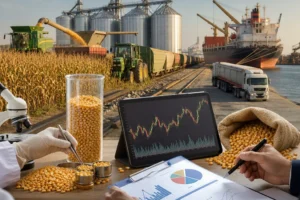
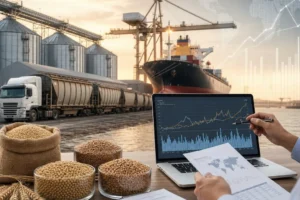
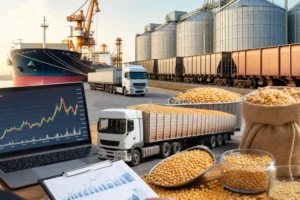
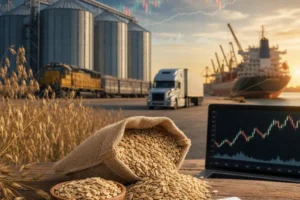
Grain price trends are never just one number. The price shown on a futures exchange is a benchmark, while the price a farmer, feed mill, exporter, or processor actually pays or receives is usually a local cash price shaped by basis, freight, quality, storage, and regional demand. To follow grain prices accurately, readers need to know where benchmark prices are quoted, where local bids are posted, which reports move the market, and how physical grain transactions differ from financial trading. The most useful approach is to combine exchange data, government reports, and local cash market information rather than relying on a single “grain price” headline.
In practice, grain price trends are built from the interaction of supply and demand, weather, logistics, policy, currencies, and speculative positioning. Wheat, corn, soybeans, rice, barley, oats, rye, sorghum, canola, rapeseed, and sunflower seed each have their own market structure, but the core mechanics are similar: benchmark prices are discovered in organized markets, then translated into local physical trade through basis and contract terms.
What grain price trends actually mean
A grain price trend is the direction and pattern of prices over time, not a single quote. Analysts look at whether prices are rising, falling, or moving sideways across nearby and forward delivery periods. They also compare trends between crops, regions, and market types.
There are usually two linked but different price layers:
- Futures prices: Exchange-traded benchmark contracts used for price discovery, hedging, and speculation.
- Cash prices: Real physical grain bids or offers at elevators, cooperatives, ports, mills, crushers, feed plants, or export positions.
A strong futures rally does not automatically mean local grain buyers will raise bids by the same amount. If freight is expensive, storage is full, export demand is weak, or quality is poor, local cash prices may lag futures. The opposite can also happen when processors need grain urgently or export programs are active.
Where grain prices are quoted and checked
For benchmark prices, the most widely used source in North America is CME Group, which lists futures and options for major agricultural contracts including corn, wheat, soybeans, soybean meal, soybean oil, oats, rough rice, and canola through linked markets where relevant. Exchange data shows contract month, unit, and settlement structure, but it does not tell a farmer the exact local bid at a nearby elevator.
Local cash prices are usually checked through:
- Grain elevators and agricultural cooperatives
- Merchants and grain buyers
- Processors such as flour mills, ethanol plants, crushers, maltsters, or feed mills
- Exporter bid sheets at river, rail, or port locations
- Government or public agricultural market reporting services where available
In many regions, elevators and cooperatives publish daily or intraday bids online. Some post spot bids, forward bids, basis contracts, hedge-to-arrive contracts, or delivery windows. Merchants and processors may quote directly by phone, email, procurement portal, or private contract sheet.
For international context, readers often compare domestic prices with export benchmarks or regional reference markets. In Europe, Euronext futures are commonly watched for milling wheat, corn, and rapeseed benchmarks. Physical trade may also reference FOB port values, CIF import terms, or merchant quotations rather than only exchange prices.
| Market type | What it shows | Where readers normally find it | Main users |
|---|---|---|---|
| Futures market | Standardized benchmark price for a contract month | Exchange websites, broker platforms, market-data vendors | Hedgers, traders, analysts, merchandisers |
| Local cash bid | Actual purchase bid at a delivery point | Elevators, cooperatives, processors, merchants | Farmers, local buyers, truckers, merchandisers |
| Export market quote | Port or vessel-related value under trade terms | Merchants, brokers, trade publications, export desks | Exporters, importers, brokers, feed and milling buyers |
| Government market report | Reported regional prices, grades, spreads, movement | Agricultural agencies and official reporting services | Producers, analysts, lenders, policy users |
How futures prices influence physical grain prices
Futures contracts are standardized agreements traded on regulated exchanges. They specify a commodity, quantity, quality standard, delivery location rules, and expiry month. Most participants do not make or take delivery. Instead, they use futures as a pricing tool.
The key link between futures and local grain is basis. Basis is the difference between the local cash price and the relevant futures price. If corn futures are unchanged but a nearby ethanol plant raises its cash bid, basis has strengthened. If wheat futures rally but export demand weakens at a port, basis may weaken.
Basis reflects local conditions such as:
- Transport costs by truck, rail, barge, or vessel
- Storage availability and carrying costs
- Competition among buyers
- Quality and grade differences
- Import and export demand
- Regional harvest pressure
This is why grain price trends should be analyzed in two parts: the futures trend and the basis trend. A farmer selling physical grain should track both. A processor buying nearby needs to know whether the market is expensive globally or simply tight locally.
Main drivers of grain price trends
Grain prices move when the market changes its view on future supply, future demand, or both. Weather is important, but it is only one part of the story.
| Driver | Typical effect on prices | How market participants use it |
|---|---|---|
| Weather | Can raise or lower yield expectations | Watched through forecasts, satellite data, crop tours, condition reports |
| Acreage and planting pace | Affects potential production | Compared with expected demand and rotation shifts |
| Stocks and stocks-to-use | Low stocks usually increase sensitivity to shocks | Used to judge whether markets are tight or comfortable |
| Exports and imports | Change regional balance sheets and basis levels | Tracked through sales reports, customs data, port lineups |
| Currency moves | Affects competitiveness in world trade | Important for exporters, importers, and cross-border buyers |
| Energy and biofuels | Influence corn, oilseeds, and vegetable oils | Watched by ethanol plants, crushers, and feed users |
| Freight and logistics | Often changes basis more than futures | Critical in harvest, export surges, and disruptions |
Different crops respond to different combinations of these factors. Corn often reacts strongly to feed demand, ethanol, and U.S. growing weather. Soybeans are highly sensitive to export demand and crushing margins. Wheat can be driven by global production quality, Black Sea trade flow, and milling versus feed demand. Canola and rapeseed are influenced by vegetable oil markets, biodiesel policy, and crush demand.
Where to find reliable grain market data and reports
Serious market users rely on official and exchange-based sources first, then add private analysis. The most widely used public sources include:
- USDA WASDE: Monthly global and U.S. supply-and-demand estimates for major grains and oilseeds. Used for big-picture balance sheet changes.
- USDA Crop Progress: Weekly updates on planting, emergence, crop condition, and harvest pace. Important during the growing season.
- USDA Export Sales: Weekly export booking data that helps the market judge external demand.
- CFTC Commitments of Traders: Shows broad futures and options positioning categories, useful for understanding speculative length or short covering.
- CME Group market data: Contract specifications, settlements, and exchange reference prices.
- FAO market information: International context, especially for global food commodities and broad market conditions.
- National agricultural ministries and statistical agencies: Country-specific crop estimates, trade updates, and market reports.
Commercial data vendors and charting platforms may provide faster intraday data, basis maps, weather analytics, options tools, and historical databases. These are used by grain merchandisers, trading firms, processors, analysts, and larger farms. They are different from brokerage platforms, which are designed primarily for executing futures or options trades.
How physical grain is bought and sold
Physical grain trade usually happens through a delivery contract, not through clicking a futures buy button. The seller may be a farmer, country elevator, cooperative, merchant, or exporter. The buyer may be a mill, feed manufacturer, ethanol plant, crusher, maltster, merchant, or overseas importer.
A typical physical transaction includes:
- Price discovery: The buyer posts or negotiates a bid based on futures, basis, delivery period, and quality.
- Contracting: The parties agree on quantity, crop, grade, moisture, test weight or other specifications, delivery window, and payment terms.
- Delivery: Grain moves by truck, rail, barge, or vessel to the agreed location.
- Inspection and weighing: The load is checked for quality and quantity.
- Settlement: Payment is made according to contract terms, sometimes adjusted for discounts or premiums.
Where this happens depends on the scale of trade. Farmers commonly deliver to local elevators, cooperatives, or processors. Larger domestic flows may move through regional merchants or rail shippers. Export flows are often handled by major grain merchants and port operators. International trade may use Incoterms and vessel-based contracts, which are very different from local truck-delivered cash grain.
Important risks include quality disputes, moisture loss, shrink, delayed delivery slots, freight changes, counterparty exposure, and basis changes before pricing is fixed.
How futures, options, and hedging fit into grain price trends
Futures and options are mainly risk-management tools for the grain trade, although speculators also use them. A farmer may sell futures to protect against a price decline before physical grain is sold. A feed mill may buy futures to protect against rising input costs. A grain elevator may hedge inventory exposure while storing physical grain.
Access normally requires an account with a regulated futures broker or futures commission merchant. Trading is done on a broker platform connected to an exchange, not through a physical grain elevator unless that elevator offers a separate risk-management service. Margin is required for futures, and losses can exceed the original deposit if the market moves sharply.
Options give the right, but not the obligation, to buy or sell a futures contract at a strike price before expiry. They can help set a floor or cap while retaining some flexibility, but they involve premium cost and time decay.
Hedging is not the same as locking the final local cash price. Even if the futures side is protected, local basis can still change. This basis risk is one of the most important practical limits of using futures alone.
Storage, logistics, and quality in price trends
Storage can change the price a seller receives. If harvest pressure temporarily weakens local bids, on-farm or commercial storage may allow sale later when basis improves. But storage is not free. It involves aeration, handling, shrink, spoilage risk, financing cost, and sometimes commercial storage charges.
Physical location matters as much as headline market direction. A grain surplus in one inland region can coexist with a strong nearby bid at a processor that has transport problems. Export bottlenecks, river conditions, rail congestion, and port capacity can all distort local grain prices relative to exchange benchmarks.
Quality also matters. Protein in wheat, oil content in canola or sunflower seed, damage, foreign material, mycotoxins, moisture, and falling number can cause discounts or premiums. Two trucks of the same crop may not receive the same net price if quality differs.
Practical ways to analyze grain price trends
For a farmer, buyer, or analyst, the most practical workflow is to combine benchmark market direction with local execution realities.
- Check the relevant futures month for the crop being priced.
- Check local bids from elevators, cooperatives, processors, or merchants in the actual delivery area.
- Compare basis today with recent history in the same location.
- Watch official reports such as WASDE, Crop Progress, and Export Sales.
- Track weather in key producing regions, not just your own farm.
- Review logistics conditions if basis is moving independently of futures.
- Know the contract terms before committing grain: quality, delivery period, discounts, and payment timing.
For traders focused on futures rather than physical grain, chart structure, spreads between contract months, option volatility, and CFTC positioning may matter more. But even financial traders benefit from understanding physical grain flow because delivery pressure, export demand, and processor margins often explain why price trends accelerate or fail.
Where can I check current grain prices?
Check benchmark futures on exchange-related market data sources such as CME Group for major U.S. grain contracts, and check local cash bids directly from elevators, cooperatives, merchants, mills, crushers, or feed plants. Government agricultural market reporting services may also publish regional cash price summaries. A live futures quote is not the same as your local grain bid.
What is the difference between a grain futures price and a cash grain price?
A futures price is a standardized exchange-traded benchmark for a contract month. A cash price is the real physical bid at a specific location for a specific quality and delivery period. The difference between them is basis, which changes with freight, storage, local supply, and buyer demand.
Where does physical grain trading usually take place?
Physical grain is commonly sold through local elevators, cooperatives, processors, merchants, and exporters. Small domestic transactions are often truck-delivered to nearby facilities, while larger flows may move by rail, barge, or vessel. International trade is usually arranged by merchants, exporters, importers, and brokers under formal contract terms.
How do farmers use futures to manage grain price risk?
Farmers may use futures to hedge expected production or stored grain by taking an opposite position in the futures market through a regulated broker. This can reduce exposure to broad price declines, but basis still matters, and margin calls are possible if futures move against the hedge before the physical sale is completed.
Which reports move grain markets the most?
The most watched reports often include USDA WASDE, USDA Crop Progress, USDA Export Sales, and CFTC Commitments of Traders. The market also reacts to exchange data, national crop agencies, and trade or customs reports when they materially affect supply, demand, or positioning.
Can I buy physical grain online like a futures contract?
Usually not in the same way. Futures are financial instruments traded through a brokerage platform. Physical grain purchases normally require direct contracting with an elevator, merchant, processor, or broker, with detailed terms for quality, delivery point, freight, and payment.
Why do local grain bids sometimes fall when futures rise?
This usually means basis has weakened. Common causes include harvest pressure, high freight costs, limited storage, poor quality, weak export demand, or reduced buying interest from local processors. The futures market may be responding to global news while the local market is dealing with immediate physical oversupply.
What should I check before storing grain to wait for better prices?
Check storage condition, moisture and spoilage risk, likely carrying costs, financing cost, local basis history, and whether later bids actually cover those costs. Also compare the benefit of unpriced storage with alternatives such as forward contracts, basis contracts, or partial hedging.
Sources
- USDA Foreign Agricultural Service and USDA World Agricultural Outlook Board, World Agricultural Supply and Demand Estimates
- CME Group agricultural contract specifications and market data
- U.S. Commodity Futures Trading Commission, Commitments of Traders