

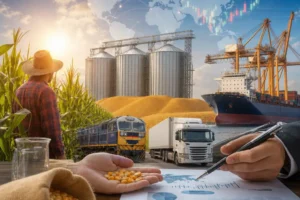
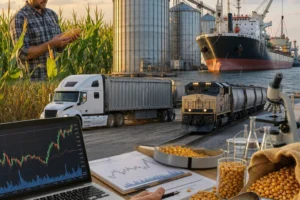
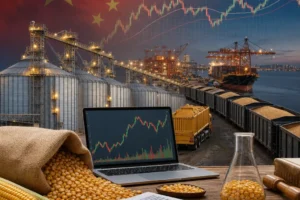

The unprecedented growth of **regional** trade agreements over the past decades has reshaped the landscape of **grain** commerce. By fostering deeper economic ties among neighboring countries, these pacts have influenced production patterns, price stability, and logistical frameworks. This article examines how **trade** alliances contribute to the evolution of the **market**, the implications for supply chains and pricing, as well as the emerging challenges and **opportunities** that producers, exporters, and policymakers face in a more integrated environment.
Regional Integration and Grain Flows
Cross-border trade blocs, such as the European Union’s Common Agricultural Policy (CAP), the United States–Mexico–Canada Agreement (USMCA), and the African Continental Free Trade Area (AfCFTA), have significantly reduced **tariffs** and non-tariff barriers on cereals like wheat, maize, and barley. By harmonizing quality standards and phytosanitary measures, these agreements facilitate smoother **commerce** in staple crops. Farmers in member states often benefit from expanded market access, enabling them to achieve economies of scale and invest in higher-yielding seed varieties.
Moreover, the establishment of joint marketing offices and shared research institutions under many regional pacts has boosted knowledge transfer. For instance, coordinated breeding programs in the EU have delivered rust-resistant wheat strains adapted to diverse microclimates. Similarly, North American collaborations on maize pest control have driven down post-harvest losses. As a result, the overall **supply** of grains has become more predictable, reducing vulnerability to localized weather shocks.
- Tariff elimination has lowered export costs by up to 15% in some corridors.
- Common standards simplify cross-border inspections, cutting clearance times by days.
- Joint research fosters innovations that improve yield and grain quality.
Price Dynamics and Supply Chain Efficiency
Wholesale and retail prices in integrated regions often exhibit lower volatility compared to more fragmented markets. The pooling of supply across multiple producers creates a buffer against sudden shortages or surpluses. When one member country experiences a poor harvest due to drought, nearby partners with robust yields can compensate, maintaining stable price levels. This mechanism supports both producers—who enjoy predictable returns—and consumers, who benefit from affordable staple foods.
Transportation and logistics also see substantial improvements under regional frameworks. Investments in transnational rail networks, inland waterways, and border terminals have cut lead times and reduced spoilage. For example, rail corridors linking the Black Sea port terminals in Eastern Europe to landlocked Central European nations have increased throughput capacity by more than 40% within five years. Access to modern **infrastructure** lowers per-ton shipping costs, making smallholder grains more competitive in export markets.
However, price integration is not without risks. Excessive reliance on a single trade bloc may expose grain markets to regional policy shifts. A sudden imposition of export restrictions during a food security scare can ripple through the entire zone, temporarily spiking prices. Strategic reserves and transparent communication channels among member governments are therefore crucial to mitigate such disruptions.
Policy Challenges and Strategic Opportunities
Despite clear benefits, regional agreements must address several policy challenges. First, ensuring equitable gains across large and small producers remains complex. Dominant agribusinesses with advanced technologies may outcompete small-scale farmers, widening the income gap. Targeted support programs, such as subsidized access to **innovation** grants or cooperative marketing schemes, can help balance this disparity.
Second, environmental sustainability must be woven into trade frameworks. Intensive grain cultivation can lead to soil degradation, excessive freshwater use, and biodiversity loss. Integrating **sustainability** standards—such as incentives for crop rotation, precision farming, and reduced fertilizer runoff—can align agricultural productivity with ecological preservation. Some trade pacts already include green clauses requiring signatories to meet emission reduction targets in agricultural sectors.
Third, political tensions sometimes stall deeper integration. Border disputes or security concerns may prompt temporary reinstatement of customs checks, undermining the frictionless flow of goods that trade agreements aim to achieve. Confidence-building measures—joint patrols, digital tracking systems, and dispute-resolution mechanisms—help maintain market stability even amid diplomatic hiccups.
Balancing Smallholder Inclusion
Small-scale farmers often struggle to meet bulk shipping requirements or comply with complex certification standards. Cooperatives can serve as aggregators, enabling individual growers to pool their output and share transportation costs. Capacity-building initiatives—training in quality control, post-harvest management, and financial literacy—further empower rural communities to participate fully in **regional** markets.
Environmental Safeguards
Water stress and land-use change present long-term threats to grain production. Trade agreements that incorporate environmental impact assessments for major agricultural projects encourage responsible investment. Mechanisms such as green bonds or sustainability-linked loans reward producers for adopting practices like reduced-tillage systems and organic soil amendments.
Digital Trade Facilitation
Blockchain-based platforms, electronic phytosanitary certificates, and AI-driven forecasting tools are revolutionizing grain **commerce**. Digital documentation minimizes paperwork delays, while predictive analytics enhance market transparency by forecasting demand and price trends. Regional cooperation on technological standards ensures systems remain interoperable across borders.
Technological Innovations and Future Outlook
Emerging technologies offer the potential to further streamline grain trade within regional blocs. Advanced drone scouting allows real-time monitoring of crop health, enabling swift interventions against pests and diseases. Genetic editing techniques, such as CRISPR, promise to develop climate-resilient grain varieties tailored to specific soil and weather conditions found within each region.
Satellite imagery combined with big data analytics improves yield estimation and supports more accurate trade forecasts. Governments and private sector partners can use these tools to optimize reserve levels and plan strategic interventions during supply shocks. Additionally, automated port cranes and intelligent routing software facilitate faster loading and unloading, cutting turnaround times and reducing costs.
Looking ahead, the convergence of **innovation**, policy reform, and infrastructure investment will determine the resilience of regional grain markets. As global challenges—climate change, population growth, geopolitical shifts—intensify, well-structured trade agreements can serve as vital platforms for collective action. By balancing economic ambitions with social equity and environmental stewardship, regions can secure a stable, sustainable future for grain **commerce** and food security.