


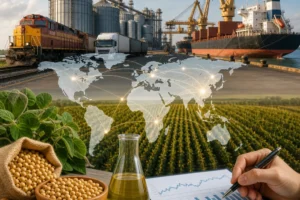

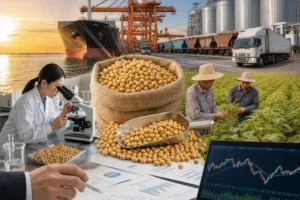

International cooperation plays a pivotal role in reinforcing the grain market’s resilience and ensuring that global food systems thrive. By fostering collaboration among governments, industry stakeholders, and multilateral organizations, nations can collectively address challenges from weather disruptions to geopolitical tensions. A unified approach enhances sustainability, promotes innovation, and safeguards food security for millions around the world.
Global Coordination in Grain Supply Chains
Efficient, well-integrated supply chains demand consistent dialogue and joint strategies. When producers, transporters, and financiers align, the entire network gains in resilience and adaptability. Key aspects of this collaboration include:
- Data Sharing: Real-time exchange of crop forecasts, inventory levels, and shipping schedules helps prevent bottlenecks.
- Infrastructure Investment: Coordinated funding for ports, rail lines, and storage facilities reduces post-harvest losses and enhances throughput.
- Risk Management: Joint insurance schemes and hedging platforms spread financial exposure, enabling smaller operators to participate securely.
These measures boost the ability to reroute shipments in response to local disruptions, such as extreme weather events or logistical constraints. Through international memorandums of understanding and cross-border task forces, partners can swiftly implement contingency plans and uphold uninterrupted trade flows.
Policy Harmonization and Trade Facilitation
Streamlined regulations and shared policy frameworks are essential to avoid fragmented markets and costly trade barriers. Harmonization efforts often revolve around the following:
- Standardized phytosanitary protocols to control pests and diseases without impeding shipments.
- Aligned quality grading systems that foster mutual recognition of grain specifications.
- Coordinated tariffs and export quotas that prevent sudden market distortions.
Regional blocs and multilateral bodies like the World Trade Organization facilitate discussions on reducing trade policy uncertainty. Through joint negotiations and bilateral agreements, countries commit to transparent measures that discourage abrupt export bans and safeguard global supply stability.
Moreover, technical assistance programs help emerging economies modernize customs processes and adopt digital documentation. As paperwork is minimized, border crossings become quicker, reducing spoilage and ensuring fair pricing for farmers and consumers alike.
Technological Collaboration and Risk Mitigation
Advancements in technology drive efficiency gains across the grain market, but adoption is often uneven. Collaborative initiatives help disseminate best practices and emerging tools worldwide:
- Shared platforms for satellite-based crop monitoring and yield prediction.
- Joint research on climate-resilient seed varieties and sustainable farming methods.
- Collective investment in blockchain-enabled traceability solutions to secure supply chains and counter fraud.
By pooling resources for innovation, countries can scale up pilot projects more rapidly than going it alone. These partnerships enable stakeholders to tackle volatility stemming from unpredictable weather patterns, ensuring that harvest projections remain reliable.
Risk mitigation extends beyond technology. International grain corridors and regional stockpiles exemplify how nations can share responsibilities. When one country experiences a shortfall, neighboring partners can release reserve stocks or adjust export schedules to stabilize prices and availability.
Capacity Building and Knowledge Exchange
Training and information dissemination are at the heart of sustainable market governance. Through workshops, field demonstrations, and online courses, experts share insights on best agricultural and logistical practices:
- Extension services that teach farmers precision agriculture and integrated pest management.
- Public-private partnerships offering scholarships and fellowships for agribusiness professionals.
- Centres of excellence that conduct joint studies on market trends and regulatory impacts.
Such capacity building enhances local expertise and promotes a sense of shared ownership. Governments and NGOs often co-host forums where policymakers and industry leaders debate emerging challenges and co-develop policy recommendations that reflect diverse regional needs.
Financial Instruments and Incentives
Securing adequate capital is critical to maintain grain market stability. Collaborative financial mechanisms help distribute risk and attract investment:
- Multi-country development banks extend low-interest loans for storage expansion and port modernization.
- Guarantee schemes encourage private banks to fund agribusiness ventures, reducing the cost of credit for smallholders.
- Performance-based grants reward projects that achieve sustainability and efficiency targets, such as reduced wastage rates and lower carbon emissions.
These instruments are most effective when aligned with clear regulatory frameworks and transparent evaluation criteria. International donors and local authorities coordinate to ensure funds are disbursed fairly and monitored rigorously.
Addressing Geopolitical and Climatic Challenges
Grain markets are uniquely sensitive to geopolitical tensions and climate change. Countries that collaborate on diplomatic and environmental fronts strengthen collective preparedness:
- Joint contingency planning for conflict or trade embargoes, preventing sudden price spikes.
- Shared research on adaptation strategies for drought-prone and flood-prone regions.
- Regional emergency funds to subsidize food imports during extreme shortages.
Through intergovernmental councils and climate adaptation coalitions, participants can negotiate resource-sharing agreements and early warning systems. This level of cooperation reduces the risk of competitive hoarding and commercial retaliation, fostering a more predictable global trading environment.
The Role of Private Sector and Civil Society
While governments set the stage for cooperation, the private sector and NGOs bring agility and innovation. Collaborative initiatives among these actors include:
- Industry coalitions that establish voluntary sustainability standards and facilitate traceability.
- NGO-led programs that empower local producers with microloans and market linkages.
- Cross-sector working groups that pilot new logistics models, such as shared warehousing and last-mile distribution hubs.
By leveraging the unique strengths of each stakeholder, these partnerships accelerate the diffusion of best practices and technologies. They also provide platforms for marginalized groups to voice concerns and influence policy development.
Future Prospects for a Stable Grain Market
Emerging trends point toward even deeper collaboration. Digital platforms will facilitate near-instant coordination on supply adjustments. Climate-smart financing will reward projects that reduce environmental footprints. And regional trade agreements will increasingly incorporate grain market stability clauses.
Successful models of cooperation can be replicated across continents, enabling smaller economies to benefit from the collective capacity of their larger neighbors. Ultimately, when nations unite around shared objectives—such as food security, market stability, and environmental stewardship—the global grain trade becomes not only more robust but also more equitable and sustainable.