

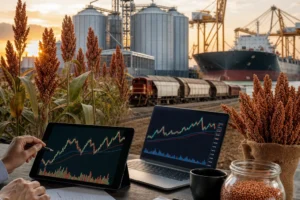



The global grain market relies heavily on pricing systems that reflect real-time supply and demand dynamics. Understanding how these benchmarking systems operate is crucial for farmers, traders, processors, and policy makers. This article explores prominent price benchmarks, the methodologies behind them, their practical applications, and the challenges shaping their evolution. By gaining insight into these mechanisms, market participants can enhance decision-making, manage risk more effectively, and foster greater transparency across the entire value chain.
Key Global Grain Price Benchmarking Systems
Several exchanges and institutions publish standardized grain prices that serve as global reference points. These benchmarks derive from trading activity in highly active markets, ensuring they capture prevailing market sentiment and liquidity.
- Chicago Board of Trade (CBOT): As one of the oldest and most liquid futures markets, CBOT sets daily settlement prices for corn, wheat, and soybeans. These prices influence contracts worldwide and underpin numerous over-the-counter transactions.
- MATIF (Marché à Terme International de France): European benchmark for wheat and rapeseed futures. MATIF prices guide regional cash markets in the European Union and inform import/export decisions.
- Dalian Commodity Exchange (DCE): Key Asian benchmark for corn, soymeal, and palm oil. Rapid growth in trading volumes has elevated DCE’s role in shaping prices across Asia.
- Minneapolis Grain Exchange (MGEX): Specialist market for hard red spring wheat futures. MGEX prices are particularly influential in North American milling and export markets.
Underlying Methodologies and Data Sources
Grain price benchmarks rely on transparent rules and robust data to ensure fairness and accuracy. Exchanges and reporting agencies implement strict protocols to collect, validate, and aggregate trading information.
Trade Execution and Reporting
Exchanges record each transaction’s volume, price, and timestamp. High-frequency data from electronic trading platforms allows real-time price calculation and dissemination. Market participants value this volatility-reflective data when structuring sale or purchase agreements.
Open Interest and Volume Metrics
Open interest indicates the number of outstanding contracts at the end of each trading session, signaling the depth of market participation. Volume data helps identify active contract months, ensuring the benchmark reflects the most liquid delivery period.
Cash Market Surveys and Interpolation
For physical grain, certain agencies conduct weekly or monthly surveys of cash bids and offers from elevators, processors, and merchants. When direct futures data is sparse, statistical models interpolate between known price points, maintaining benchmark continuity.
Applications of Grain Price Benchmarks
Benchmark prices underpin a wide array of commercial and financial instruments, enabling market participants to transfer, hedge, or speculate on price risk.
- Futures and Options Contracts: Standardized agreements that allow producers and consumers to hedge against adverse price movements by locking in prices in advance.
- Over-the-Counter Derivatives: Customized swaps and forwards that reference a recognized benchmark, facilitating tailored risk management solutions for large agribusinesses.
- Basis Trading Strategies: Buying or selling the cash commodity while taking opposite positions in futures, aiming to profit from changes in the difference (basis) between cash and benchmark prices.
- Government Policy and Subsidy Programs: Public agencies use benchmarks to determine subsidy levels, import tariffs, and strategic reserve valuations, ensuring policies reflect market realities.
Challenges and Evolving Trends
While existing benchmarks offer broad coverage, they face challenges related to market integrity, data quality, and the need to adapt to emerging technologies and sustainability demands.
Price Manipulation and Regulatory Oversight
Large traders may attempt to influence benchmark prices through concentrated positions or spoofing tactics. Regulatory bodies enforce position limits and require trade surveillance to uphold market fairness.
Integration of Digital Technologies
Advances in digitalization and blockchain platforms promise greater data verification and real-time track-and-trace capabilities. Secure ledger systems can record each grain batch’s origin, quality, and transaction history, reinforcing price integrity.
Sustainability and Traceability Metrics
Growing consumer and regulatory focus on environmental impact drives demand for benchmarks that incorporate carbon footprints, water usage, and deforestation risk. Combining physical commodity pricing with sustainability indices may become a new frontier for benchmark design.
Future Outlook for Grain Price Benchmarking
The next generation of benchmarking systems will likely blend traditional exchange data with alternative information sources such as satellite imagery, IoT-enabled farm sensors, and machine learning algorithms. By integrating real-time yield estimates and weather patterns, future benchmarks could offer more dynamic price signals, reducing lag in market responses. Emphasizing sustainability and traceability will further align grain pricing with global environmental goals. Ultimately, enhanced collaboration among exchanges, regulators, and technology providers will foster more robust and derivatives-ready benchmarks, empowering all market participants to navigate price risk with greater confidence.