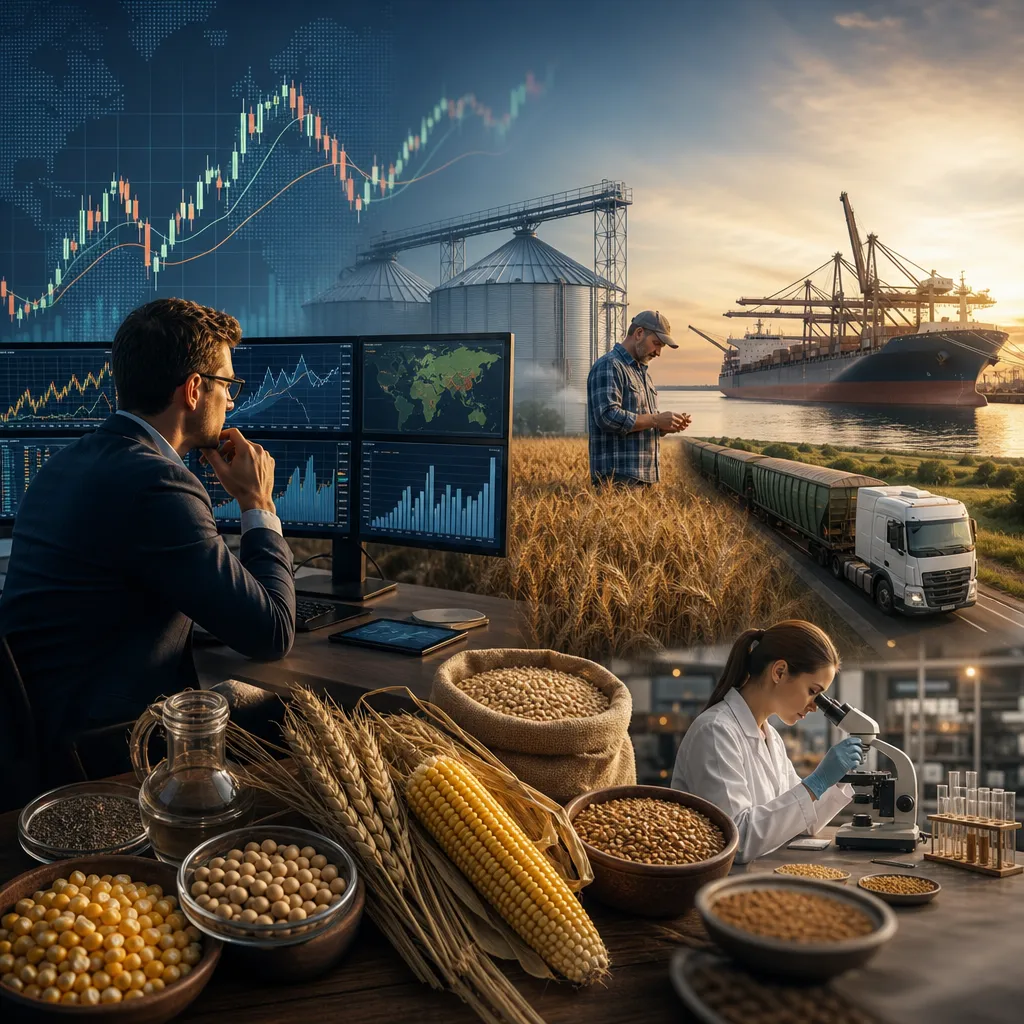


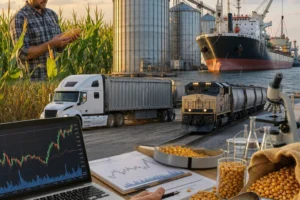


This article delves into how market intelligence platforms are reshaping grain markets by offering advanced data analytics and machine learning capabilities. It examines the critical role these tools play in improving forecasting accuracy, strengthening supply chain resilience, and helping stakeholders navigate complex price dynamics and volatility. Through real-world examples and technical insights, readers will gain an understanding of the core components, applications, and challenges associated with modern grain market intelligence.
Understanding the Need for Enhanced Grain Forecasting
Market Complexity and Agricultural Risks
Global grain markets are influenced by a multitude of factors, including weather events, trade policies, crop diseases, and shifting consumption patterns. This hypersensitivity to external shocks has increased the demand for industry-wide real-time monitoring and precise forecasting tools. Producers, traders, and policymakers must contend with high levels of uncertainty that can lead to sudden price swings, supply disruptions, and financial losses. Traditional forecasting methods—reliant on historical averages and manual reporting—often fail to capture rapid market changes. As a result, the sector has turned to specialized digital platforms that synthesize data from diverse sources.
Data-Driven Decision Making in Agriculture
Reliable data is the foundation of modern commodity risk management. By integrating satellite imagery, weather sensor feeds, crop health assessments, and logistics information, grain stakeholders can anticipate production shortfalls or surpluses with greater precision. Such integration supports timely interventions, whether adjusting planting schedules, negotiating forward contracts, or allocating storage resources. When coupled with robust analytics engines, this data unlocks actionable insights that empower users to transform raw information into strategic plans. In essence, these platforms act as central hubs for delivering comprehensive market intelligence to anyone involved in the grain ecosystem.
Features and Technologies of Market Intelligence Platforms
Data Aggregation and Integration
Leading platforms excel at ingesting and normalizing vast data streams. They connect to government databases, private weather services, commercial satellite providers, and trade reporting agencies. Automated extraction routines and cloud-based pipelines ensure minimal latency between data generation and availability. Users gain access to unified dashboards where they can filter by region, commodity type, or timeframe. This seamless integration reduces manual errors and enables granular analysis of yield projections, shipping volumes, and storage levels.
Predictive Analytics and Machine Learning
Embedded predictive models leverage advanced statistical techniques and machine learning algorithms to generate forward-looking scenarios. Time-series forecasting methods, such as ARIMA and LSTM networks, assess historical trends and detect emerging patterns. Ensemble learning frameworks combine multiple models to improve overall accuracy and quantify uncertainty. Risk metrics, like Value-at-Risk (VaR) for commodity portfolios, are computed in near-real-time. By evaluating model performance continuously, platforms adapt to changing conditions, recalibrating parameters as new information arrives.
- Feature engineering extracts variables such as soil moisture indices, shipping delays, and market sentiment indicators.
- Model validation uses cross-validation and backtesting against historical outcomes to ensure reliability.
- Automatic anomaly detection flags unexpected events—such as pest outbreaks or policy shifts—that may disrupt forecasts.
User Interfaces and Interactive Visualizations
Accessible graphical interfaces allow users to explore data through customizable charts, heat maps, and scenario builders. Filters and sliders enable dynamic 'what-if’ analyses, while geospatial overlays display crop conditions at field level. Alerts and notifications can be configured to warn stakeholders of threshold breaches, such as projected price drops or logistics bottlenecks. Ultimately, this level of interactivity streamlines communication across teams and supports more agile responses to market fluctuations.
Applications in Grain Forecasting
Risk Management and Decision Support
Grain traders and agricultural corporations rely on decision support tools to hedge exposure and optimize procurement. By simulating multiple price trajectories, firms can develop robust hedging strategies through futures and options markets. Scenario analysis highlights potential stress points within the supply chain, guiding investments in storage capacity or alternative transport routes. Insurance providers also benefit by accurately pricing coverage based on forecasted yield variances and weather-related risks.
Optimizing Logistics and Storage
Warehouse operators and port authorities use forecasting outputs to plan capacity, schedule labor, and coordinate vessel arrivals. Predictive alerts on shipment surges or crop volume changes help minimize demurrage costs and reduce spoilage risks. Integrating transportation analytics with grain forecasts ensures that distribution networks remain efficient, even when confronted with sudden shifts in global demand or natural disasters. This holistic approach fosters resilient logistics frameworks that can absorb market shocks with minimal disruption.
Case Study: Corn Pricing Forecast
One multinational agribusiness adopted a market intelligence platform to refine its corn price projections. By combining high-resolution soil maps, near-infrared satellite scans, and export license data, the platform produced weekly updates on projected harvest volumes. The result was a 15% reduction in forecast error compared to legacy models. Armed with more precise forecasts, the firm adjusted its buying schedule and futures positions, leading to improved margins during a period of unprecedented volatility.
- Improvement in profit forecasting by aligning purchase and sale timelines.
- Enhanced collaboration across commodity, risk, and logistics teams.
- Ability to react swiftly to policy announcements and weather advisories.
Challenges and Future Outlook
Data Quality and Accessibility
Despite rapid technological advances, data inconsistencies and gaps remain significant hurdles. Some regions lack reliable reporting infrastructures, leading to blind spots in global grain coverage. Harmonizing disparate data formats and ensuring data integrity require ongoing investment in standards and validation protocols. Furthermore, privacy regulations and proprietary constraints can limit access to critical information streams, slowing platform adoption in certain markets.
Integration and User Adoption
Implementing sophisticated market intelligence solutions demands organizational change management. Training end-users to interpret complex dashboards and trust algorithmic recommendations is essential. Firms must bridge the gap between data scientists and commodity experts, establishing governance frameworks for monitoring model performance and managing updates. As the technology matures, platforms are expected to offer greater customization, embedding domain-specific workflows for distinct grain types and regional requirements.
Emerging Trends and Future Capabilities
Looking ahead, the integration of Internet of Things (IoT) sensors and blockchain-based traceability promises to enhance the granularity and transparency of grain market data. Coupled with advancements in artificial intelligence—such as reinforcement learning for adaptive trading strategies—future platforms will deliver even more robust insights. By continuing to blend technological innovation with domain expertise, market intelligence providers will drive a new era of precision agriculture, risk mitigation, and sustainable grain supply management.