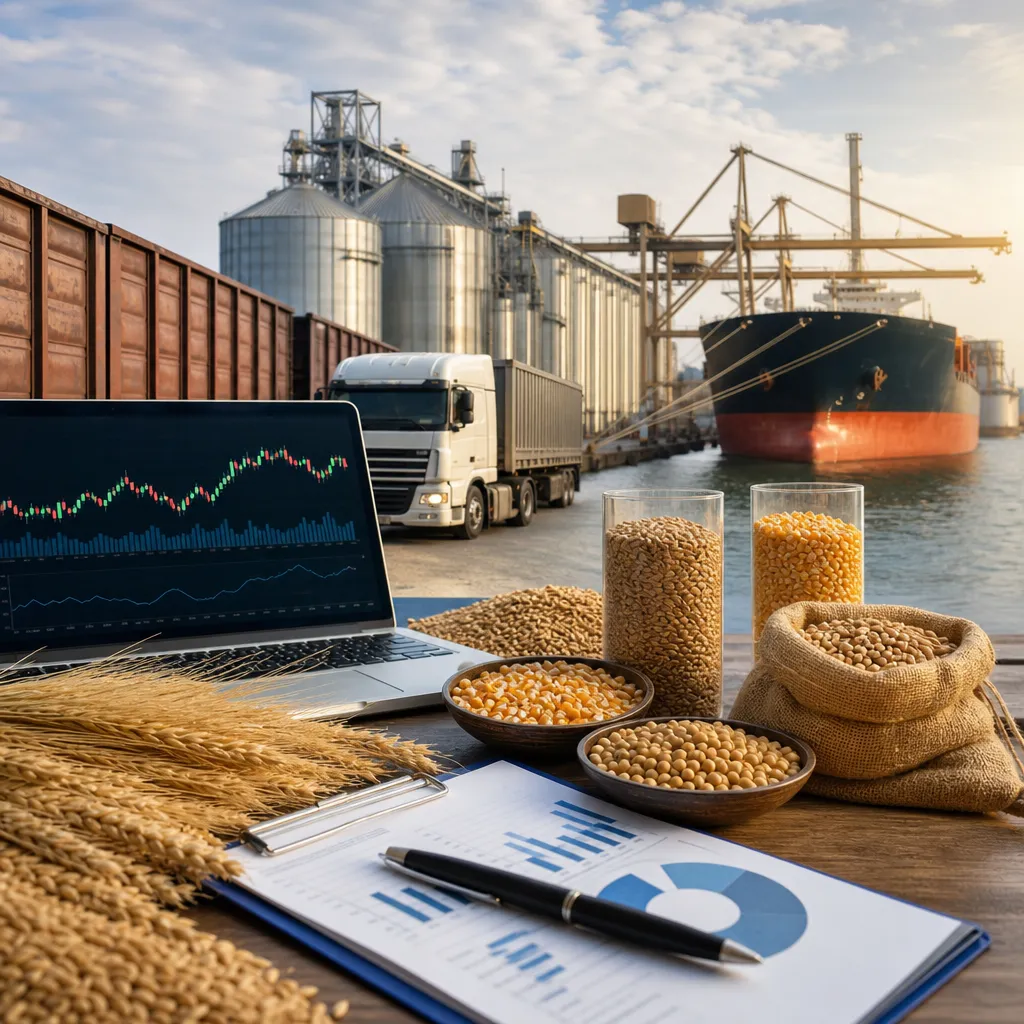







In the intricate world of global agriculture, traders and analysts continuously seek opportunities to capitalize on price differentials across regions. Grain arbitrage represents a powerful strategy that leverages variations in market conditions, supply dynamics, and logistical factors to generate profit with minimal directional exposure. By understanding the mechanisms that drive these spreads and deploying disciplined strategies, participants can navigate the complexities of the grain trade and unlock potential gains.
Fundamentals of Grain Arbitrage
Grain arbitrage is rooted in the principle that identical or similar commodities trade at different prices in distinct geographic or temporal markets. Traders exploit these discrepancies by buying low in one venue and selling high in another, while accounting for transport costs, storage fees, and any relevant regulation. The process involves:
- Identifying price spreads between physical or futures markets.
- Calculating all associated transaction expenses, including freight, insurance, and handling.
- Ensuring timely execution to lock in the margin before the spread converges.
Key grains for arbitrage include wheat, corn, soybeans, and rice. Each of these commodities exhibits unique characteristics: moisture content, grade differentials, and harvest cycles, which influence regional pricing structures. Successful arbitrageurs pay close attention to local supply inflows, seasonal demand patterns, and quality adjustments that can widen or compress price gaps.
Key Drivers of Regional Price Disparities
Several factors contribute to the creation and persistence of price differentials across grain markets:
- Logistics and Infrastructure: Port capacity constraints, rail bottlenecks, and road network quality can elevate transportation costs in one region relative to another.
- Storage and Handling Fees: Grain elevators, silos, and inland terminals impose variable charges based on location, throughput, and operational efficiencies.
- Government Policies: Regulation such as export quotas, import tariffs, and subsidy programs directly affect price formation and cross-border flows.
- Currency Fluctuations: Exchange rate movements influence export competitiveness, making some origin markets more attractive for buyers.
- Weather Events: Droughts, floods, or unexpected frost can disrupt local yields, quickly shifting residual inventories and driving up regional premiums.
For instance, a harvest in the U.S. Midwest may lead to depressed domestic corn prices, while high freight rates to the Gulf can keep export parity prices elevated. Arbitrageurs monitor port inventories and inland basis levels to determine whether exporting from a surplus region to a deficit market remains economically viable.
Risk Management Strategies in Grain Arbitrage
Even though arbitrage is considered a lower-risk approach compared to directional trading, several uncertainties must be managed:
- Volatility in freight rates can erode projected margins if shipping costs jump unexpectedly.
- Price Convergence Risk: If the spread narrows before execution, the arbitrage opportunity may vanish or even reverse, resulting in a loss.
- Counterparty Risk: Dealing with unfamiliar buyers or sellers, especially in emerging markets, raises concerns about contract enforcement and payment defaults.
- Storage Decay: Prolonged holding periods can lead to quality degradation or pest infestations, reducing the commodity’s market value.
To mitigate these risks, traders employ various tactics:
- Pre-hedging with futures contracts to lock in the purchase or sale price.
- Using letters of credit and performance bonds to secure transactions with unknown counterparties.
- Diversifying across multiple corridors and grain types to avoid concentration in a single trade.
- Partnering with third-party logistics providers that offer transparent cost structures and contingency plans.
By combining physical transactions with financial hedges, arbitrageurs can protect their profit margins from adverse moves in either direction.
Technological Innovations Transforming Grain Arbitrage
Advances in information systems, data analytics, and supply chain visibility have significantly enhanced the efficiency of grain arbitrage:
- Real-time Price Feeds: Integrated platforms aggregate spot, forward, and futures quotes from global exchanges, enabling instantaneous identification of mispriced markets.
- Blockchain Solutions: Distributed ledgers offer immutable records of ownership and movement, reducing disputes and accelerating settlement cycles.
- IoT Sensors: Smart bins and transport containers equipped with humidity and temperature sensors monitor grain quality throughout the shipping process.
- AI-driven Forecasts: Machine learning models analyze weather patterns, satellite imagery, and crop health data to predict yield variations and upcoming demand shifts.
These innovations create a more transparent environment, narrowing informational asymmetries between buyers and sellers. Traders can now execute cross-border arbitrage with greater confidence in the accuracy of cost estimates and timing.
Case Study: Corn Arbitrage Between the U.S. and Mexico
Consider a recent scenario where U.S. corn was trading at a rail-delivered basis of $3.50 per bushel in Illinois, while the Mexican import market demanded a landed cost of $4.10 per bushel. Factoring in rail freight to the Gulf ($0.30), ocean freight to Veracruz ($0.25), and inland trucking ($0.15), the total transport expense equaled $0.70 per bushel.
Comparing the adjusted U.S. export price (3.50 + 0.70 = $4.20) against local Mexican bids at $4.10, an initial glance suggested the trade was slightly unprofitable. However, deeper analysis revealed that seasonal rally expectations in Mexico, coupled with government grain reserve releases in the U.S., could shift the spread by $0.15. By executing a forward sale in Mexico and a back-to-back purchase in Illinois, the arbitrageur locked in a $0.05 cushion and stood to benefit from the anticipated spread expansion.
Future Outlook for Grain Arbitrage
As global population growth drives up demand for food and feed, market participants will continue seeking efficient mechanisms to balance supply between surplus and deficit regions. Key trends include:
- Expansion of inland terminals in Africa and Southeast Asia to reduce reliance on maritime shipping.
- Greater use of renewable energy in grain drying and handling, lowering carbon footprints and operating costs.
- Integration of carbon credit markets into agricultural commodity trading, affecting cost structures and arbitrage thresholds.
Adapting to these shifts requires agility, robust risk frameworks, and a willingness to embrace new technologies. By staying informed and proactive, grain arbitrageurs can continue to identify and execute profitable strategies in an ever-evolving landscape.