

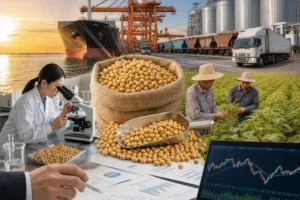

Grain hedging strategies are practical tools for reducing price risk, not for guaranteeing the highest price. Farmers, elevators, feed mills, processors, exporters, and importers use hedging to manage the gap between today’s uncertain market and a future purchase or sale. In practice, grain hedging usually combines two separate markets: the physical cash market, where grain is actually bought and delivered, and the futures or options market, where price risk is offset financially. The key to using hedging well is understanding where your local cash price comes from, how it relates to exchange prices, and what risks remain after the hedge is placed.
A wheat grower, for example, may sell futures before harvest to protect against a price decline, then later sell physical wheat to a local elevator or mill and buy back the futures position. A feed buyer may do the reverse: buy futures or call options to protect against rising corn costs before physical grain is purchased. Hedging works best when it is tied to real exposure, a known delivery period, a realistic basis assumption, and a clear marketing plan.
What grain hedging is and what it is not
Hedging is the use of a financial or contractual position to reduce the impact of adverse price moves in physical grain. The classic hedge uses exchange-traded futures, but forward cash contracts, minimum-price contracts, over-the-counter agreements, and options can also serve a hedging function.
It is important to separate hedging from speculation. A hedge offsets an existing or expected physical exposure. A speculator takes price risk without owning or needing the grain. The same futures contract can be used for either purpose; the difference is why the position exists.
Hedging also does not eliminate every risk. It mainly addresses flat price risk, meaning the general rise or fall of the market. It does not fully remove basis risk, quality issues, freight changes, storage losses, counterparty concerns, or the possibility that local bids move differently from futures.
| Market | What it represents | Where it is used | Main risk left over |
|---|---|---|---|
| Futures | Standardized exchange contract for a future month | Through regulated futures exchanges and brokers | Basis mismatch, margin calls |
| Options | Right, not obligation, to buy or sell futures at a strike price | Through exchange-listed options via a broker | Premium cost, basis risk |
| Forward cash contract | Physical sale or purchase for later delivery at agreed terms | Elevators, cooperatives, merchants, processors | Counterparty, production shortfall, quality |
| Basis contract | Basis fixed now, futures component set later | Physical grain buyers and sellers | Futures price later may be unfavorable |
Where grain hedging happens: exchange market versus local cash market
Most grain futures and grain options trading takes place on regulated commodity exchanges through a licensed futures broker or a brokerage platform connected to that exchange. In the United States, many benchmark grain contracts trade on CME Group markets. Other regions may use different exchanges or local contracts, but the principle is the same: the exchange price is a benchmark, not your final farmgate or delivered physical price.
The physical grain market operates separately. Farmers usually sell to grain elevators, cooperatives, merchants, feed companies, ethanol plants, crushers, flour mills, maltsters, rice mills, or exporters. Buyers may bid for pickup at the farm, delivery to a local elevator, rail loading point, river terminal, inland warehouse, or export port. The physical transaction depends on grade, moisture, foreign material, protein or oil content where relevant, freight, unloading terms, timing, and payment conditions.
Local cash prices are often expressed as:
- Futures price + or – basis
- Delivered bid to a named location
- Pickup bid at the farm or warehouse
Readers should check exchange futures prices on the exchange website or via a broker or market-data service, and local cash bids through elevators, cooperatives, grain merchants, processors, or agricultural market reporting systems where available. Those are not interchangeable prices.
How the main grain hedging strategies work
Short hedge for producers or grain owners
A short hedge is the standard strategy for a farmer, elevator, or merchant who owns grain or expects to own grain and is exposed to falling prices. The hedger sells futures first. Later, when physical grain is sold in the cash market, the hedger buys back the futures.
If futures fall, the futures gain may offset a weaker cash sale. If futures rise, the higher cash sale may be offset by a futures loss. The result is that the hedger has reduced price uncertainty, though basis still matters.
This is often used before harvest for corn, wheat, soybeans, canola, barley, or sorghum, and after harvest when grain is in storage.
Long hedge for grain buyers
A long hedge is used by feed mills, livestock producers, flour mills, crushers, maltsters, ethanol plants, or importers worried about rising grain prices. They buy futures now, then later buy the physical grain in the cash market and sell the futures hedge.
This helps protect input costs when the business knows grain will be needed in the future but has not yet fixed the physical purchase.
Put options for price floors
Buying a put option gives a grain seller the right to sell futures at a chosen strike price. It acts like insurance against a falling market while leaving upside open if prices rise. The trade-off is the option premium, which is paid upfront.
Put options are often chosen by growers who want downside protection without the margin-call risk of a straight short futures position, though options still involve time decay and do not remove basis risk.
Call options for buyers
Grain users can buy call options to protect against rising prices while keeping flexibility if the market falls. This can suit importers or feed buyers when supply is uncertain or procurement timing is flexible.
Forward contracts and hedge-to-arrive structures
Many physical grain buyers offer forward contracts that lock a cash price for future delivery. Some may offer contracts that lock only one part of the price, such as futures or basis, leaving the other component to be set later. These are arranged directly with the elevator, cooperative, or merchant, not through a retail futures account.
These contracts are practical for producers who prefer not to manage margin accounts, but they create different risks, especially if production fails or the grain does not meet contract quality.
Basis, storage, and logistics: the part many hedgers underestimate
Basis is the difference between the local cash price and the relevant futures contract. It reflects freight, local supply and demand, storage pressure, export demand, processor needs, quality, and local logistics. A hedge can work well on futures and still disappoint if basis weakens sharply.
For example, harvest pressure may widen basis because elevators are full, trucks are scarce, or storage is tight. Conversely, basis may strengthen later if stocks tighten, barge freight improves, rail service normalizes, or a nearby processor needs grain.
Storage decisions therefore matter as much as futures decisions. If grain is stored on farm or in a commercial warehouse, the owner should compare:
- expected basis improvement,
- storage cost,
- interest on inventory,
- shrink and quality risk,
- freight timing,
- cash-flow needs.
Physical grain can be stored on farm, in commercial elevators, bonded warehouses, river terminals, port silos, or processor-linked facilities depending on country and crop. Access is local and contract specific. Before hedging stored grain, check who controls title, whether warehouse receipts are issued, what quality standards apply, and whether grain can be moved when needed.
| Factor | Why it matters to a hedge | Where to check it |
|---|---|---|
| Basis history | Shows how local cash prices usually relate to futures | Elevator bid sheets, cooperative records, merchant quotes, farm marketing software |
| Storage availability | Affects whether grain can be held for later sale | On-farm capacity, warehouse operators, local elevators |
| Freight | Can widen or narrow local basis significantly | Truckers, rail providers, barge market contacts, merchants |
| Quality | Discounts can reduce the realized cash price | Elevator grading, inspection agencies, lab tests, contract specs |
| Margin liquidity | Futures hedges may require cash when markets move against the position | Broker account statements, bank lines, treasury planning |
Practical steps to build a grain hedge
- Define the physical exposure. Estimate how much grain you will sell or buy, the likely month, location, and quality.
- Choose the benchmark contract. Use the futures contract month that best matches your exposure period and the crop you are hedging.
- Know your local basis. Review historical basis and current bids from elevators, cooperatives, processors, or merchants.
- Select the instrument. Futures for a direct hedge, options for flexible insurance, or a physical forward contract if that better fits operations.
- Arrange access. Futures and options require a brokerage relationship and a funded margin account. Physical forward contracts are arranged directly with the buyer or seller.
- Document the plan. Set target volumes, time windows, acceptable basis levels, and who has authority to lift or roll the hedge.
- Monitor and adjust. Watch crop size, weather, export demand, currency, freight, and local basis. If timing changes, the hedge month may need to be rolled.
- Close the hedge against the physical transaction. When grain is priced or delivered physically, offset the futures or exercise, sell, or let expire the option depending on the strategy used.
A hedge should be tied to a commercial plan, not left open as a separate speculative position after the physical grain is sold or purchased.
Where to get grain prices, bids, reports, and hedging access
For futures prices, the primary source is the relevant commodity exchange and approved broker platforms. Exchange websites typically publish delayed quotes and contract specifications such as contract size, listed months, delivery terms, and tick values. Professional users may subscribe to commercial real-time data vendors.
For local cash bids, farmers and grain owners usually check:
- local elevator and cooperative bid sheets,
- processor or mill procurement bids,
- exporter or merchant bid indications,
- regional agricultural market reporting services,
- farm marketing or grain merchandising software that aggregates bids where available.
For hedging access, futures and options are normally placed through a regulated futures broker. That is different from selling physical grain to an elevator or merchant. A brokerage account manages exchange positions, margin, and trade reporting; it does not itself buy your truckload of wheat or corn.
For market intelligence, the most widely used public sources include crop, stocks, trade, and positioning reports. These help users understand whether the hedge environment is becoming tighter or looser in terms of supply and demand.
Which reports matter most for hedgers
Good hedging decisions depend on more than just today’s quote. Traders and commercial grain firms normally monitor official reports, weather, and logistics because those factors shape both futures and basis.
- USDA WASDE: widely used for global and U.S. supply, demand, ending stocks, and trade balances for major grains and oilseeds.
- USDA Crop Progress: tracks planting, crop condition, and harvest pace, especially important during the growing season.
- USDA Grain Stocks: helps the market gauge how tight or comfortable supply is.
- USDA Export Sales: useful for demand momentum, especially in export-oriented crops.
- CFTC Commitments of Traders: shows how major categories of futures traders are positioned.
- FAO and national agriculture agencies: useful for broader international production and trade context.
These reports are usually accessed online from the publishing agency. Commercial analysts, brokers, and grain merchandisers often build them into dashboards and internal market models, but the original reports remain the baseline reference.
Common risks, costs, and mistakes
The biggest operational risk in futures hedging is the margin call. A good hedge can still require cash if the futures market moves against the futures position before the physical sale is completed. That is a liquidity issue, not necessarily a sign the hedge is wrong.
Another frequent mistake is the cross-hedge problem: using a benchmark contract that does not closely track the local crop or region. This can happen in barley, sorghum, oats, or regional feed grains where local cash values may not move in line with the hedge instrument.
Other common errors include:
- hedging more grain than will actually be produced or needed,
- ignoring basis and focusing only on futures,
- failing to match the hedge month to the cash exposure period,
- forgetting quality risk and delivery specifications,
- treating options premium as trivial,
- holding a hedge after the underlying physical exposure has changed,
- using leverage without understanding account requirements.
Storage, brokerage, interest, freight, drying, and handling costs should all be considered when comparing hedging choices. A hedge that looks attractive on paper may be weak after full carrying costs are included.
FAQ
Where can I check grain prices for hedging?
Check benchmark futures prices on the relevant exchange website or through a futures broker or market-data service. Check local cash bids with nearby elevators, cooperatives, merchants, processors, or official regional market reporting services. The futures quote is not the same as the local cash price.
Where do farmers usually place grain hedges?
Exchange-traded futures and options are usually placed through a regulated futures broker. Physical forward contracts are typically arranged directly with elevators, cooperatives, merchants, or processors.
What is the difference between a hedge and a forward cash sale?
A futures hedge offsets price risk financially while leaving the physical sale to be completed separately later. A forward cash sale is a direct physical contract with a buyer for future delivery, usually fixing all or part of the cash price now.
Can I hedge grain without delivering to the exchange?
Yes. Most hedges are offset financially before delivery. Many commercial hedgers use futures only for price protection and then complete the actual grain sale or purchase in the local physical market.
What is basis risk in grain hedging?
Basis risk is the possibility that the difference between local cash price and futures changes unexpectedly. Even if the futures hedge works, your final local cash result may differ because local supply, freight, storage pressure, or processor demand changed.
Are options safer than futures for grain hedging?
Options can limit downside to the premium paid for the option buyer, which helps with margin-call risk. But they are not automatically better. They can be expensive in volatile markets and still leave basis risk.
Which reports should grain hedgers follow regularly?
Core reports include USDA WASDE, USDA Crop Progress, USDA Grain Stocks, USDA Export Sales, and CFTC Commitments of Traders. International users may also monitor FAO and national agricultural statistics or trade agencies.
Can local grain quality affect a hedge result?
Yes. Futures hedging mainly addresses price movement, not physical quality discounts. Moisture, test weight, protein, oil content, damage, or contamination can reduce the actual cash price received or increase procurement costs.
Sources
- USDA World Agricultural Supply and Demand Estimates
- CME Group contract specifications and agricultural futures market information
- CFTC Commitments of Traders