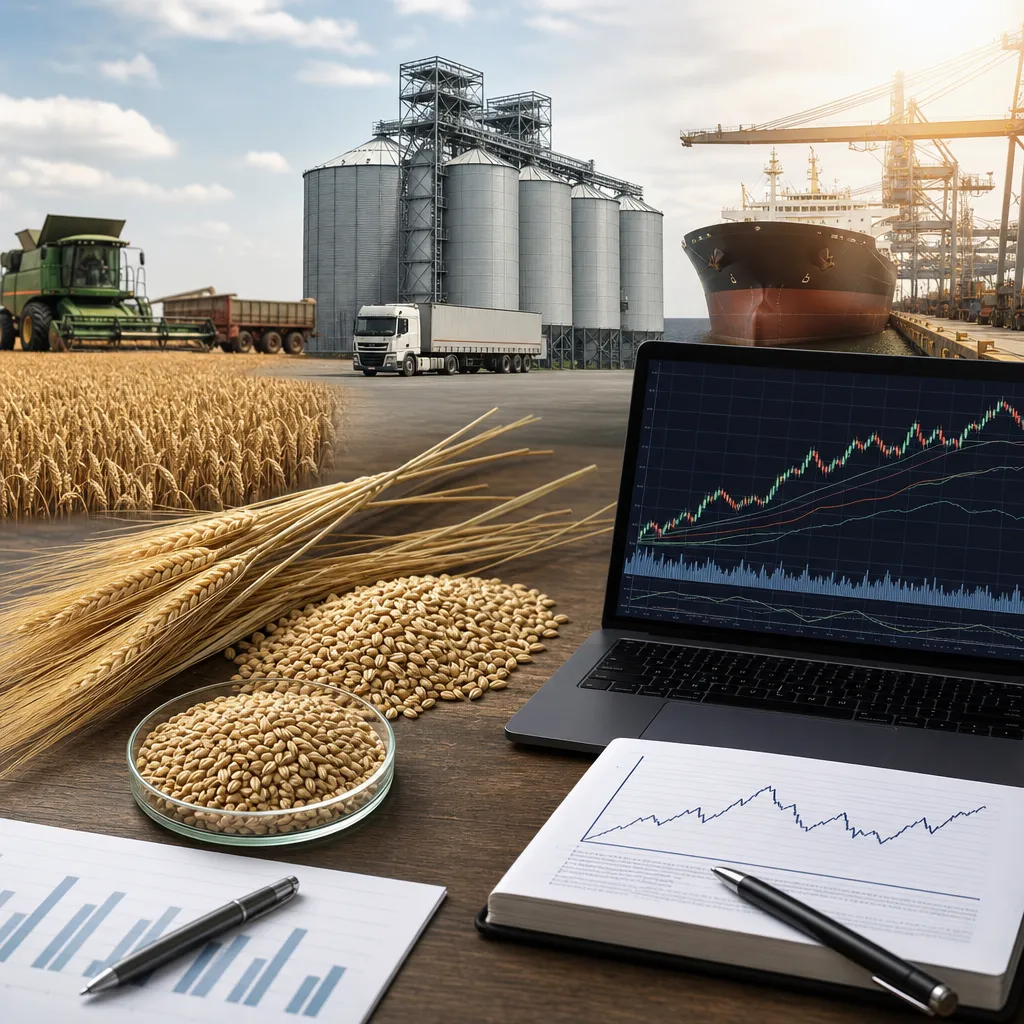



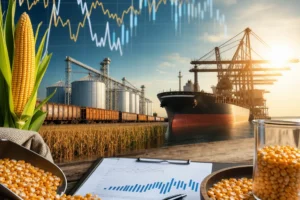




A grain swap is usually an over-the-counter agreement in which two parties exchange grain-related price exposure rather than move grain itself. In practice, one side typically pays or receives a floating value linked to a published grain price, while the other side pays or receives a fixed price, basis formula, or another indexed value. Grain swaps are used to manage price risk, not to replace the physical cash sale of wheat, corn, soybeans, canola, or other grains. They sit between the futures market and the physical grain market: more customizable than exchange-traded futures, but less transparent and usually more dependent on counterparty credit.
For farmers, processors, feed mills, merchandisers, and commercial grain users, the key question is not only what a grain swap is, but where it is actually done and how it differs from a hedge on an exchange such as CME Group. Most grain swaps are arranged through banks, commodity merchants, swap dealers, or risk-management intermediaries, while physical grain is still bought and sold through elevators, cooperatives, merchants, processors, exporters, and negotiated cash contracts. Understanding that distinction is essential, because a swap can protect against price moves without solving logistics, quality, storage, or delivery obligations.
What a grain swap is
A grain swap is a financial contract whose value is tied to a grain price benchmark. One party agrees to a fixed price or formula, and the other agrees to a floating settlement based on an agreed reference price observed over a stated period or on a specific date. At settlement, the two values are netted, and the losing side pays the difference in cash.
Unlike a standard futures contract, a swap is not normally traded in a central public order book in the same way as listed grain futures. It is generally negotiated privately, although it may be arranged electronically through institutional trading and clearing systems used by commercial participants and financial firms.
Common reference points for grain swaps can include:
- Exchange futures prices, such as CBOT corn, wheat, or soybean futures listed by CME Group.
- Average prices over a month or season.
- Basis values relative to futures.
- Regional cash indexes or published price assessments, where available and accepted by both parties.
Because grain pricing often has two parts, futures and basis, some commercial users structure swaps to address only one part of the risk. For example, a processor may leave basis open but lock a futures-equivalent component through a swap.
How a grain swap works in practice
The mechanics are straightforward even though the legal documents can be complex. Two parties define the crop, quantity reference, pricing formula, observation dates, settlement dates, and payment terms. They also agree on whether the deal is uncleared bilateral OTC risk or cleared through an approved clearing structure where available.
- A buyer and seller agree on a reference volume, such as the equivalent of a certain tonnage or bushel amount.
- They choose a benchmark price, often tied to a futures month or a published cash index.
- One side pays a fixed price or fixed differential.
- The other side pays the floating result based on the benchmark at settlement.
- At expiry or on each pricing date, the contract is cash-settled for the difference.
Example in concept: a feed manufacturer wants protection against rising corn prices for the next quarter. It enters a swap with a dealer under which it receives the floating corn market price and pays a fixed price. If the market rises above the fixed level, the dealer pays the feed manufacturer the difference, offsetting higher physical purchase costs. If the market falls, the manufacturer pays the dealer, but benefits from buying physical corn more cheaply in the cash market.
The physical corn still has to be bought separately through normal channels such as local elevators, grain merchants, or direct contracts with producers. The swap does not guarantee supply, freight, or quality.
| Feature | Grain Swap | Grain Futures | Physical Grain Contract |
|---|---|---|---|
| Where traded | OTC with dealer, merchant, or institutional intermediary | Regulated exchange such as CME Group | Elevator, cooperative, merchant, processor, exporter, broker |
| Main purpose | Customize price-risk transfer | Standardized hedging or speculation | Actual purchase or sale of grain |
| Delivery of grain | Usually no physical delivery | Usually offset before delivery, though contracts are deliverable | Yes, subject to contract terms |
| Customization | High | Low to moderate | High |
| Main risk | Counterparty and pricing-benchmark mismatch | Margin calls and basis risk | Performance, quality, logistics, and payment risk |
Who uses grain swaps
Grain swaps are mainly commercial risk-management tools. They are more common among firms with recurring grain exposure than among small cash sellers making occasional sales.
Typical users include:
- Grain merchandisers managing position risk between purchase and resale.
- Processors such as flour mills, crushers, ethanol plants, or feed manufacturers that want to stabilize input costs.
- Large farms or farm groups that use structured hedging through advisers or counterparties offering OTC products.
- Importers and exporters managing price exposure between purchase commitments and shipment timing.
- Financial institutions and swap dealers that intermediate and warehouse risk.
Smaller farms more often use cash forward contracts, hedge-to-arrive contracts where available, minimum-price contracts, or listed futures and options through a broker. A grain swap is possible for some producers, but access usually depends on jurisdiction, account type, minimum size, legal documentation, and credit arrangements.
Where grain swaps are arranged and where prices come from
Grain swaps are normally arranged in the OTC market, not at the local grain dump. That means the counterparties are generally commercial firms, banks, commodity dealers, or specialist brokers and advisers rather than a country elevator posting a daily cash bid board.
In many grain markets, the underlying price reference still comes from highly visible exchange benchmarks. For internationally referenced contracts, Chicago Board of Trade futures for corn, soybeans, soybean meal, soybean oil, soft red winter wheat, and rough rice are widely used. Depending on the market, canola, rapeseed, barley, or regional wheat benchmarks may be referenced through other exchanges or accepted spot assessments.
Where readers can check benchmark prices and supporting market data:
- CME Group for listed grain futures contract specifications, settlement information, and official exchange data on CBOT agricultural contracts.
- CFTC for regulatory information and Commitments of Traders data that helps analysts understand positioning in listed futures and options.
- USDA for cash market context, production, stocks, exports, crop progress, and world balance sheets through reports such as WASDE, Crop Progress, Grain Stocks, and Export Sales.
- National agricultural ministries or market reporting services for regional cash prices, grades, and domestic grain flow information.
Where physical grain prices are checked is different. Farmers and local buyers usually watch elevator bids, cooperative websites, merchant bid sheets, processor bids, or agricultural market reporting systems. Those local cash prices incorporate basis, freight, quality, and local supply-demand conditions. They are not the same thing as a futures quote or a swap settlement index.
Grain swaps versus futures, options, and cash grain contracts
The biggest practical difference is standardization. Futures are listed contracts with standardized quantity, grade, delivery terms, and expiry. Options give the right, but not the obligation, to buy or sell futures at a strike price. A swap can be tailored to the user’s month, averaging period, quantity profile, and pricing formula.
That flexibility is useful, but it comes at a cost: less transparency, fewer visible bids and offers, and more credit dependence on the counterparty. The user must understand documentation, mark-to-market exposure, settlement conventions, and what happens if the benchmark is disrupted.
Cash grain contracts are different again. A cash contract addresses real grain ownership and movement. It specifies delivery location, grade, moisture, test weight, protein or oil parameters where relevant, freight responsibility, inspection terms, and payment timing. A swap does none of that unless paired separately with a physical contract strategy.
| Tool | Best used for | Where accessed | Main limitation |
|---|---|---|---|
| Swap | Customized price exposure | Dealer, merchant, bank, institutional broker | Counterparty and transparency risk |
| Futures | Standardized hedge or trade | Regulated futures broker and exchange | Margin calls and imperfect locality match |
| Options | Defined downside or upside protection | Futures broker on exchange-listed contracts | Premium cost |
| Cash contract | Move physical grain | Elevator, cooperative, processor, exporter, merchant | Price may remain exposed unless hedged |
How grain swaps are used in hedging
Commercial users often choose swaps when listed futures do not match the exposure cleanly enough. A crusher may need an average monthly soybean input price rather than a single futures expiry. A feed company may want a rolling corn hedge tied to its procurement cycle. An exporter might want to lock a spread between purchase timing and expected sales timing.
Common use cases include:
- Fixed-for-floating price protection for grain users worried about rising input costs.
- Floating-for-fixed exposure for grain owners seeking to protect inventory value.
- Average price swaps where settlement uses an average benchmark over time instead of one day’s price.
- Basis-related structures where local cash exposure is separated from futures exposure.
The user still needs to evaluate basis risk. If the swap settles against CBOT corn futures but the physical exposure is a local delivered feed wheat market, the hedge may only partially offset real-world price changes. That mismatch can be significant in volatile freight, export, or quality-driven markets.
Operational, legal, and financial risks
The main attraction of a swap is customization. The main danger is that customization can hide complexity.
Risks to check before entering a grain swap include:
- Counterparty risk: if the other side fails, the hedge may disappear when it is most needed.
- Benchmark risk: the reference index may not move in line with the actual physical grain exposure.
- Liquidity risk: exiting early may be difficult or expensive compared with offsetting listed futures.
- Documentation risk: OTC contracts rely on negotiated legal terms, confirmations, collateral terms, and settlement procedures.
- Valuation risk: pricing may be less transparent than exchange-traded instruments.
- Cash-flow risk: margin, collateral, or periodic settlement obligations may arise depending on the structure.
For commercial users, internal controls matter. A firm should know who can approve swaps, how exposures are measured, how settlements are verified, which benchmark source is official, and how the swap aligns with the physical procurement or sales book.
How to access or use a grain swap
A grain swap is not usually something a person buys with a retail brokerage click in the same way as a listed mini futures contract. Access normally begins with a commercial relationship and a risk-management need.
- Define the exposure. Identify the crop, quantity, period, currency, and whether the risk is futures-related, basis-related, or both.
- Choose the benchmark. This may be a futures settlement, average futures price, or recognized cash index accepted by both sides.
- Select an intermediary or counterparty. This could be a bank, merchant, swap dealer, or commercial risk adviser serving grain businesses.
- Review legal and credit requirements. OTC contracts commonly require account onboarding, credit evaluation, and contract documentation.
- Understand settlement mechanics. Clarify pricing dates, averaging method, payment deadlines, dispute procedures, and what happens near expiry or disruption.
- Match it to the physical book. The financial hedge should reflect actual grain ownership, purchase plans, or sales commitments.
In contrast, if the goal is simply to hedge an expected sale of corn or soybeans, many producers may find listed futures or options through a regulated futures broker more accessible and more transparent. If the goal is to sell actual grain, the correct venue is still a physical buyer such as an elevator, cooperative, mill, crusher, feed company, or exporter.
Where grain swaps fit in the broader grain market
Grain swaps are part of the price-discovery and risk-transfer system surrounding physical grain, but they are not the center of the farm gate market. The center remains the chain of production, storage, transport, merchandising, processing, and export.
In the physical market, grain moves through:
- On-farm storage and truck shipment.
- Country elevators and cooperatives.
- Rail, barge, and port terminals.
- Domestic mills, crushers, feed manufacturers, ethanol plants, and maltsters.
- Exporters and importers using port or delivered contracts.
Prices in that chain are influenced by futures benchmarks, but also by local basis, quality, protein, oil content, moisture, contamination limits, freight, storage availability, inspection standards, and export demand. A swap helps isolate and transfer some price risk. It does not replace grain handling, grading, or logistics.
Are grain swaps the same as futures contracts?
No. Futures are standardized exchange-traded contracts. Grain swaps are usually OTC agreements customized between counterparties and commonly cash-settled rather than used for physical delivery.
Where can I trade a grain swap?
Usually through a commercial intermediary such as a bank, swap dealer, commodity merchant, or specialized risk-management provider. This is different from opening a standard futures account with a broker to trade listed contracts on an exchange.
Can a farmer use a grain swap instead of selling to an elevator?
No. A swap can hedge price exposure, but it does not buy your grain. To sell physical grain, a farmer still needs a buyer such as an elevator, cooperative, processor, or merchant and must agree on quantity, quality, location, and delivery terms.
Where should I check grain prices if I am considering a swap?
Check both benchmark and local markets. Benchmark prices may come from exchange data such as CME-listed grain futures. Local prices should be checked through elevator bids, cooperative bid sheets, processor bids, and official market reporting systems where available.
What is the biggest risk in a grain swap?
Often it is a combination of counterparty risk and mismatch risk. Even if the swap settles correctly, the benchmark might not track the exact cash market where the grain is bought or sold.
Do grain swaps require margin?
They can involve collateral, margin, or other credit support depending on the contract and counterparty arrangement. Unlike listed futures, the exact structure is negotiated and should be reviewed carefully.
Can a grain swap hedge basis risk?
Sometimes, if the swap is written against a basis or cash-price index. But many swaps hedge only the futures-related part of price exposure, leaving local basis risk open.
What reports help evaluate whether a grain swap makes sense?
Users commonly follow USDA reports such as WASDE, Crop Progress, Grain Stocks, and Export Sales, along with exchange contract specifications and market data. Those sources help assess volatility, supply-demand balance, and benchmark suitability.
Sources
- CME Group
- U.S. Department of Agriculture
- U.S. Commodity Futures Trading Commission