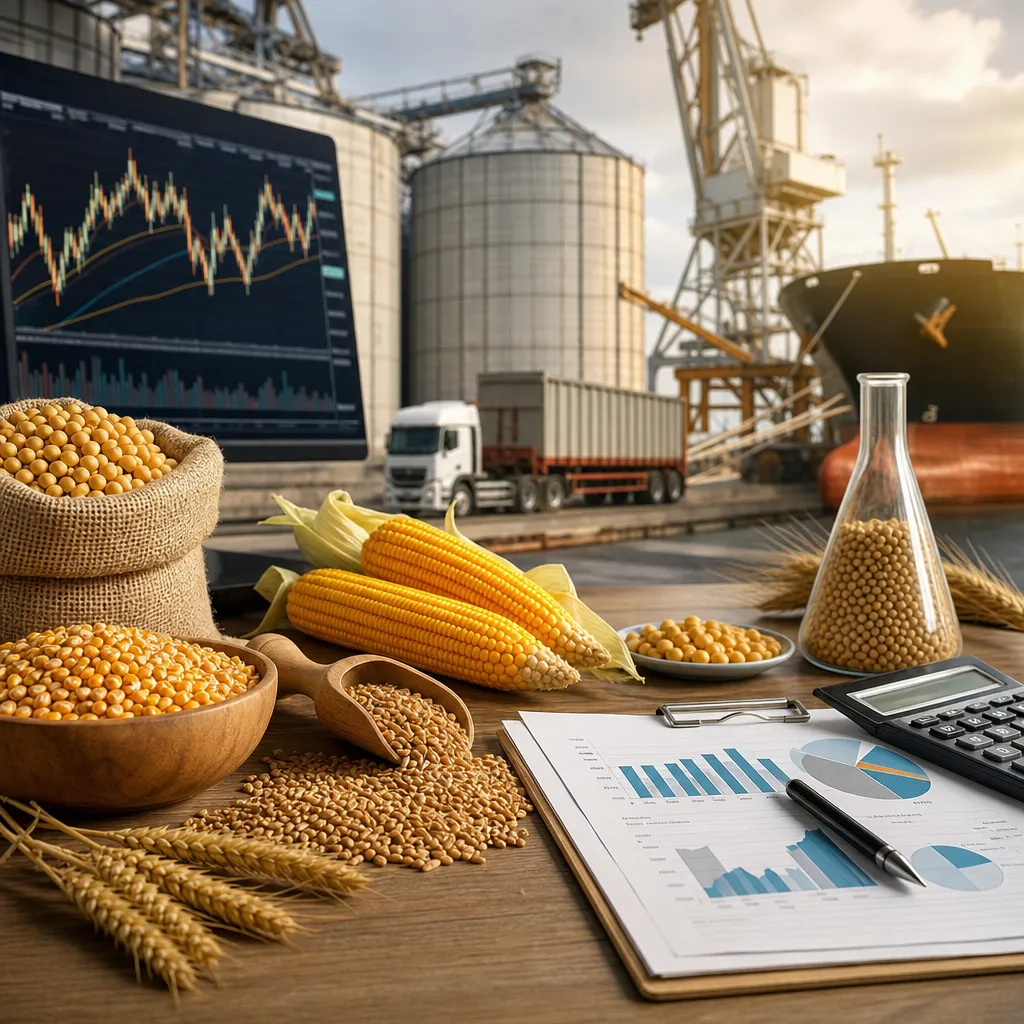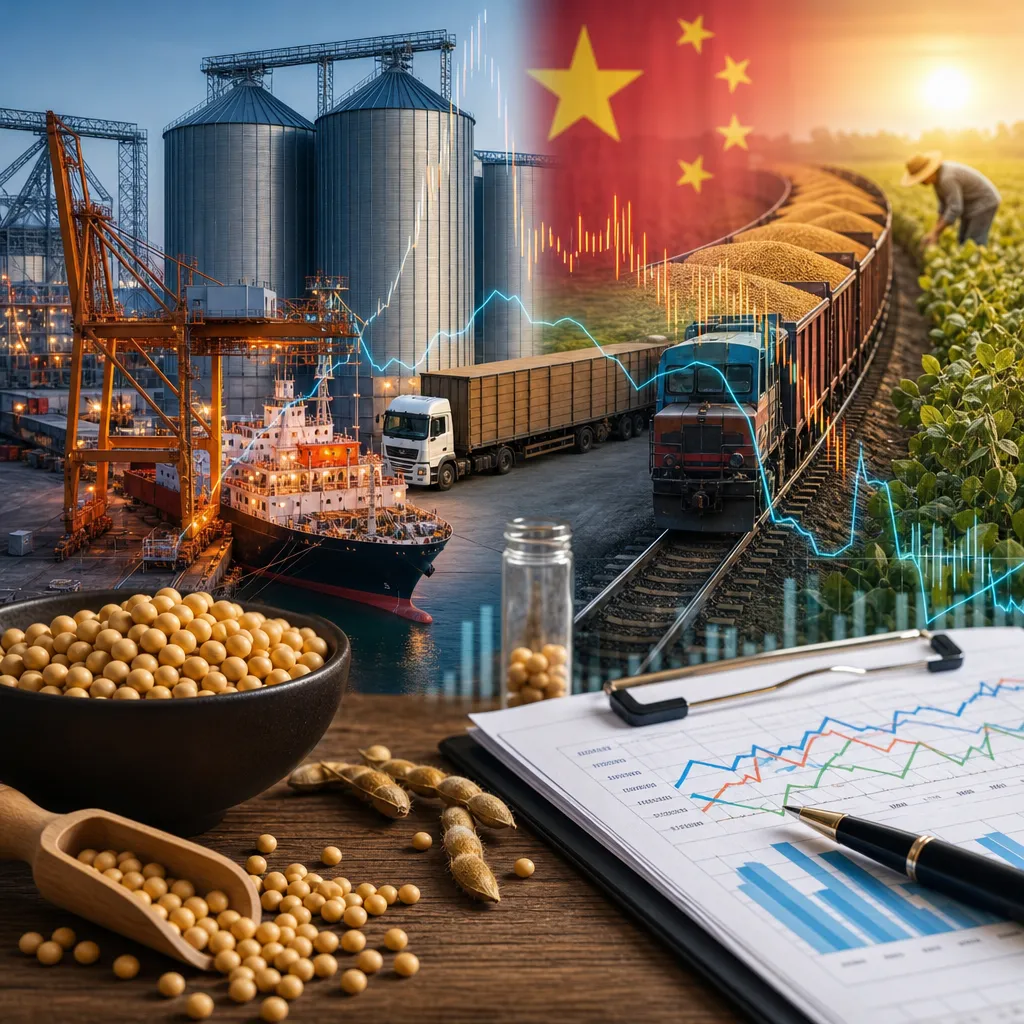





Grain forward contracts are private cash agreements between a grain seller and a grain buyer to deliver a specified quantity and quality of grain at a future date for a price agreed today. In practice, they are used most often by farmers, grain elevators, cooperatives, merchants, feed mills, ethanol plants, crushers, and exporters to manage price risk in the physical market. Unlike exchange-traded futures, a forward contract is usually negotiated directly with a local buyer or merchant and is tied to a real delivery point, quality specification, and delivery window. The main value of a grain forward contract is simple: it can turn an uncertain future selling price into a known cash sale, but it also creates delivery and counterparty obligations that must be understood before signing.
A farmer may use a forward contract to lock in a cash bid for new-crop wheat, corn, soybeans, barley, or canola before harvest. A buyer may use one to secure supply for a mill, feed plant, export program, or processing plant. The contract exists in the physical grain market, not primarily on a regulated exchange screen, although the price often reflects futures values plus or minus local basis.
What a grain forward contract is
A grain forward contract is an over-the-counter physical grain contract. Over the counter means it is privately agreed between two parties rather than bought and sold on a centralized futures exchange. The contract normally states:
- Crop and quantity
- Delivery period or exact delivery date
- Delivery location
- Quality or grade requirements
- Price or pricing formula
- Moisture, test weight, protein, oil, damage, or other discount schedules where relevant
- Payment terms
For example, a farmer may agree in spring to deliver a set number of tonnes or bushels of harvest corn to a local elevator in October at a fixed cash price. If the contract is fulfilled, the farmer delivers physical grain later and is paid according to the contract terms.
Forward contracts are common in regions where grain moves through country elevators, cooperatives, merchant houses, processors, or export channels. They are especially practical for growers who want to match a marketing decision with expected production and a known local delivery point.
How forward contracts work in practice
The pricing process usually starts with a local buyer’s bid. That buyer may be an elevator, cooperative, feed mill, flour mill, maltster, crusher, ethanol plant, rice mill, or grain merchant. The bid may be quoted as a flat cash price or as a futures reference plus or minus basis.
Basis is the difference between the local cash price and the relevant futures price. If a corn futures contract on an exchange is one value and the local elevator bid is lower or higher because of freight, storage, local supply, export demand, or processor competition, that difference is the basis.
A typical flow looks like this:
- The seller checks local bids from elevators, cooperatives, merchants, or processors.
- The buyer offers a forward bid for a future delivery month or period.
- The parties agree quantity, quality, location, and price.
- The contract is issued, often electronically or on paper.
- The seller delivers during the agreed window.
- The grain is weighed, graded, and settled according to the contract and discount schedule.
- Payment is made under the agreed terms.
Some contracts are fully fixed-price contracts. Others are more flexible, such as basis contracts or hedge-to-arrive arrangements, depending on local market practice and the buyer’s offerings. Those variants still relate to future physical delivery, but they separate parts of the pricing decision.
| Feature | Grain Forward Contract | Futures Contract |
|---|---|---|
| Market type | Private physical cash agreement | Standardized exchange-traded contract |
| Where used | Elevators, cooperatives, processors, merchants, exporters | Regulated exchanges through a futures broker |
| Delivery terms | Specific local delivery point and quality terms | Standardized exchange delivery rules, though many positions are offset before delivery |
| Price exposure | Locks local cash price or local basis/futures component depending on contract type | Tracks exchange benchmark price |
| Margin requirement | Usually no daily margin to the farmer on a standard cash forward sale, but terms vary by buyer | Daily margin and mark-to-market apply |
| Main risk | Production shortfall, quality failure, counterparty risk | Margin calls, leverage, basis mismatch if used for hedging |
Where farmers and buyers normally get forward contracts
Most grain forward contracts are offered in the physical market by businesses that handle grain. Common providers and counterparties include:
- Country elevators and inland grain handlers
- Agricultural cooperatives
- Grain merchants and originators
- Feed manufacturers
- Flour mills and rice mills
- Maltsters for malting barley
- Oilseed crushers for soybeans, canola, or rapeseed
- Ethanol plants or starch processors
- Exporters at port or inland collection points
In many regions, buyers publish bids online through their own websites, mobile apps, text alerts, or farm marketing portals. Some also post bid sheets at physical locations. The actual contract, however, is still a cash market agreement with that buyer, not a trade placed on an exchange.
If a seller wants to compare offers, practical places to check include local elevator bid pages, cooperative marketing desks, grain merchants, and processor procurement offices. In some countries, agricultural market reporting services or extension services also summarize local cash prices, but an actual forward sale still requires agreement with a physical buyer.
What determines the forward price
A forward contract price is usually built from several components:
- Relevant futures benchmark, if one exists for the crop and region
- Local basis at the delivery point
- Expected freight and logistics conditions
- Storage economics and carrying costs
- Buyer demand and competition in the area
- Expected supply at harvest or during the delivery period
- Quality premiums or discounts
- Currency effects in export-oriented markets
For crops such as corn, wheat, and soybeans in North America, local bids are often strongly influenced by CME Group futures, but the cash bid can still differ materially from the futures quote because basis reflects local realities. In Europe and some other regions, regional exchange benchmarks and export values may be more relevant depending on crop and trade flow. For rice, barley, oats, rye, sorghum, sunflower seed, and some oilseeds, local contract structure may be less standardized and more dependent on direct processor or merchant demand.
A seller should always ask whether the offer is:
- A flat cash forward price
- A basis-only contract
- A futures-only contract component
- A contract with quality bonuses or penalties
- A contract with an act-of-God clause or without one
An act-of-God clause, where offered, may address production failure due to uncontrollable events, but many contracts do not include such protection. Terms vary greatly, so the written wording matters.
How to use a grain forward contract step by step
Forward contracting is most effective when it is tied to expected production, storage capacity, cash-flow needs, and risk tolerance.
- Estimate realistic production. Use conservative yield assumptions, not best-case output.
- Check local bids. Compare offers from elevators, cooperatives, processors, and merchants for the same delivery period.
- Review the contract form. Confirm crop, quantity, grade, moisture limits, delivery point, delivery window, discount schedule, and payment timing.
- Understand whether the price is fixed. Some contracts lock the full cash price, while others fix only basis or reference futures.
- Match tons sold to production risk. Avoid overselling unless you have strong confidence in production or replacement supply options.
- Plan logistics. Check trucking, harvest timing, hours of delivery, queue risk, and whether storage is needed before movement.
- Keep records. Store signed contracts, confirmations, scale tickets, grade certificates, and settlement documents.
This process may begin online, by phone, or in person. Many buyers now allow digital signatures or online contracting portals, but delivery and settlement remain physical market activities.
Main risks and limitations
The main advantage of forward contracting is price certainty. The main drawback is that the obligation becomes real even if market conditions change.
| Risk | How it arises | Practical check |
|---|---|---|
| Production shortfall | Drought, flood, disease, hail, or lower yields reduce available grain | Contract only a prudent share of expected output and review force majeure wording carefully |
| Quality failure | Moisture, protein, vomitoxin, test weight, oil, or damaged kernels fall outside contract terms | Know the discount schedule and test grain if quality is uncertain |
| Opportunity loss | Market rallies after the price is fixed | Use partial sales and staged marketing instead of selling everything at once |
| Counterparty risk | Buyer or seller fails to perform | Deal with established counterparties and read default clauses |
| Logistics problems | Truck shortages, lineups, closed receiving hours, or port congestion | Verify delivery windows, freight responsibility, and alternative delivery procedures |
One common mistake is assuming a high futures market automatically means a good local cash contract. It may not. Basis can weaken because of harvest pressure, freight disruptions, or local oversupply. Another mistake is treating a forward contract like a flexible marketing idea rather than a binding sales commitment.
Forward contracts versus hedging with futures or options
A forward contract and a futures hedge both aim to reduce price risk, but they do so differently.
With a forward contract, the seller commits physical grain directly to a buyer. With a futures hedge, the seller typically uses a regulated exchange contract through a futures broker to offset price risk while keeping the cash grain sale separate. Exchange-traded options add another layer by allowing the buyer of the option to define downside risk while retaining some upside, but they involve premiums and require brokerage access.
Relevant futures and options markets for major grains and oilseeds are typically accessed through regulated exchanges such as CME Group for widely used U.S. benchmarks. These are financial trading venues. A farmer or commercial firm needs a brokerage account to trade there. That is different from opening a grain delivery account with an elevator or processor for physical grain sales.
Many commercial grain firms use both. For example, an elevator may offer a farmer a forward cash contract and then hedge its own risk in the futures market. The farmer sees a local bid; the elevator manages part of its exposure through exchange-traded instruments.
Where to check prices, bids, and market information
To evaluate a forward contract, a seller normally needs both benchmark market data and local cash information.
- Local cash bids: elevator websites, cooperative bid sheets, processor procurement pages, merchant bid platforms, or direct calls to grain buyers
- Futures benchmarks: exchange data from CME Group or other relevant exchanges, broker platforms, and commercial market data services
- Government reports: USDA reports for U.S. and world grain balance sheets, crop progress, export sales, and grain inspections
- Positioning data: CFTC Commitments of Traders for exchange-traded futures and options markets
- International market context: FAO and national agriculture ministries or statistical agencies for production, trade, and policy information
USDA’s WASDE report is widely used to assess world and U.S. supply and demand for wheat, corn, soybeans, rice, and other crops. USDA Crop Progress helps monitor planting and crop condition in the United States. Export Sales and Grain Inspections reports help traders gauge demand flow. CFTC data helps analysts understand speculative and commercial positioning in futures markets, though it does not show private local forward contracts.
Readers should distinguish four different things:
- An exchange futures price
- A local cash bid
- A signed forward cash contract
- A delivered and graded grain settlement
They are related, but they are not the same.
Physical delivery, storage, and settlement issues
Because forward contracts are physical agreements, delivery details matter as much as price. The contract should make clear whether delivery is at farm, elevator, mill, crusher, warehouse, rail point, river terminal, or port. Freight responsibility should also be clear: seller-delivered and buyer-picked-up terms can produce very different net prices.
Storage also matters. A farmer may forward sell for post-harvest delivery and then store grain on farm or in commercial storage until shipment. In that case, storage condition, aeration, shrink, insect control, and quality preservation become important economic issues. A strong forward price can be offset by storage losses, freight changes, or discounts if grain quality deteriorates.
For larger commercial trade, contracts may also reference inspection, weighing, grades, and trade terms used in domestic or export channels. In international trade, Incoterms and port logistics become more relevant, but many farm-level forward contracts are simpler local delivery agreements.
Can a grain forward contract be traded on an exchange?
No. A standard grain forward contract is a private physical agreement between buyer and seller. It is not itself exchange-traded, although the price may be influenced by exchange futures markets.
Where do farmers usually sign forward contracts?
Most are signed with local elevators, cooperatives, grain merchants, processors, feed mills, ethanol plants, crushers, or exporters. Depending on the buyer, this may happen in person, by phone with confirmation, or through an online contracting portal.
How do I check whether a forward price is competitive?
Compare bids from multiple local buyers for the same crop and delivery period. Then compare the implied basis against the relevant futures benchmark if your market uses futures-linked pricing. Also review quality discounts, freight terms, and payment timing.
What happens if I cannot deliver the contracted grain?
The outcome depends on the written contract and local law. Possible issues include contract buyout costs, replacement charges, or renegotiation. This is why production risk and force majeure wording should be reviewed before contracting.
Is a forward contract safer than trading futures?
They involve different risks. A forward contract usually avoids daily margin calls, but it creates physical delivery and counterparty obligations. Futures are regulated and liquid for major crops, but they involve margin, leverage, and basis risk if used as a hedge.
Do forward contracts always lock the final price?
No. Some lock the full cash price, while others lock only basis or only the futures component. The contract form should clearly show what is fixed and what remains open.
Where can I find official market reports relevant to forward marketing?
For widely traded grains, USDA publishes major supply, demand, crop, export, and inspection reports. CME Group provides contract specifications and market data for major futures benchmarks. CFTC publishes position data for exchange-traded futures and options.
Sources
- USDA Foreign Agricultural Service and USDA World Agricultural Outlook Board, World Agricultural Supply and Demand Estimates
- CME Group, agricultural futures and options contract specifications
- U.S. Commodity Futures Trading Commission, Commitments of Traders