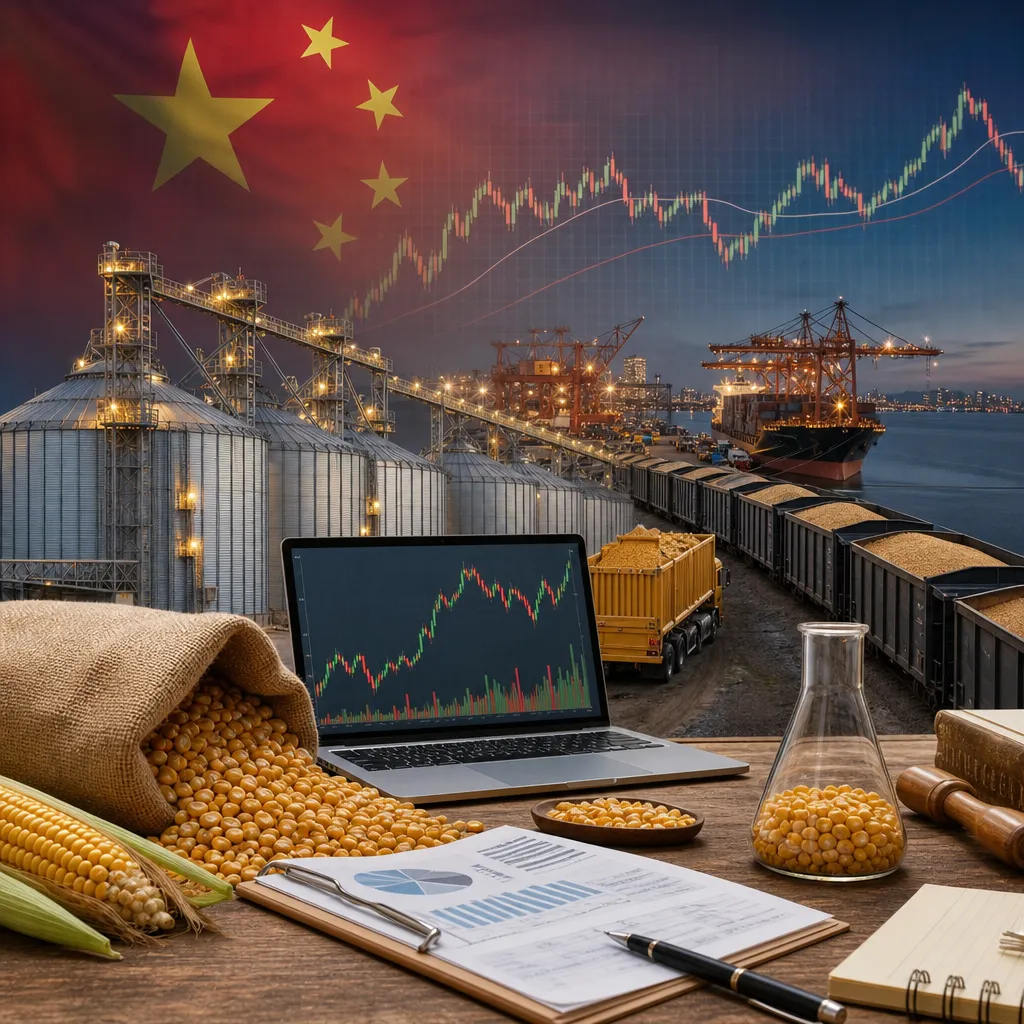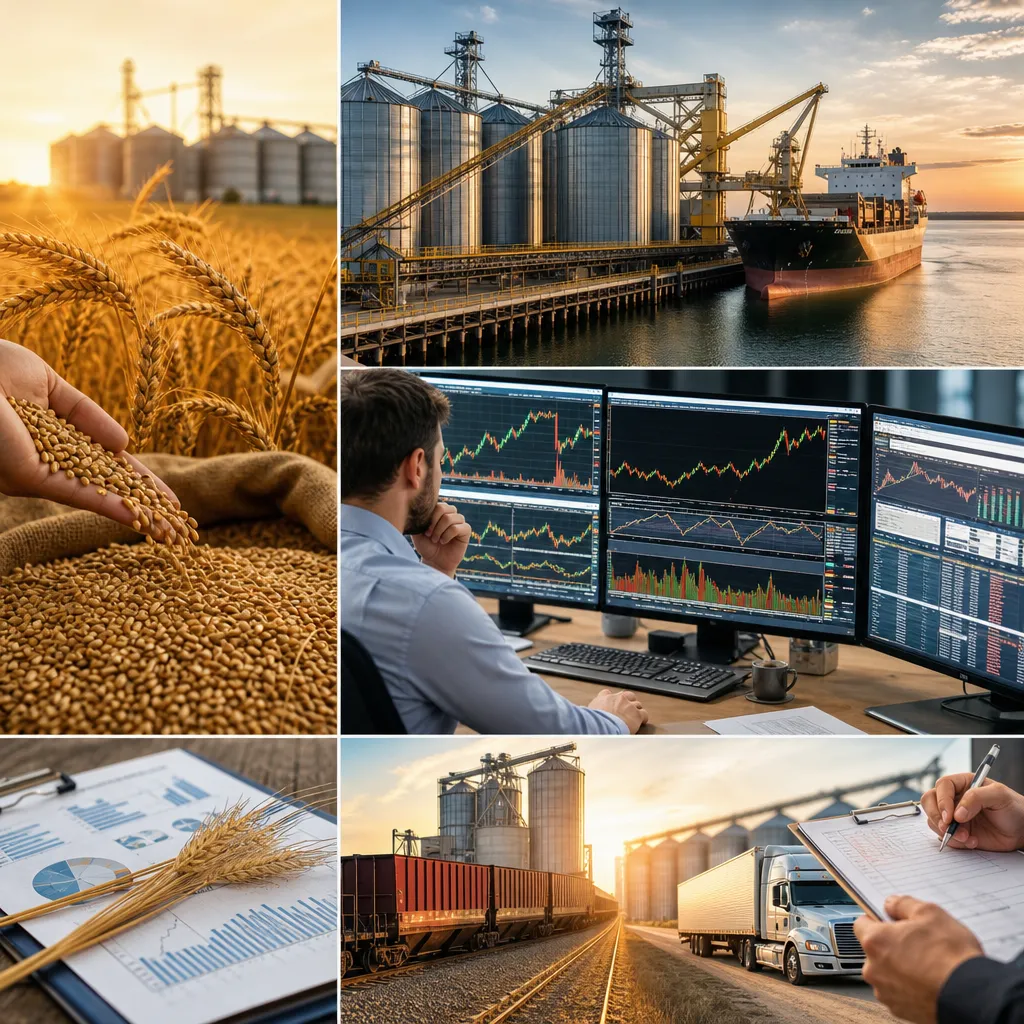







The United States soybean market is one of the most important agricultural markets in the world. US soybean supply and demand matter not only for American farmers, crushers, feed users, and exporters, but also for importers in Asia, livestock producers, vegetable oil buyers, and futures traders globally. In practice, the market combines a large physical grain network across the Midwest and Gulf export system with a highly liquid futures benchmark at the Chicago Board of Trade. To understand this market, readers need to separate national balance-sheet fundamentals from the way soybeans are actually priced, traded, delivered, processed, exported, and hedged.
In the United States, soybeans are usually priced in US dollars. Futures are commonly quoted in cents per bushel, while many export and international trade discussions also use US dollars per metric ton. Physical grain in the country is bought and sold through local cash bids, processor bids, river terminal bids, rail markets, and export bids, all of which may differ from the futures market because of basis, location, quality, timing, and logistics.
What “US soybean supply and demand” means
US soybean supply and demand refers to the national balance between the soybeans available in the United States and the uses that compete for those beans. Supply mainly includes beginning stocks, current crop production, and imports, although imports are usually a minor part of the US soybean balance. Demand mainly includes domestic crushing, exports, seed use, residual use, and ending stocks.
This framework matters because soybean prices are strongly influenced by whether the market expects tighter or looser ending stocks. A smaller crop, stronger export sales, or faster crushing demand can tighten the balance sheet. Larger planted area, better yields, slower exports, or weaker meal and oil demand can loosen it.
In market language, traders watch not only the absolute size of production and use, but also the direction of change. A market can react sharply if conditions imply that the balance sheet is becoming tighter than expected, even before final harvest or final export numbers are known.
| Balance-sheet item | What it means | Why the market cares |
|---|---|---|
| Beginning stocks | Soybeans left over from the previous marketing year | Sets the starting level of available supply |
| Production | New crop harvested in the United States | Usually the largest driver of annual supply |
| Imports | Soybeans brought into the US from abroad | Normally a small adjustment factor |
| Crush | Soybeans processed into soybean meal and soybean oil | Main domestic use category |
| Exports | Shipments from the US to foreign buyers | Key link between US prices and world demand |
| Ending stocks | Soybeans remaining at the end of the marketing year | A widely watched indicator of market tightness |
Where the US soybean market operates
The physical soybean market is centered in the main crop-producing states of the Midwest and parts of the Plains and Delta. States such as Illinois, Iowa, Minnesota, Indiana, Nebraska, and Ohio are major production areas, while crushing plants, feed demand centers, river terminals, rail origins, and export channels spread the market across a much wider geography.
The benchmark futures market operates through CME Group’s Chicago Board of Trade, commonly called CBOT. This is the main reference point for soybean futures prices in the United States and an important benchmark internationally. However, soybeans are not physically sold at one single national price. A farmer in Iowa, a crusher in Illinois, a river terminal on the Mississippi system, and an exporter loading cargoes at the Gulf may all be looking at the same futures board while quoting different cash prices.
On the export side, the US Gulf is a central outlet for soybean shipments. Pacific Northwest export channels are also important for some flows, especially depending on destination demand and freight economics. Inland logistics often move soybeans by truck, rail, and barge before they reach processors or export terminals.
How US soybean prices are formed
US soybean prices are formed through the interaction of futures and basis. The futures market reflects broad expectations about national and global supply and demand, macro conditions, fund activity, and relative value versus competing crops and origins. The basis reflects local market conditions such as transportation costs, elevator space, processor demand, export competition, storage availability, and regional supply.
A local cash soybean bid is commonly expressed as the relevant CBOT soybean futures contract plus or minus a basis. For example, a buyer might quote a bid against a nearby contract or a harvest-period contract depending on delivery timing. The cash bid is the actionable local price for physical grain, not the futures price alone.
For export trade, pricing may be discussed in terms such as FOB, CIF, or delivered values. FOB means free on board at the export point, where the seller provides the goods loaded for shipment. CIF includes cost, insurance, and freight to the destination port. These prices are different from inland cash bids because they include different logistics and commercial responsibilities.
| Price type | Where it is used | What it represents |
|---|---|---|
| CBOT futures price | Exchange-traded benchmark | Financial benchmark for standardized soybean contracts |
| Local cash bid | Elevators, cooperatives, processors | Actual local buying price for physical soybeans |
| Basis | Cash market pricing tool | Difference between local cash price and futures |
| Delivered price | Processor or end-user purchases | Price including transport to a stated destination |
| FOB export price | Port and export trade | Price for soybeans loaded at export origin |
| CIF import price | Import destination trade | Price including freight and insurance to buyer’s port |
Main drivers of US soybean supply
The most important supply drivers are planted area, weather, yields, and harvest progress. In the United States, soybeans compete with corn for acreage in many regions, so spring planting decisions matter. Acreage expectations can shift with relative crop economics, input costs, crop insurance conditions, and weather delays.
Weather remains critical throughout the growing season. Early planting conditions, summer heat, August rainfall, and late-season frost risk can all affect yield potential. Because the United States is a major global soybean producer, changes in US yield expectations often influence prices worldwide.
Harvest pace also matters. A large crop arriving quickly can pressure basis and nearby cash values, especially where storage is tight. In contrast, harvest delays or quality concerns can support local bids in some areas if buyers need immediate coverage.
Beginning stocks are another key variable. If the market enters a new season with limited old-crop inventories, it becomes more sensitive to weather and early yield threats. If stocks are comfortable, the market may absorb moderate production issues more easily.
Main drivers of US soybean demand
Domestic crushing is the largest single demand component to watch inside the United States. Soybeans are crushed into soybean meal, used primarily in livestock and poultry feed, and soybean oil, used in food, industrial applications, and biofuel-related demand. Strong margin conditions for crushers can increase soybean demand, while weak meal or oil values can slow it.
Exports are the other major pillar. US soybean exports depend on crop size, relative competitiveness versus Brazil and Argentina, freight conditions, buyer demand, and seasonal timing. The United States often competes most directly with South American origin in the global export market. When Brazilian supplies are abundant and competitively priced, US export demand may face pressure. When South American logistics tighten or crops disappoint, US export opportunities can improve.
Feed demand matters indirectly through soybean meal. Energy markets and biofuel policy can matter through soybean oil. Currency effects also matter even though US soybeans are priced in dollars. A stronger US dollar can reduce competitiveness for some foreign buyers, while a weaker dollar can support exports.
How soybeans are physically bought, sold, and exported
Physical soybeans in the United States are normally bought and sold through local elevators, farmer cooperatives, grain merchants, processors, feed manufacturers, and exporters. A farmer typically delivers soybeans under a cash sale, forward contract, hedge-to-arrive contract, basis contract, or storage arrangement, depending on the buyer and the farmer’s marketing plan.
Every physical transaction includes commercial details beyond headline price. These can include moisture limits, foreign material tolerances, test weight, delivery period, unloading rules, storage terms, payment timing, and any discounts or premiums. Counterparty quality matters as well, especially for deferred delivery or stored grain arrangements.
From the interior, soybeans may move by truck to elevators and crushers, by rail to processors or export facilities, or by barge down the inland waterway system toward the Gulf. Exporters assemble cargo-quality grain, manage freight and port logistics, and sell into international trade channels. Importers abroad may buy directly from exporters or through trading houses and brokers, usually on shipment terms rather than inland US cash terms.
Readers should distinguish between the inland farm-level market and the export market. A strong Gulf export bid does not automatically mean the exact same price at the farm gate. Inland basis can widen or narrow depending on freight, barge availability, rail capacity, and local buyer demand.
How futures and options are used for hedging
CBOT soybean futures and options are financial tools used to manage price risk, not the same thing as buying physical soybeans from a country elevator. Farmers, elevators, processors, exporters, and commercial users hedge price exposure through futures and options, usually via a registered futures broker or commercial risk-management desk.
A farmer may sell futures to hedge unsold physical inventory or expected production. A crusher may buy soybeans physically and hedge product exposure separately in meal and oil markets. An exporter may buy soybeans inland, sell export cargoes, and use futures to manage price risk while basis and logistics are handled in the cash market.
Speculators also trade soybean futures, but they generally do not intend to take physical delivery. Their activity adds liquidity, although it can also increase day-to-day volatility. Anyone using futures must understand margin requirements, contract expiry, position risk, and basis risk. Basis risk is especially important because a perfect futures hedge does not guarantee a perfect local cash outcome.
Where to check US soybean prices and market information online
For benchmark futures prices, the most relevant official source is CME Group, which lists CBOT soybean futures and options information. This is the starting point for anyone tracking the main US soybean benchmark. It is important to remember that a futures quote is not the same as a local elevator bid.
For national supply-and-demand analysis, the most important source is the US Department of Agriculture. USDA provides core reports used by the market, especially the World Agricultural Supply and Demand Estimates, Grain Stocks, acreage reports, yield and production estimates, weekly export sales, export inspections, and crop progress reports.
For local cash prices, farmers and commercial participants usually check country elevator and cooperative bid sheets, processor bid pages, grain merchant postings, and regional market reports. These local sources are where the actionable cash bid appears. A producer selling physical soybeans should rely on the local buyer’s stated bid and contract terms rather than interpreting the futures market alone.
Broker platforms and market data vendors also publish futures, options, spreads, and in some cases basis indications. For official oversight of futures market structure and trader positioning, some market participants also use data from the Commodity Futures Trading Commission.
Practical market scenarios for supply and demand analysis
US soybean market analysis is best approached through scenarios rather than certainty. The same headline issue can have different price consequences depending on stocks, demand strength, and global competition.
| Scenario | Conditions | Possible market implication |
|---|---|---|
| Tighter US balance sheet | Lower yield, strong crush, solid exports | Potential support for futures and firmer basis in demand regions |
| Looser US balance sheet | Large crop, slower exports, ample stocks | Potential pressure on futures and weaker harvest-time cash markets |
| Strong domestic crush demand | Favorable meal and oil demand or margins | Supportive for soybean demand even if exports are mixed |
| Heavy South American competition | Large rival crop and competitive export offers | US export demand may soften, especially outside peak US shipping windows |
| Logistics disruption | River, rail, or port constraints | Basis can move sharply even if futures are relatively stable |
Frequently asked questions
What is the main benchmark for US soybean pricing?
The main benchmark is CBOT soybean futures traded through CME Group. Physical prices in the United States are usually derived from that benchmark plus or minus local basis.
Where can I check US soybean supply and demand data?
The most widely used official source is USDA, especially its WASDE reports, crop production reports, grain stocks reports, crop progress reports, and weekly export data.
Why is my local cash soybean bid different from CBOT futures?
Because your local bid includes basis. Basis reflects freight, local supply and demand, storage conditions, buyer competition, timing, and quality factors. Futures alone are only the benchmark.
Are US soybeans priced in bushels or metric tons?
Inside the United States, futures and many cash bids are commonly discussed in bushels and US dollars. In export trade, soybeans are also often discussed in US dollars per metric ton.
How are soybeans usually sold physically in the United States?
Most physical sales are made to elevators, cooperatives, processors, or exporters under cash contracts, forward contracts, basis contracts, hedge-to-arrive contracts, or storage arrangements.
Can I trade US soybean futures without owning physical grain?
Yes. Futures and options are financial instruments accessed through a broker. Many users trade them for hedging or speculation without taking delivery of physical soybeans.
What are the biggest demand factors for US soybeans?
The biggest demand factors are domestic crushing and exports. Soybean meal and soybean oil demand, livestock feeding, biofuel-related oil demand, and import demand from major overseas buyers all matter.
What should I watch most during the growing season?
Watch acreage, crop conditions, summer weather, yield expectations, and early harvest reports. In parallel, monitor exports, crush trends, and the relative competitiveness of South American supplies.
Sources
- US Department of Agriculture
- CME Group
- Commodity Futures Trading Commission