




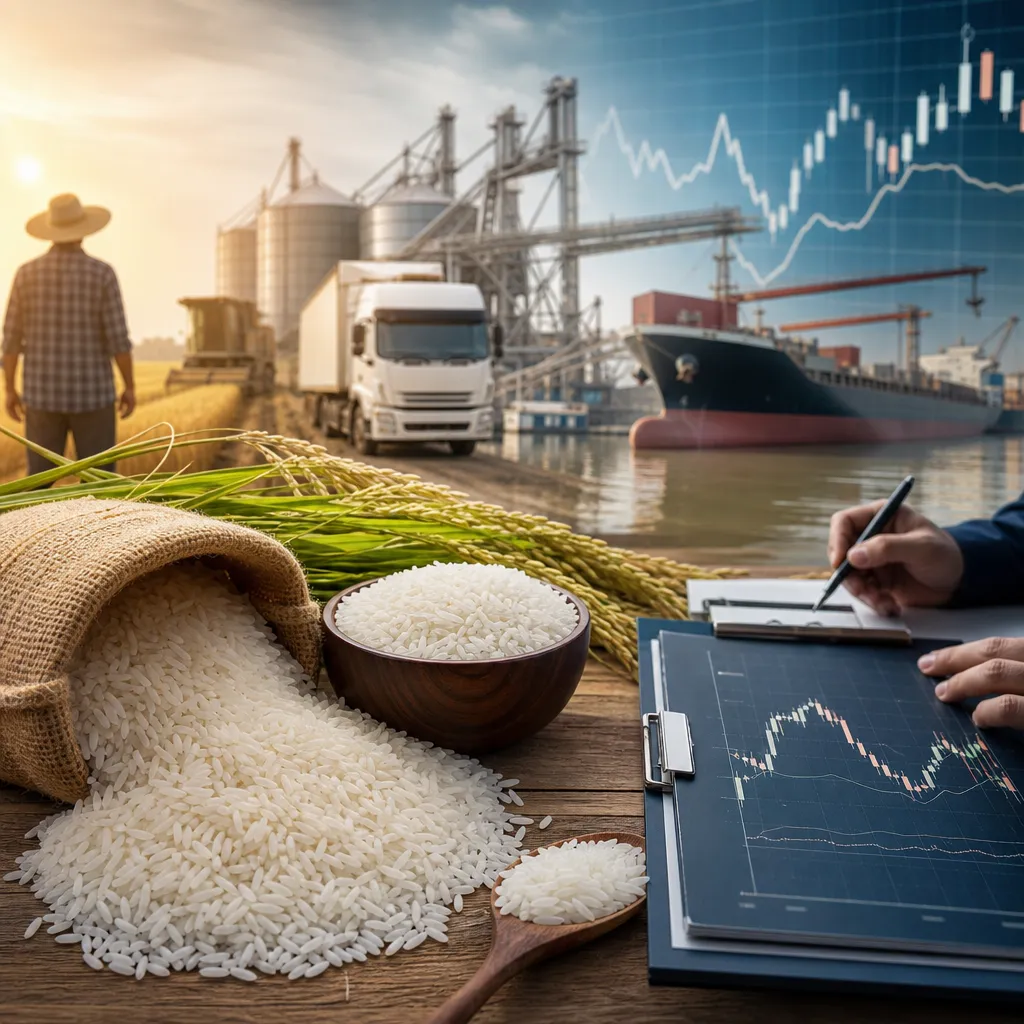
Rice price today depends on which market you mean. There is no single global rice price: exchange-traded rice futures, export quotations, wholesale market prices, and local farm or mill cash bids can all differ on the same day. If you need the current price, first identify the market, location, quality, unit, and currency, then check the relevant source such as a futures exchange, a government market reporting service, a local elevator or mill bid sheet, or an export quotation service. For farmers, buyers, and traders, the most important practical distinction is between a benchmark price seen online and the actual cash price available at a delivery point.
In practice, “rice price today” may refer to paddy at farmgate, milled rice in wholesale trade, export offers such as Thai or Vietnamese grades, or futures contracts used for hedging. That is why two people checking “today’s rice price” can see very different numbers and both be correct. The useful question is not only what the price is, but where that price applies and how to use it.
What “rice price today” usually means
Rice prices are quoted in several layers of the market. A farmer may care about paddy rice delivered to a local mill or elevator. A food company may care about milled rice delivered to a warehouse. An exporter may follow FOB export quotations at major shipping origins. A futures trader may watch exchange prices for rough rice contracts.
Because rice is heavily affected by grade, moisture, broken percentage, milling yield, origin, freight, and government policy, there is no universal spot number that applies everywhere. A benchmark price is only a reference point until adjusted for quality, location, and logistics.
| Price type | What it represents | Where it is usually checked | Who uses it |
|---|---|---|---|
| Futures price | Exchange-traded benchmark for a standardized contract | Exchange data and broker platforms | Hedgers, traders, analysts |
| Local cash bid | Actual bid at a mill, elevator, cooperative, or merchant location | Buyer bid sheets, direct calls, local market reports | Farmers, merchants, local buyers |
| Wholesale price | Price for milled or packaged rice in larger commercial volumes | Wholesale markets, trade bulletins, government reports | Distributors, retailers, food processors |
| Export quotation | Indicative price at an export origin, often tied to a grade and shipment term | Trade reporting services, official market notes, merchants | Exporters, importers, international traders |
Where to check rice prices today
If you want today’s rice price, the best source depends on whether you need a financial benchmark or a physical transaction price.
For futures and benchmark market data
Exchange-traded rice futures are commonly checked through exchange websites and broker trading platforms. In the United States, CME Group is the main reference point for rough rice futures. Exchange data shows contract month, price movement, volume, and settlement information. This is useful for hedging and price discovery, but it is not automatically the same as a local paddy or milled rice cash price.
For local cash bids
Farmers and physical sellers usually check bids directly with rice mills, grain elevators, cooperatives, and local merchants. In some regions, buyers publish bid sheets online or by mobile app; in others, prices are mainly shared by phone, messaging, or daily bid circulars. The local bid usually reflects the current basis, meaning the local adjustment over or under a benchmark, plus quality and freight considerations.
For wholesale and retail market prices
Government agricultural market reporting portals, wholesale market bulletins, and statistical agencies often publish representative daily or weekly rice prices. These can be useful for commercial buyers and market analysts, but they may lag real-time market negotiations.
For export and import market prices
International buyers usually rely on merchants, brokers, tender documents, trade bulletins, and official agricultural market intelligence. Export quotes are often given for a specific grade and shipment basis such as FOB. Importers then adjust for ocean freight, insurance, inland transport, finance costs, and destination duties or taxes where applicable.
Futures price versus local cash rice price
This is the most important distinction in the market. A futures price is a standardized exchange quote. A local cash price is what a farmer, mill, or merchant can actually buy or sell for at a specific place and time.
For example, a futures contract may reflect expectations for rough rice under exchange specifications. A local cash bid may be for paddy with a certain moisture level, delivered to a named mill, with deductions for drying, cleaning, or quality differences. The cash bid can move because of local supply, truck availability, storage pressure, or mill demand even when futures are stable.
| Feature | Futures market | Physical cash market |
|---|---|---|
| How it trades | On a regulated exchange through a futures broker | By direct contract with a mill, merchant, cooperative, exporter, or buyer |
| What is priced | Standardized contract | Actual grain with specific quality and delivery terms |
| Access needed | Broker account and margin capacity | Commercial relationship, contract, and logistics |
| Main use | Hedging or speculation | Buying or selling real rice |
| Key risk | Leverage, margin calls, expiry risk | Quality disputes, freight, storage, counterparty risk |
How rice pricing works in the physical market
Physical rice transactions usually happen through mills, cooperatives, grain merchants, brokers, processors, wholesalers, exporters, and importers. The seller may be a farmer, collector, warehouse operator, or merchant. The buyer may be a local mill, a branded food company, a feed user in some cases, or an export house.
The price is normally built from several parts:
- Base market level: local supply-demand, a nearby benchmark, or a negotiated reference.
- Quality adjustment: variety, moisture, impurities, milling yield, broken rate, color, and damage.
- Delivery point: farmgate, mill gate, warehouse, port, or border point.
- Freight: truck, rail, barge, or container cost.
- Storage and timing: whether the grain is sold at harvest, from storage, or for forward delivery.
- Payment terms: immediate payment, deferred payment, document release, or trade finance structure.
In practice, a farmer or merchant commonly receives an offer after the buyer applies weight, grade, and delivery conditions. In many markets, the final settlement follows inspection at intake. That means the posted bid is not always the same as the final net price if the crop needs drying or fails a quality threshold.
Where rice is bought and sold in practice
Physical rice does not usually move through a retail-style online checkout. Most commercial trade happens through established supply chains.
Farm and local assembly level
Farmers often sell paddy rice to local collectors, mills, cooperatives, or merchants. In some countries, government procurement agencies may also play a role. Transactions may be spot sales at harvest, delayed pricing after storage, or forward agreements for future delivery.
Milling and processing level
Mills buy paddy, process it into rice, and sell milled product to wholesalers, exporters, institutions, or retailers. Buyers focus on head rice yield, grain length, whiteness, and broken percentage. A mill’s bid structure therefore differs from a raw paddy collection point.
Export trade
Exporters assemble larger volumes, arrange quality control, prepare shipment documents, and book freight. Export sales are often negotiated by grade and shipment period rather than by a continuously visible screen price. Importers may buy directly from exporters, through trading houses, or via tenders.
Warehousing and storage
Stored rice may be sold from on-farm bins, commercial warehouses, or licensed storage facilities. Warehouse receipts can matter because they document lot identity and quantity. Storage adds flexibility, but also cost and quality risk, especially in humid conditions.
How futures and options are used for rice
Rice futures are mainly used as a hedging and price-discovery tool. A futures contract represents a standardized quantity and quality under exchange rules. It trades through a regulated futures exchange and requires a brokerage account. Traders post margin, and daily gains and losses are marked to market.
A producer who expects to sell physical rice later may use futures to reduce price exposure. A processor who expects to buy later may hedge purchases. This does not remove all risk, because the local cash price may not move exactly with the futures contract. That remaining difference is basis risk.
Options, where available through futures brokerage access, can also be used to manage downside or upside exposure while preserving some flexibility. But options have premiums, expiries, and strategy complexity. They are risk-management tools, not guaranteed profit tools.
Anyone considering rice futures should distinguish clearly between trading price risk and handling physical grain. A broker platform gives access to financial contracts, not necessarily to local elevator delivery channels or physical rice procurement.
What moves rice prices day to day
Rice prices react to both agricultural fundamentals and policy decisions. Day-to-day movement may look random, but the main drivers are usually identifiable.
- Weather: monsoon timing, drought, flooding, storm damage, and irrigation availability.
- Crop size: acreage, yield, planted area shifts, and harvest progress.
- Stocks: domestic inventories and global stocks-to-use conditions.
- Trade policy: export restrictions, quotas, import tariffs, food security measures, and government procurement.
- Currencies: exchange-rate changes can alter export competitiveness.
- Freight and logistics: container availability, port congestion, inland transport, and fuel costs.
- Substitution and demand: competition with wheat or other staples in some consuming markets, and changes in food inflation.
For short-term market reading, traders often combine cash bids, export quotes, crop condition reports, and macro factors such as currency strength. For longer-term planning, balance-sheet reports and policy changes matter more than intraday futures volatility.
Best official and market sources for rice price analysis
If you need reliable market information, use official and exchange sources first, then add local commercial intelligence.
- CME Group: futures contract information, settlement data, contract specifications, and trading references for rough rice.
- USDA: rice outlook material, supply and demand analysis, production reports, export sales data, and broader grain market context.
- FAO: international food price monitoring, market commentary, and global rice trade context.
- National agriculture ministries or statistical agencies: domestic crop estimates, procurement policies, and wholesale market reporting where available.
- Local elevators, mills, cooperatives, and merchants: real-world bids that determine whether a physical sale works today.
Analysts often combine these sources because no single publication tells the whole story. Exchange data shows benchmark sentiment. USDA and FAO help interpret supply and demand. Local buyers reveal the actual conversion from market theory into cash trade.
Practical steps to find the right rice price today
- Define the product. Decide whether you need paddy, rough rice, milled rice, parboiled rice, or an export grade.
- Define the location. Price at farmgate, mill gate, warehouse, port, or delivered destination can differ sharply.
- Check the benchmark. If relevant, review exchange futures or official market quotations.
- Check local cash bids. Contact mills, cooperatives, merchants, or elevators that actually buy in your area.
- Confirm quality terms. Ask how moisture, broken percentage, impurities, and grade affect the final price.
- Check freight and deductions. A strong headline price may be weaker after transport, drying, cleaning, and fees.
- Match currency and unit. Compare like with like: paddy versus milled, local currency versus dollars, bag price versus ton price.
This process matters because the wrong reference can lead to poor selling decisions, bad hedge alignment, or unrealistic procurement budgets.
FAQ
Where can I check rice prices today online?
For benchmark futures, check exchange data such as CME Group or a regulated broker platform. For physical prices, check local mill or elevator bids, cooperative bid sheets, government market reports, or merchant quotations. The right source depends on whether you need a tradable financial quote or an actual physical buying or selling price.
Is the futures rice price the same as the farm price?
No. Futures are standardized exchange prices. Farm prices depend on basis, local demand, quality, moisture, freight, and delivery point. A farmer’s net cash price can be above or below the futures market.
How do farmers usually sell rice?
Most farmers sell through mills, cooperatives, grain merchants, or local buyers. Sales may be spot at harvest, stored and sold later, or contracted forward. The final settlement often depends on delivered weight and quality inspection.
Where does international rice trading take place?
International physical trade usually happens through exporters, importers, commodity merchants, brokers, and tender systems rather than through a simple retail marketplace. Pricing is commonly negotiated by grade, volume, delivery period, and shipment term such as FOB or CIF.
Can I buy physical rice through a futures broker?
Usually, a futures broker provides access to financial contracts, not ordinary commercial grain procurement. Buying physical rice normally requires dealing with a merchant, mill, wholesaler, processor, or exporter and arranging delivery, quality, and payment terms separately.
What risks matter most when selling or buying physical rice?
Main risks include quality disputes, moisture and milling yield deductions, freight cost changes, delayed payment, storage losses, and counterparty risk. The sale contract should clearly state grade, location, timing, and settlement terms.
Which reports are most useful for rice market analysis?
USDA rice outlook and supply-demand materials are widely used, especially for balance-sheet analysis. CME Group is relevant for contract and futures information. FAO helps with global market context and food-price developments.
Why do rice prices differ between countries on the same day?
Different countries trade different rice varieties and grades under different currencies, freight structures, and policies. Export restrictions, import duties, local stocks, and port logistics can create large price gaps even when the global market tone is similar.
Sources
- USDA Economic Research Service and USDA Foreign Agricultural Service
- CME Group
- Food and Agriculture Organization of the United Nations