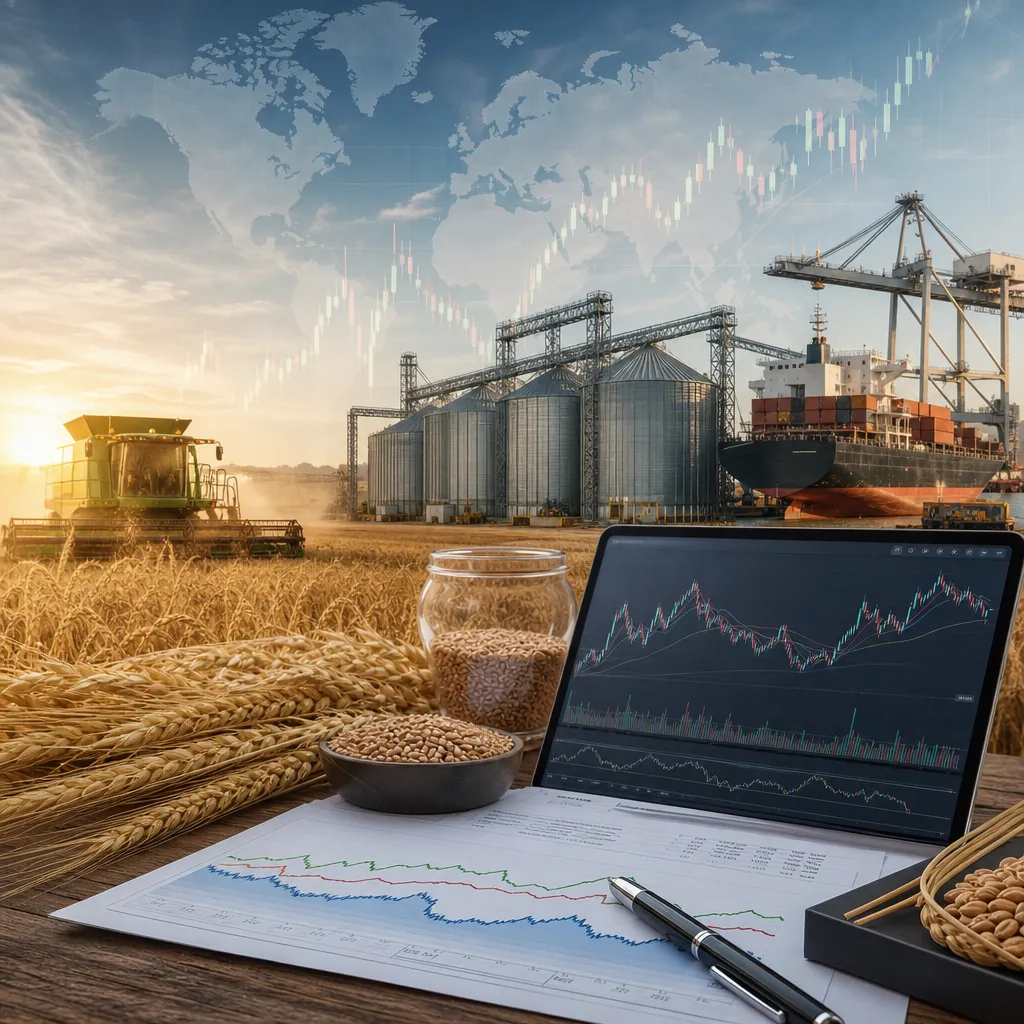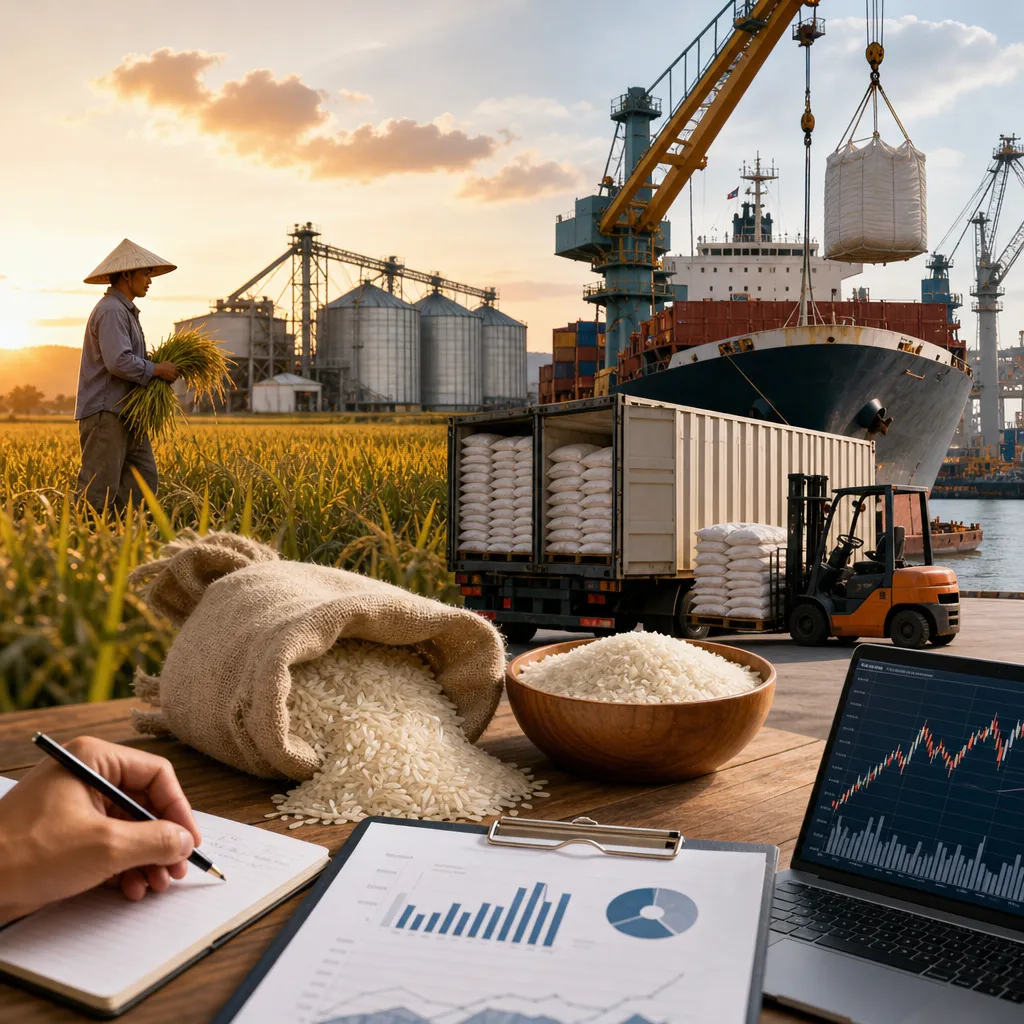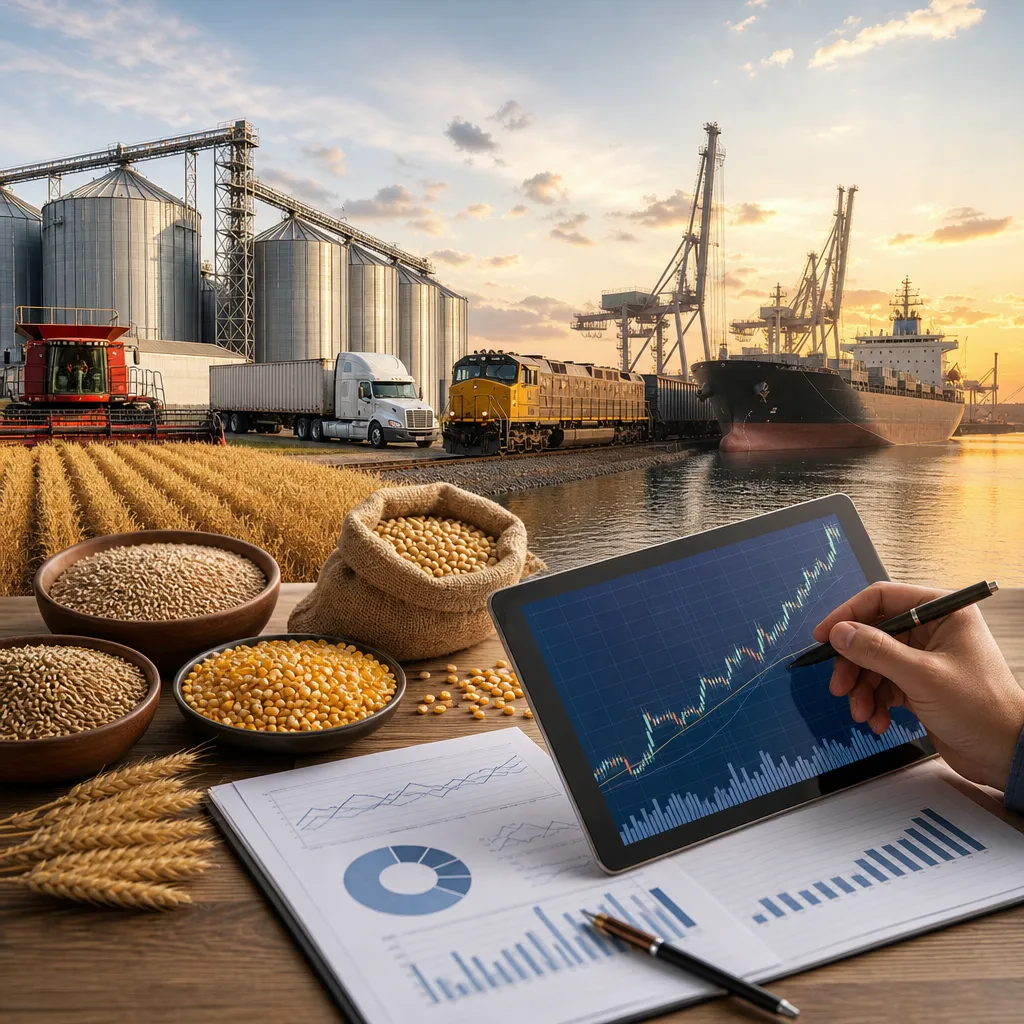
The grain market outlook is not a single price prediction. It is a working view of how supply, demand, weather, logistics, policy, and futures market positioning may affect wheat, corn, soybeans, rice, barley, and oilseeds over the coming weeks and months. For most readers, the practical question is not only whether prices may rise or fall, but where to check the market, how futures relate to local cash bids, and how to use that information for selling, buying, hedging, storage, or analysis. A useful outlook therefore combines exchange pricing, physical market signals, official crop reports, and local basis and freight conditions.
What a grain market outlook actually means
A grain market outlook is a scenario-based assessment of probable market direction, not a guarantee. Analysts look at whether global and domestic grain balances are tightening or loosening. That means estimating production, beginning stocks, feed use, food use, industrial demand, exports, imports, and ending stocks.
The outlook differs by crop. Corn may be driven heavily by feed demand, ethanol margins, acreage, and weather during pollination. Wheat often depends on global trade flows, Black Sea competition, milling quality, and importer demand. Soybeans are influenced by crush demand, biofuels, export demand, and South American weather. Rice markets can react strongly to policy and trade restrictions. Barley, oats, sorghum, canola, rapeseed, and sunflower seed tend to be more regional and can be affected by local substitution in feed or oilseed processing.
In practice, users include farmers, grain elevators, processors, exporters, feed mills, importers, commodity merchants, futures traders, and banks financing inventories. Each uses the outlook differently. Farmers may decide whether to make cash sales, store grain, or hedge. Processors may lock in raw material coverage. Traders may focus on spreads, basis, or export flows rather than flat price alone.
Where grain prices are found and why they differ
The first practical step in any outlook is separating futures prices from cash prices. A futures quote is the exchange-traded benchmark for a standardized contract. A local cash bid is what an elevator, cooperative, processor, merchant, or feed mill is willing to pay at a specific location, for a specific quality, on a specific day.
In the United States, benchmark grain futures are commonly traded at CME Group exchanges. Wheat may also be benchmarked by different classes and delivery locations, so the contract matters. Outside futures markets, local cash bids are usually checked through grain elevator bid sheets, cooperative websites, merchant bid tools, processor bid lists, or local agricultural market reporting services. Some countries also publish official spot or farmgate indications through ministries, commodity boards, or statistical agencies, but these are often delayed and not executable bids.
Local cash prices differ from futures because of basis. Basis is the local cash price minus the relevant futures price. It reflects transport cost, local supply, nearby demand, storage pressure, export terminal economics, river or rail congestion, and quality premiums or discounts. A farmer should never assume that a quoted exchange price is the same as their delivered farm bid.
| Market type | What it shows | Where readers normally check it | Main limitation |
|---|---|---|---|
| Futures market | Standardized exchange price for a contract month | Exchange data vendors, broker platforms, CME Group market pages | Not the same as a local cash bid |
| Local cash market | Actual bid at an elevator, processor, or merchant delivery point | Elevators, cooperatives, processors, grain buyers, local bid sheets | Varies by location, freight, and quality |
| Export or port market | Terminal or export demand signal | Merchants, exporters, port indications, trade reporting services | May not be directly available to farm sellers |
| Government report data | Supply, demand, exports, acreage, crop condition, stocks | USDA, FAO, national agriculture ministries, statistical agencies | Useful for analysis, not an executable bid |
How the outlook is built: the main price drivers
Most grain outlooks start with the balance sheet. If acreage is large and yields are favorable, production rises and prices usually face pressure unless demand also expands. If drought, floods, frost, or disease cut yields, supply tightens and prices can rally. The size of stocks matters because low carryout leaves the market more sensitive to weather or export shocks.
Demand is equally important. Feed demand depends on livestock margins and the relative price of substitute grains. Industrial demand matters for crops linked to ethanol, biodiesel, renewable diesel, starch, sweeteners, crushing, or milling. Export demand depends on global competitiveness, currency moves, freight rates, and government policy.
Currency is often underestimated. A weaker exporter currency can make grain more competitive in world markets. Freight also matters. Ocean shipping, barge rates, rail performance, and truck availability can widen or narrow basis even when futures are quiet.
Policy can change the tone quickly. Export restrictions, import tariff changes, biofuel mandates, sanitary rules, or phytosanitary issues can shift trade flows between origins. In rice and wheat especially, trade policy can have an outsized effect on available world supply.
| Driver | Typical market effect | How market participants use it |
|---|---|---|
| Acreage and planting pace | Changes production potential early in the season | Adjust crop size expectations and new-crop sales plans |
| Weather and yield | Drives the largest in-season supply changes | Monitor risk windows such as pollination, flowering, and harvest |
| Stocks and stocks-to-use | Measures how tight or comfortable supply is | Judge whether market is vulnerable to shocks |
| Exports and imports | Shifts demand between producing regions | Track competitiveness and destination buying patterns |
| Energy and biofuels | Influences corn and oilseed processing demand | Compare feed, fuel, and crush economics |
| Freight and logistics | Mostly affects basis and regional spreads | Decide where and when to move physical grain |
Where to check the most useful reports and market data
For grain outlook work, official reports remain the backbone. In the United States, USDA is central. WASDE provides monthly global and U.S. supply-and-demand estimates. Crop Progress tracks planting, emergence, crop condition, and harvest pace during the season. Grain Stocks helps the market reassess old-crop availability. Acreage and production reports can materially shift expectations. Export Sales is used weekly to judge demand momentum.
For futures market positioning, the CFTC Commitments of Traders report shows how different classes of traders are positioned in major futures and options markets. This does not predict price, but it helps explain whether the market is heavily long, heavily short, or relatively balanced.
For exchange pricing and contract details, readers typically use CME Group for contract specifications, delivery months, units, and settlement references. Commercial data providers and broker platforms may offer faster quotes, charting, options chains, historical data, and spread analysis, but they are not the same as a place to sell physical grain.
For global context, FAO and national agriculture ministries can help with production and trade trends, especially for countries where local reporting is more important than U.S. futures benchmarks. In the European market, readers often combine exchange benchmarks, official crop agencies, customs statistics, and local merchant indications.
Online futures trading versus physical grain selling
These are different markets and should not be confused. Futures trading takes place on a regulated exchange through a futures broker. A trader opens a brokerage account, posts margin, and buys or sells contracts electronically. The contract has standardized quality, quantity, delivery terms, and expiry. Most participants offset the position before delivery rather than shipping grain against the contract.
Physical grain selling happens through elevators, cooperatives, grain merchants, mills, feed companies, crushers, maltsters, ethanol plants, rice mills, exporters, or livestock integrators, depending on the crop and region. The seller receives a bid based on delivery point, quality, moisture, test weight, protein or oil content where relevant, timing, and basis. The transaction may be spot, forward cash, hedge-to-arrive, basis-only, storage, or minimum-price depending on local practice and provider offerings.
Buying physical grain is also different from trading a futures contract. A feed mill, flour mill, exporter, or importer may buy actual grain with negotiated specifications, freight, and payment terms. Delivery point, inspection method, tolerances, and counterparty risk matter just as much as headline market direction.
How physical grain transactions normally work
- The seller requests bids from one or more local buyers such as elevators, cooperatives, processors, or merchants.
- The buyer quotes a cash bid for a named location and time window, often based on futures plus or minus basis.
- Quality, moisture, grade, and any premiums or discounts are confirmed.
- The seller agrees whether grain is delivered immediately, later under contract, or placed into storage if available.
- Freight responsibility is determined. It may be seller-delivered, buyer-picked-up, rail, truck, or barge depending on location.
- The grain is weighed, tested, received, and settled under the buyer’s payment terms.
How hedging fits into the outlook
Hedging is not a price forecast. It is a risk management action. A farmer expecting to sell grain later may sell futures to reduce the risk of a falling market. A feed buyer or processor expecting to buy grain later may buy futures to reduce the risk of rising prices. Options add flexibility: a put option can help establish a downside floor for a seller, while a call option can help cap upside price risk for a buyer.
Hedging still carries risk. Futures require margin, and losses on the futures side can require additional funds even when the physical position gains value. Options require an upfront premium and can expire worthless. Basis risk remains because the hedge offsets futures price movement, not every local cash movement.
In practice, hedging is usually done through a regulated futures broker or, for some physical users, through merchant-structured programs offered by elevators or grain companies. A farm or commercial user should understand contract size, delivery month, margin exposure, brokerage documentation, and local basis behavior before hedging. Speculation and hedging can use the same instruments, but the intent and risk profile are different.
Storage, logistics, and quality in the grain outlook
Storage can change the economics of grain sales more than many market participants expect. If harvest pressure weakens local basis, storing grain may allow the seller to wait for basis improvement or seasonal futures carry. But storage is never free. There are physical costs, shrink, aeration, handling losses, interest on inventory, and quality risk.
Commercial storage is usually accessed through elevators, warehouses, terminals, or cooperative facilities. On-farm storage gives more timing flexibility but shifts responsibility for condition, insect control, aeration, blending limitations, and inventory management to the owner. In export-oriented markets, logistics can dominate outlooks during periods of low river levels, port congestion, rail disruption, or insufficient truck capacity.
Quality matters particularly for wheat, barley, oats, rice, and oilseeds. Milling quality, malting specs, protein, falling number, disease presence, moisture, admixture, and damage levels can materially alter cash value. That is why a bullish futures market does not guarantee a strong farmgate price if quality discounts are severe or if the local market is oversupplied with the same grade.
How to use the market outlook in practice
The most practical use of a grain market outlook is to match market information with a commercial decision. A farmer may compare current elevator bids with storage economics and forward pricing opportunities. A buyer may compare nearby needs with deferred coverage and monitor whether basis or futures offers the better value. A trader may track whether futures spreads confirm tightening supply, or whether export demand is shifting to another origin.
A disciplined process usually works better than trying to predict every move:
- Check the relevant futures benchmark for the crop and contract month.
- Check local cash bids from several buyers, not just one.
- Separate futures direction from basis movement.
- Review upcoming official reports that could change the balance sheet.
- Watch weather in major producing regions, not only local weather.
- Calculate storage cost, interest, and likely quality risk before delaying sales.
- Use hedging tools only if contract terms, margin requirements, and basis behavior are understood.
The best outlook is therefore operational, not just theoretical. It tells you where the market signal comes from, who is quoting it, what it means at your delivery point, and which risks remain after you act.
Where can I check grain prices today?
Check futures prices on exchange-related market pages or broker data platforms, and check local cash bids directly with elevators, cooperatives, processors, or grain merchants. Futures show the benchmark market. Local cash bids show what a buyer will actually pay at a named location and date.
Why is my local wheat or corn bid different from the futures price?
The difference is basis. It reflects freight, local supply and demand, storage pressure, export access, and grain quality. A strong nearby processor or export market can narrow basis, while harvest pressure or transport problems can widen it.
Where does grain futures trading take place?
It normally takes place on regulated commodity exchanges through licensed futures brokers and electronic trading platforms. This is financial trading of standardized contracts and is not the same as selling truckloads of physical grain to a local buyer.
How do farmers usually sell physical grain?
Most physical sales occur through grain elevators, cooperatives, merchants, processors, mills, crushers, feed manufacturers, or exporters. The sale is based on delivery point, quality, timing, basis, and payment terms, not just the exchange benchmark.
Which reports matter most for a grain market outlook?
Common core reports include USDA WASDE, USDA Crop Progress, Grain Stocks, Acreage, Production reports, and USDA Export Sales. For trader positioning, CFTC Commitments of Traders is widely used. For global context, FAO and national official crop agencies are useful.
Is hedging the same as speculating?
No. Hedging is used to reduce price risk tied to a physical or expected commercial position. Speculation is taking price risk to profit from market moves without needing the underlying grain. The same futures or options contracts may be used, but the purpose is different.
Should grain be stored or sold at harvest?
That depends on basis, futures carry, storage cost, cash flow needs, and quality risk. Storage can add value if the market pays enough carry or if basis is likely to improve, but it can destroy value if costs, shrink, or quality losses exceed the expected gain.
Can I buy physical grain online?
In some regions, bids and offers may be discovered electronically, but physical trade still requires agreement on quantity, quality, delivery point, freight, and settlement terms. An online listing is not the same as a standardized exchange contract, and logistics remain critical.
Sources
- USDA World Agricultural Supply and Demand Estimates
- CME Group agricultural futures and options contract specifications
- CFTC Commitments of Traders