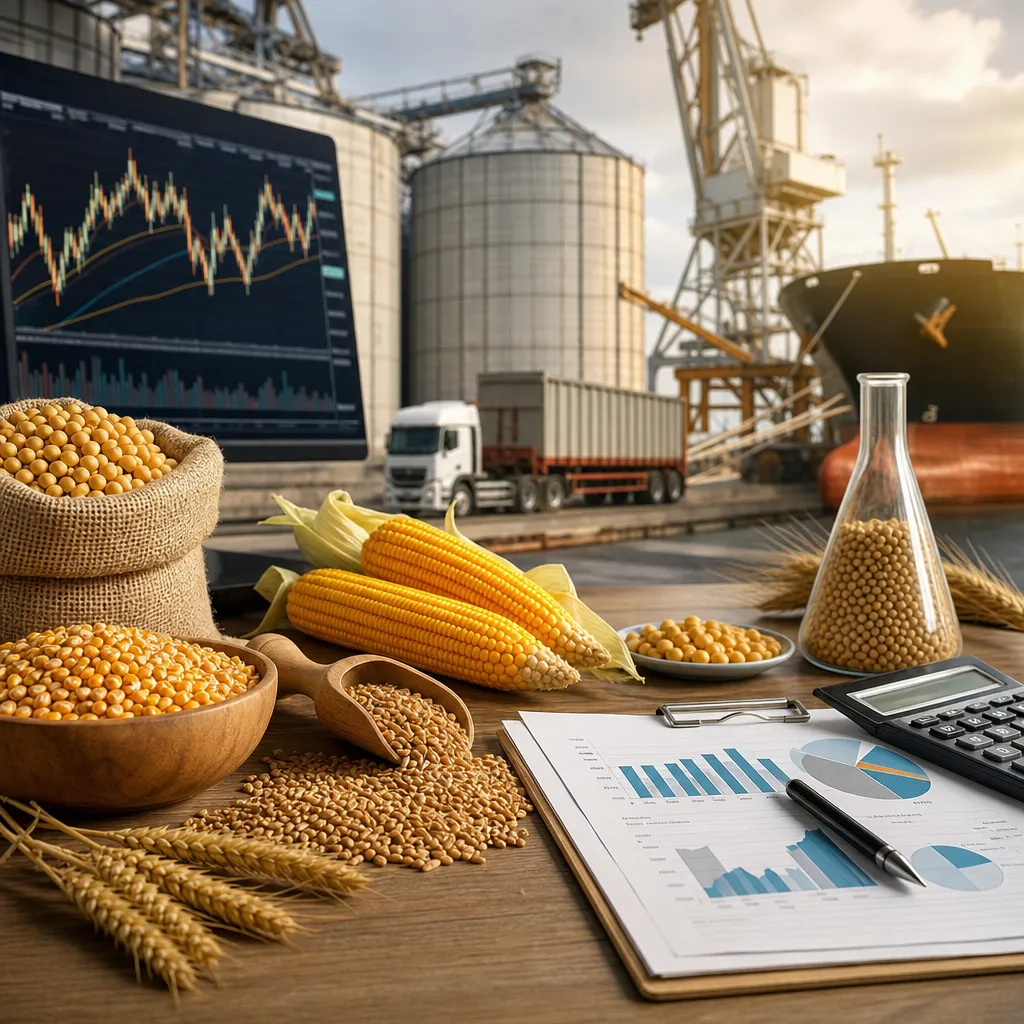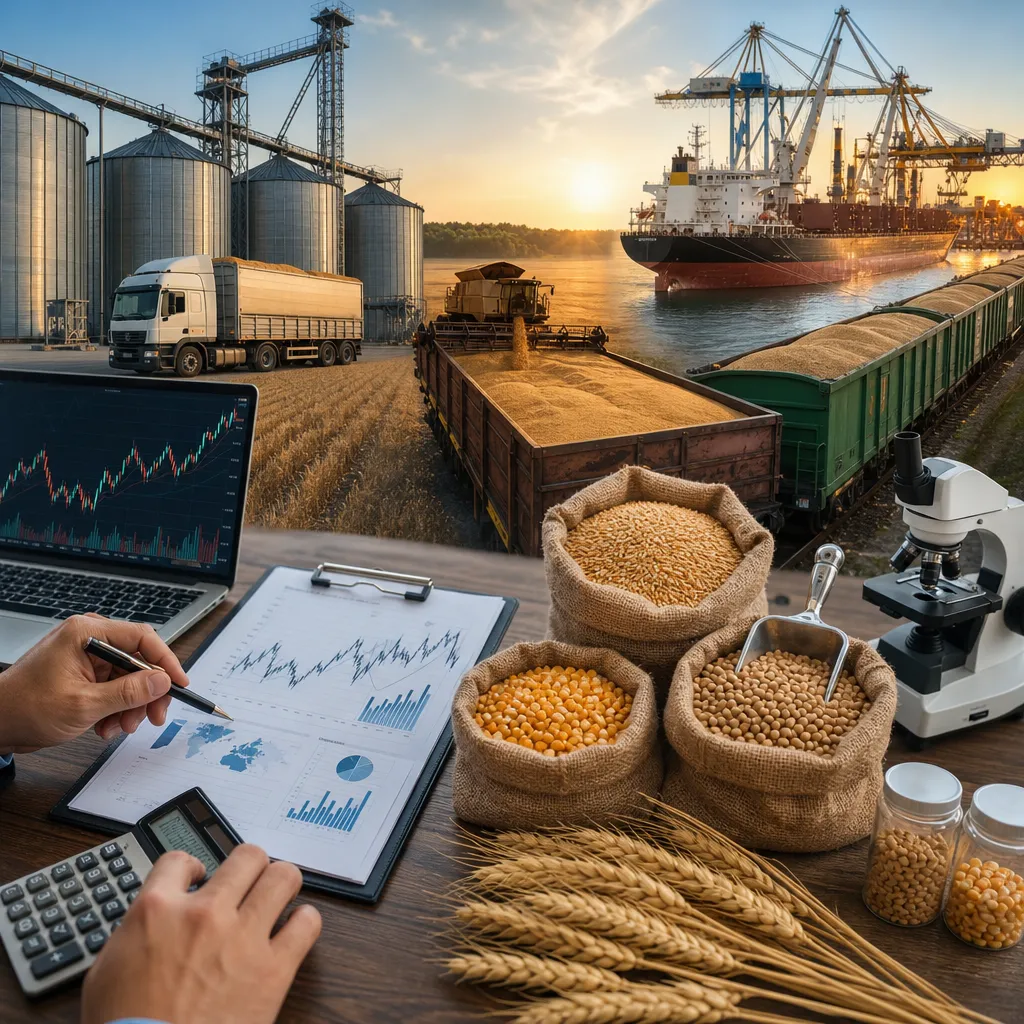



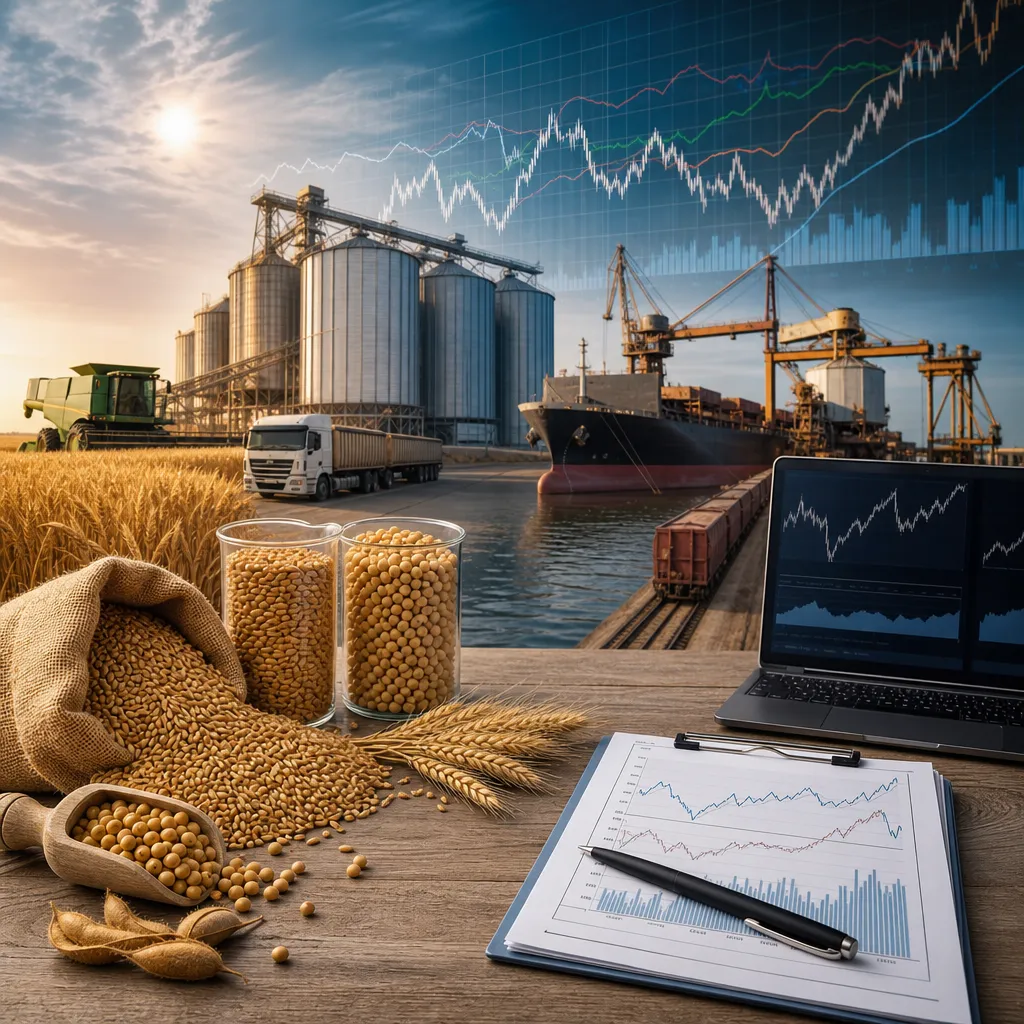
Spot grain prices and futures prices are related, but they are not the same thing and they are not used in the same way. Futures prices are exchange-traded benchmark prices for standardized contracts, while spot grain prices are physical market prices for grain delivered at a specific place, time, and quality. In practice, farmers, elevators, mills, feed companies, exporters, and traders use both: futures for price discovery and hedging, and spot or cash prices for actual physical buying and selling. The key to understanding grain markets is the link between them: cash price = futures price + basis, where basis reflects location, freight, local supply and demand, quality, and timing.
If you want to know what grain is worth locally, a futures quote alone is not enough. You normally need a local elevator bid, processor bid, cooperative price sheet, merchant quote, or port bid for the exact grain type and delivery point. If you want to hedge price risk or trade market direction, that usually happens through a regulated futures exchange via a futures broker, not by buying truckloads of grain.
What spot grain prices and futures prices mean
Spot grain prices are prices for physical grain available for prompt or nearby delivery. In many grain regions, people also call them cash prices or cash bids. These are the prices a farmer may actually receive from a grain elevator, cooperative, processor, feed mill, ethanol plant, crusher, or export terminal, subject to grade, moisture, dockage, freight, and contract terms.
Futures prices are prices for standardized contracts traded on a futures exchange. For major grains and oilseeds, the most widely followed benchmarks are often from CME Group, including corn, soybeans, soybean meal, soybean oil, wheat contracts, oats, and rough rice. Other countries may also use regional exchange contracts where available, but many physical grain markets still reference major international benchmarks even when grain is traded locally.
Futures prices are not the same as a local truck bid because futures contracts are standardized. They specify contract size, grade assumptions, approved delivery locations, and delivery months. The local physical market rarely matches those details exactly.
How the connection works: futures plus basis
The practical link between futures and cash grain is the basis. Basis is the difference between the local cash price and the relevant futures contract. It can be positive or negative.
For example, a local buyer may quote corn at a discount or premium to the nearby futures month depending on freight, handling, storage capacity, export demand, local feed demand, and harvest pressure. The same futures contract can support very different cash bids in different regions on the same day.
| Term | What it means | Where it is used | Why it matters |
|---|---|---|---|
| Futures price | Exchange-traded benchmark for a standardized grain contract | Futures exchanges and broker platforms | Used for hedging, speculation, and price discovery |
| Spot or cash price | Price for physical grain at a specific location and quality | Elevators, cooperatives, mills, processors, exporters | Determines what a seller pays or receives in the real market |
| Basis | Cash price minus futures price | Hedging and local merchandising | Captures local supply, logistics, freight, and quality effects |
| Nearby contract | The futures month most relevant to current trade timing | Trading screens, market commentary, hedge decisions | Affects which benchmark is used for pricing |
Basis can strengthen when local buyers need grain urgently, transport is constrained, or export demand is active. It can weaken during harvest, when storage is full, or when freight costs rise. Quality also matters: high protein wheat, low moisture corn, or identity-preserved soybeans may trade at a premium, while off-grade grain may be discounted.
Where to find futures prices and where to find spot grain prices
These prices exist in different places.
Futures prices are normally found on exchange websites, broker platforms, market data terminals, charting services, and financial websites that carry commodities data. The exchange is the primary source for contract specifications, trading months, settlement methodology, and official market information. For US grain benchmarks, CME Group is a core reference point.
Spot grain prices are usually found in local or regional channels, not on a single global screen. Farmers and commercial buyers typically check:
- local grain elevator bids,
- cooperative bid sheets,
- processor or crusher bids,
- ethanol plant bids,
- feed mill bids,
- export terminal bids,
- grain merchant quotes,
- brokered cash market indications.
In some countries, government or quasi-official market reporting services publish regional cash prices, terminal market reports, or average farmgate values. In the United States, USDA Agricultural Marketing Service provides a wide range of spot, terminal, and transportation market reports for many commodities and regions. These are useful for benchmarking, but they are not a substitute for a live bid from a specific buyer for a specific load.
Readers looking for the current market should therefore check both:
- the relevant futures contract on the exchange or broker screen, and
- the local cash bid from the intended delivery point.
How spot grain is actually bought and sold
Physical grain trade happens through commercial channels, not through a standard retail checkout process. A farmer or grain owner usually sells to an elevator, cooperative, merchant, processor, feed company, mill, or exporter. Larger cargoes may be negotiated directly between merchants, processors, importers, and exporters, often with quality specifications and freight terms.
A typical physical transaction includes:
- grain type and crop year,
- quantity,
- quality or grade,
- delivery window,
- delivery point,
- price formula or flat price,
- payment terms,
- freight responsibility,
- inspection and weighing terms.
Local cash markets may use spot sale, forward contract, basis contract, hedge-to-arrive contract, minimum-price structure, or storage arrangement depending on the buyer and jurisdiction. The names and details vary by firm and country, so sellers must confirm the exact rules with the elevator, cooperative, merchant, or processor.
Where the grain exists physically also matters. Grain can be on farm, in a commercial elevator, in a river terminal, at a rail loading point, in a port warehouse, or already in transit. The closer a bid is to export channels or deficit-consuming regions, the more closely it may track global trade values, adjusted for freight and handling.
How futures trading works and who uses it
Futures trading takes place on a regulated exchange through a licensed or authorized futures broker or clearing intermediary, depending on the jurisdiction. A trader does not need to own grain to buy or sell a futures contract. Instead, the trader posts margin and gains or loses value as the market moves.
Commercial users include:
- farmers hedging unsold production,
- elevators hedging inventory,
- feed manufacturers hedging input costs,
- mills and processors hedging raw material needs,
- exporters and merchants managing cargo risk.
Non-commercial participants may trade futures for speculation, spread trading, or portfolio exposure. That is financially different from buying physical grain. Most futures positions are offset before delivery, and many participants never intend to make or take delivery.
To trade futures, a user normally needs:
- a futures brokerage account,
- risk disclosures and account approval,
- sufficient funds for initial and maintenance margin,
- understanding of contract size, tick value, expiry month, and delivery rules.
Leverage is central to futures markets. Small price moves can produce meaningful gains or losses because the contract value is much larger than the margin posted. This is useful for hedging, but risky for speculation.
| Market type | How it operates | Typical users | Main risk |
|---|---|---|---|
| Spot cash market | Negotiated or posted bid for physical grain delivery | Farmers, elevators, processors, exporters, feed mills | Basis shifts, quality claims, freight, counterparty issues |
| Futures market | Standardized exchange-traded contract | Hedgers, merchants, funds, speculators | Leverage, margin calls, expiry management |
| OTC forward contract | Private agreement between buyer and seller | Farmers, merchants, processors, importers | Counterparty risk and less liquidity |
| Options on futures | Right, not obligation, linked to futures contract | Hedgers and traders wanting defined premium cost | Premium decay, complexity, execution mistakes |
Why spot and futures prices diverge
The difference between local cash and futures is not an error. It is the market doing location and quality adjustment.
Main drivers include:
- Location: a river terminal, interior elevator, and export port do not have the same freight economics.
- Supply pressure: harvest deliveries often weaken basis when storage and transport fill up.
- End-user demand: mills, feeders, crushers, and ethanol plants may bid aggressively when coverage is short.
- Quality: protein, test weight, moisture, damage, foreign material, and mycotoxin risk can change the price materially.
- Storage and carry: when the futures curve offers carry, storage decisions and deferred marketing become more attractive, but only if basis and storage economics support it.
- Exports and logistics: port congestion, vessel lineups, rail disruptions, low river levels, or strikes can affect nearby physical values without moving futures equally.
- Currency: in export-oriented regions, local cash prices are often influenced by exchange rates even when the benchmark futures contract is offshore.
How farmers, merchandisers, and buyers use both markets
A farmer usually watches futures to understand the broader market trend and uses local bids to decide when and where to sell physical grain. An elevator may buy grain from farmers at a local basis and hedge the futures component on the exchange. A processor may buy physical grain locally and hedge input price risk with futures or options.
A simple hedge often works like this:
- A grain owner expects to sell physical grain later.
- To protect against a futures price drop, the owner or merchandiser sells futures.
- Later, the physical grain is sold in the cash market.
- The futures hedge is offset.
- The final result depends on both the futures move and the basis outcome.
This reduces exposure to broad market moves, but it does not eliminate basis risk. If local basis weakens unexpectedly, the hedge may not protect the full physical value. That is why understanding local transportation, storage, and demand conditions matters as much as following headline futures prices.
Best places to check data, reports, and market signals
For reliable grain market analysis, readers usually combine exchange data, government reports, and local commercial information.
Useful categories of sources include:
- Exchange data: contract specs, settlement prices, delivery rules, trading months, and options chains.
- USDA reports: WASDE for global and US balance sheets, Crop Progress for seasonal conditions, Grain Stocks, Prospective Plantings, Acreage, and Export Sales.
- CFTC Commitments of Traders: shows positioning by trader category in futures and options markets.
- Agricultural marketing reports: regional cash bids, terminal prices, rail and barge indicators, and export inspections where available.
- National statistical agencies and agriculture ministries: crop production, area, stocks, trade flows, and domestic prices in many countries.
- Commercial data vendors and farm software: charting, alerts, basis maps, portfolio hedging tools, accounting, and inventory management.
The important distinction is that market data platforms mainly show prices and analytics, while physical grain software may handle contracts, settlement, storage tickets, scale tickets, logistics, and inventory. A brokerage platform is for financial trading; it is not the same thing as a grain elevator or a merchant that can receive a truckload.
Practical risks, costs, and common mistakes
The most common mistake is assuming a benchmark futures quote equals the local farmgate price. It does not. Freight, basis, quality discounts, handling charges, drying costs, and contractual terms can all materially change what the seller receives.
Other common issues include:
- using the wrong futures month to compare with a local bid,
- ignoring contract expiry and delivery rules,
- hedging futures but forgetting basis exposure,
- storing grain without calculating storage, shrink, interest, and quality risk,
- comparing bids in different units or currencies without conversion,
- accepting a bid without checking grade and discount schedules,
- confusing online market indications with executable local bids.
Costs also differ by market type. Physical grain sales may involve freight, drying, cleaning, inspection, elevation, storage, and finance costs. Futures trading may involve commissions, exchange and clearing fees, margin requirements, slippage, and interest on capital tied up in margin. Exact charges depend on the provider and jurisdiction, so they should always be checked directly before trading or contracting.
Where can I check current grain futures prices?
Current futures prices are normally checked on the relevant exchange website, through a futures broker platform, or via market data services that carry commodity quotes. For major US grain benchmarks, CME Group is a primary reference for contract specifications and official futures market information.
Where can I check local spot or cash grain prices?
Check local elevators, cooperatives, processors, crushers, feed mills, ethanol plants, merchants, or export terminals that actually buy grain in your area. Government agricultural marketing reports may provide regional references, but a live local bid is still the most relevant number for an actual sale.
Why is my local cash bid lower than the futures price?
Because the cash bid includes basis, freight, handling, local supply and demand, and quality adjustments. A futures contract is only a benchmark for a standardized delivery point and grade, not a guaranteed local price.
Can I buy physical grain through a futures exchange?
Usually no, at least not in the way most readers mean. Futures exchanges list financial contracts with standardized delivery procedures. Most users offset the contract before delivery. Physical grain is normally bought through elevators, merchants, processors, mills, feed companies, or exporters.
What is basis risk?
Basis risk is the risk that the local cash price does not move in line with the futures price you used for hedging. Even if a futures hedge works as expected, a weaker local basis can reduce the final cash result.
Who normally uses futures instead of spot sales?
Commercial hedgers such as farmers, elevators, mills, processors, feed companies, and exporters use futures to manage price risk. Speculators use futures to trade price moves. Physical users still rely on the spot market for actual grain movement and delivery.
Which reports matter most for understanding the relationship between spot and futures prices?
USDA WASDE, Crop Progress, Grain Stocks, Export Sales, and other official supply-demand reports are widely followed. Exchange contract information and CFTC positioning data are also useful. Local basis reports and transportation market reports are often just as important for understanding nearby cash prices.
Does storing grain help capture better prices?
Sometimes, but not automatically. Storage only makes sense if expected basis improvement or deferred pricing opportunities outweigh storage costs, interest, shrink, spoilage risk, and quality deterioration. Storage economics should be calculated, not assumed.
Sources
- CME Group
- USDA Agricultural Marketing Service
- USDA World Agricultural Outlook Board, WASDE