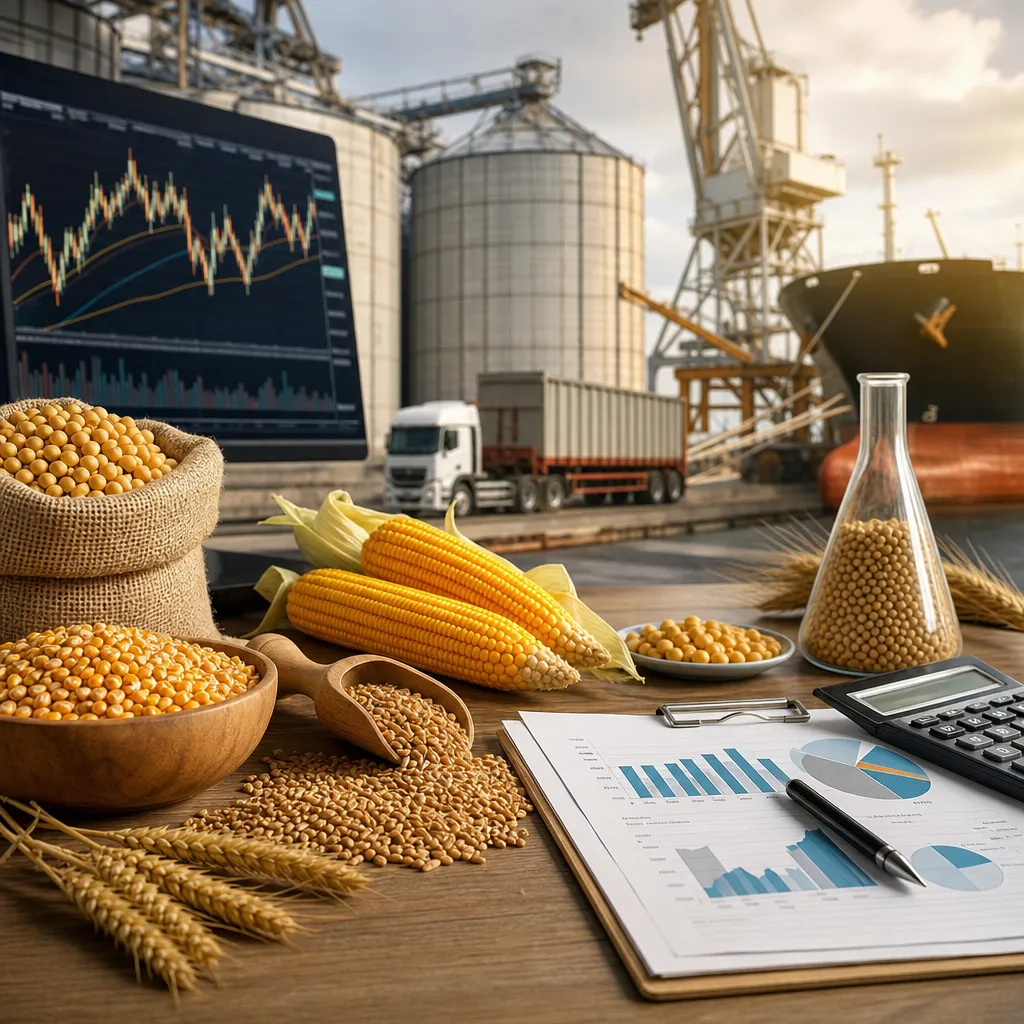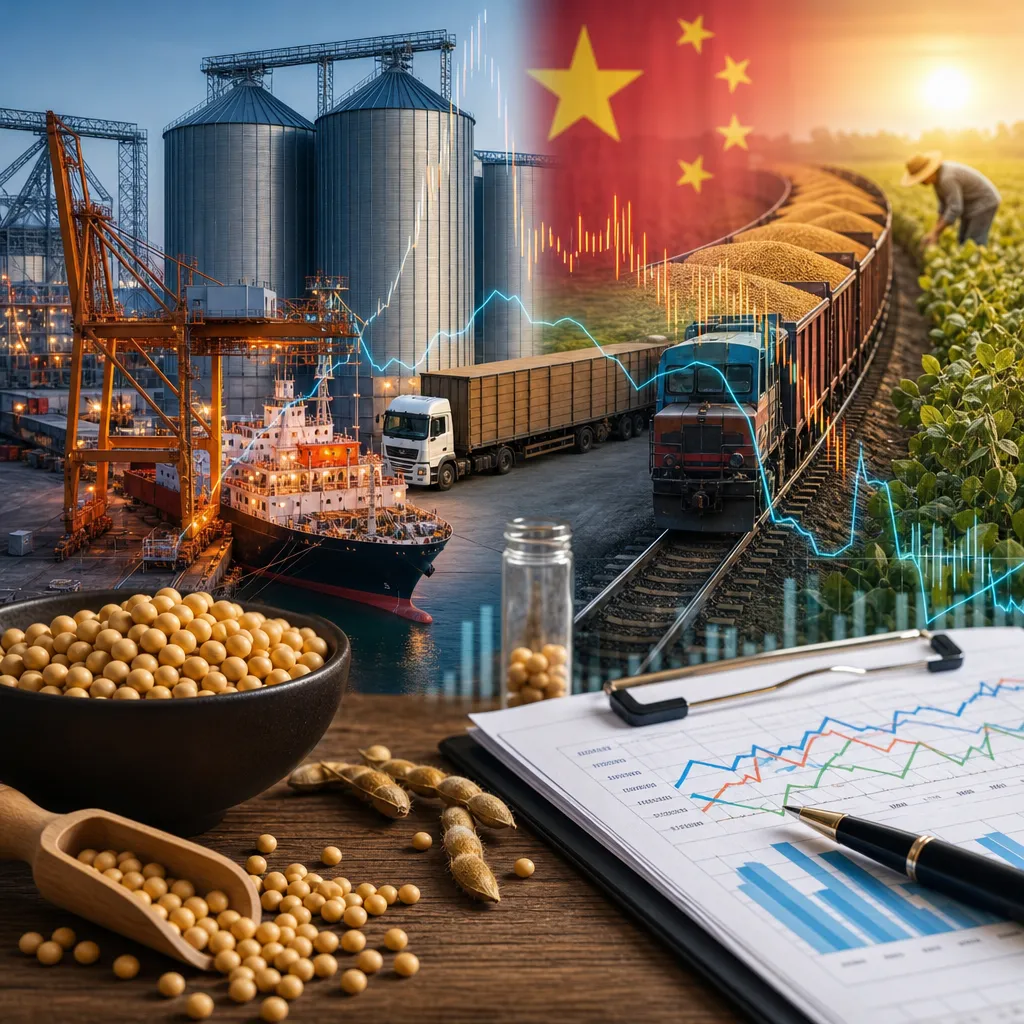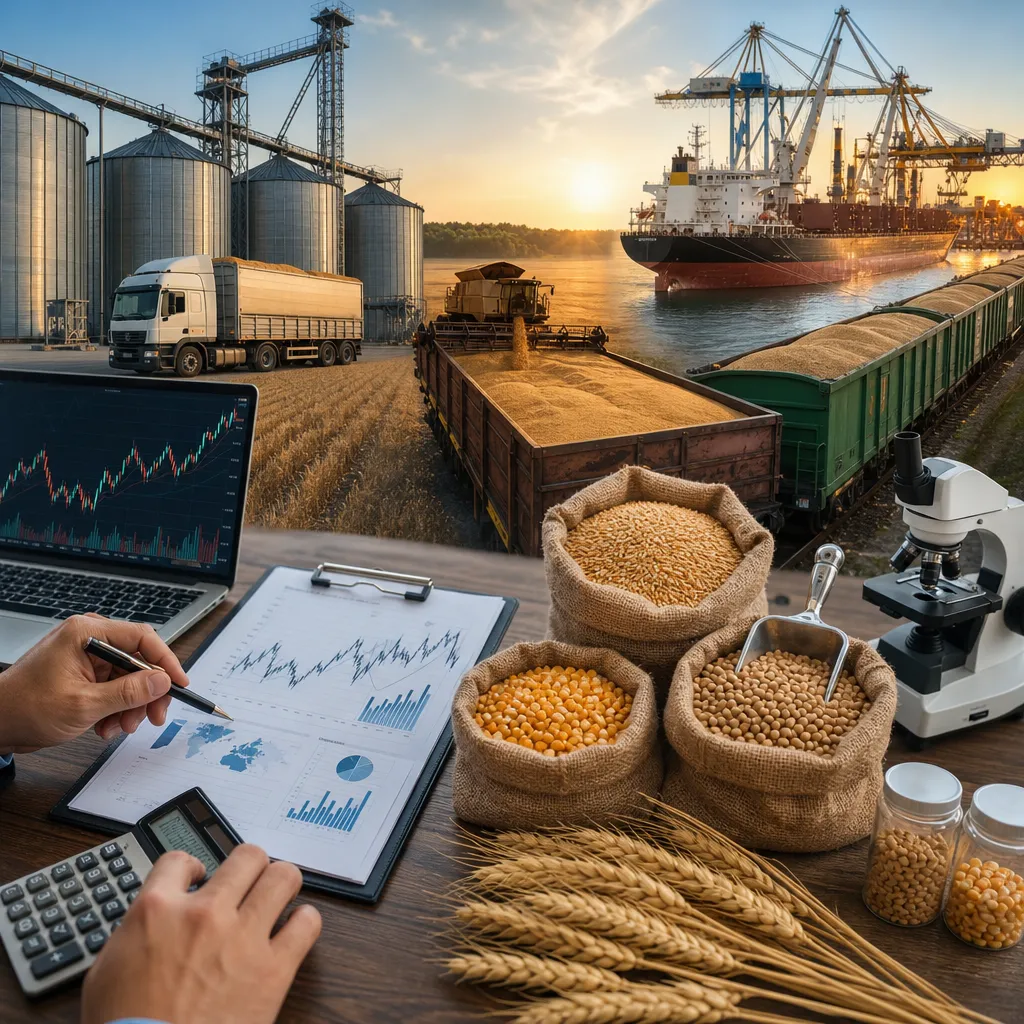


Grain basis is the difference between a local cash grain price and a related futures price. In practice, it is the adjustment that turns an exchange-traded benchmark into the price offered at a specific elevator, processor, barge terminal, rail terminal, feed mill, or export point. Basis matters because most physical grain is bought and sold using a futures reference plus or minus a local basis, not by using the futures price alone. If you understand basis, you can read local bids properly, compare delivery points, make better storage and hedging decisions, and separate local logistics from broader market direction.
A simple formula is: Cash Price = Futures Price + Basis. If the basis is negative, local cash is below futures; if positive, local cash is above futures. Basis is usually quoted in cents per bushel in North American grain markets, but the same concept applies in metric systems and other regions using local units, grades, and currencies.
What grain basis means
Basis is a location-and-time-specific pricing adjustment. It reflects what it costs, and what it is worth, to move grain from where it is produced or stored to where it is needed. That includes freight, handling, storage pressure, local supply and demand, quality differences, and the strength or weakness of nearby buyers.
For example, corn futures on CME Group may show the benchmark value for a standard contract month. A local elevator in Iowa, an ethanol plant in Nebraska, and an export terminal in the Gulf may all post different cash bids for the same day because each location has a different basis. The futures market gives a common reference. Basis translates that reference into a physical market price.
Basis is normally quoted against a specific futures month, such as December corn, November soybeans, or September wheat. A posted bid might read 20 under December or 15 over November. That tells you the local buyer is using that contract month and adjusting from it by the stated basis.
How basis works in the physical grain market
In the physical market, grain is commonly priced in one of two ways: a flat cash price or a basis contract tied to futures. Elevators, cooperatives, grain merchants, processors, feed companies, mills, and exporters often post bids that show both the futures reference and the basis component.
Here is the practical flow:
- A buyer chooses the relevant futures month that best matches the delivery period.
- The buyer sets a basis for a specific delivery point and quality specification.
- The seller receives either a cash bid or a contract structure based on futures plus basis.
- If the seller accepts, the final price may be fixed immediately, or the basis may be fixed now while futures are fixed later, depending on contract type.
This happens in real facilities, not only online. Farmers may sell to a local country elevator or cooperative. Merchants may aggregate grain and ship by truck, rail, or barge to processors or export terminals. End users such as flour mills, feed mills, maltsters, crushers, ethanol plants, rice mills, or feedlots may bid directly when they need coverage.
Basis usually gets stronger when local buyers need grain and weaker when grain is abundant or logistics are congested. Harvest pressure often weakens basis because many sellers are delivering at once. Basis may strengthen later if on-farm storage reduces immediate selling and users need nearby supply.
| Basis factor | Typical effect | Why it matters |
|---|---|---|
| Local supply | Large supply often weakens basis | Elevators and processors do not need to bid as aggressively when grain is plentiful nearby |
| Nearby demand | Strong demand often strengthens basis | Processors, mills, feeders, or exporters may raise bids to attract physical grain |
| Freight and logistics | Higher freight often weakens origin basis | Transport cost reduces what an origin buyer can pay |
| Storage availability | Tight storage can weaken harvest basis | Buyers may discount grain if space is limited |
| Quality | Better quality can improve basis | Premiums and discounts apply for test weight, protein, moisture, damage, vomitoxin, oil, or other traits |
| Export demand | Strong export programs can strengthen basis | Port and interior buyers compete to source grain for shipment |
Basis versus futures: the difference that matters
Futures and basis are related, but they are not the same market. Futures trade on regulated exchanges, such as CME Group in the United States, through futures brokers and trading platforms. These contracts are standardized by quantity, quality, delivery terms, and contract month.
Basis exists in the physical market. It is set by local buyers and sellers based on immediate commercial conditions. A futures quote is visible online through exchange data vendors, brokers, financial terminals, farm marketing platforms, and market websites. A local basis is usually found through posted elevator bids, cooperative bid sheets, processor bids, merchant quotes, phone calls, text alerts, and farm grain marketing software.
A farmer cannot assume that the screen price on a futures platform is the price available at the farm gate. Between the exchange and the local bid sit freight, quality, handling, margin requirements for commercial firms, local competition, and timing. That gap is basis.
| Market element | Where it exists | Who uses it | What it tells you |
|---|---|---|---|
| Futures price | Exchange-traded market | Hedgers, traders, speculators, commercial firms | Benchmark value for a standard contract month |
| Cash price | Local physical market | Farmers, elevators, processors, exporters, mills, feeders | Actual price at a specific location for a specific delivery period and quality |
| Basis | Physical market pricing relationship | Commercial grain participants and hedgers | Local adjustment from futures to cash |
| Hedge | Futures or options account | Producers, merchandisers, processors, end users | Manages futures price risk, but not all basis risk |
Where to find basis and cash bids
The most useful source of basis for a farmer or grain buyer is usually a local bid sheet. These are commonly provided by:
- Country elevators
- Agricultural cooperatives
- Grain merchants
- Processors such as ethanol plants, soybean crushers, flour mills, feed mills, and maltsters
- Export-handling firms and river terminals
Many buyers publish bids on their websites or in mobile tools aimed at producers. Some distribute bids by text message, email, or through grain marketing apps. Others require a phone call because basis can change during the day, especially in active commercial areas.
Public reporting also exists, but coverage varies by country and region. In the United States, USDA Agricultural Marketing Service publishes cash grain and transportation-related market information for some locations and use cases. Futures benchmarks and contract specifications are available from CME Group. Commercial data providers and farm management systems may combine futures, basis history, and local bids into one dashboard.
If you are outside the United States, basis still exists even if it is not always called by that name. Traders may refer instead to a premium, discount, differential, location spread, or outright cash market spread against an exchange or export benchmark.
How basis is used in hedging and contracts
Basis is central to grain merchandising and hedging because it separates two risks:
- Futures price risk: the risk that the benchmark market moves up or down
- Basis risk: the risk that the local cash relationship to futures changes
A farmer may hedge corn futures through a regulated futures broker while planning to sell physical corn later to a local elevator. If futures fall, the hedge may gain value, offsetting part of the lower cash price. But the final local sale still depends on basis. If basis weakens unexpectedly, the cash outcome can still disappoint even if the futures hedge works as intended.
Commercial contracts often include:
- Cash contracts: futures and basis are both fixed now
- Basis contracts: basis is fixed now, futures are fixed later
- Hedge-to-arrive contracts: futures are fixed now, basis is fixed later
- Delayed pricing or similar structures: title and pricing timing vary by provider and jurisdiction
These are physical grain contracts, not exchange-traded instruments, even though they reference futures. Terms vary by buyer, so sellers should check delivery period, quality schedules, storage charges, service fees, pricing deadlines, and default provisions before signing.
To trade futures directly, a participant normally needs a futures brokerage account and must meet margin requirements. That is separate from opening an account with an elevator or cooperative to deliver physical grain. A brokerage platform lets you hedge or speculate on futures; it does not by itself buy your truckload of grain.
Why basis changes
Basis often moves for reasons that have little to do with world grain headlines. A large crop may matter, but so can a rail shortage, a slow river, a feed mill outage, or a shortage of nearby farmer selling.
Common drivers include:
- Harvest pressure: basis often weakens when storage fills and deliveries surge
- Seasonality: basis may strengthen after harvest if grain is stored and users still need supply
- Freight: truck, rail, barge, or vessel costs can change origin and destination values quickly
- Processing margins: ethanol, crush, milling, malting, or feed demand can push local bids higher or lower
- Export programs: strong sales can tighten interior basis near supply routes to ports
- Quality issues: disease, moisture, low test weight, protein variation, or foreign material affect discounts and premiums
- Policy and trade disruptions: tariffs, inspections, border restrictions, or sanctions can change flows without moving futures equally
Basis can also vary sharply by crop. Wheat basis may be heavily quality-sensitive because grade, protein, falling number, and milling specifications matter. Soybean basis can be shaped by crush demand and export pace. Corn basis may respond strongly to ethanol demand, feed use, and interior freight. Canola, barley, oats, sorghum, sunflower seed, rice, and rye all have their own local supply-chain dynamics.
How farmers, buyers, and traders use basis in practice
Farmers often monitor basis to decide whether to sell at harvest, store grain, or hedge futures and wait for basis improvement. A weak harvest basis may not be attractive, but storage only makes sense if likely basis improvement covers storage cost, shrink, interest, risk, and handling.
Elevators and merchants manage basis constantly. They buy grain from producers, sell to processors or exporters, hedge futures exposure, and try to earn handling and merchandising margins. Processors watch basis to secure supply without overpaying. Exporters use basis at origin and destination to manage shipment economics.
A practical basis analysis usually asks:
- What is the local bid today?
- What futures month is it tied to?
- How does current basis compare with normal seasonal patterns?
- What is happening with freight, storage space, and nearby demand?
- Are quality discounts changing the true net price?
- Does storage likely pay after interest and operating costs?
Good basis decisions depend on local history. Many producers keep records of bids by delivery point and season. Grain marketing software, cooperative bid archives, and commercial market-data services can help, but local buyer relationships still matter because not all basis opportunities appear on a public screen.
Limits and risks of using basis
Basis is useful, but it is not predictable with certainty. Seasonal patterns can fail if logistics break down or demand shifts suddenly. Storage can improve pricing flexibility, but it adds cost and quality risk. Futures hedges reduce price exposure but do not eliminate basis risk.
Important limits include:
- Local basis may change faster than expected during transport disruptions
- Posted bids may not reflect final delivered value after moisture, grade, and other discounts
- Some contracts reference different futures months, making comparisons misleading
- Basis can improve while futures fall, or weaken while futures rise
- Not all regions have transparent, public basis reporting
For buyers and sellers in international trade, a similar caution applies. Export premiums, port differentials, and CIF or FOB offers are related to basis concepts, but they also include ocean freight, destination terms, and Incoterms. A quoted export offer is not interchangeable with an inland elevator basis.
FAQ
Where can I check grain basis in real time?
The most practical sources are local elevator, cooperative, processor, and grain merchant bid sheets. Some publish bids online or through mobile apps, while others provide them by phone, email, or text. Futures reference prices can be checked through CME Group market data or broker platforms, but local basis normally comes from physical buyers.
Is basis the same as the cash price?
No. Basis is the difference between the local cash price and the relevant futures price. The cash price is the actual amount offered at a location for a delivery period and quality. Basis is only one part of that final price.
Can I trade basis on an exchange?
Basis itself is usually a physical market relationship, not a standard retail exchange product. Commercial firms may manage basis through cash contracts, hedges, and OTC arrangements tied to logistics and delivery commitments. Individual participants normally access basis through physical grain contracts with elevators, cooperatives, processors, or merchants rather than through a simple exchange order ticket.
Why is my local bid different from the futures price I see online?
Because futures are only the benchmark. Your local bid includes basis, which reflects local supply, demand, freight, handling, storage conditions, quality, and competition among buyers. A futures quote is not automatically the farm cash price.
When does basis usually improve?
Often after harvest, if delivery pressure fades and buyers still need grain. But this is not guaranteed. Basis may stay weak if stocks are burdensome, freight is expensive, export demand slows, or processors reduce runs.
How do basis contracts work?
In a basis contract, the buyer and seller fix the basis now but leave the futures component to be priced later. This can help when basis is attractive but the seller does not want to lock futures yet. Terms vary by buyer, so review pricing deadlines, delivery periods, quality rules, and any charges.
Do futures hedges remove basis risk?
No. Futures hedges are mainly designed to offset moves in the benchmark futures market. The local basis can still strengthen or weaken, which means the final cash result may differ from expectations.
Which reports help explain basis movements?
Useful sources include USDA market news and grain transportation information for physical market context, USDA supply-and-demand and export reports for broader fundamentals, and CME Group contract information for futures structure. Local buyer bids remain essential because basis is highly regional.
Sources
- USDA Agricultural Marketing Service
- CME Group
- USDA World Agricultural Supply and Demand Estimates