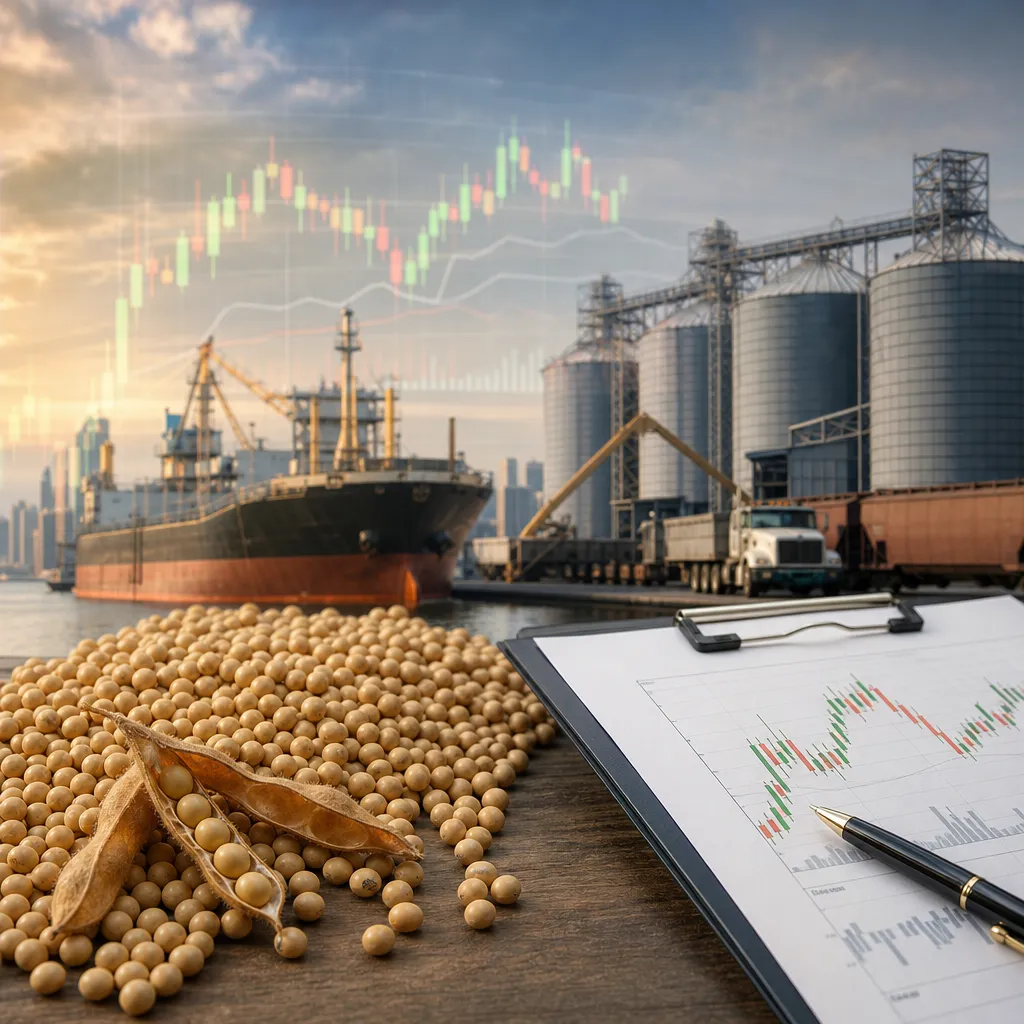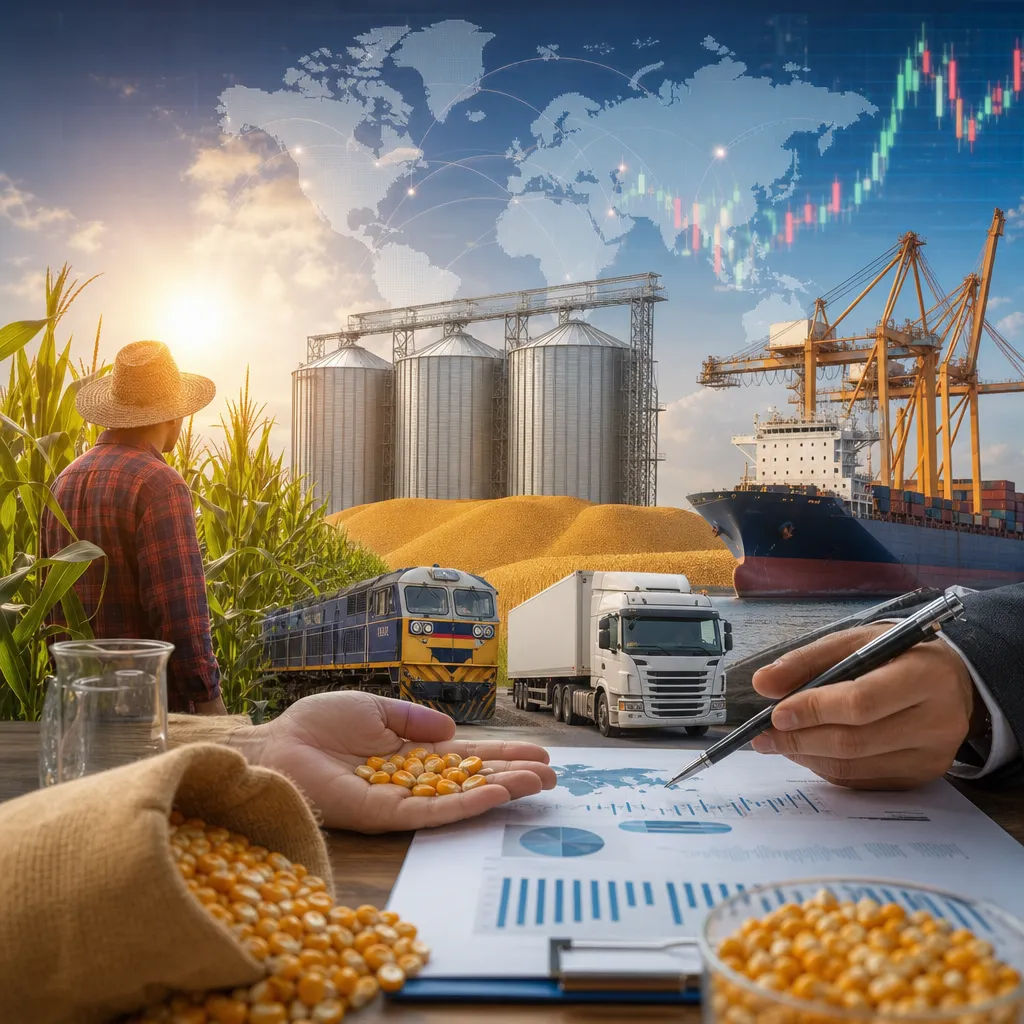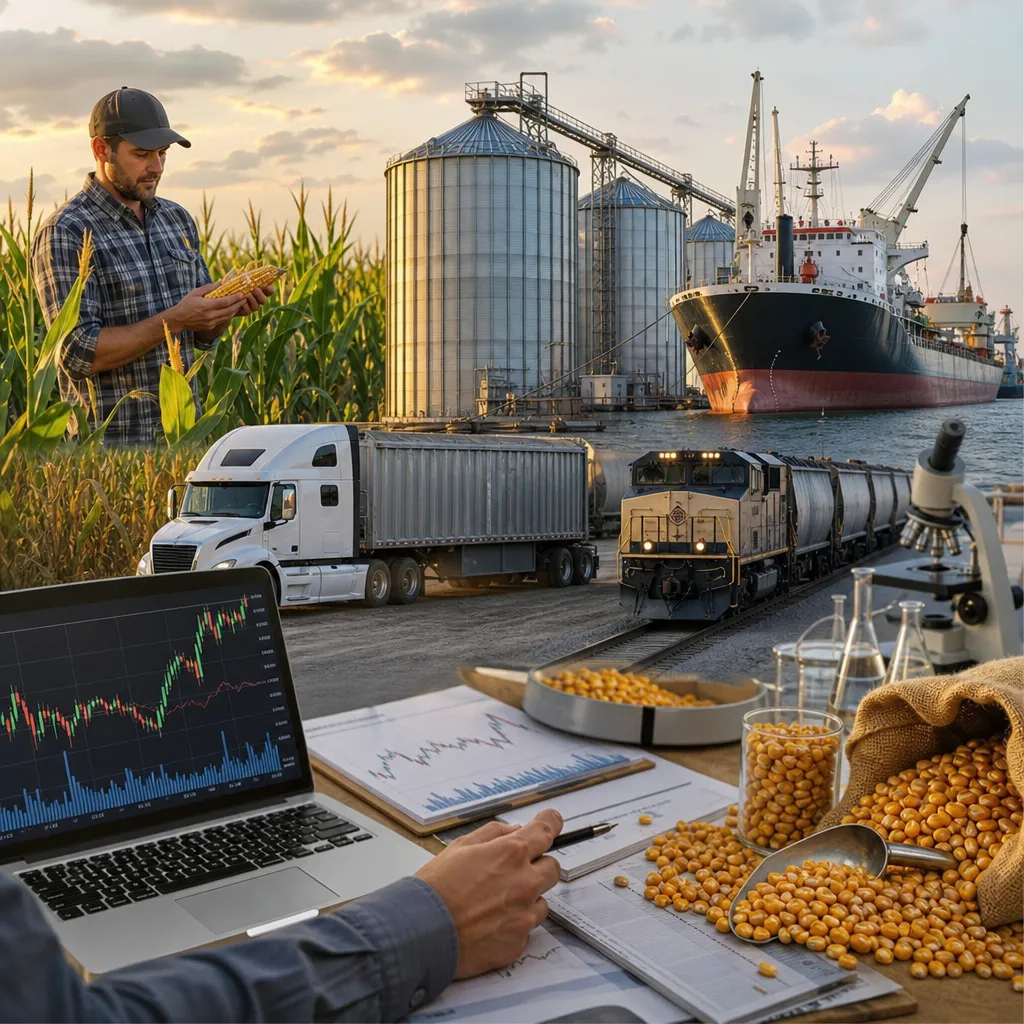

“Poland grain prices today” usually refers to the current cash prices, delivered prices, export indications, or futures-linked values for wheat, corn, barley, rapeseed, and other grains traded in Poland. Poland is a major agricultural country in Central Europe, and its grain market is connected both to domestic users and to wider European and global benchmarks. In practice, there is no single nationwide live grain price: values differ by region, buyer, quality, delivery point, and whether the grain is priced at farm gate, inland warehouse, processor, or port. Readers looking for today’s price therefore need to know both where in Poland the grain is being traded and what kind of price is being quoted.
Polish grain prices are usually discussed in złoty per metric tonne in the physical market, while international comparison often refers to euro-denominated values or futures on Euronext for milling wheat, corn, and rapeseed. Poland’s domestic market is strongly influenced by harvest size, feed demand, flour milling demand, export competitiveness, transport costs, and the złoty exchange rate against the euro. Because of that, today’s price in western Poland may differ meaningfully from the price in the east, and an inland truck-delivered quote can be very different from a port export bid.
What “Poland grain prices today” means in practice
In Poland, grain prices are mainly physical market prices rather than a single exchange-set national quote. Farmers, merchants, feed mills, flour mills, crushers, cooperatives, and exporters negotiate prices for actual grain based on quality and delivery terms. The most common grains and oilseeds discussed are milling wheat, feed wheat, corn, barley, triticale, rye, and rapeseed.
When someone asks for the price “today,” they may mean one of several different things:
- Farm-gate cash price: what a local buyer will pay at the farm.
- Delivered inland price: what a mill, feed plant, or warehouse pays if grain is delivered to its site.
- Port or export price: what exporters are bidding near Baltic export channels.
- Benchmark futures price: a tradable futures contract, usually on Euronext, used as a reference rather than a direct farm price.
That distinction matters because the futures market is not the same thing as the Polish local cash market. A futures quote reflects a standardized contract on an exchange, while a local Polish cash bid reflects the real cost and value of grain in a specific place on a specific day.
Where the Polish grain market operates
The market operates across the whole country, but trading conditions differ by region. Grain production is spread across many voivodeships, and domestic trade flows move grain from farms to storage, processors, feed users, and export channels. Inland demand comes from flour mills, feed compounders, livestock sectors, starch users, and rapeseed crushers in the case of oilseeds.
Poland is also tied to the wider European grain economy. As a member of the European Union, it trades within the single market and is directly affected by EU crop balances, import competition, and export opportunities. For internationally traded grains, coastal logistics matter because export business can support inland prices when Polish grain is competitive in foreign markets.
In market terms, Poland sits between its domestic physical trade and a broader pricing environment shaped by:
- Euronext grain and rapeseed futures, especially for European benchmark pricing
- EU supply and demand balances
- Black Sea competition in wheat and corn
- Baltic and northern European export routes
- The euro/złoty relationship, which affects export parity and import parity
How grain prices are formed in Poland
Polish grain prices are formed through a combination of benchmark market signals and very local physical conditions. A buyer in Poland may start with a European or international reference and then adjust for transport, grain quality, storage, timing, and local competition.
The most practical way to understand Polish grain pricing is through the relationship between benchmark and cash market:
| Price type | Where quoted | What it means |
|---|---|---|
| Futures price | Exchange such as Euronext | Standardized financial benchmark for a future delivery month; not the exact Polish farm price |
| Cash bid | Local merchant, elevator, cooperative, processor | Immediate or nearby purchase price for physical grain at a specific location |
| Delivered price | Mill, feed plant, crusher, warehouse | Price including delivery to the buyer’s site, subject to quality and timing |
| Export bid | Trader or exporter near port or rail-linked export flow | Price tied to export competitiveness, freight, and vessel or terminal demand |
| FOB price | Export market | Free on board vessel value at export point; usually not the same as inland farmer receipts |
A key concept is basis. Basis is the difference between the local cash price and the benchmark futures price. In Poland, basis can strengthen or weaken depending on how urgently buyers need grain, whether export channels are active, storage availability, local harvest pressure, and transport costs from inland origin to end user or port.
Other major price drivers include:
- Quality: protein, falling number, test weight, moisture, impurity level, and mycotoxin status can materially affect wheat and corn values.
- Location: grain closer to major demand centers or export outlets may command a stronger bid.
- Seasonality: harvest periods often pressure nearby prices if storage is tight.
- Currency: since much export business across Europe is euro-linked, the złoty matters for domestic price translation.
- Competition among buyers: feed mills, mills, exporters, and merchants may all compete for the same grain.
Where to check Poland grain prices online
If you need Poland grain prices today, the safest approach is to combine official benchmark information with physical market indications from actual buyers. Because no single source captures every local cash bid in Poland in real time, readers should check several layers of information.
Useful places to monitor include:
- Euronext: relevant for wheat, corn, and rapeseed futures benchmarks used across Europe.
- European Commission market information: useful for EU grain and oilseed context, trade, and general market monitoring.
- Polish statistical and agricultural institutions: helpful for production, crop, and market background rather than live elevator bids.
- Local merchants, cooperatives, and processors: often the most practical source for actual purchase bids in a given district.
- Broker or market news platforms: useful for futures and broad sentiment, but they do not replace a local physical quote.
- Export traders: relevant when trying to understand port-linked wheat, corn, or rapeseed demand.
For physical grain, farmers and traders in Poland often get the most actionable “today” price directly from buyers by phone, email, apps, or posted purchase lists. That is because the real tradable price usually depends on quality specification, load size, payment terms, and whether delivery is immediate or forward.
| Source type | What you can check | Best use |
|---|---|---|
| Euronext | European futures benchmarks | Tracking wider price direction and hedging reference |
| European Commission | EU market context, policy, trade data | Understanding the broader grain backdrop |
| Statistics Poland and national institutions | Crop, production, regional agricultural data | Context on supply and seasonality |
| Local buyers and processors | Current cash bids and delivery terms | Actual physical selling decisions |
| Export merchants | Port-linked demand signals | Evaluating export support for inland markets |
Poland’s role in grain production, consumption, and trade
Poland is an important grain-producing country within the European Union. Its crop mix commonly includes wheat, corn, barley, rye, triticale, oats, and rapeseed. Domestic consumption is broad-based because Poland has large feed needs, a developed flour milling sector, and oilseed processing activity.
That means the market is not driven by exports alone. In some periods, domestic feed and milling demand can be the key support for inland prices. In other periods, export competitiveness becomes more important, especially when harvest supplies are comfortable and inland users are well covered.
Poland can function as both a supplier into EU and seaborne trade channels and as a market influenced by imports from neighboring regions. Trade patterns can shift with relative price competitiveness, crop quality, logistics, and policy conditions. Because Poland is part of the EU internal market, cross-border flows with nearby member states can matter even when seaborne exports are quiet.
How grain is actually bought and sold in Poland
Physical grain market
Physical trade in Poland is conducted through direct commercial relationships rather than through a central national grain exchange. A farmer typically sells to one of the following:
- Local grain merchant or collector
- Cooperative or storage operator
- Flour mill
- Feed mill
- Rapeseed crusher
- Exporter or trader assembling grain for shipment
The deal may be spot, nearby delivery, or forward. The contract usually specifies:
- Commodity and crop year
- Quality parameters
- Delivery period
- Delivery location and who pays freight
- Price formula or fixed price
- Payment terms
- Sampling and dispute rules
For sellers, the practical risks are not just price risk but also quality claims, drying costs, storage losses, and counterparty risk. For buyers, procurement timing matters because a bid during harvest can look very different from a bid later in the marketing year after strong farmer selling has ended.
Export and port-linked trade
Export-oriented grain is usually assembled inland, transported to storage or terminal position, and then sold under export terms. In that chain, inland prices are influenced by what an exporter believes can be realized in the destination market after deducting elevation, transport, handling, and freight-related costs.
This is why a strong export bid does not automatically become a high farm-gate price. Every logistics step between the farm and the vessel has a cost. Conversely, when export channels are active and buyers compete aggressively for grain meeting specification, inland cash bids may improve.
Futures, hedging, and the link to Polish cash prices
For Poland, the most relevant exchange benchmark is often Euronext, especially for milling wheat, corn, and rapeseed. Futures are financial instruments traded electronically through brokers. They are used by merchants, processors, risk managers, and some sophisticated producers to hedge price exposure or take market views.
It is important not to confuse a futures position with physical ownership of grain. A trader can buy or sell futures without moving a single tonne in Poland. Likewise, a farmer can sell physical grain locally without ever opening a futures account.
The practical difference looks like this:
- Physical market: you trade actual grain; quality and logistics matter.
- Futures market: you trade price exposure in standardized contracts; margin and volatility matter.
Hedging is common in commercial grain trade because merchants or processors may buy physical grain in Poland and use futures to reduce exposure to broader market moves. But basis risk remains. Even if the benchmark future declines or rises in a predictable way, the local Polish cash differential can move independently due to freight, currency, buyer competition, or quality premiums.
Main factors that can move Poland grain prices next
Forecasting Polish grain prices should be done in scenarios, not certainties. Several factors can move the market materially over coming weeks or months.
| Factor | Possible effect | Why it matters in Poland |
|---|---|---|
| Weather and yield | Can tighten or loosen local supply | Production swings affect both domestic availability and export potential |
| Harvest pace | Often pressures nearby cash values during peak arrivals | Storage and logistics can become temporarily congested |
| EU and global futures direction | Changes benchmark value | Polish prices are linked to broader European market sentiment |
| Złoty exchange rate | Can improve or weaken local equivalent returns | Exports and EU trade are often euro-sensitive |
| Feed and milling demand | Supports inland bids when buyers are short covered | Domestic consumption is a major part of the market |
| Export competitiveness | Can lift or cap prices near export channels | If Polish grain is not competitive, port demand may weaken |
A bullish scenario usually requires some combination of smaller available supplies, stronger domestic consumption, active exports, or supportive benchmark futures. A bearish scenario usually involves comfortable stocks, weak export demand, heavy farmer selling, or softer European futures. In many years, the most important question is not simply crop size, but whether Polish grain is moving smoothly into domestic use and export channels.
Practical guidance for reading today’s Poland grain market
For a farmer, processor, or trader, the most useful way to read the market is to compare several quotes rather than relying on one headline number. A wheat price on Euronext may show the broad market direction, but the actual tradable Polish price still depends on basis and quality.
A practical workflow is:
- Check the relevant benchmark futures market for direction.
- Compare local cash bids from at least two or three buyers.
- Confirm the exact specification: milling wheat is not the same as feed wheat.
- Ask whether the quote is farm-gate, ex-warehouse, delivered, or port-linked.
- Check payment timing and deduction rules.
- If selling forward, understand how the contract handles quality and delivery period.
For market participants using futures, it is equally important to remember that hedging reduces benchmark price exposure but does not eliminate basis risk or physical execution risk. The online market and the physical market are connected, but they are not identical.
FAQ
Where can I check Poland grain prices today?
Check local buyers such as merchants, cooperatives, mills, feed plants, crushers, and exporters for real cash bids. For benchmark direction, monitor Euronext futures and broader EU market information from the European Commission.
Are Poland grain prices quoted in złoty or euro?
Domestic physical prices in Poland are usually discussed in PLN per metric tonne. International trade and benchmark comparisons are often viewed in euro terms, especially when linked to EU trade or Euronext futures.
What is the main benchmark for Polish wheat prices?
For European market reference, Euronext milling wheat futures are widely relevant. However, that benchmark is not the same as a local Polish farm-gate or delivered cash price.
Why is the local cash price different from futures?
Because local cash prices include basis, which reflects freight, quality, local supply and demand, storage, buyer competition, and currency effects. Futures represent a standardized exchange contract, not a local physical bid.
How is grain physically sold in Poland?
Usually through direct contracts with merchants, cooperatives, mills, feed manufacturers, crushers, or exporters. Terms normally specify quality, delivery location, timing, and payment conditions.
Can I trade Polish grain prices online through futures?
You can trade related European futures through a broker, but that gives financial exposure to a benchmark contract, not ownership of physical grain in Poland. Physical grain trading and futures trading are separate activities.
Do port prices matter for inland Poland?
Yes. Port and export demand can support inland values when exporters are active and logistics work well. But transport and handling costs mean inland farm prices are still lower than export values at the coast.
What usually moves Poland grain prices most sharply?
Weather, harvest pressure, Euronext futures, the złoty exchange rate, domestic feed and milling demand, and export competitiveness are usually the most important drivers.
Sources
- Euronext
- European Commission
- Statistics Poland (Główny Urząd Statystyczny, GUS)