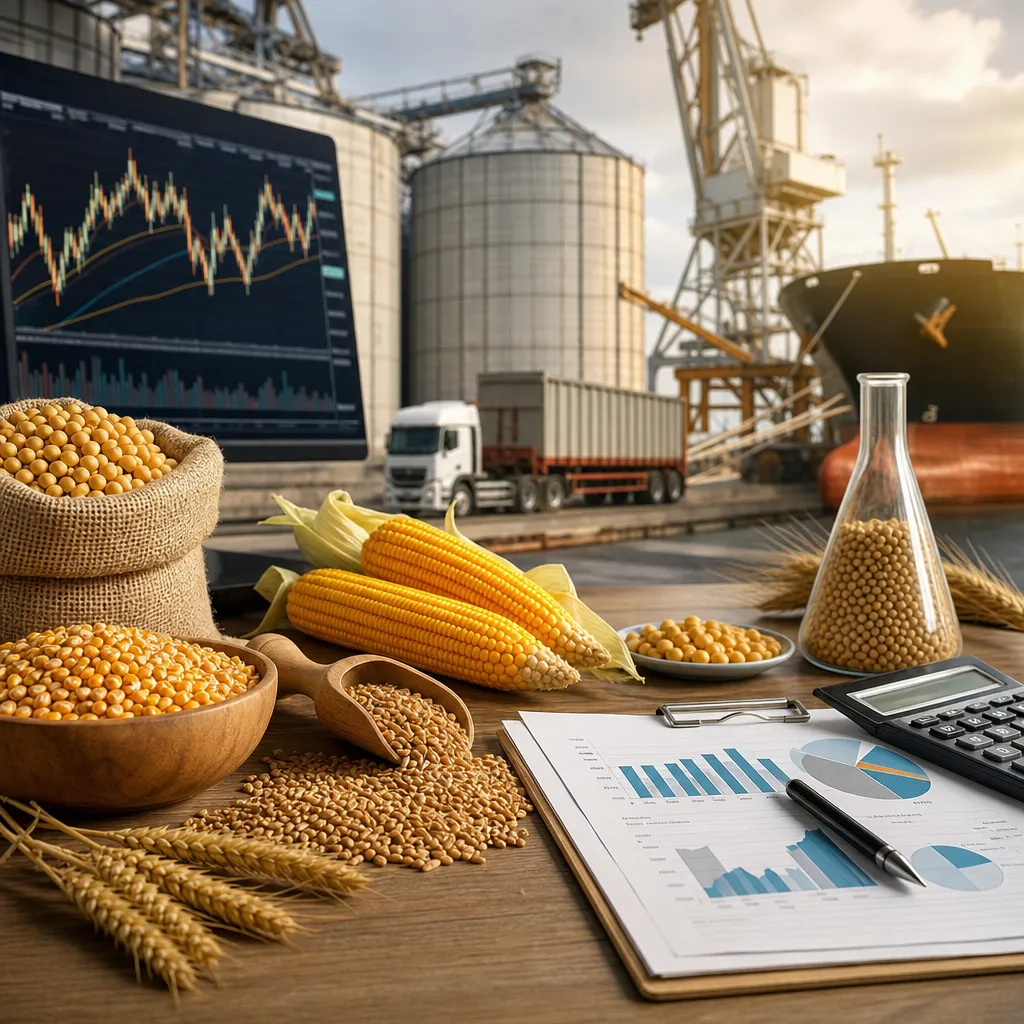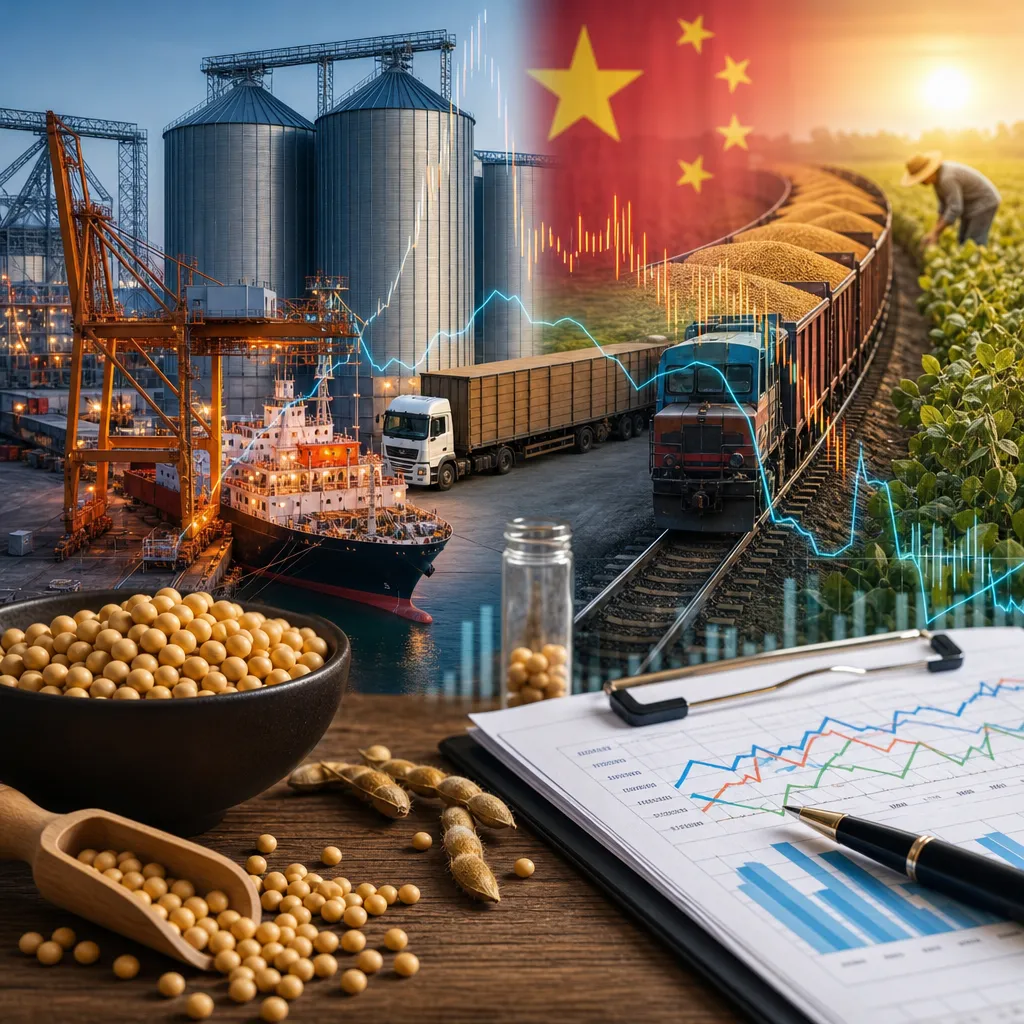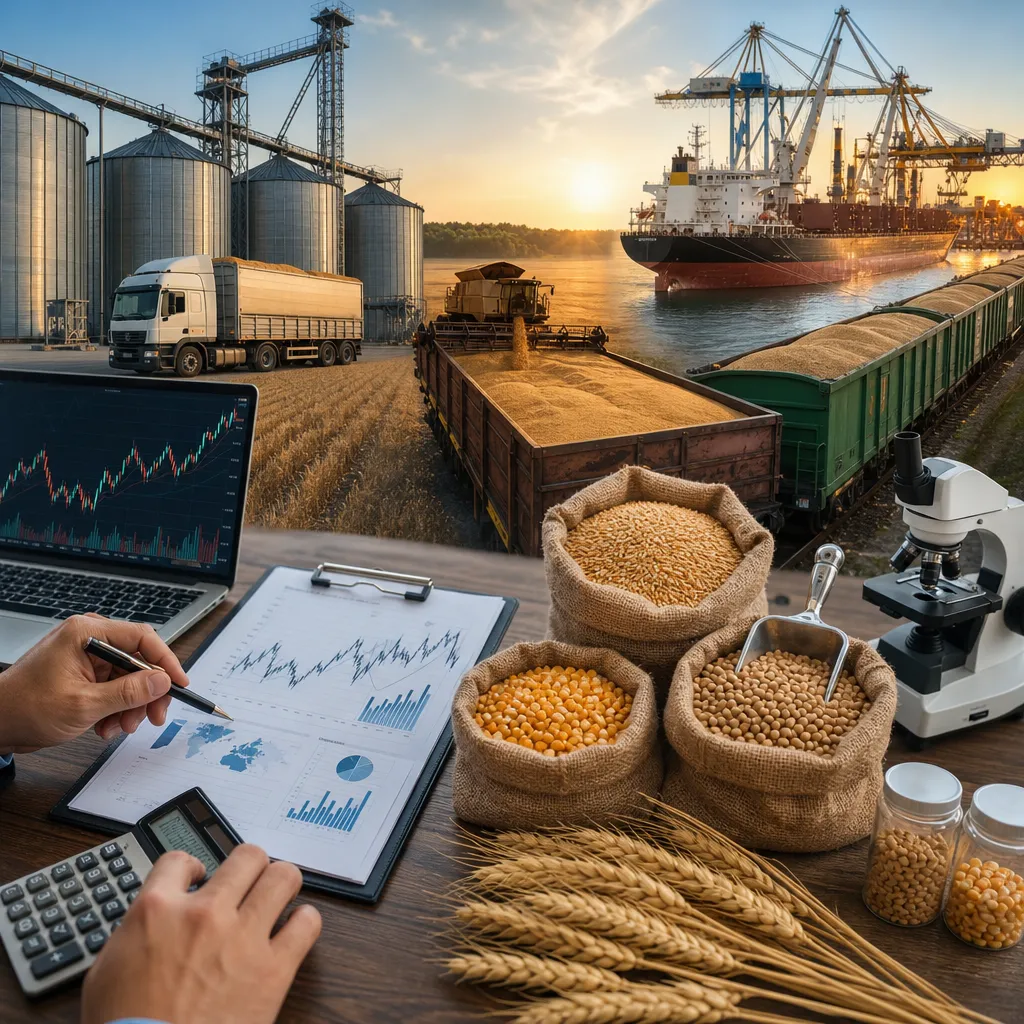

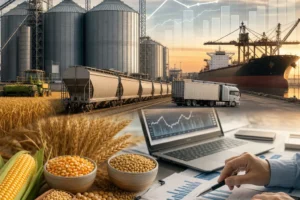
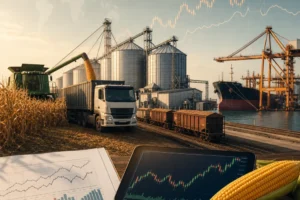
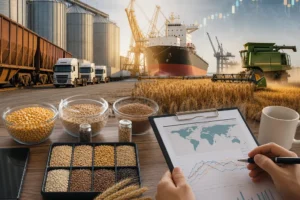
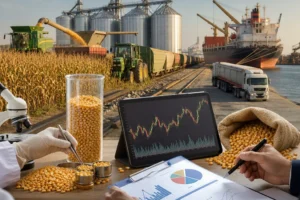
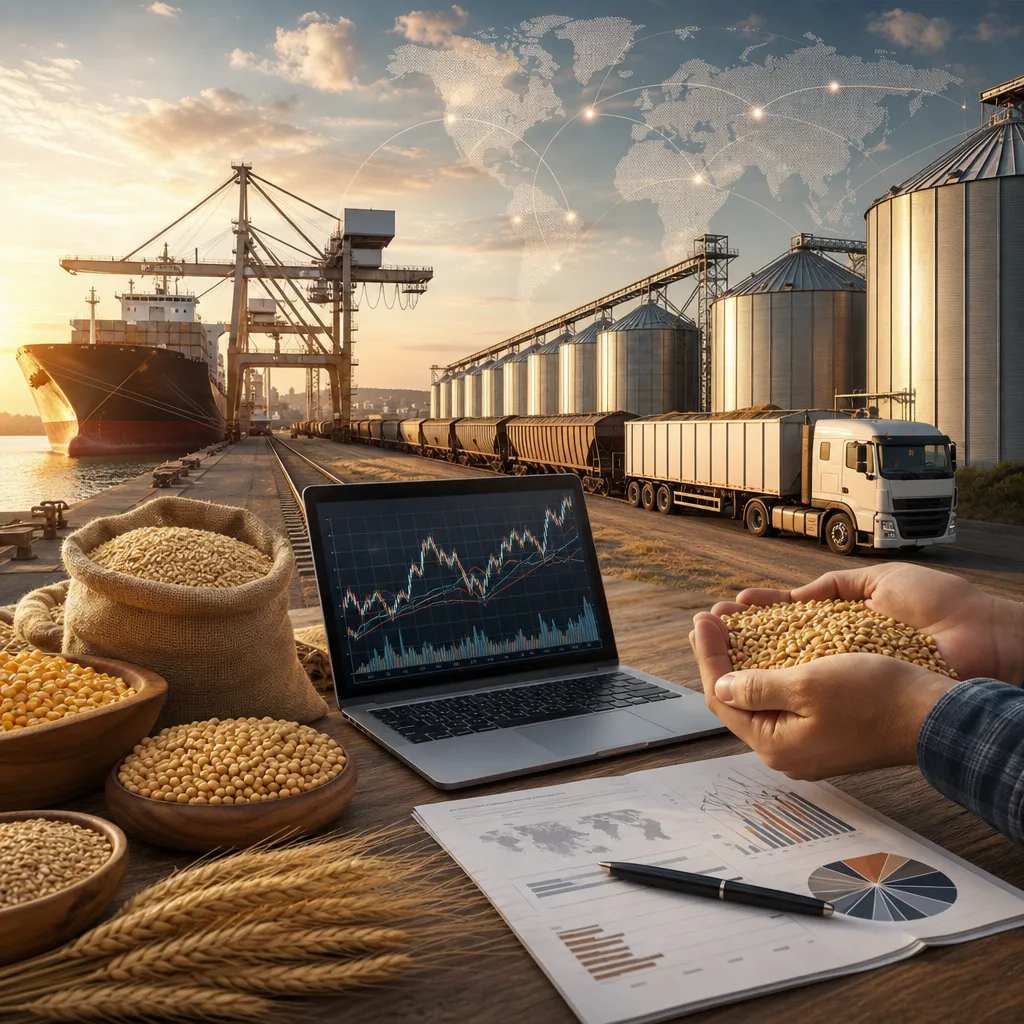
Grain prices and global trade are linked through a chain that starts with weather and crop yields on farms and ends with bids at local elevators, export terminals, feed mills, crushers, and food processors. The most important practical point is that there is no single “grain price”: exchange futures prices, port export values, and local cash bids are different markets that interact but do not match exactly. To understand what grain is worth, a farmer, buyer, or trader usually needs to check both benchmark futures prices and the local basis or cash bid at a specific delivery point. Global trade then moves those price signals across regions through exports, imports, freight, currency movements, and government policy.
For wheat, corn, soybeans, rice, barley, canola, rapeseed, sunflower seed, sorghum, oats, and rye, prices are discovered in a mix of regulated futures exchanges and negotiated physical markets. Futures help set benchmarks and manage risk; physical trade determines who delivers what quality, where, when, and at what final landed cost. The most useful way to approach the subject is to separate benchmark pricing, local cash trade, logistics, and risk management.
How grain prices are formed
Grain prices are driven by supply and demand, but in practice the market watches a small set of recurring variables: acreage, yield, ending stocks, export demand, livestock feed demand, biofuel demand, weather, energy costs, currency moves, and freight. If expected production rises faster than demand, prices usually weaken. If weather damages crops, export flows are disrupted, or stocks become tight, prices often strengthen.
Price formation happens at more than one level. A futures exchange may provide a benchmark price for a standardized contract, but the physical grain market adds location, grade, moisture, protein, test weight, contamination limits, freight, handling costs, and timing. That is why two elevators in the same region may post different bids on the same day.
| Price layer | What it represents | Where it is normally checked | Who uses it |
|---|---|---|---|
| Futures price | Exchange-traded benchmark for a standardized contract month | Exchange websites, broker platforms, market-data vendors | Traders, hedgers, analysts, merchants |
| Basis | Difference between local cash price and futures benchmark | Elevator bids, cooperative bid sheets, merchant offers | Farmers, elevators, processors |
| Cash bid | Actual local buy price for grain delivered under stated terms | Local elevators, cooperatives, mills, crushers, feed buyers | Farmers and physical buyers |
| Export or import value | Price at port or destination including trade terms and freight elements | Merchants, tenders, customs data, trade reporting services | Exporters, importers, trade houses |
Where grain prices are quoted and where to check them
Benchmark grain prices are commonly quoted on regulated exchanges. In the United States, many major grain and oilseed futures are listed by CME Group, including corn, wheat, soybeans, soybean meal, soybean oil, oats, rough rice, and canola-related benchmarks through linked North American markets. European participants may also watch Euronext grain and rapeseed contracts for regional reference. These prices are usually shown by contract month and are not the same as what a truckload of grain will bring at a local receiving point.
Local cash prices are normally checked through grain elevators, cooperatives, merchants, crushers, ethanol plants, feed mills, flour mills, maltsters, and export houses. In many producing regions, these buyers publish bids online, in mobile apps, by text message, or by voice line. A farmer selling physical wheat or corn typically compares nearby bids at several delivery locations because basis and freight can change the net price more than the futures move on some days.
For official market information, the United States Department of Agriculture publishes widely used data and reports. The Agricultural Marketing Service provides cash market reporting for many locations and commodities. USDA also publishes crop and balance-sheet reports used globally. Outside the United States, readers should check their own agriculture ministries, grain boards where applicable, statistical agencies, and customs data portals for domestic cash and trade information.
Futures markets versus physical grain markets
Futures trading is financial risk transfer on a regulated exchange. Physical grain trading is the purchase or sale of actual grain with specific quality, delivery, and payment terms. The two markets influence each other, but they are not interchangeable.
A futures contract represents a standardized quantity and quality at approved delivery locations and months. Traders access these contracts through a futures broker and a margined trading account. They post initial margin, face daily gains and losses through mark-to-market, and can close the position before delivery. Most participants do not intend to make or take delivery; they use futures for hedging or speculation.
Physical grain trade occurs through elevators, cooperatives, merchants, processors, exporters, importers, mills, crushers, and feed manufacturers. The buyer and seller agree on the crop, quality, quantity, delivery point, delivery window, freight responsibility, basis or flat price, and payment terms. This may happen through a direct contract, a brokered deal, or a tender process.
| Feature | Futures market | Physical grain market |
|---|---|---|
| Purpose | Benchmark pricing and risk transfer | Movement of actual grain from seller to buyer |
| Access | Regulated exchange through a futures broker | Elevator, cooperative, merchant, processor, broker, tender |
| Standardization | Highly standardized contract terms | Negotiated quality, timing, location, and freight |
| Money flow | Margin and daily settlement | Payment under commercial terms after delivery or as agreed |
| Main risks | Leverage, margin calls, contract expiry | Quality claims, freight, storage loss, counterparty risk |
How global trade moves grain prices
Global trade connects surplus regions to deficit regions. Wheat from major exporters can price into North Africa, the Middle East, or Asia; soybeans can move to crushing markets; corn can shift between feed importers depending on crop size and freight. As buyers compare origins, local prices increasingly reference export parity or import parity.
Export parity means the local grain value is influenced by what exporters can earn after deducting elevation, handling, and freight to port. Import parity means domestic prices are influenced by the cost of bringing grain in from abroad. Inland basis often strengthens when exporters, mills, and feed users compete for limited supply; it weakens when logistics are congested or supply is abundant.
Trade is also shaped by currencies, tariffs, quotas, phytosanitary rules, sanctions, and tender systems. A weaker exporting-country currency may support competitiveness in world markets even if local-currency farm prices do not move the same way as dollar-denominated futures. Freight disruptions, river levels, rail bottlenecks, port congestion, or vessel shortages can widen the gap between futures values and physical bids.
How physical grain is bought, sold, and delivered
In practice, physical grain is usually sold through a local elevator or cooperative, directly to a processor, to a merchant, or through a broker arranging a contract between buyer and seller. The process starts with an offer or bid, then moves to contracting, delivery, grading, settlement, and payment. Larger commercial flows may move under standard trade forms and trade terms such as FOB, CFR, or CIF, especially in export business.
A typical farm-to-buyer transaction includes these steps:
- Check local bids from elevators, cooperatives, mills, crushers, or feed buyers.
- Confirm whether the bid is a cash price, basis contract, forward contract, or deferred delivery contract.
- Review quality requirements such as moisture, protein, foreign material, damage, falling number, oil content, or test weight depending on crop.
- Confirm delivery point and freight responsibility. A better price at a distant location may net less after trucking.
- Deliver grain and obtain weights and grade results.
- Receive settlement under the agreed payment terms.
For larger merchant or export trades, inspection and documentation matter more. Quality certificates, warehouse receipts where relevant, shipping documents, and contract performance become central. Counterparty risk also becomes more important, especially in cross-border business or less transparent markets.
Storage, logistics, and quality in price formation
Storage changes the timing of sale and can improve marketing flexibility, but it is not free. On-farm bins, commercial elevators, flat storage, warehouses, and port silos all involve costs and operational limits. Owners and users need to consider shrink, aeration, handling losses, financing cost, spoilage risk, and whether the market is paying enough carry to justify holding grain.
If futures spreads or local bids reward later delivery, storage may be worthwhile. If basis is weak at harvest but normally improves after harvest pressure passes, a seller may prefer to store and wait. However, this strategy is exposed to market risk and physical grain risk. Poor aeration, insects, moisture migration, or heating can quickly destroy value.
Quality is especially important in internationally traded grain. Wheat may be valued by protein and milling quality, barley by malting specifications, soybeans by damage and oil/protein expectations, and rice by milling yield and grain characteristics. A strong board price does not help if local grain fails contract specs and is discounted.
Reports, data, and tools used by the market
The grain market relies on a repeating calendar of reports. USDA’s World Agricultural Supply and Demand Estimates, usually referred to as WASDE, is one of the main global balance-sheet references for wheat, corn, soybeans, and other major crops. USDA Crop Progress is closely watched during the growing season. USDA Export Sales helps traders monitor demand. The CFTC’s Commitments of Traders report shows how different classes of futures market participants are positioned.
Exchange websites provide contract specifications, expiry calendars, and delayed or real-time futures data depending on the service level. Broker platforms allow order entry, charts, and account management for futures and options users. Commercial data services aggregate prices, spreads, weather, freight indications, and news for trading desks, merchants, and larger farms.
For physical market intelligence, readers often use a combination of elevator bid pages, cooperative bid sheets, local market commentary, port line-up information where available, customs data, and government cash reporting. No single source is enough because one source may show the benchmark, another the local bid, and another the export flow.
| Source type | What it provides | Typical use |
|---|---|---|
| Exchange data | Futures quotes, options data, contract specs, delivery months | Benchmarking, hedging, spread analysis |
| Government crop reports | Production, acreage, yield, stocks, exports, crop condition | Fundamental analysis and scenario building |
| Local bid sheets | Cash bids and basis by delivery point and timing | Farm marketing and procurement decisions |
| Trade and customs data | Import and export volumes by country and period | Trade-flow and demand analysis |
| Weather services | Rainfall, temperature, drought, forecast maps | Yield-risk monitoring |
Hedging with futures and options
Farmers, elevators, feed buyers, mills, crushers, and exporters often use futures and options to reduce price risk rather than to replace physical contracts. A farmer who expects to sell corn later may hedge by selling futures, then lift the hedge when making the cash sale. A feed mill that fears rising grain costs may buy futures or use call options. The goal is to protect a margin, not guess the market perfectly.
Options differ from futures because they provide a right, not an obligation, under specified terms. They can limit downside or upside exposure but involve a premium cost. Futures, by contrast, require margin and can create unlimited adverse price exposure if used speculatively without a matching physical position.
Important limitations remain. A hedge can reduce futures-price risk, but basis risk remains because the local cash relationship to futures can change. There is also execution risk, liquidity risk in less active contracts, and operational risk if position size does not match actual physical exposure.
Common risks and mistakes in grain pricing and trade
The most common mistake is confusing a screen price with an actual farmgate or delivered price. A Chicago or Paris futures quote is only a benchmark until a local basis, quality schedule, and freight calculation are applied. Another common error is locking in one component of price while ignoring the others, such as selling futures without a plan for basis or storage.
In physical trade, the main risks include quality disputes, moisture or damage discounts, delivery congestion, contract misunderstandings, and counterparty risk. In futures trading, the main risks are leverage, margin calls, contract expiry, and positions that are too large for the user’s cash flow or risk tolerance.
Better decisions usually come from combining three checks: the benchmark futures market, the local cash market, and the logistics reality. If any one of those is ignored, the final net price can disappoint even when the broader market view was correct.
Where can I check grain prices today?
Check futures benchmarks on exchange websites or broker platforms, and check actual local cash prices on elevator, cooperative, merchant, mill, crusher, or feed-buyer bid sheets. For official U.S. cash market reporting, USDA Agricultural Marketing Service is widely used. Always note the contract month, unit, currency, and delivery point.
Why is my local grain bid different from the futures price?
Your local bid reflects basis, freight, handling costs, storage conditions, local supply and demand, and quality adjustments. Futures are standardized benchmarks, while local bids are physical purchase offers for a specific place and time.
Where does grain trading actually take place?
Futures trading takes place on regulated exchanges through futures brokers and trading platforms. Physical grain trading takes place through elevators, cooperatives, merchants, processors, exporters, importers, brokers, and negotiated commercial contracts.
Can I buy physical grain online?
Sometimes the negotiation can begin online through a bid portal, marketplace, or merchant platform, but physical grain still requires contract terms for quality, quantity, delivery, freight, and payment. Buying physical grain is very different from clicking to trade a futures contract.
What reports matter most for global grain markets?
For many participants, the core set includes USDA WASDE, USDA Crop Progress, USDA Export Sales, and CFTC Commitments of Traders. Depending on region and crop, national agriculture ministries, customs databases, exchange reports, and official statistical agencies are also important.
How do exporters and importers price grain?
They usually price against an international benchmark plus or minus origin basis, freight, quality adjustments, elevation and handling costs, and trade terms such as FOB or CIF. Currency hedging may also be relevant in cross-border deals.
Is storing grain always profitable when harvest prices are low?
No. Storage only makes sense if expected carry or basis improvement is greater than storage, shrink, financing, and spoilage risk. The right answer depends on local bids, futures spreads, bin condition, and cash-flow needs.
What is the main risk of hedging grain with futures?
The main practical risks are basis risk and margin risk. Futures can offset benchmark price moves, but the local cash relationship may still change, and adverse futures moves can create margin calls before the physical grain is sold or bought.
Sources
- USDA World Agricultural Supply and Demand Estimates (WASDE)
- CME Group agricultural contract specifications and market data
- U.S. Commodity Futures Trading Commission Commitments of Traders