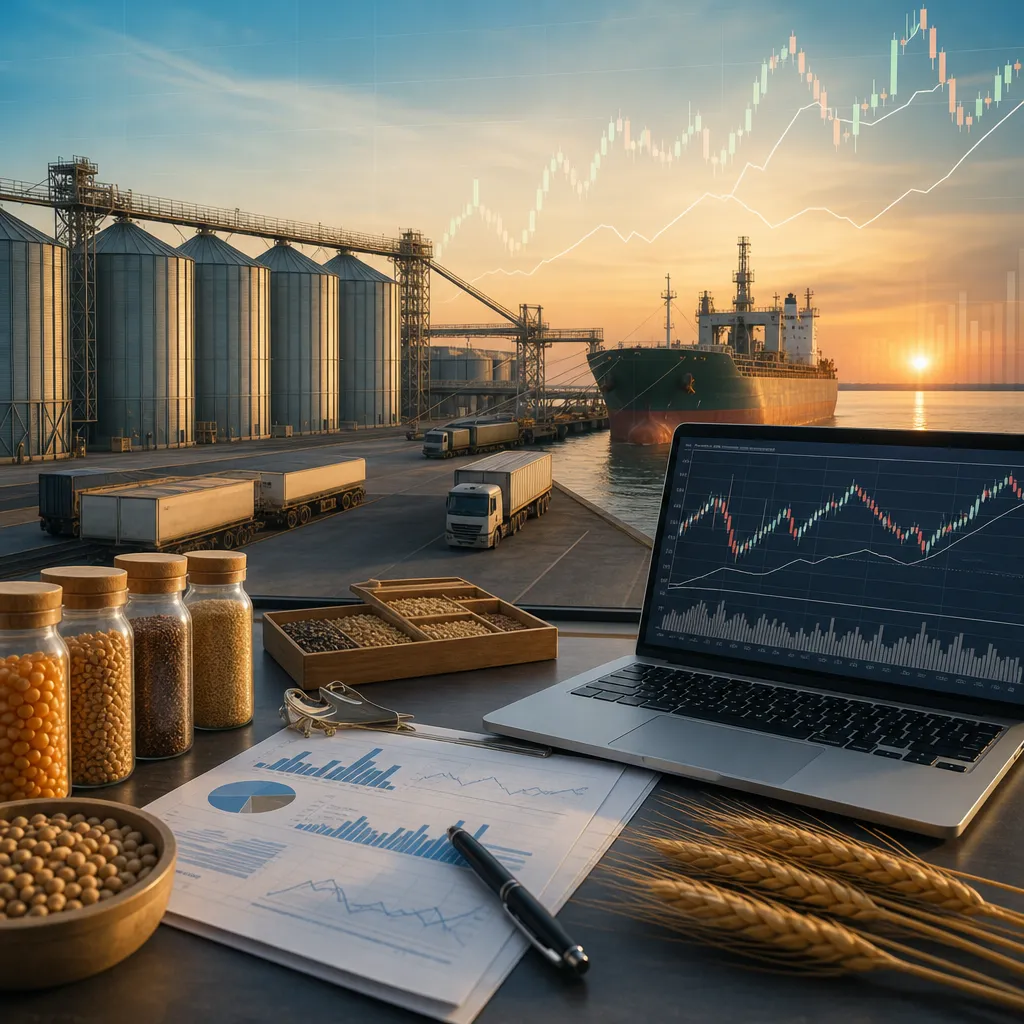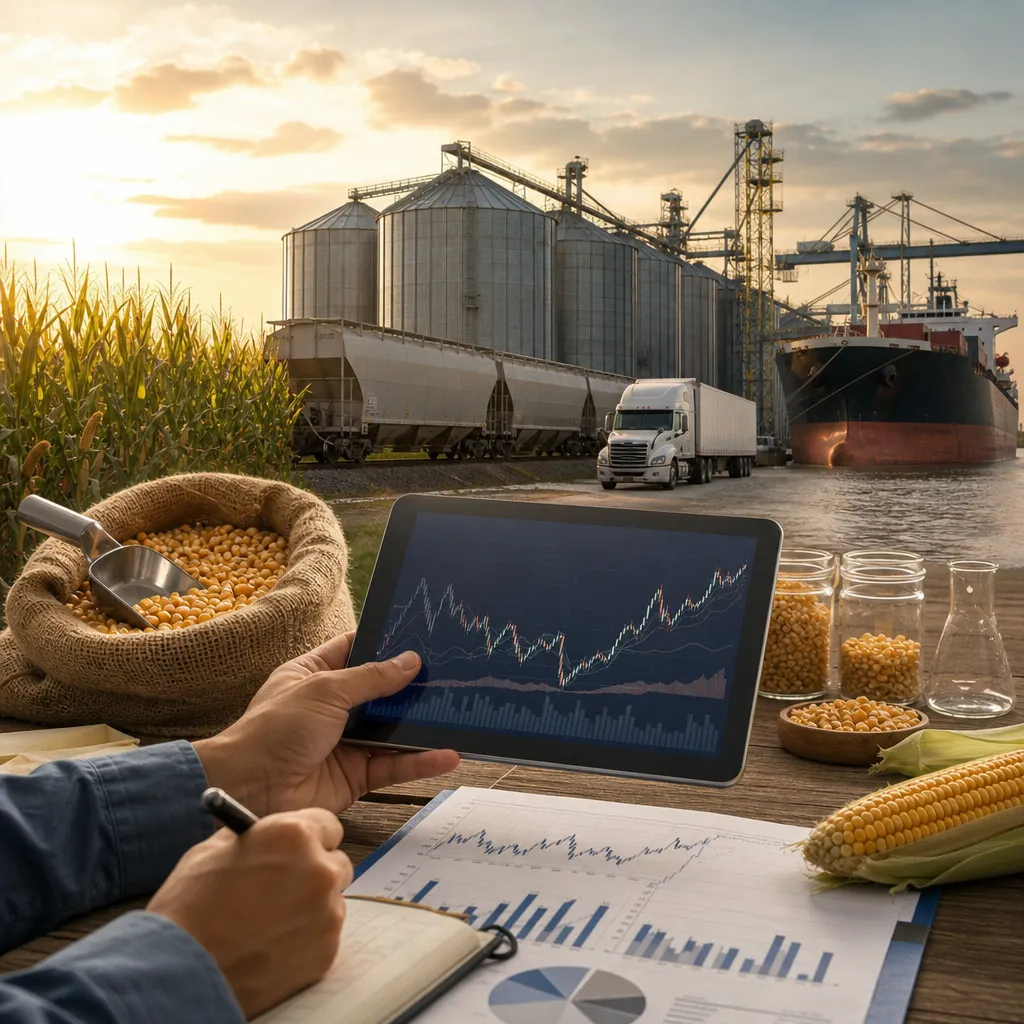

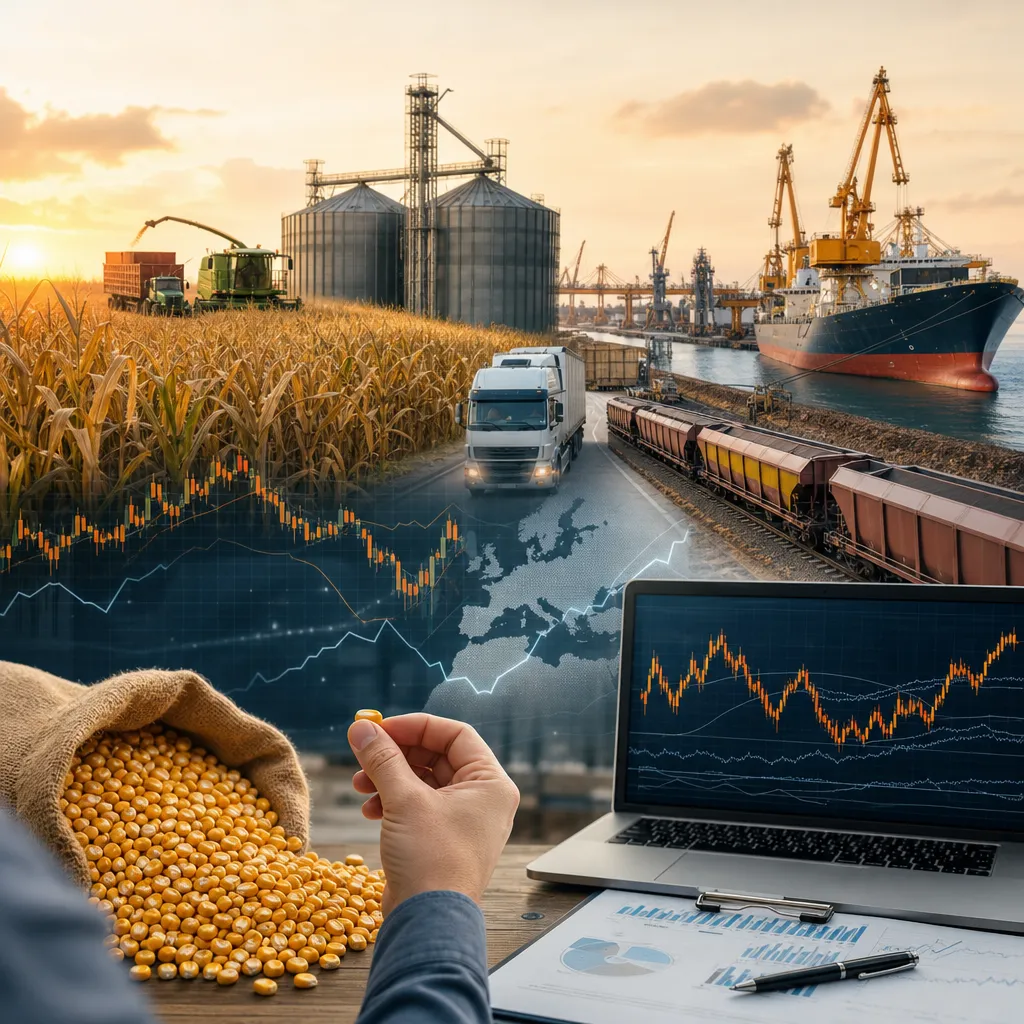
The EU corn market is the market for maize traded, consumed, imported, exported, and hedged across the European Union. It is not a single local cash market with one uniform price; instead, it is a network of farm-gate, inland, processor, feed mill, trader, and port markets connected to the broader European and global grain trade. Corn prices in the EU are usually discussed in euros per metric tonne, while futures participants often watch Euronext grain contracts and global benchmarks such as CBOT corn for broader direction. In practice, the EU corn market matters most to feed manufacturers, livestock producers, starch and ethanol users, grain merchants, exporters, importers, and farmers deciding when and how to market crop.
Geographically, the market spans all EU member states, but corn production and trade are especially important in countries such as France, Romania, Hungary, Italy, Spain, Bulgaria, and parts of Central and Eastern Europe. The EU is both a producer and a major consumer of corn, with feed demand playing a central role. Depending on crop size, quality, logistics, and world prices, the EU can be a notable importer while some member states or regions may still export surplus grain. That dual role is one of the main reasons the EU corn outlook depends not only on domestic harvest conditions but also on Black Sea competition, Atlantic trade, internal transport, and currency movements.
What the EU corn market includes
In the EU, corn is traded in several overlapping ways. First, there is the physical market: farmers sell harvested maize to cooperatives, local merchants, feed mills, starch plants, ethanol plants, or exporters. Second, there is the forward market, where grain is contracted for future delivery under specific quality and delivery terms. Third, there is the futures and options market, used mainly for price discovery and hedging rather than for routine movement of physical grain.
EU corn is mainly used for animal feed, especially in poultry, pig, and livestock rations. That means the market is highly sensitive to feed grain substitution. If wheat or barley becomes cheaper relative to corn, feed demand can shift. If corn is competitively priced, demand can improve even when the overall feed sector is soft.
The market also differs by region. Spain is structurally important as a feed-consuming market and often needs imports. France and Romania are major producing countries. Italy has an important feed and industrial demand base. Danube and Black Sea logistics matter for southeastern EU flows, while Atlantic and Mediterranean ports matter for export-import trade in western and southern Europe.
Where the market operates and how grain moves
The EU corn market operates through local inland collection points, processors, rail and river corridors, and seaports. A farmer in France or Romania may sell to a local elevator or cooperative. That grain may then move to domestic feed users, industrial processors, or export channels depending on quality, freight economics, and buyer demand.
Within the EU, corn can move across borders without the same customs framework that applies to non-EU trade, but commercial and sanitary requirements still matter. Imported corn from outside the EU may enter through major ports and then move inland to deficit regions. Delivered prices into consuming areas can differ sharply from port or farm values because road, rail, barge, and storage costs can be substantial.
For export and import trade, pricing often references port terms. Traders may discuss FOB values for exports or CIF values for imports. Inland physical prices then adjust from those benchmarks according to transport cost, handling, quality, and local competition.
| Market layer | Where it operates | Typical participants | Why it matters |
|---|---|---|---|
| Farm-gate / local cash | Producing regions across EU member states | Farmers, cooperatives, merchants | Primary physical sale point for harvested grain |
| Delivered inland market | Feed mills, starch plants, ethanol plants, livestock regions | Processors, feed manufacturers, traders | Shows true cost to end users after transport and handling |
| Port/export-import market | Atlantic, Mediterranean, Black Sea, and river-linked port zones | Exporters, importers, terminals, shipping trade | Connects the EU with world supply and demand |
| Futures/options market | Exchange-traded, accessed electronically | Commercial hedgers, investors, brokers | Used for hedging and price discovery, not everyday farm settlement |
How EU corn prices are formed
EU corn prices are formed from a mix of international benchmarks and local physical factors. There is no single number that represents the exact “EU corn price” for all users on the same day. A futures market may indicate broad sentiment, but a buyer in Spain, a farmer in Hungary, and an exporter in Romania may all face very different values.
Several price types are important:
- Futures price: the exchange-traded benchmark used for hedging and market reference.
- Local cash bid: the price offered by a local buyer for physical grain at a specific place and time.
- Delivered price: the price paid at the destination, including transport to the buyer.
- FOB price: free on board at a port, typically used in export trade.
- CIF price: cost, insurance, and freight to the destination port, common in import discussions.
- Basis: the difference between a local cash price and a futures or reference benchmark.
Basis is especially important in the EU because internal logistics, quality variation, and regional deficits or surpluses can create wide differences from one area to another. For example, a strong local feed market may support inland delivered prices even if futures are weak. Conversely, a good harvest in a landlocked region can pressure local bids if storage is tight or transport is expensive.
Currency also matters. EU physical trade is usually discussed in euros per tonne, but corn competes in a global market where US dollar pricing influences import and export parity. A weaker euro can make imports more expensive and support local prices, while a stronger euro can reduce import costs and make EU exports less competitive.
Benchmarks, futures, and hedging in Europe
The most relevant exchange benchmark in Europe is generally Euronext, which is widely used in European grain risk management. Market participants also monitor CBOT corn through CME Group because global corn supply, US planting and yield expectations, and fund positioning often shape broader market sentiment. Even so, CBOT is not the same as an EU local cash price.
Futures are mainly a financial risk management tool. A commercial grain merchant may buy physical corn from farmers and sell futures to reduce downside price risk. A feed manufacturer may buy futures or options to protect against rising replacement costs. A speculative trader may participate without handling any grain at all.
Using futures does not automatically mean taking delivery of actual corn. Most users close or roll positions before delivery. For physical grain businesses, the key risk is often basis risk: futures may move one way while the local cash market moves differently because of transport, quality, weather, or regional supply-demand shifts.
| Price or market reference | What it shows | Main users | Limitation |
|---|---|---|---|
| Euronext grain futures | European benchmark sentiment and hedging reference | Merchants, processors, risk managers | Not the exact farm-gate cash price |
| CBOT corn futures | Global corn benchmark and macro direction | International traders, analysts, hedgers | Quoted in a different market structure and currency context |
| Local cash bid | Actual offer for physical grain at a location | Farmers, cooperatives, local buyers | Can vary significantly by region and quality |
| Port FOB/CIF indication | Trade value in export or import channels | Exporters, importers, brokers | Does not equal inland net price without freight adjustment |
Key supply and demand drivers for the outlook
The EU corn outlook depends first on crop conditions in major producing member states. Weather during planting, summer heat, moisture stress, and harvest conditions can change both yield and quality. Corn is especially sensitive to weather at critical development stages, so seasonal forecasts and actual field conditions matter more than broad annual assumptions.
Demand is led by feed use. Poultry, pork, and livestock sectors influence consumption directly, but relative prices between corn, feed wheat, and barley also matter. If domestic wheat is abundant and competitively priced, some feed buyers may reduce corn inclusion. Industrial demand from starch and ethanol can also shift depending on energy markets, processing margins, and policy conditions.
The trade side is equally important. When EU production is tight or demand is concentrated in deficit regions, imports become more relevant. When production is strong in export-oriented areas and world demand is supportive, some EU origins can remain competitive abroad. Competition from the Black Sea region, the Americas, and changing freight economics can therefore alter the balance quickly.
Other practical drivers include:
- harvest pace and storage availability,
- river levels and inland transport conditions,
- port congestion or improved logistics,
- the euro versus the US dollar,
- energy and drying costs,
- policy changes affecting trade flows or agricultural support,
- quality issues such as moisture or mycotoxin concerns where relevant.
Practical scenarios for the EU corn outlook
Because the market is weather-sensitive and trade-sensitive, it is more useful to think in scenarios than in fixed predictions.
Supportive scenario: if major producing areas face crop stress, import competition is not especially cheap, and feed demand remains steady, EU corn prices may stay supported. In that case, deficit regions can bid more aggressively for nearby supply.
Neutral scenario: if the crop is broadly adequate and imports are available at workable values, the market may remain range-bound, with local basis doing more of the work than outright futures direction.
Bearish scenario: if EU production is comfortable, harvest pressure is heavy, and competing exporters offer cheap corn into European destinations, inland cash markets may weaken unless storage and export channels absorb the surplus efficiently.
These are not forecasts, but they are the main practical frameworks commercial participants use when evaluating forward sales, hedging, and import coverage.
How corn is actually bought, sold, imported, exported, and hedged
Physical trade in the EU usually starts with bilateral commercial relationships. Farmers may sell spot after harvest, store and sell later, or forward contract before harvest. Buyers can include cooperatives, private merchants, feed mills, livestock integrators, starch producers, and exporters. Contracts normally specify quantity, quality, delivery period, delivery location, and payment terms. Moisture, impurities, test weight, and any relevant quality tolerances can affect the final settlement.
Export and import trade is usually handled by grain merchants and trading houses with access to port logistics, vessel execution, and cross-border documentation. An inland seller rarely exports directly without specialized shipping and contractual capacity. Instead, local grain is aggregated, conditioned, moved to terminal storage, and sold under port or destination terms.
Futures and options trade is different. A company or investor opens an account through a broker that provides access to the exchange. Futures require margin, can involve leverage, and expose the user to gains and losses from market movement. That is why hedging should not be confused with physical ownership. A feed mill can hedge rising prices without buying grain that day, and a trader can sell futures without owning a silo full of corn.
For farmers and commercial firms, the most common practical approach is mixed marketing: watch the benchmark futures market online, monitor basis or local bids from physical buyers, and then choose whether to sell cash grain, forward contract, store, or hedge part of the risk.
Where to check EU corn prices and market information online
There is no universal live “EU cash corn” quote covering every location. Readers should check several types of sources depending on what they need.
- Euronext: for European futures benchmarks and contract-related market information.
- CME Group: for CBOT corn futures, useful as a global benchmark reference.
- European Commission: for official EU agriculture market information, trade context, and sector reporting.
- Eurostat: for official trade and agricultural statistics, useful for structural market analysis rather than live cash bids.
- USDA: especially WASDE, FAS, and Grain reports for global and EU supply-demand context.
- Local cooperatives, merchants, and processors: often the most relevant source for actual cash bids in a given region.
- Specialized brokers and market reporting services: useful for FOB, CIF, and regional price indications where available.
When comparing sources, always check the commodity definition, location, currency, unit, and whether the quote is futures, cash, delivered, FOB, or CIF. A futures quote in euros is not the same thing as an inland bid, and a port offer is not the same thing as a farm-gate net price.
Common misunderstandings in the EU corn market
A frequent mistake is to assume that a single benchmark tells the whole story. In reality, two buyers in different EU regions can pay very different prices on the same day because freight, basis, and local demand can outweigh a modest futures move.
Another misunderstanding is to treat imports as automatically bearish and exports as automatically bullish. Trade effects depend on timing, quality, replacement values, logistics, and whether the trade is concentrated in deficit or surplus zones. A region can feel tight even when the broader EU balance looks comfortable on paper.
It is also important not to confuse online trading access with the physical grain business. Watching prices on an exchange platform does not mean a user is participating in the local spot market. Physical grain requires contracts, quality execution, storage, logistics, and counterparty management.
FAQ
What is the main benchmark for the EU corn market?
Euronext is the main European exchange reference watched for grain hedging and price direction, while CBOT corn is also monitored as a global benchmark. Local EU cash prices still depend on basis, logistics, and buyer competition.
In what currency and unit is EU corn usually priced?
EU corn is commonly discussed in euros per metric tonne in physical trade. International comparisons may also involve US dollar benchmarks, especially when imports or exports are being evaluated.
Where can I check current EU corn prices?
For benchmark futures, check Euronext and CME Group. For local physical bids, the most practical sources are cooperatives, merchants, processors, and regional market reports. Official institutions such as the European Commission and USDA are better for market context than for exact local spot bids.
Why is the local cash price different from futures?
Because local cash prices include basis. Basis reflects location, transport, storage, quality, timing, local supply-demand balance, and competition among buyers. Futures show a benchmark market, not the exact value at every inland point.
Is the EU mainly a corn exporter or importer?
It can be both, depending on the crop year, regional balances, and world market conditions. Some EU countries produce exportable surpluses, while others are structurally dependent on imported feed grains.
How do EU farmers usually sell corn?
Most sell physically to local buyers such as cooperatives, merchants, or feed users. Sales may be spot, forward, or storage-based. Some commercial participants also use futures or options to hedge price risk, but that is separate from the physical delivery contract.
Can an investor trade EU corn without buying physical grain?
Yes. Futures and options can be traded through a broker on an exchange platform. That gives price exposure only; it does not mean owning, storing, or transporting actual corn.
What are the biggest factors in the EU corn outlook?
Weather in key producing areas, feed demand, import competitiveness, Black Sea and global trade flows, the euro, logistics, and crop quality are usually the most important factors.
Sources
- European Commission, Agriculture and Rural Development
- Euronext
- USDA