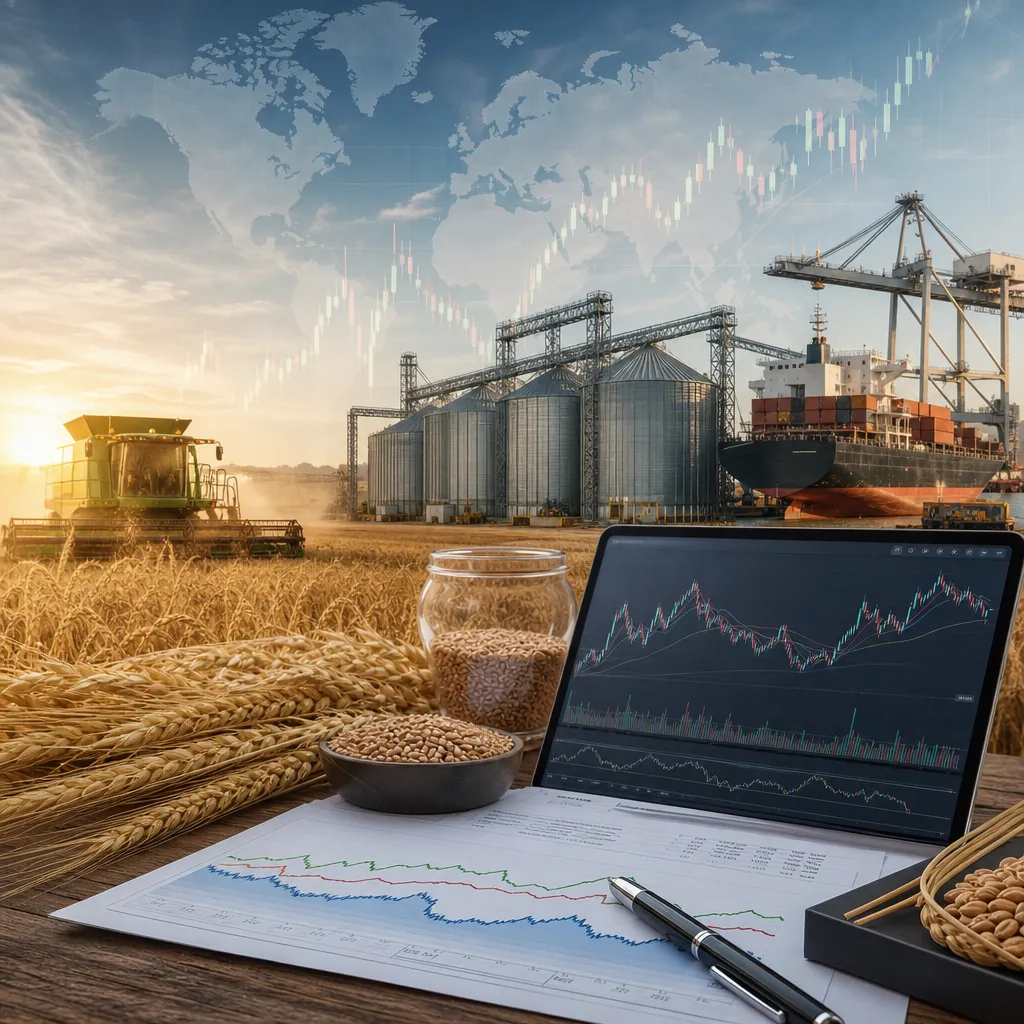







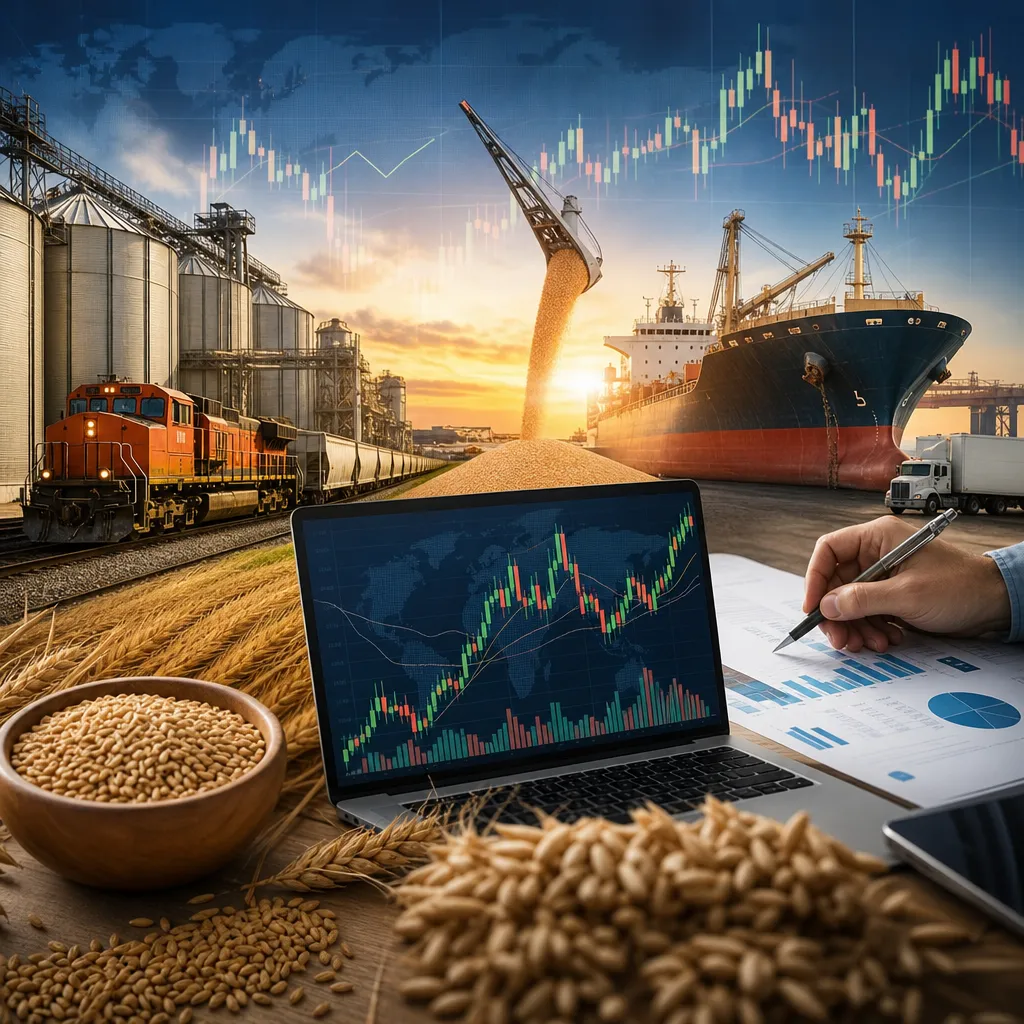
Kansas City wheat futures prices are the benchmark futures prices for hard red winter wheat traded in the United States. The market is centered on futures and options listed by CME Group, historically known as the Kansas City Board of Trade market, and it is closely watched by wheat growers, grain merchants, flour millers, exporters, and risk managers across the U.S. Plains. These prices are not the same as a local cash bid at a country elevator, but they are one of the main reference points used to value physical wheat in Kansas, Oklahoma, Texas, Nebraska, and other hard red winter wheat regions. For anyone following wheat markets, it is essential to understand both the exchange-traded futures price and the local basis that turns that benchmark into a real-world cash price.
What Kansas City wheat futures prices mean
Kansas City wheat futures refer to futures contracts for U.S. hard red winter wheat. This class of wheat is the dominant wheat type grown in the central and southern Plains and is widely used for bread flour. The contract is now traded on CME Group’s electronic platform, but the market identity remains strongly associated with Kansas City because of its long role in the hard red winter wheat trade.
Prices are quoted in U.S. cents per bushel. That makes the contract different from many international wheat markets that are commonly discussed in dollars per metric ton or euros per metric ton. For global comparison, traders often look at Kansas City wheat alongside Chicago soft red winter wheat futures and Minneapolis spring wheat futures, while export market participants may also compare it with FOB wheat prices from major exporting origins.
The Kansas City contract is especially important because hard red winter wheat quality, supply, and demand do not always move in line with other wheat classes. Protein premiums, drought in the Plains, milling demand, and export competitiveness can all affect this market differently from Chicago wheat.
Where the market operates
The exchange-traded market operates through CME Group in the United States. Although the contract is associated with Kansas City, trading is electronic and can be accessed from anywhere through approved futures brokers and trading platforms. The pricing benchmark is still deeply tied to the U.S. hard red winter wheat belt, especially Kansas, which is one of the country’s most important wheat-producing states.
In practical grain trade terms, the Kansas City benchmark connects to a wide physical market that includes:
- Country elevators and cooperatives in wheat-producing states
- Merchants and grain companies buying wheat for domestic use or export
- Flour mills sourcing hard red winter wheat
- Feed users when wheat is competitively priced
- Export channels through Gulf and other U.S. terminal markets
Kansas City futures are therefore a financial market with a physical foundation. The exchange contract provides a standardized reference price, while everyday grain movement happens in the cash market through contracts between buyers and sellers.
How prices are formed
Kansas City wheat futures prices are formed continuously in the futures market as buyers and sellers trade contracts based on expectations about supply, demand, weather, crop quality, exports, macroeconomic conditions, and competing grain prices. That is the benchmark side of the market.
However, a wheat producer or commercial buyer usually deals with a cash price, not just the futures price. The cash price is commonly calculated as:
Cash price = futures price + basis
Basis is the local difference between the futures market and the physical bid at a specific place and time. Basis can be positive or negative and reflects real market conditions such as:
- Local supply and nearby harvest pressure
- Rail or truck freight costs
- Storage availability
- Buyer competition
- Protein and other quality specifications
- Distance from export channels or mills
- Regional demand for immediate shipment
A local cash bid in Kansas, for example, can differ significantly from the Kansas City futures quote even when both refer to hard red winter wheat. That is why a futures chart alone does not tell a farmer exactly what they can sell grain for at a local elevator.
| Price type | Where it is quoted | What it means |
|---|---|---|
| Kansas City wheat futures | CME Group futures market | Exchange-traded benchmark for hard red winter wheat risk and price discovery |
| Local cash bid | Elevator, cooperative, merchant, mill | Actual nearby buying price at a local delivery point |
| Delivered price | Buyer contract or negotiated trade | Price including delivery to a named destination such as a mill or terminal |
| FOB export price | Export market and trader indications | Price for grain loaded free on board at an export location, excluding ocean freight |
| CIF import price | Import market tenders or trade assessments | Price including cost, insurance, and freight to the buyer’s destination |
Where to check Kansas City wheat futures prices online
If you need the current or live Kansas City wheat futures price, the safest place to start is CME Group, which lists the contract and market data for the relevant delivery months. Many brokerage platforms and professional market terminals also display live or delayed quotes. Financial media may show futures prices too, but users should always confirm the contract month and whether the quote is delayed.
For broader market interpretation, readers often combine exchange data with official grain reports and cash market information. Practical sources include:
- CME Group for futures and options contract information and current or delayed market data
- USDA Agricultural Marketing Service for cash grain reports, basis indications in some locations, and market commentary
- USDA Foreign Agricultural Service for export sales and broader trade context
- USDA National Agricultural Statistics Service for crop production, acreage, and condition reporting
- Local elevators, cooperatives, mills, and merchants for actual nearby bids
- Broker trading platforms for live futures access, charting, order entry, and account-specific market tools
When checking prices online, always note:
- The contract month
- Whether the quote is live or delayed
- The unit, usually cents per bushel
- Whether you are looking at futures, cash, or export values
- The trading date and time
A common mistake is to assume the nearest futures contract is the same as the price available at a local point. In reality, a producer may see a strong futures board but still face a weak basis because of harvest pressure, transport congestion, or quality concerns.
How physical wheat is actually bought and sold
Most hard red winter wheat linked to the Kansas City benchmark is traded physically through the cash market, not by handing over futures contracts. Farmers normally sell to a local elevator, cooperative, grain merchant, mill, or another approved buyer. The transaction may be for spot delivery, forward delivery, delayed pricing, hedge-to-arrive, or another contract structure depending on buyer practices and local regulations.
Physical wheat transactions usually involve more than price alone. Buyers and sellers must also agree on:
- Quantity
- Delivery period
- Delivery location
- Quality specifications such as test weight, moisture, damage, and protein
- Discount and premium schedules
- Payment terms
Export-linked physical trade may move inland wheat toward terminal markets, often through rail or truck connections to larger domestic or export channels. A merchant may buy wheat at country points, assemble volume, hedge futures exposure, and then resell to a mill or exporter. In that chain, Kansas City futures help manage price risk, but the physical grain still changes hands through negotiated commercial contracts.
For an importer or overseas buyer, U.S. hard red winter wheat is not purchased on the Kansas City futures exchange as a bag of grain ready for shipment. Instead, it is generally sourced through exporters or trading houses offering specified quality and shipment terms, with futures sometimes used behind the scenes as part of pricing and risk management.
How futures and options are used for hedging and trading
Kansas City wheat futures and options are used by commercial hedgers and financial traders for very different purposes. A farmer, elevator, mill, or exporter may use these contracts to reduce exposure to adverse price moves. A speculative trader may use the same market to take a directional view on wheat prices without owning physical grain.
Physical ownership and futures exposure are not the same thing:
- A farmer can own wheat in storage and sell futures to hedge falling prices.
- An elevator can buy cash grain from farmers and hedge inventory risk in futures.
- A mill can buy futures or options to help manage the risk of rising wheat costs.
- A trader can buy or sell futures contracts without ever intending to take physical delivery.
Access to the futures market normally requires a brokerage account. Traders need to understand margin, leverage, contract expiration, and basis risk. Margin means only a fraction of contract value is posted as collateral, which increases financial risk as well as flexibility. Options can also be used to define risk differently from straight futures positions.
| Market activity | Where it happens | Typical users |
|---|---|---|
| Selling harvested wheat | Local cash market | Farmers, elevators, cooperatives, merchants |
| Forward contracting grain | Private commercial contracts | Farmers, grain buyers, mills, exporters |
| Hedging price risk | CME Group futures and options market | Commercial grain firms, mills, producers, merchandisers |
| Speculative trading | Broker platform connected to futures exchange | Funds, proprietary traders, individual traders |
| Export wheat sales | Merchant and exporter contracts | Trading houses, exporters, overseas buyers |
Main drivers of Kansas City wheat futures prices
The Kansas City contract is especially sensitive to conditions affecting U.S. hard red winter wheat. Weather across the Plains is often the first factor the market watches, especially dryness during planting and dormancy, freeze risk, spring moisture, and harvest conditions.
Other important drivers include:
- U.S. acreage and yields: planted area and yield prospects directly affect expected supply.
- Crop quality: protein levels and milling quality can shift spreads between wheat classes.
- Export demand: U.S. competitiveness against other major wheat exporters matters.
- Domestic milling and feed demand: wheat use can strengthen or weaken depending on price relationships.
- Global wheat balance: world stocks, Black Sea exports, European production, and other international developments influence U.S. prices.
- Currency moves: a stronger or weaker U.S. dollar can change export competitiveness.
- Freight and logistics: rail service, barge conditions, and terminal demand can alter basis and cash market behavior.
Because Kansas City wheat is a class-specific benchmark, the spread between Kansas City and Chicago or Minneapolis can also tell the market something about quality demand, regional production stress, or substitution between wheat classes.
How Kansas City futures connect to exports and the wider wheat trade
Kansas City wheat futures prices matter beyond the Plains because U.S. hard red winter wheat is part of the global milling wheat trade. When exporters assemble wheat for overseas shipment, they monitor futures as a benchmark and then build a physical offer using basis, elevation costs, transport, financing, and export margins.
That means export prices may move with Kansas City futures but are never identical to them. An inland cash market may weaken even while export demand improves if harvest movement is heavy. Conversely, basis may strengthen near export channels or mills when nearby physical supply becomes tight.
Importers comparing U.S. wheat with other origins usually focus on delivered or FOB values, quality reliability, and freight. Kansas City futures still matter because they influence the underlying replacement cost of U.S. hard red winter wheat sold into export channels.
Using the market practically
For producers and grain users, the most practical way to use Kansas City wheat futures prices is as a benchmark rather than as a standalone answer. A producer might watch the futures board online every day, but the sale decision should also consider basis, storage costs, quality, and delivery opportunities. A mill or feed buyer may use the same benchmark to compare purchasing windows and hedge coverage.
Good market practice usually includes:
- Tracking the relevant futures month, not just a headline wheat number
- Comparing several local cash bids
- Watching basis separately from futures direction
- Understanding quality specifications before committing grain
- Using futures or options only with a clear hedge or risk plan
- Monitoring USDA reports and local weather during key crop stages
Readers looking for the current market should therefore combine official futures data with local commercial bids. That gives a far more accurate picture than a single „wheat price today” headline.
Frequently asked questions
What wheat does Kansas City wheat futures represent?
It represents U.S. hard red winter wheat, the main bread-making wheat grown in the Plains.
Are Kansas City wheat futures the same as the cash price paid to a farmer?
No. The farmer’s cash price is usually the futures price adjusted by local basis, plus any quality premiums or discounts.
Where can I check the current Kansas City wheat futures price?
CME Group is the core reference for the futures market. Many broker platforms and financial data services also show the contract, often with live or delayed quotes.
In what currency and unit are Kansas City wheat futures quoted?
They are quoted in U.S. cents per bushel.
How is physical hard red winter wheat usually sold?
It is usually sold through local elevators, cooperatives, merchants, mills, or exporters under commercial contracts covering quantity, quality, location, and timing.
Can an investor trade Kansas City wheat without owning grain?
Yes. Futures and options can be traded through a broker as financial instruments, although this involves leverage and market risk.
Why do Kansas City and Chicago wheat prices sometimes move differently?
They represent different wheat classes. Kansas City reflects hard red winter wheat, while Chicago is associated with soft red winter wheat, so quality, regional supply, and end-use demand can differ.
What are the biggest factors to watch for price direction?
Weather in the U.S. Plains, crop conditions, export demand, global wheat competition, currency moves, and changes in domestic or export basis are all important.
Sources
- CME Group
- USDA Agricultural Marketing Service
- USDA National Agricultural Statistics Service