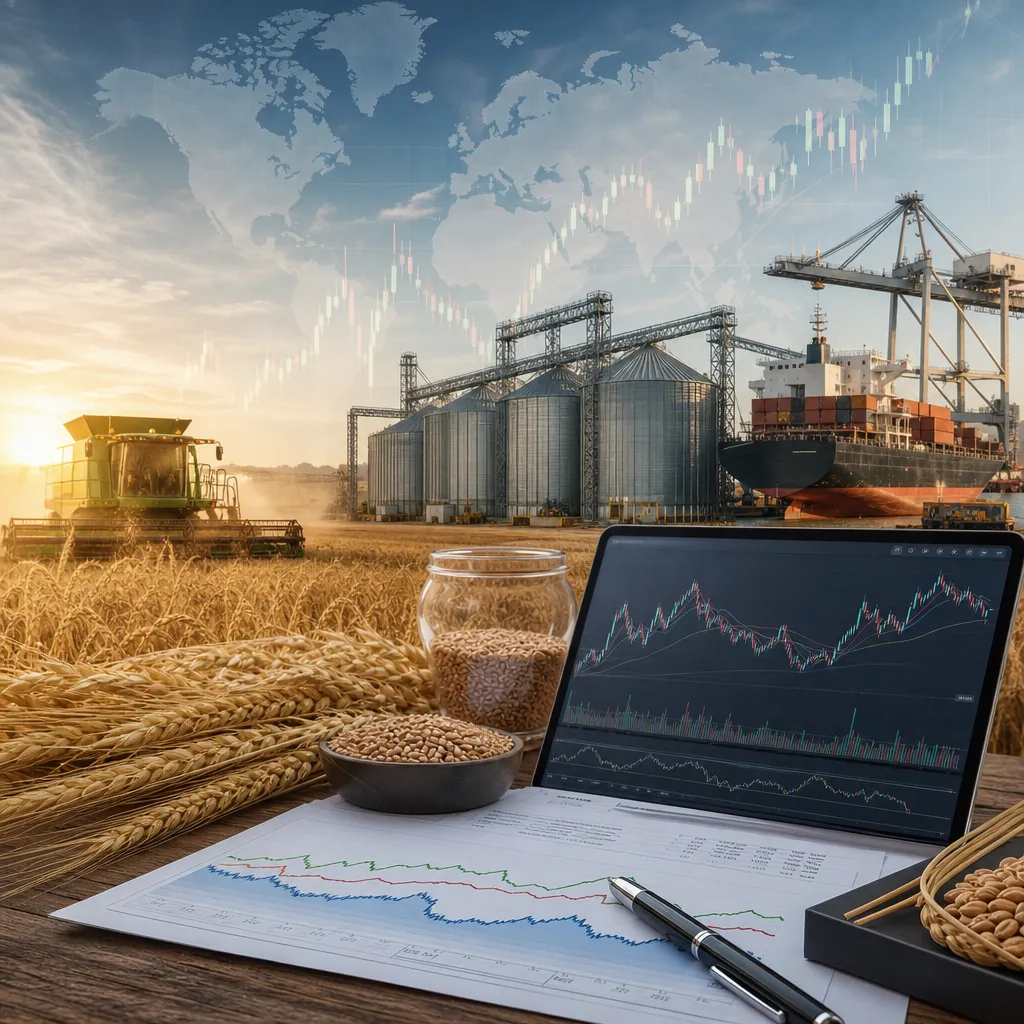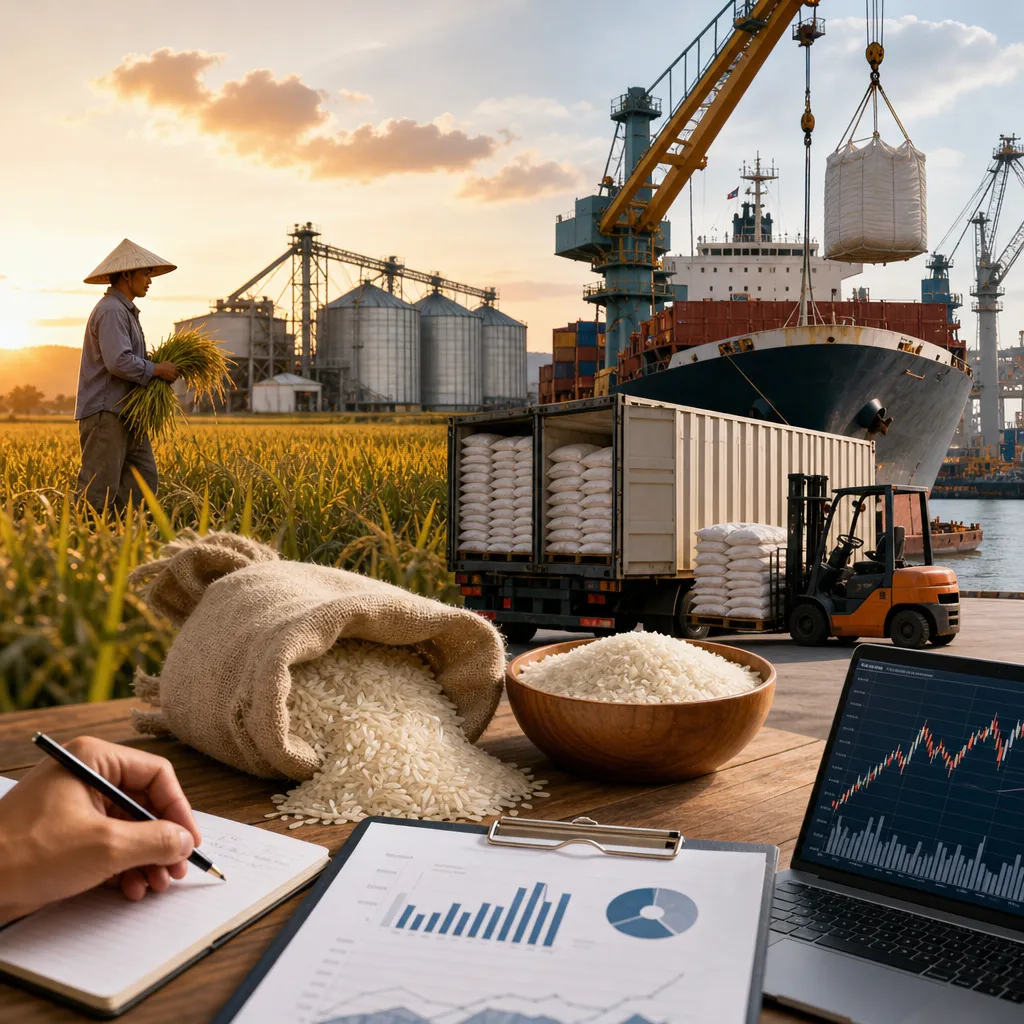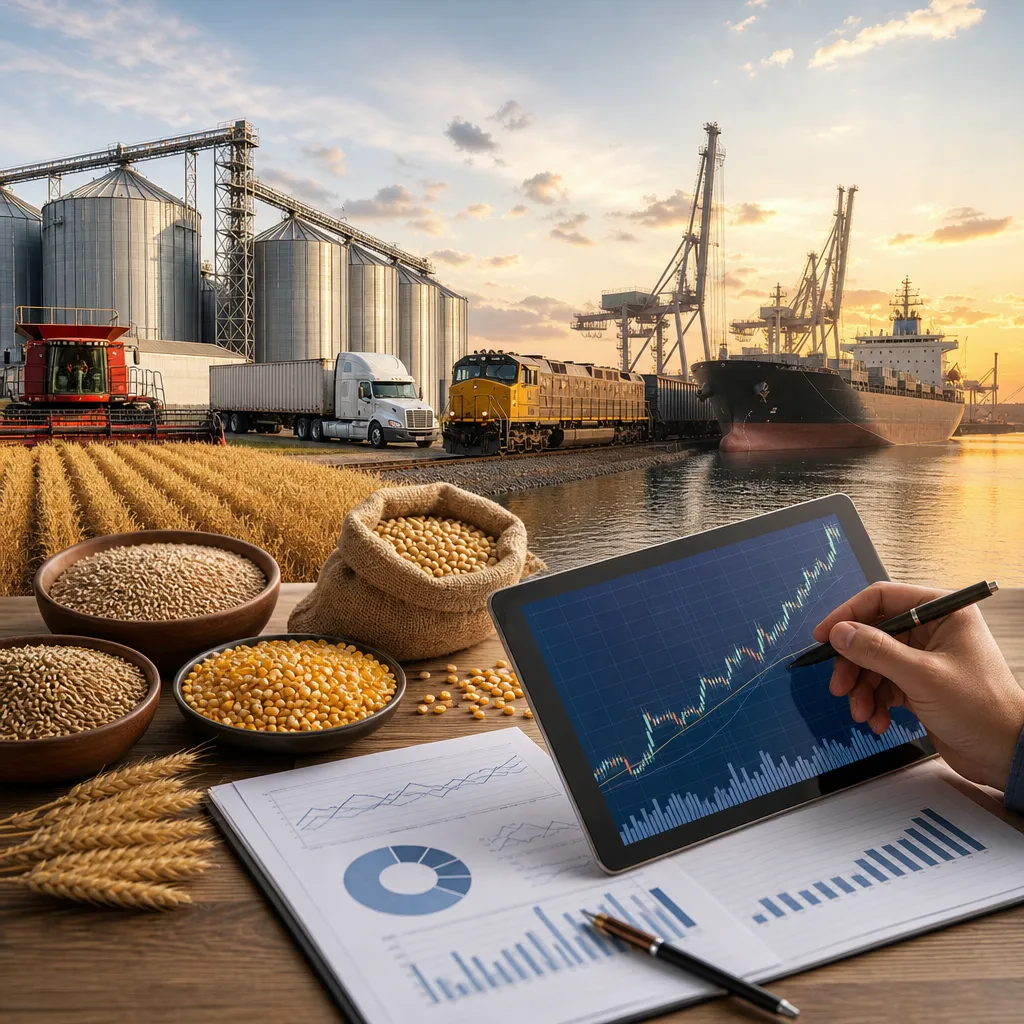
Tariffs can move grain prices quickly, but they do not affect all prices in the same way. A tariff may change export demand, import costs, freight flows, crush or milling margins, and local basis, while the benchmark futures market may move less or move later. To understand the real price effect, readers need to separate exchange futures from physical cash grain and then track which country is taxing which product, at what rate, and at which point in the supply chain. In practice, grain users and sellers check tariff news alongside futures quotes, export data, local elevator bids, and freight conditions rather than relying on one headline price.
In grain markets, tariffs matter most when they change trade flows between major exporters and importers of wheat, corn, soybeans, rice, barley, sorghum, canola, rapeseed, or sunflower products. The impact is usually strongest in basis and cash markets near ports, processors, feed mills, crushers, and border trade routes. Futures markets remain essential for hedging and price discovery, but they are not the same as the local delivered or farmgate price.
What grain tariffs are and how they affect prices
A tariff is a tax applied to imported goods, and in some cases export restrictions or retaliatory duties can create a similar market effect. In grain and oilseed trade, tariffs may apply to raw grain, processed products such as soybean meal or oil, or downstream food and feed products. The direct effect is usually to raise the landed cost for the importer, but the wider effect depends on substitution, logistics, and how much grain can be redirected to other buyers.
For example, if a large importing country raises tariffs on a major supplier’s soybeans, several things can happen at once:
- Importers may switch origin to another exporting country.
- Export premiums and discounts at ports may change.
- Futures may react if the trade flow shift is large enough.
- Local cash bids in producing regions may weaken if export demand falls.
- Processors may alter purchases between whole beans and meal or oil.
Tariffs do not work in isolation. Their actual price effect depends on stocks, crop size, freight, currency moves, biofuel demand, and whether buyers have alternative origins available.
| Tariff situation | Likely market effect | Why it happens |
|---|---|---|
| Import tariff on grain | Higher landed cost for the buyer | The importer pays more unless the exporter cuts price |
| Retaliatory tariff on a major exporter | Trade flows shift to alternate origins | Buyers source from countries facing lower trade barriers |
| Tariff on processed products rather than grain | Crush, milling, or feed demand may shift | Processors compare import economics across products |
| Temporary tariff suspension | Import demand may rise quickly | Buyers accelerate purchases while lower duty applies |
| Tariff rate quota | Two-tier pricing inside the same market | Some grain enters at lower duty up to a set volume |
Futures prices versus local cash grain prices
The most common mistake is assuming that a grain tariff automatically changes the exchange price by the same amount as the local farm price. That is not how grain markets work. Futures reflect a standardized contract traded on an exchange, while cash grain prices reflect a physical transaction at a specific place, quality, time, and freight cost.
For internationally traded grains and oilseeds, benchmark futures are commonly watched on exchanges such as CME Group for products including corn, wheat, soybeans, soybean meal, soybean oil, oats, rough rice, and canola-related linked markets through North American pricing relationships. European participants may also follow Euronext wheat, corn, and rapeseed contracts. These futures are financial and commercial reference tools; most participants do not take delivery through the exchange.
Local cash prices are normally quoted by:
- Grain elevators
- Agricultural cooperatives
- Merchants and exporters
- Processors such as mills, crushers, ethanol plants, and feed manufacturers
- Cash brokers in some regions
A local bid usually equals a futures reference price plus or minus basis. Basis reflects delivery point, local supply and demand, freight, storage pressure, quality, and buyer urgency. Tariffs often hit basis first because they directly change export competitiveness and destination demand.
| Market type | Where price is found | What it represents | Who uses it |
|---|---|---|---|
| Futures market | Commodity exchange data and broker platforms | Standardized contract for a future delivery month | Hedgers, funds, commercial traders, analysts |
| Cash market | Elevator bids, processor bids, merchant offers | Actual physical grain price at a location | Farmers, grain buyers, processors, exporters |
| Export market | FOB offers, merchant indications, tender results | Price for grain at port or shipment basis | Exporters, importers, trade houses |
| Delivered consumer market | Direct contracts with mills, crushers, feeders | Price including transport to end user | Processors, feed companies, merchants |
Where to check grain prices and tariff-related market effects
Readers looking for price impact should check several layers of information.
Exchange and futures data
For benchmark futures, CME Group is a primary source for contract specifications, delivery terms, trading months, and delayed or reference market information. A futures broker platform or a commercial market data terminal may provide deeper intraday data, charting, and order entry. This is the right place to see whether the broader market is repricing global supply and demand.
Local cash bids
For farm-level selling decisions, local elevator or processor bids matter more than a headline futures quote. Farmers usually check:
- Elevator bid sheets
- Cooperative websites or mobile apps
- Direct merchant bid indications
- Processor purchase bids
- Regional agricultural market reporting services where available
This is where tariff effects can show up as weaker export basis, stronger domestic processor bids, or wider differences between inland and port markets.
Government and official trade information
To verify whether a tariff actually exists and how broad it is, traders and analysts usually check official customs, trade ministry, or agricultural agency sources. For the United States and global grain users, USDA reports are central. USDA does not set tariffs, but it provides the supply, demand, export, and crop data needed to measure the likely market impact.
How tariffs change physical grain trade in practice
Physical grain does not move because a chart moves; it moves because a buyer issues a tender, a merchant makes an offer, freight is booked, and grain meets specification. When tariffs change, physical trade adjusts through contracts and logistics.
A typical physical transaction may involve:
- A seller such as a farmer, country elevator, or merchant.
- A buyer such as a mill, crusher, feed company, exporter, or importer.
- A delivery point such as farm pickup, elevator, rail terminal, river terminal, warehouse, or port.
- A quality specification covering grade, moisture, protein, test weight, damage, oil content, or foreign material.
- A price formula, often futures plus or minus basis, or a flat cash price.
- Freight allocation and timing.
- Inspection and payment terms.
If an importing country imposes a tariff, the importer may ask for a different origin, renegotiate offers, delay buying, or switch product mix. Exporters then compete for alternate markets. Inland basis near export channels may weaken, while regions serving domestic processors may hold up better.
In this sense, tariffs often reshape the map of grain movement more than the absolute global supply. Grain still exists physically, but the best buyer may change location.
How futures and options are used when tariff risk rises
Futures and options do not remove tariff risk completely, but they help manage flat price exposure. A wheat grower, soybean processor, feed mill, or grain merchant may hedge on a regulated exchange through a licensed futures broker. That requires a brokerage account, margin funding, and an understanding of contract size, expiry month, and delivery rules.
How it works in practice:
- A farmer worried about falling futures may sell futures or use put options.
- A feed buyer worried about rising corn prices may buy futures or call options.
- A merchant holding inventory may hedge the futures component while managing basis separately.
- A crusher may hedge grain inputs and product outputs, depending on exposure.
But tariffs are especially tricky because they can alter basis, spreads between origins, and product relationships. A hedge on futures protects against part of the price move, not every local market effect. If tariffs reduce export demand for a region, the local cash bid may fall more than futures. That is basis risk.
Options can be useful when policy uncertainty is high because they define upfront premium cost while preserving some upside or downside participation. Still, options can expire worthless, and pricing depends on volatility and time value.
Key reports and datasets used to analyze tariff-driven grain markets
Professional grain market analysis usually combines policy news with official fundamentals. The most useful public sources are often these:
| Report or source | Publisher | How it is used |
|---|---|---|
| WASDE | USDA | Tracks global and U.S. supply, demand, exports, imports, and ending stocks |
| Crop Progress | USDA | Shows planting, crop condition, and harvest pace that may amplify or offset tariff effects |
| Export Sales | USDA | Shows weekly export commitments and shipment trends by commodity |
| Commitments of Traders | CFTC | Shows futures and options positioning by trader category |
| Contract specifications and market data | CME Group and other exchanges | Defines contract size, delivery terms, months, and benchmark pricing framework |
For international trade analysis, customs statistics, national agriculture ministries, and intergovernmental agencies such as FAO are also relevant. FAO is useful for global food and agricultural market context, while customs and national trade data help show whether a tariff actually changed import volumes over time.
Who is affected most by grain tariffs
The effect depends on where a participant sits in the chain.
- Farmers: Usually affected through local basis, delivery opportunities, and changes in domestic competition for grain.
- Elevators and cooperatives: Need to manage basis, storage, and sales channels if export demand changes.
- Processors: May benefit from cheaper local grain or face more expensive imported inputs, depending on the tariff structure.
- Exporters and merchants: Must reroute cargoes, reprice origin spreads, and manage contractual performance.
- Importers: Face higher landed costs and may need alternate suppliers.
- Futures traders: See volatility, but financial market moves may differ from physical market pain points.
Countries that are large exporters usually feel tariffs through weaker export channels and shifting basis. Major importing countries feel tariffs more directly in domestic consumer and feed costs unless they can readily switch origin.
Practical risks, costs, and limitations
Tariff analysis is often oversimplified. Three practical limits matter.
First, tariff announcements are not the same as executed trade. Buyers may have existing contracts, exemptions, quota access, or substitute products. Always check whether the policy applies immediately and to which commodity code.
Second, futures are not a perfect proxy for cash grain. A soybean futures hedge may work for flat price risk while still leaving port basis, rail freight, and local crusher demand uncertain.
Third, logistics can dominate the outcome. If a tariff pushes buyers toward a different origin, vessel availability, rail capacity, storage space, and inspection bottlenecks can matter as much as the nominal duty rate.
Costs and risks to check include:
- Margin risk on futures hedges
- Option premium cost
- Basis volatility
- Freight changes
- Storage pressure from delayed movement
- Counterparty risk in physical contracts
- Quality discounts if grain must be held longer or moved farther
How to use tariff information in real grain marketing decisions
A practical approach is to combine policy news with actual market signals rather than trading headlines alone.
- Identify the commodity and product level affected: raw grain, meal, oil, flour, feed grain, or seed.
- Check whether the tariff applies to imports, has a quota, or is retaliatory.
- Watch benchmark futures on the relevant exchange.
- Compare local elevator, processor, or export bids before and after the policy change.
- Track export sales, shipment pace, and destination shifts in official reports.
- Review freight and port conditions if the market is export exposed.
- Use hedging tools only with a clear understanding of basis risk and contract mechanics.
For farmers, the most immediate question is usually whether the local bid has changed relative to futures. For importers and processors, the key question is landed cost and substitute availability. For traders, the opportunity often lies in origin spreads, product spreads, and basis rather than in a simple outright futures view.
Where can I check grain prices affected by tariffs?
Check benchmark futures on exchange-related market data, then compare them with local elevator, cooperative, processor, or merchant cash bids. Tariffs often show up more clearly in basis and local delivered prices than in futures alone.
Do tariffs change futures prices or just cash prices?
They can affect both, but not equally. Futures respond when the tariff materially changes broader supply and demand expectations. Cash prices often react faster at specific locations because export channels, freight, and buyer competition change immediately.
Where does physical grain buying and selling happen?
Usually through grain elevators, cooperatives, merchants, processors, exporters, feed mills, crushers, and import tenders. These are negotiated physical transactions with defined quality, location, and payment terms, not just screen prices.
Can I trade grain tariff moves through a broker?
You can trade related futures or options through a regulated futures broker if you have the required account and understand margin, leverage, and contract expiry. That is financial trading, not the same as buying or selling actual grain.
Why is my local grain bid different from the futures market?
Because local bids include basis. Basis reflects delivery point, freight, storage conditions, buyer demand, quality, and regional supply pressure. Tariffs often widen or narrow basis depending on whether they help or hurt local demand.
Which reports are most useful for tariff-related grain analysis?
USDA WASDE, USDA Export Sales, USDA Crop Progress, CFTC Commitments of Traders, and exchange contract information are among the most useful public sources. They help connect policy news with actual supply, demand, and positioning.
Do tariffs always raise grain prices?
No. They may raise price for the importer but lower price for the affected exporter. The result depends on who pays the duty, whether trade can be redirected, and how much substitute supply is available.
How do grain buyers protect themselves when policy risk is high?
They may diversify origin, stagger purchases, use futures or options, negotiate flexible physical terms, and monitor official trade and crop reports closely. No single method removes all risk.
Sources
- USDA World Agricultural Supply and Demand Estimates
- CME Group contract specifications and grain market resources
- U.S. Commodity Futures Trading Commission Commitments of Traders