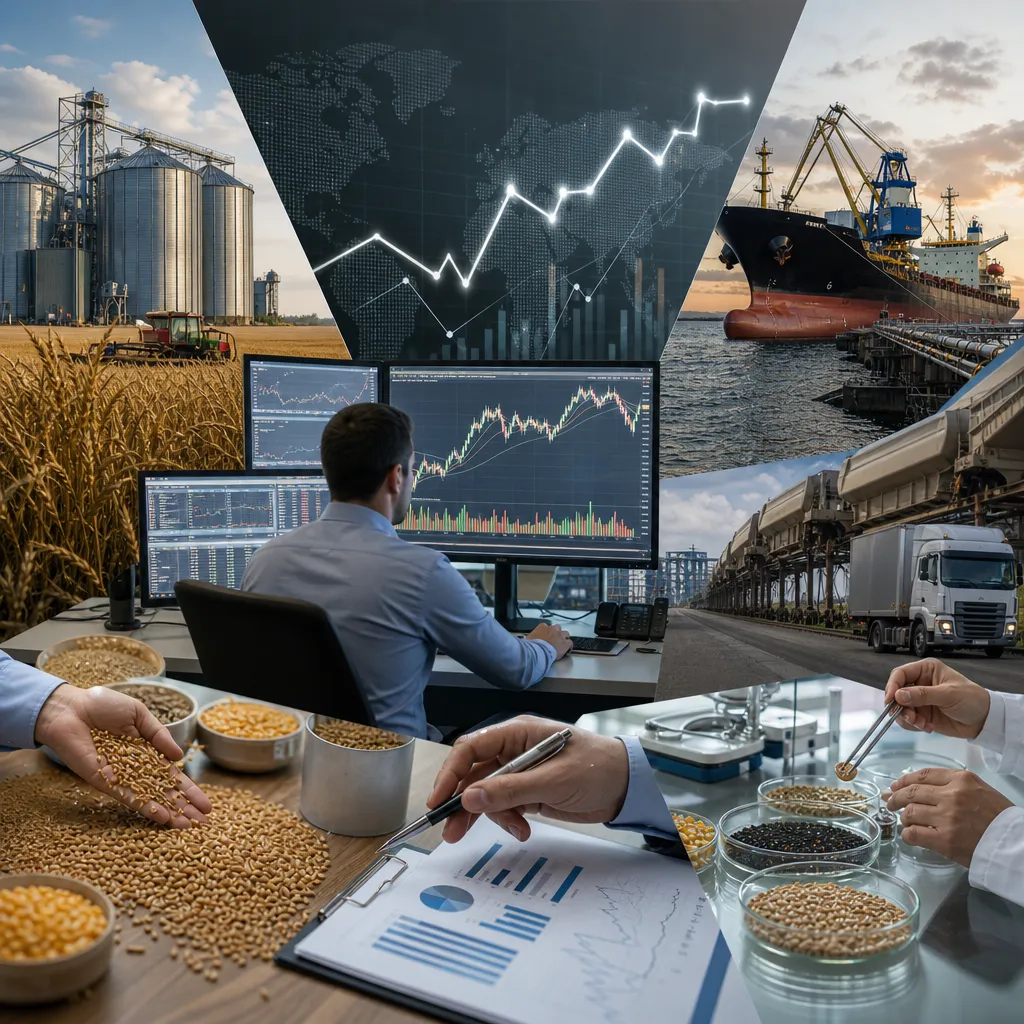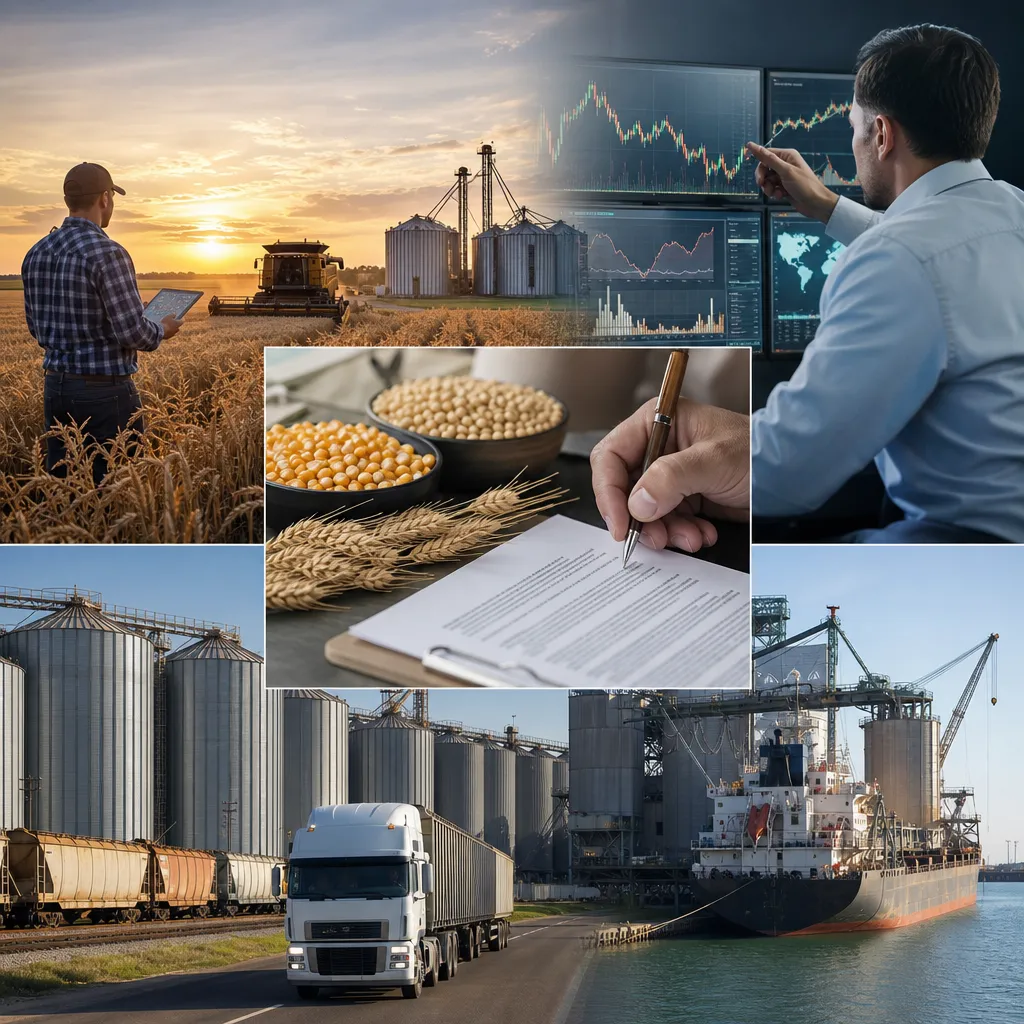


Euronext wheat prices usually refer to milling wheat futures traded on Euronext, the main exchange benchmark for the European grain market. Although many market participants still say “MATIF wheat,” the contract is part of Euronext and is widely used across France and much of the wider EU grain trade. These prices are not the same as a local farm cash bid, a port export bid, or a delivered mill price, but they strongly influence all of them. For anyone looking for “Euronext wheat prices today,” the key is to identify the contract month, the quotation currency and unit, and whether you need a futures benchmark or a physical market price.
The market is centered in Europe, with France especially important because French wheat is a major reference point for the contract and for EU export competition. Prices are quoted in euros per metric tonne, and the futures market acts as a risk-management and price-discovery tool for farmers, cooperatives, merchants, exporters, millers, and financial traders. In practice, physical wheat is bought and sold through contracts between commercial counterparties, while the futures market is used to hedge or manage price exposure.
What “Euronext Wheat Prices Today” Means
When readers search for Euronext wheat prices today, they are usually looking for one of three things: the latest futures quote, an indication of European wheat market direction, or a reference point for local cash prices. The most common benchmark is Euronext Milling Wheat futures. This is a financial and commercial benchmark for European wheat, not a universal spot price for all wheat in Europe.
A futures quote reflects the value of a standardized contract for a specific delivery month. That means the “today” price can change throughout the trading session and can differ sharply between nearby and later contract months. It also means two people can both cite “Euronext wheat” but refer to different months.
That benchmark matters because many physical transactions in Europe are priced as a premium or discount to Euronext futures. A merchant may offer a farmer a cash bid based on the futures month most relevant to the marketing period, adjusted for local basis, quality, and freight. Exporters may build FOB values from the same starting point, then adjust for port elevation, logistics, and international demand.
Where the Euronext Wheat Market Operates
Euronext is a European exchange group, and its wheat contract serves participants across the EU grain chain and beyond. The benchmark is especially relevant in France, which is one of the EU’s key wheat-producing and exporting countries. The contract is also watched closely in Germany, the Benelux region, Spain, Italy, and by importers in North Africa and other destinations that compare EU-origin wheat against Black Sea, US, and other export origins.
The physical grain itself moves through inland silos, cooperatives, river systems, rail links, and export ports. In commercial terms, Euronext wheat prices are most closely connected to European milling wheat values, especially exportable surplus from major producing regions. The exchange therefore sits above a large physical market, but it does not replace it.
| Market element | Where it applies | What it means |
|---|---|---|
| Euronext milling wheat futures | Exchange benchmark for Europe | Standardized futures price in euros per metric tonne for a defined contract month |
| Farm or elevator cash bid | Local physical market | Actual offer to buy wheat in a certain location, quality, and timing |
| Delivered mill price | Domestic consumption market | Price including transport to the buyer, often with tighter quality requirements |
| FOB export price | Port export market | Price of wheat loaded for export at the port, before ocean freight |
| CIF import price | Import destination market | Price including cost, insurance, and freight to the buyer’s destination |
How Euronext Wheat Prices Are Formed
Euronext wheat futures are formed through exchange trading. Buyers and sellers place orders electronically, and the market continuously reflects supply and demand for risk transfer, hedging, and speculation. Commercial firms use the market to protect margins or future sales and purchases. Funds and other financial traders may participate for directional or spread trading, adding liquidity but also contributing to day-to-day volatility.
The futures price responds to a wide set of factors. European weather is important, especially for French and wider EU crop conditions. So are world wheat balances, Black Sea competition, US futures direction, currency movements, freight economics, export demand, and quality concerns such as protein or harvest damage. Energy prices, fertilizer costs, and policy shifts can also matter because they affect production costs and trade flows.
Local physical prices are then built around the futures benchmark. This adjustment is often called the basis. Basis can be positive or negative depending on location, timing, quality, and buyer need. For example, wheat close to an export port or a deficit milling area may command a stronger basis than wheat in an oversupplied inland zone. During harvest, basis may weaken if storage fills and sellers are active. Later in the season, basis may firm if quality wheat becomes scarce or export demand improves.
Why Euronext Futures and Cash Wheat Prices Differ
A common mistake is to treat the Euronext futures quote as the exact price a farmer will receive. In reality, a farmer or merchant usually deals in the cash market, not by selling one tonne directly at the screen price. The physical price depends on the futures benchmark plus or minus basis and on the exact contract terms.
Cash and export prices differ from futures for several reasons:
- Location: inland grain must be transported to mills, feed plants, or ports.
- Quality: protein, test weight, moisture, Hagberg falling number, and admixture can change value.
- Timing: nearby delivery may carry a premium or discount versus later movement.
- Buyer competition: more active millers or exporters can strengthen local bids.
- Storage pressure: harvest selling often weighs on cash markets.
- Currency: euro movements affect export competitiveness against other origins.
That is why two wheat prices in the same country can move differently on the same day. Futures might rise while inland cash barely changes, or futures might fall while a nearby processor still bids strongly for specific quality.
| Price type | Usually quoted in | Main driver | Typical user |
|---|---|---|---|
| Euronext futures | EUR per metric tonne | Exchange trading and global grain sentiment | Hedgers, traders, analysts |
| Local cash bid | EUR per metric tonne | Futures plus basis, quality, local logistics | Farmers, cooperatives, merchants |
| Delivered processor price | EUR per metric tonne | User demand, quality, freight to plant | Millers, feed manufacturers |
| FOB export offer | Often USD or EUR per metric tonne | Port basis, origin competitiveness, export demand | Exporters, importers, tender participants |
Where to Check Euronext Wheat Prices Online
The most direct place to check Euronext wheat futures is Euronext itself. Readers should look for the milling wheat contract, verify the contract month, and check whether they are viewing delayed or end-of-day information. Exchange data is the cleanest reference for the benchmark.
Broker and market-data platforms also publish Euronext wheat quotes. These can be useful for intraday monitoring, charting, and spread analysis, but users should make sure the symbol and contract month are correct. Some platforms show a continuous chart, which is helpful for trend analysis but should not be confused with a tradable single contract at one moment in time.
For physical market context, readers should also monitor:
- FranceAgriMer for French and export-market information relevant to the EU wheat trade.
- European Commission market information for EU cereals context, trade, and policy developments.
- USDA reports, especially global wheat supply-and-demand reports, because world balances strongly affect Euronext.
- Local cooperatives, elevators, merchants, and mill buyers for actual cash bids and contract terms.
If the goal is to know what wheat is worth in a specific region today, a local buyer’s bid sheet is usually more relevant than the exchange screen alone. If the goal is to understand broader market direction or hedge price risk, the futures quote is the right starting point.
How Wheat Is Actually Bought and Sold in the Physical Market
Physical wheat in Europe is mainly traded through merchants, cooperatives, grain handlers, processors, and exporters. Farmers typically sell to a cooperative or merchant under spot, forward, minimum-price, or pool-style arrangements, depending on the local market structure. Buyers specify quality requirements, delivery window, and payment terms.
Domestic users such as flour mills and feed manufacturers may buy directly from merchants or cooperatives. Exporters buy inland or at port positions, assemble parcels that meet export specifications, and then offer wheat into international tenders or direct sales. The port market matters because the export channel often supports inland values when world demand is active.
A practical cash transaction often includes:
- Quality definition for the wheat being sold.
- Pricing mechanism, fixed price or futures-linked formula.
- Delivery point, such as farm pickup, inland silo, or delivered destination.
- Delivery period and logistics responsibilities.
- Payment timing and contract conditions.
This is fundamentally different from trading a futures contract online. In the physical market, commercial parties transfer ownership of real wheat. In the futures market, most participants are managing price risk or taking market exposure without intending to move grain.
How Hedging Works With Euronext Wheat Futures
Euronext wheat futures are widely used for hedging. A farmer, cooperative, or merchant expecting to sell physical wheat later may use futures to lock in part of the price risk. A miller or feed manufacturer expecting to buy wheat may use futures to protect against rising prices. The goal is not to eliminate all risk, because basis still matters, but to reduce exposure to broad market moves.
For example, a seller might watch Euronext futures online and decide the benchmark is attractive, then use a local buyer to fix a cash price or hedge through a broker. A merchant buying physical wheat from growers might sell futures as a hedge until the wheat is resold domestically or exported. A processor might buy futures against expected raw material needs, then offset the position as physical coverage is secured.
Futures access normally requires a broker and a margin account. Traders need to understand leverage, margin calls, contract expiry, liquidity by month, and basis risk. Futures trading gives price exposure; it does not automatically provide physical wheat ownership suited to a mill or feed plant. That distinction is critical.
Main Factors Driving Euronext Wheat Trends
Euronext wheat can react quickly to both European and global developments. In bullish scenarios, support may come from weather stress in major EU producing regions, lower-than-expected yields, strong export demand, a weaker euro that improves EU competitiveness, or supply issues in rival exporting origins. Tight milling-quality availability can also strengthen nearby cash markets even if feed-grade wheat is less tight.
In bearish scenarios, pressure may come from large harvest expectations, slow exports, intense competition from lower-priced origins, stronger farmer selling during harvest, or a stronger euro that makes EU wheat less attractive internationally. Weak feed demand or large alternative grain supplies can also weigh on prices.
Because the EU sits in a competitive export environment, Euronext often reflects not only local crop conditions but also the relative pricing of Black Sea, US, and other origins. This is why readers should combine Euronext data with global supply-and-demand reports rather than relying on local weather alone.
Practical Reading of the Market
For practical decision-making, start with the futures benchmark, then translate it into the market you actually use. A farmer should compare Euronext with local cooperative bids and basis history. A miller should focus on delivered replacement cost and quality spreads. An exporter should watch port basis, freight conditions, and international tender demand. A speculative trader should focus on liquidity, volatility, contract month choice, and risk management.
It also helps to separate three questions:
- What is the benchmark doing? Check Euronext futures.
- What is wheat worth in my location? Check local cash bids.
- What is driving the move? Review EU crop conditions, global wheat balances, currency, and export competitiveness.
That framework prevents the common error of confusing an exchange quote with a farm-gate or delivered physical price.
FAQ
Where can I check Euronext wheat prices today?
The most reliable starting point is Euronext’s own market data for milling wheat futures. Broker and professional data platforms also publish quotes, but always confirm the contract month and whether the data is live, delayed, or end-of-day.
Are Euronext wheat prices the same as French farm prices?
No. Euronext is a futures benchmark in euros per metric tonne. French farm prices are local cash prices and can be higher or lower depending on basis, quality, transport, storage pressure, and buyer competition.
What currency and unit are used for Euronext wheat?
Euronext wheat is commonly discussed in euros per metric tonne. Physical wheat in much of Europe is also usually quoted in euros per tonne, although export comparisons may also be discussed in US dollars per tonne.
How do exporters use Euronext wheat prices?
Exporters use Euronext as a benchmark for hedging and for building physical offers. They still need to account for port basis, elevation, quality, logistics, and international demand before arriving at an FOB export price.
Can I buy physical wheat through Euronext?
Most users do not use the futures market to source day-to-day physical wheat. Physical grain is normally bought through merchants, cooperatives, processors, or exporters. Futures are mainly used for price risk management and market exposure.
Why can local wheat prices rise when Euronext falls?
This can happen when local basis strengthens. Reasons include strong nearby mill demand, limited quality supply, freight bottlenecks, or active export buying in a particular area.
What is the main international benchmark compared with Euronext?
Euronext is a leading European benchmark, while global comparisons often include US wheat futures and the export pricing of other major origins. In practice, traders compare Euronext with competing export origins rather than relying on one single world benchmark.
Who typically hedges on Euronext wheat?
Farmers, cooperatives, merchants, exporters, millers, feed manufacturers, and professional traders may all use the market. Commercial users hedge to reduce price risk, while financial traders may participate for directional or spread opportunities.
Sources
- Euronext
- European Commission
- FranceAgriMer