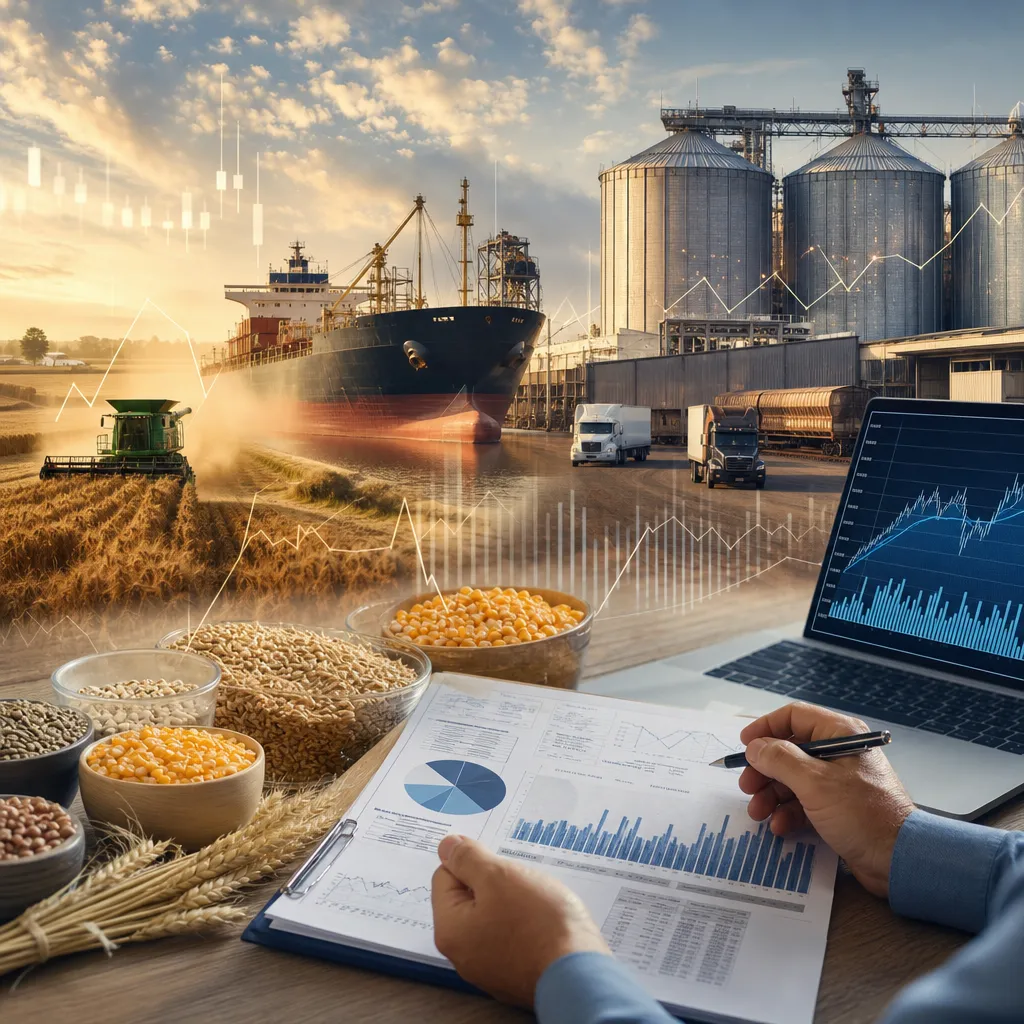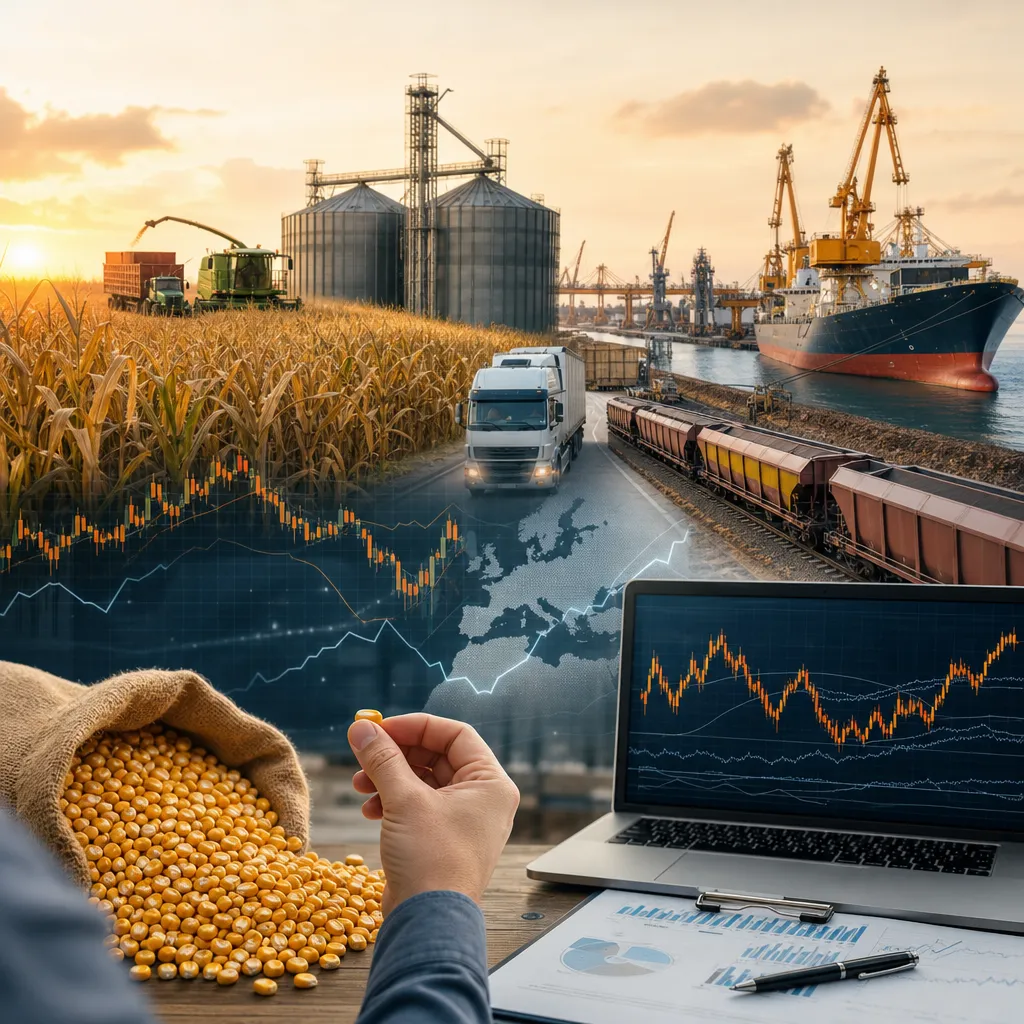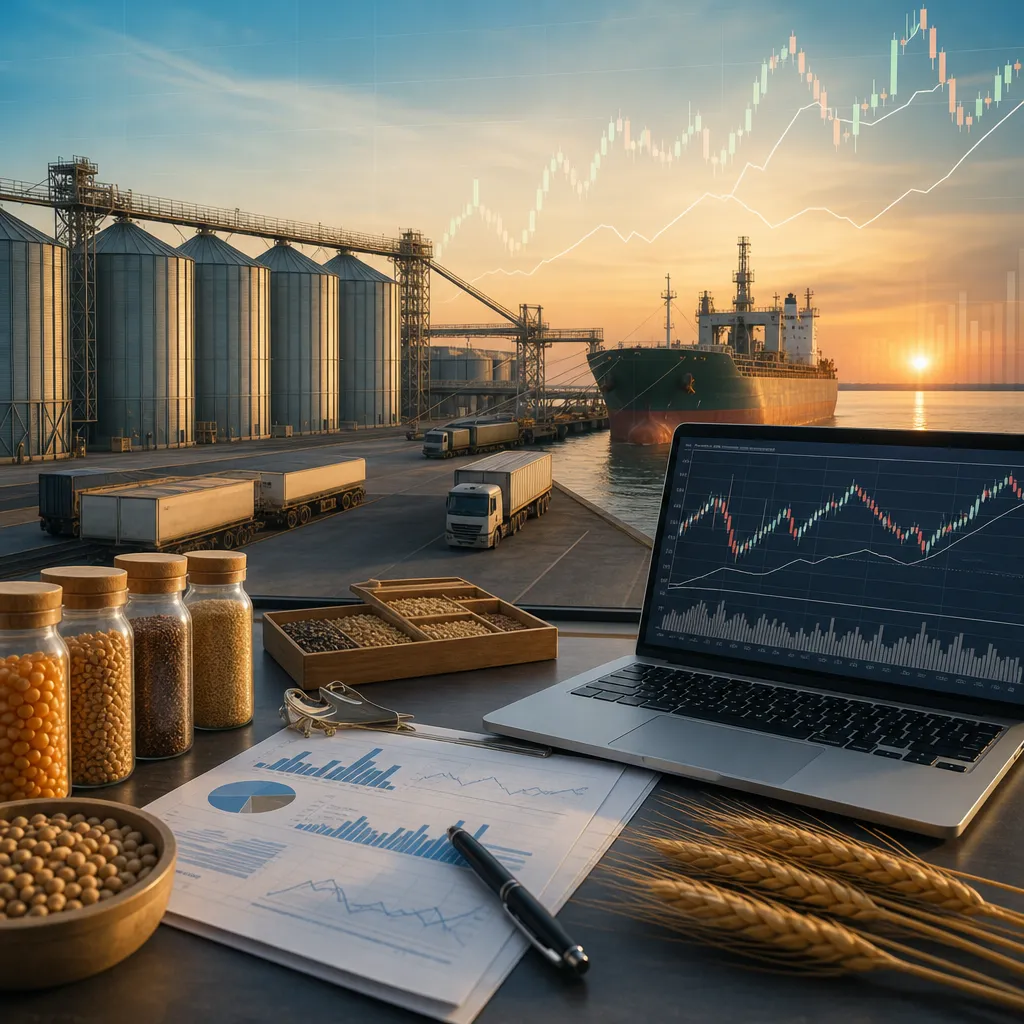
The EU wheat futures market is centered on the Euronext milling wheat contract, often still referred to in trade language as the MATIF wheat contract because of the market’s historical roots in Paris. It is the main listed benchmark for wheat pricing in the European Union and is widely used by farmers, cooperatives, grain merchants, millers, feed manufacturers, exporters, and financial traders. Although it is a futures market, its influence extends deeply into the physical grain trade across France and much of the wider EU. For practical users, understanding this market means knowing not only where the futures price is quoted, but also how local cash prices, export values, and hedging decisions connect back to that benchmark.
What the EU wheat futures market is
The most important exchange-traded wheat benchmark for the European Union is the Euronext milling wheat futures contract. It is an exchange market for soft milling wheat, not a direct local farm-gate cash market. Prices are quoted in euro per metric tonne, which matches the commercial language used in much of the European grain trade.
In practice, the contract is especially important for French-origin wheat, because France is one of the EU’s largest wheat producers and a major exporter. But the futures contract is also watched across other EU member states because it serves as a regional benchmark for pricing, risk management, and trade comparisons.
This market matters because wheat in Europe is sold in several different ways:
- physically in local cash markets,
- for inland delivery to mills, feed plants, or merchants,
- for export through ports on an FOB basis,
- and financially through futures and options for hedging or speculation.
The futures price is therefore not the same as the actual price a farmer receives in a village collection point or the exact price an exporter pays at a port terminal. It is the benchmark around which many of those physical prices are negotiated.
Where the market operates
The contract trades on Euronext, a major European exchange group. In grain-market language, many participants still say “MATIF wheat,” reflecting the old Paris futures market identity. The benchmark is therefore closely associated with Paris as the reference center for EU wheat futures, even though Euronext operates as a broader exchange network.
Geographically, the contract is most closely tied to the European Union’s soft wheat market, with strongest practical relevance in countries such as France, Germany, the Benelux region, and other nearby origins and destinations that trade against the Euronext benchmark. It is particularly influential in export pricing for wheat moving from EU interior regions to export ports.
The physical trade connected to this benchmark takes place across a wide network of farms, cooperatives, inland silos, merchants, rail and barge logistics, feed mills, flour mills, and export elevators. In western Europe, transport routes by truck, rail, and waterway are important because inland basis values often reflect the cost of reaching a processor or a port.
| Market element | Where it operates | Why it matters |
|---|---|---|
| Euronext wheat futures | Exchange benchmark associated with Paris/Euronext | Main EU-listed soft wheat benchmark in euro per tonne |
| Local cash market | Farmgate, cooperative, merchant, mill, feed plant | Where physical grain is actually bought and sold |
| Export market | EU export ports and trader networks | Connects EU wheat values to world demand and competing exporters |
How wheat prices are formed in the EU market
The most important practical point is that futures are a benchmark, not the whole price. A physical wheat price in the EU is usually built from several layers.
At the center is the Euronext wheat futures price. To that, the market adds or subtracts a basis, which reflects local conditions and contract terms. Basis can be positive or negative relative to futures depending on location, quality, buyer demand, and logistics.
Physical prices may appear in several forms:
- Farm-gate or local cash bid: what a farmer may be offered at origin by a cooperative or merchant.
- Delivered inland price: price for delivery to a mill, feed plant, or inland silo.
- Export bid: merchant or exporter bid tied to shipment economics.
- FOB price: free on board at a port, reflecting value loaded for export.
- CIF import price: cost, insurance, and freight into a destination; more relevant for importers than EU growers, but important for trade competition.
Several factors shape the spread between futures and physical cash values:
- wheat protein and other quality parameters,
- domestic milling or feed demand,
- competition among local buyers,
- distance to processor or port,
- truck, barge, rail, and handling costs,
- storage availability and financing,
- currency moves, especially the euro against the U.S. dollar,
- export competitiveness versus Black Sea, U.S., or other origins.
Because global wheat trade is often discussed in U.S. dollars, the euro exchange rate matters even for an EU futures contract priced in euros. A weaker euro can improve EU export competitiveness; a stronger euro can make EU wheat less attractive in world tenders, depending on rival origins.
How the futures market relates to physical grain trade
The futures market and the physical market serve different but connected purposes.
Physical grain trade involves actual wheat ownership. Farmers sell to cooperatives, merchants, mills, feed manufacturers, or exporters. Contracts may specify quality, moisture, protein, falling number, delivery period, storage terms, and payment conditions. Buyers may quote a fixed cash price, or a formula linked to Euronext futures plus or minus basis.
Futures and options trade on Euronext provides price exposure rather than immediate physical ownership. A hedger can sell futures to protect against falling prices or buy futures to cover future purchase needs. Speculators may trade price moves without intending to handle grain.
A common example is a cooperative or merchant buying wheat from farmers in the cash market while simultaneously selling Euronext futures to reduce flat-price risk. Later, when the physical wheat is sold onward to a mill or exporter, the hedge may be adjusted or closed. This helps separate the management of outright market price risk from local basis risk.
That distinction is important: even if a company hedges on the exchange, it still faces basis risk. Futures may move one way while the local premium or discount changes differently because of regional supply, logistics bottlenecks, or quality shortages.
| Type of price | Where quoted | What it means |
|---|---|---|
| Futures price | Euronext exchange | Standardized benchmark for a future month |
| Cash bid | Cooperative, merchant, processor | Actual local purchase price for physical wheat |
| Delivered price | Mill, feed plant, inland destination | Physical price including delivery to a named point |
| FOB export price | Port export market | Value of wheat loaded for export shipment |
| Basis | Cash trade formula | Difference between local cash market and futures benchmark |
Who uses the EU wheat futures market
The market is used by a wide range of commercial and financial participants.
- Farmers and cooperatives monitor futures to judge selling opportunities and to structure forward sales.
- Grain merchants use futures to hedge stocks, origination programs, and export commitments.
- Millers and feed manufacturers use the market to manage procurement risk.
- Exporters compare Euronext wheat with world benchmarks when pricing tenders and cargoes.
- Funds and proprietary traders provide liquidity and take directional or spread positions.
Most individuals do not trade directly on the exchange itself. Access normally comes through a broker or trading platform that offers Euronext products. That requires a trading account and margin, because futures are leveraged instruments. A futures position can gain or lose value quickly, and that is very different from holding physical grain in storage.
How to check EU wheat prices and market information online
If you want the current or most recent futures price, the first place to check is Euronext, which publishes official market information for its listed contracts. Many brokers and market platforms also display Euronext wheat prices, delayed or real time depending on service level.
For broader grain-market context, readers commonly monitor:
- Euronext for official futures contract information and settlement data,
- European Commission market reports for EU cereals context,
- USDA for global wheat supply, demand, and trade comparisons,
- national agriculture ministries or market observatories where available,
- local cooperatives, merchants, millers, and exporters for cash bids and contract terms.
This distinction matters. A visible Euronext futures quote is not the same as a local cash bid in northern France, Germany, Romania, or Spain. Local buyers may publish bids that differ materially from futures because they include basis, quality terms, and delivery conditions.
If a reader is looking for a “live EU wheat price,” the practical answer is usually:
- check the front-month or relevant new-crop Euronext milling wheat futures quote,
- then compare that with local elevator, cooperative, or merchant bids,
- and confirm what quality, location, and delivery month the cash quote refers to.
How wheat is bought, sold, exported, and imported in the EU
Most physical EU wheat is not sold by clicking a futures screen. It is sold through commercial contracts between counterparties.
Physical grain trade
Farmers typically sell to a cooperative, grain merchant, collector, mill, feed compounder, or exporter. The contract may be:
- spot or nearby delivery,
- forward for a future harvest or shipment period,
- fixed-price,
- or basis-linked to Euronext futures.
Before concluding a sale, commercial users usually clarify:
- quality standards,
- delivery point,
- delivery period,
- weighing and testing rules,
- payment timing,
- and counterparty reliability.
Export trade works differently from inland farm-gate sales. Exporters assemble wheat from inland origins, manage quality blending, arrange logistics to port, and sell cargoes to overseas buyers. Prices may be negotiated relative to Euronext, international benchmark values, or destination tender competition.
The EU is a significant wheat producer and an important exporter, but the internal market is diverse. Some member states are structurally export-oriented in wheat, while others may be larger consumers or occasional importers depending on crop size, feed demand, and regional logistics.
Futures and options use
For hedging, users normally open a brokerage account that offers Euronext grain contracts. Futures require margin and daily mark-to-market. Options may be used to create more flexible risk structures, but they still involve premiums, expiry, and strategy risk.
Owning futures does not mean owning warehouse wheat. Selling futures does not by itself move physical grain. The financial market is a risk-management layer on top of the physical trade.
Main drivers of EU wheat futures and cash market trends
The EU wheat market is influenced by both local and global forces. No single indicator explains price direction all the time.
Key drivers include:
- EU weather during planting, winter dormancy, spring development, and harvest.
- French crop prospects, because France is central to the benchmark and export trade.
- Black Sea competition, especially in world export tenders.
- Global supply-demand balance, including major exporters and importers.
- Euro exchange rate against the U.S. dollar.
- Freight and logistics, including inland transport and port capacity.
- Feed demand versus milling demand, especially when quality splits appear.
- Energy and fertilizer costs, which affect production economics and farmer selling behavior.
- Policy and trade measures where relevant.
Forecasting should be approached as a set of scenarios rather than a certainty. A market can react differently to the same headline depending on stocks, export pace, and the competitiveness of rival origins.
| Scenario factor | Typical market effect | Why it matters |
|---|---|---|
| Smaller EU crop | Can support futures and strengthen some cash markets | Tighter exportable surplus or local supply |
| Large rival export supply | Can pressure EU export values | Importers compare origins in tenders |
| Weaker euro | Often improves export competitiveness | World wheat trade is heavily influenced by dollar pricing |
| Logistics disruption | Can widen basis and disrupt local trade | Transport cost and timing affect where wheat can move |
Practical points for farmers, merchants, and traders
For a farmer or cooperative in the EU, the most useful habit is to separate three questions:
- What is the Euronext wheat futures market doing?
- What is my local basis or cash bid doing?
- What quality and delivery terms apply to the price I am offered?
For a merchant or processor, the key operational issue is usually margin between purchase and sale values, not simply the headline futures level. Hedging may reduce outright price risk, but basis, logistics, credit, and quality risk remain.
For a financial trader, the contract is a liquid expression of European wheat sentiment, but it is still rooted in agricultural reality. Weather, export demand, crop quality, and policy headlines can all move the market rapidly.
FAQ
What is the main wheat futures benchmark for the EU?
The main benchmark is the Euronext milling wheat futures contract, commonly called MATIF wheat in trade practice.
In what currency and unit is EU wheat futures quoted?
It is typically quoted in euro per metric tonne, which aligns with standard commercial pricing in much of the EU grain trade.
Is the Euronext wheat futures price the same as the farm-gate wheat price?
No. Farm-gate or local cash prices differ because they include basis, quality adjustments, transport costs, storage conditions, and local buyer competition.
Where can I check current EU wheat futures prices?
The most reliable reference point is Euronext. Many brokers and market-data platforms also display Euronext wheat prices, while local buyers provide separate physical cash bids.
How is physical wheat usually sold in the EU?
Most physical wheat is sold through cooperatives, merchants, mills, feed companies, or exporters under contracts that specify quality, delivery point, timing, and payment terms.
How do exporters use the EU wheat futures market?
Exporters often use Euronext futures to hedge price risk while they assemble inland wheat, manage quality, and sell export cargoes priced against world market conditions.
Can an individual trade EU wheat futures online?
Usually yes, through a broker that offers Euronext contracts. But futures trading involves margin, leverage, and the risk of losses, so it is not the same as buying physical grain.
What are the main drivers of EU wheat prices?
The main drivers are EU crop conditions, French production prospects, global wheat supply-demand balances, Black Sea competition, currency movements, logistics, and domestic milling and feed demand.
Sources
- Euronext
- European Commission
- USDA Foreign Agricultural Service