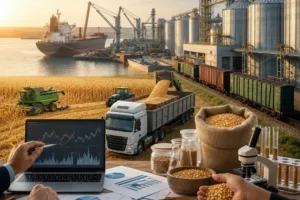
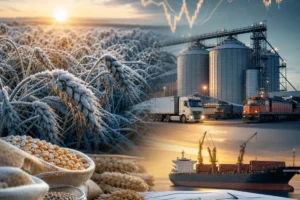
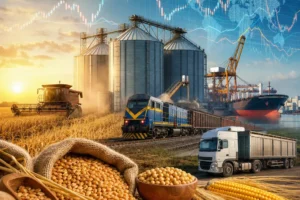

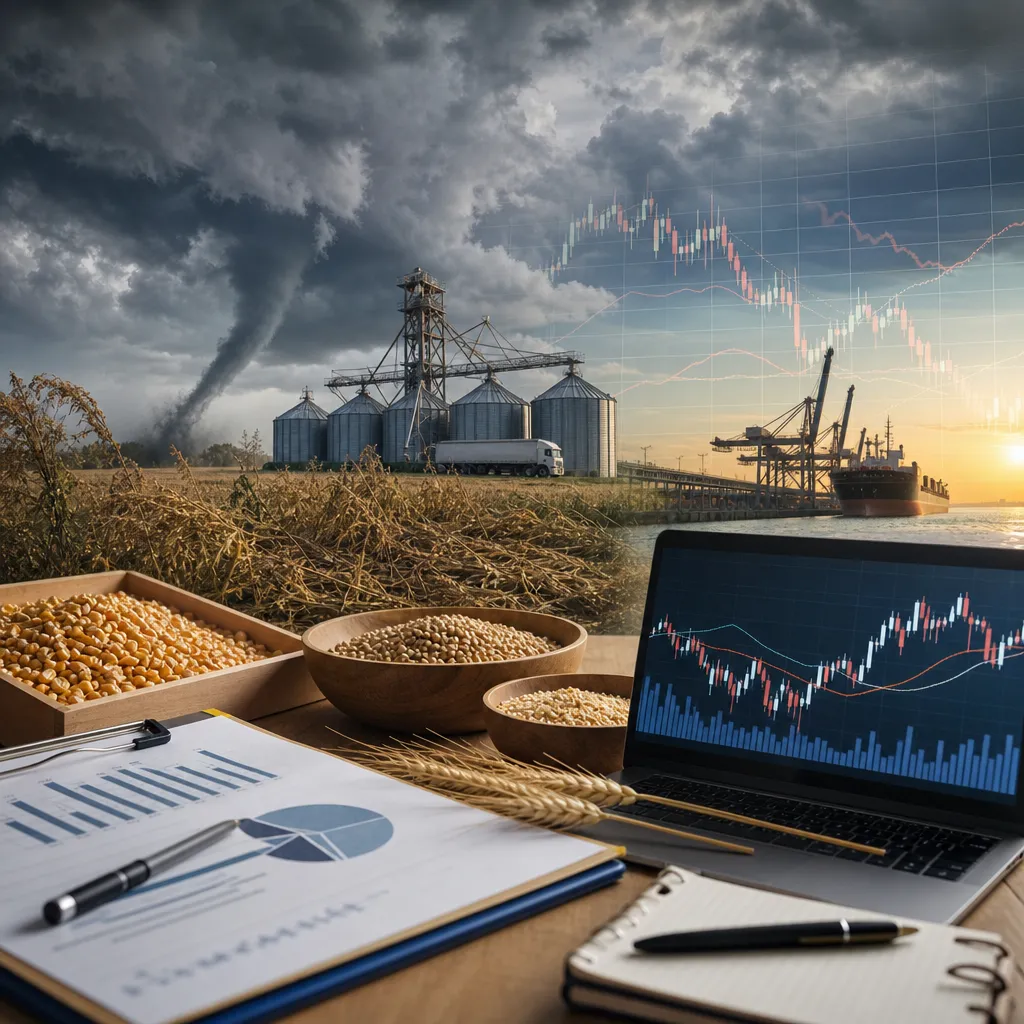
Storm damage matters to grain prices because it changes expected supply, crop quality, storage losses, and transportation flow, often within hours of a major weather event. The market reaction depends on where the storm hits, when it hits in the crop cycle, and which market you are watching: exchange futures, export values, or local cash bids. A hailstorm in one county may barely move futures but sharply change nearby elevator bids, while a hurricane affecting export terminals can move basis and logistics even if national production is unchanged. To understand the price impact, readers need to separate weather headlines from the actual channels through which storms affect supply, demand, quality, and trade.
How storm damage affects grain prices
Storm damage influences grain prices through four main mechanisms: yield loss, quality loss, storage and handling disruption, and logistics disruption. Not every storm is bullish for prices. If damage is localized and national supplies remain comfortable, futures may move little. If the storm hits a major production region or export corridor, market effects can be much larger.
For example, wind and hail can flatten wheat or corn, reducing harvestable yield. Excess rain can lower grain quality, increase disease, or delay harvest, which may widen quality spreads even if total tonnage is not severely reduced. Flooding can damage on-farm bins, commercial storage, roads, rail lines, and barge movements, raising basis volatility. Tropical storms can slow loadings at ports and temporarily distort export offers.
| Storm effect | How it affects price | Where it shows up first |
|---|---|---|
| Yield loss from hail, wind, flooding | Supports prices if supply risk expands beyond local area | Futures market, then local cash bids |
| Quality deterioration | Creates discounts for damaged grain and premiums for better grades | Elevator bids, mill bids, export specifications |
| Harvest delays | Can tighten nearby supply and affect basis | Nearby cash market and spreads |
| Storage and handling damage | Raises local marketing costs and may force distressed sales | Local cash basis and replacement costs |
| Port, rail, river disruption | Changes freight, export pace, and regional basis | Export bids, terminal markets, freight markets |
Futures prices versus local cash prices after a storm
One of the most common mistakes is assuming that a futures rally is the same as the price a farmer can receive at a local elevator. It is not. Grain prices usually have two parts: the futures component and the basis. Futures are standardized contracts traded on regulated exchanges, while basis is the local adjustment reflecting freight, storage, local supply-demand, and quality.
In the United States, benchmark grain futures are commonly watched on CME Group, including corn, soybeans, soybean products, Chicago wheat, Kansas wheat, and oats. Canola futures are traded on ICE Futures Canada. In Europe, grain participants also watch exchange benchmarks such as milling wheat and rapeseed contracts listed by major exchanges serving the region. These exchange prices are visible through exchange websites, brokerage platforms, financial data terminals, and market data vendors.
Local cash prices are different. Farmers and physical buyers usually check bids from nearby elevators, cooperatives, grain merchants, ethanol plants, feed mills, flour mills, crushers, or export terminals. Those bids may be posted on company websites, mobile apps, texting systems, customer portals, or local market reporting services. In many regions, bids are also discussed directly with merchandisers by phone because quality, freight, volume, and delivery timing matter.
After storm damage, futures may rise on a perception of reduced production, while local cash bids may either strengthen or weaken depending on whether local facilities are short of grain, overloaded with damaged grain, or unable to receive grain because of logistics problems.
| Market type | What it represents | Where to check it | Storm impact pattern |
|---|---|---|---|
| Futures | Standardized exchange-traded contract | Exchange data, broker platforms, market-data services | Moves on broad production or export expectations |
| Local cash bid | Actual nearby buying price, adjusted for basis and quality | Elevators, co-ops, processors, merchants, local bid sheets | Moves on local supply, damage, freight, and facility conditions |
| Export bid | Terminal or FOB value tied to international trade flow | Exporters, merchants, shipping market contacts, official reports | Sensitive to port closures and vessel delays |
Which storms matter most for wheat, corn, soybeans, rice, and oilseeds
The type of storm matters as much as its size. Hail is especially destructive to standing crops because damage is immediate and visible. Wind can lodge cereals such as wheat, barley, rye, and oats, making harvest slower and quality less predictable. Corn can suffer stalk breakage and lodging; soybeans can lose pods or face prolonged flooding stress. Rice is highly sensitive to excessive water, lodging, and harvest weather. Canola and rapeseed are vulnerable to pod shatter, hail, and late-season weather that harms seed quality.
Timing is critical. A storm before planting may delay fieldwork but can sometimes be offset later. During pollination or pod set, crop sensitivity is much greater. Near harvest, the biggest risk often shifts from yield to quality and logistics. For milling wheat, test weight, sprouting, and protein segregation matter. For corn, moisture, mold risk, and damage percentages are important. For soybeans, staining, splits, foreign material, and storage stability may become issues.
That is why market participants do not simply ask, “Was there a storm?” They ask, “Which crop, which stage, what share of production, what quality effect, and what happened to transport?”
Where to track storm risk and price reaction
Reliable analysis starts with combining weather, crop condition, and market data. For weather and storm monitoring, traders and merchandisers commonly use national weather agencies, radar products, drought and precipitation maps, and private weather services. In the United States, USDA reports are central because they connect weather narrative to measurable crop condition and supply estimates.
Useful official sources include USDA Crop Progress for condition and harvest pace, USDA WASDE for balance sheets, USDA Grain Transportation reports for logistics context, and USDA Export Sales for demand. Futures-market participants also watch CFTC Commitments of Traders to see how managed money and commercial positions are changing. CME Group provides contract specifications, delayed market data, and settlement information.
Outside the United States, readers should also use their national agriculture ministry, statistics office, and exchange or port authority where applicable. FAO is useful for broader international context, especially when storms in one exporting region may alter global trade flows. Physical traders often supplement official data with merchant crop tours, elevator receipts, processor bid changes, satellite imagery, and direct conversations with shippers and warehouse operators.
In practice, online data shows the headline quickly, but the physical market confirms the real impact more slowly through grades, bids, freight quotes, and shipment performance.
How storm damage changes physical grain marketing
In the physical market, storm damage changes not only price but also saleability. A farmer with damaged grain may still be able to sell it, but the buyer, delivery point, and discount schedule become more important. Grain elevators, cooperatives, processors, mills, crushers, and feed manufacturers typically buy against grade specifications and moisture limits. If a storm increases damage, the grain may need drying, cleaning, blending, or a different end use.
A typical physical transaction works like this: the seller contacts a nearby elevator, co-op, merchant, or processor; receives a bid for a delivery period; confirms quality assumptions; delivers to the named location; and is paid according to contract terms after weights and grades are established. If storm damage is severe, the buyer may apply discounts for moisture, vomitoxin risk, foreign material, low test weight, damaged kernels, or other defects depending on crop and jurisdiction.
Where can this be done? Normally at local country elevators, cooperative locations, river terminals, feed mills, flour mills, oilseed crushers, ethanol plants, maltsters, or export houses. Some regions also use cash grain brokers and merchant networks that match sellers and buyers. These are physical trade channels, not brokerage accounts for futures trading.
Key items to check after a storm are the delivery point, quality terms, discount schedule, freight responsibility, drying or storage charges, inspection method, and payment timing. If nearby infrastructure is damaged, a higher posted price at a distant facility may not actually be better once trucking, waiting time, and rejection risk are included.
How traders and farmers use futures and options after a storm
Storms often increase volatility, which draws more attention to hedging. Futures and options are tools for managing price risk, not repairing physical crop damage. A futures hedge can offset some price movement risk, but it does not eliminate basis risk or quality discounts. Options can provide price insurance-like flexibility, but they involve premium cost and still require understanding of strike prices, expiry, and market timing.
Futures trading normally takes place through a regulated futures broker with an approved trading account. Orders are placed through the broker’s platform, and positions are marked to market daily. Because futures are leveraged, traders must post margin and may face margin calls if the market moves against them. This is very different from selling physical grain to a local elevator.
Farmers may use futures to hedge expected production before harvest, then offset the futures position when they sell cash grain. Elevators and processors also hedge inventory and forward purchases. Commercial firms do this alongside basis management, storage, and freight planning. Options may be used when a seller wants downside protection but wishes to keep upside potential if storm damage later lifts futures.
The limitation is important: if a storm reduces a crop’s quality rather than only its quantity, the futures market may not compensate for all local cash losses. Futures contracts are standardized; damaged physical grain is not.
Storage, logistics, and quality problems after storms
Some of the largest post-storm price effects occur away from the exchange screen. Wet grain may require immediate drying. Damaged bins can force emergency movement. Flooded roads or rail interruptions can trap grain in one region while end users elsewhere bid up for replacement supplies. River conditions and port shutdowns can force exporters to delay execution or widen basis to reflect risk.
Storage decisions become critical. On-farm storage offers control, but after a storm it may raise spoilage risk if aeration, drying, or structural integrity is compromised. Commercial storage provides handling infrastructure and quality management, but fees and delivery queues may increase when many producers are affected at once. Warehouses, elevators, and processors may also limit receipts if they are overwhelmed by damaged grain or if they need stricter grade segregation.
For grain quality, proper sampling matters. A representative sample can determine whether grain is accepted as milling, feed, crushing, or off-grade. In many markets, official or recognized inspection and grading systems influence discounts and disputes. Buyers and sellers should confirm which standards apply and how claims are handled if delivered grain fails contract specifications.
Practical steps for reading the market after storm damage
- Start with location. Identify whether the storm hit a major producing area, a storage zone, or an export corridor.
- Check crop stage. Pollination, grain fill, and pre-harvest periods usually matter more than early vegetative stages.
- Separate futures from cash. Look at exchange movement, then compare nearby elevator or processor bids.
- Watch quality signals. Ask whether the issue is tonnage loss, grade loss, or both.
- Check logistics. Review whether roads, rail, barges, ports, or elevators are impaired.
- Use official reports. Follow USDA or the relevant national agency for condition, production, exports, and transport updates.
- Review contracts carefully. For physical grain, inspect discount schedules, delivery windows, and force majeure or quality clauses where applicable.
- Be careful with hedging changes. Volatile weather markets can trigger sharp margin calls even when the longer-term fundamental view seems reasonable.
Does storm damage always make grain prices rise?
No. Prices rise only if the market believes usable supply has been reduced enough to matter. Localized damage may hurt individual farms badly while leaving national or global supply almost unchanged. In some cases, harvest disruption can weaken nearby local bids if elevators are full of damaged grain or if transport breaks down.
Where can I check grain prices after a storm?
Check exchange futures on the relevant commodity exchange or through a futures broker or market-data service. For the actual local selling price, check bids from elevators, cooperatives, processors, mills, crushers, ethanol plants, or merchants in your region. Those local bids are the practical cash market, and they may diverge sharply from futures.
What is the difference between a storm-driven futures rally and a stronger basis?
A futures rally reflects a higher exchange-traded benchmark price, usually based on broader supply or demand expectations. A stronger basis means local buyers are increasing their cash premium or reducing their discount versus futures, often because local supplies tightened or freight changed. A farmer’s final price depends on both components.
Can I sell storm-damaged grain online?
Sometimes negotiations can begin online or through a buyer portal, but final physical sale usually still depends on delivery point, grade, moisture, freight, and contract terms. Most storm-damaged grain is marketed through elevators, co-ops, merchants, processors, or brokers that can evaluate quality and direct it to the right end use.
Where does futures trading take place, and is that the same as physical grain delivery?
Futures trading takes place on regulated exchanges through licensed futures brokers and trading platforms. That is a financial market for standardized contracts. Physical grain delivery takes place through elevators, warehouses, processors, merchants, exporters, and other real-world commercial channels. The two markets are linked, but they are not the same transaction.
Which reports are most useful after severe weather?
USDA Crop Progress, USDA WASDE, USDA Export Sales, and USDA Grain Transportation reports are widely used in the U.S. market. CME Group contract information and settlement data help interpret futures reaction, while CFTC Commitments of Traders helps show positioning. In other countries, national agricultural ministries, statistical agencies, and exchange data are essential.
What are the main risks when marketing grain after storm damage?
The main risks are quality discounts, rejected loads, spoilage during storage, unexpected drying or freight costs, counterparty issues in stressed local markets, and basis moves that offset favorable futures action. Sellers should also be careful not to rely on a screen price without confirming the actual local bid and grade terms.
Should a farmer hedge more aggressively after a storm warning?
Not automatically. Hedging decisions depend on expected production, insurance position, storage, local basis conditions, and financial ability to handle margin if using futures. A storm can reduce production enough that over-hedging becomes a risk. Many producers work with merchandisers, brokers, or risk advisers to avoid hedging more bushels than they can realistically deliver or offset.
Sources
- USDA Agricultural Marketing Service and World Agricultural Outlook Board reports
- CME Group contract specifications and market data
- U.S. Commodity Futures Trading Commission Commitments of Traders