
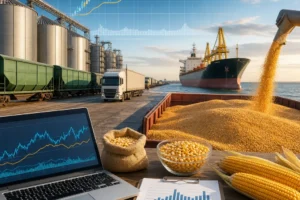

Crop ratings matter because grain markets react not only to how many acres were planted, but to how healthy those acres look during the season. In practice, weekly crop condition scores can move wheat, corn, soybean, and other grain futures within minutes, especially when the numbers differ from trade expectations. But a crop rating is not a price, and a futures market reaction is not the same thing as the local cash bid a farmer receives at an elevator, processor, or export point. To use crop ratings well, readers need to know what the ratings measure, where to find them, how the trade interprets them, and how they connect to futures, basis, and physical grain sales.
What crop ratings are and why grain markets care
Crop ratings are field condition assessments published by government agencies or similar reporting bodies. In the United States, the best-known source is the USDA National Agricultural Statistics Service weekly Crop Progress and Condition report. Crops are commonly rated in categories such as very poor, poor, fair, good, and excellent.
These ratings are watched because they offer a timely view of crop health before harvest data is available. Markets use them as an early signal for potential yield change. A decline in the share rated good-to-excellent may suggest stress from drought, heat, flooding, disease, or delayed development. An improvement may suggest better yield potential than previously assumed.
For major traded grains and oilseeds, ratings influence expectations for:
- final yield per acre or hectare,
- total production,
- ending stocks and stocks-to-use,
- export competitiveness,
- feed availability and processor margins.
Ratings are most market-sensitive when weather risk is still high and yield is not yet fixed. Corn ratings often matter most during pollination and grain fill. Soybean ratings often get more attention during flowering and pod fill. Spring wheat ratings can be highly sensitive during emergence, tillering, heading, and grain fill.
How crop ratings affect grain prices in practice
The first place crop ratings usually affect price is the futures market, not the local truck bid. Futures prices for corn, wheat, soybeans, canola, or related contracts trade on regulated exchanges. For U.S. grains, that generally means CME Group markets, including Chicago Board of Trade contracts for corn, soybeans, and wheat, and Kansas City wheat futures for hard red winter wheat.
When a crop rating report is released, traders compare the new numbers with prior weeks and with pre-report expectations. The market reaction depends on surprise. If corn was expected to hold steady at a good-to-excellent level but falls sharply, futures may rise because traders infer lower yield potential. If soybean ratings improve more than expected, futures may fall because the market may price in larger supply.
However, the relationship is not mechanical. Prices respond to the whole supply-and-demand picture, including:
- weather forecasts for the next 7 to 14 days,
- planted and harvested area,
- old-crop and new-crop stocks,
- export sales and shipment pace,
- currency moves, especially the U.S. dollar,
- energy prices and biofuel demand,
- competing crop conditions in other exporting countries.
A poor rating can sometimes have little bullish impact if traders believe the next weather pattern will improve conditions. Conversely, a stable rating can still support prices if the market expected a stronger improvement.
| Crop rating change | Typical market interpretation | Limitations |
|---|---|---|
| Good-to-excellent falls unexpectedly | Potential lower yield; often supportive for futures | Can be offset by rain forecast, large acreage, or weak demand |
| Good-to-excellent rises unexpectedly | Potential higher yield; often negative for futures | May matter less late in season or if demand is very strong |
| Ratings steady but below normal | Market may stay weather-sensitive and retain risk premium | Condition alone does not confirm harvested production |
| Ratings poor but improving | Market may become less bullish if damage appears reversible | Improvement may come too late for key growth stages |
Where to find crop ratings and related market reports
For U.S. crops, the standard public source is USDA NASS. The weekly Crop Progress and Condition report provides state-by-state and national condition data, progress numbers, and harvest pace where relevant. Analysts, merchandisers, hedge desks, farmers, and brokers use it because it is official, regular, and widely followed.
To turn crop ratings into a broader market view, readers normally pair that report with several other official data sources:
- USDA WASDE: balance sheets for production, use, trade, and ending stocks.
- USDA Export Sales: demand pace for U.S. grain and oilseeds.
- USDA Grain Stocks and acreage reports: stock and area context.
- CFTC Commitments of Traders: shows futures and options positioning by trader category.
- CME Group market data: futures and options prices, contract specifications, and expiration calendars.
Outside the United States, readers often use national agriculture ministries, statistical agencies, exchange publications, and supranational institutions. For international context, FAO and official customs or trade databases help assess import and export trends, though they are generally less immediate than weekly crop condition reports.
Commercial data vendors and farm software can combine weather, satellite imagery, futures, basis, and local bid data into one dashboard. These are useful for merchandising and risk management, but users should distinguish between official reports, broker quotes, and proprietary analytics.
Futures prices versus local cash grain prices
This is the most important practical distinction. A crop rating usually moves the exchange-traded benchmark first. The benchmark is not the same as the price paid at a local elevator or processor.
Futures price is the exchange-traded price for a standardized contract with a defined delivery month, quality specification, and contract size. It is a financial and commercial benchmark.
Cash price is the actual local price offered for physical grain at a specific location, quality, delivery period, and payment term. Cash price reflects futures plus or minus basis. Basis is the local adjustment that captures freight, storage pressure, local demand, quality, and regional supply conditions.
That is why two farmers in different regions can see very different bids on the same day even if the same futures contract is rising. A strong export corridor, a nearby crushing plant, a feed deficit region, or tight on-farm supplies can strengthen basis. Harvest pressure, rail constraints, quality discounts, or full storage can weaken basis.
| Market type | Where it exists | What price represents | Who uses it |
|---|---|---|---|
| Futures market | Regulated commodity exchange through a futures broker | Standardized benchmark for a delivery month | Hedgers, speculators, merchants, processors, funds |
| Local cash market | Elevators, cooperatives, mills, feed buyers, processors, exporters | Actual physical grain bid at a place and quality | Farmers, local buyers, merchants, end users |
| Forward cash contract | Private agreement with elevator, cooperative, or processor | Future delivery of physical grain under agreed terms | Producers and commercial grain buyers |
| OTC risk contract | Bank, merchant, broker, or structured grain program | Customized price-risk management exposure | Commercial users with specific hedging needs |
Where farmers, buyers, and traders actually check prices
For futures prices, users normally monitor exchange data through CME Group, brokerage platforms, market terminals, charting software, or agricultural market services that redistribute exchange quotes. A futures broker account is normally needed to place trades, but not always to view delayed data.
For local physical grain prices, farmers usually check:
- elevator and cooperative bid sheets,
- processor bid pages,
- merchant and exporter bids where available,
- agricultural market reporting services run by governments or farm organizations,
- phone or direct messaging with merchandisers for negotiated loads or specialty quality lots.
In many regions, local buyers post bids online or in farm-facing mobile tools. Those bids can change independently from futures if basis changes. During harvest, delivery capacity, drying needs, and storage availability can matter as much as headline futures movement.
Buyers checking grain values for procurement typically compare local bids with destination equivalents at mills, crush plants, feed manufacturers, ethanol plants, ports, or export terminals. The spread between origin and destination reflects freight, handling, elevation, margin, and risk.
How crop ratings are used in trading and hedging
Commercial grain firms, farmers, and speculative traders do not use crop ratings in the same way.
For farmers and physical sellers
A producer may use deteriorating crop ratings as a signal to review unpriced bushels, hedge production risk, or lock in favorable new-crop opportunities if futures rally. This can be done by selling futures through a broker, buying put options, or using cash or basis contracts with a local buyer. The correct tool depends on storage, production uncertainty, margin capacity, and willingness to retain upside.
Hedging through futures requires a brokerage account and the ability to post and maintain margin. That is a real cash-flow risk. A futures hedge can protect against broad price declines, but it does not remove basis risk. If local basis weakens more than expected, the final cash result may still disappoint.
For processors, feed buyers, and exporters
Commercial users watch ratings to judge replacement cost risk. If crop conditions worsen, they may hedge inputs earlier, extend coverage, or adjust procurement timing. A flour mill, feed compounder, ethanol plant, or soybean crusher may use futures or options to manage price exposure while separately sourcing physical grain from merchants, elevators, or direct farm contracts.
For speculative traders
Speculative traders may trade the report reaction directly in futures or options. This is a financial activity, not a physical grain purchase. It requires a futures broker, understanding of contract size and tick value, and strict risk control. The risks are high because weather-sensitive markets can reverse quickly after a report if broader forecasts change.
How crop ratings feed into physical grain marketing decisions
In the physical market, crop ratings matter mainly because they influence expectations for harvest size and local supply pressure. A weak crop in a deficit area can strengthen basis and create opportunities for sellers with stored grain. A large healthy crop in a region with limited storage or transport can pressure basis even if futures are stable.
A practical grain marketing process usually involves:
- Checking exchange futures for the relevant crop and delivery month.
- Checking multiple local bids from elevators, cooperatives, processors, mills, or feed buyers.
- Comparing basis by delivery point and month.
- Reviewing grain quality requirements such as moisture, test weight, protein, damage, or mycotoxin limits.
- Accounting for freight, drying, shrink, handling, and storage cost.
- Choosing between spot sale, deferred delivery, basis contract, hedge-to-arrive structure where available, or on-farm storage.
Where physical trade occurs depends on the crop and region. Grain can move from farm to country elevator, cooperative, rail loader, mill, crusher, feed plant, ethanol plant, maltster, exporter, or warehouse. The contract should clearly define delivery period, grade, discounts, weights, payment timing, and who bears freight and quality risk.
Limits of crop ratings as a forecasting tool
Crop ratings are useful, but they are not a complete forecast model. They are less comparable across years than many readers assume because weather timing, hybrid or variety performance, disease pressure, and acreage shifts change the relationship between condition and final yield.
Important limitations include:
- ratings are subjective field assessments, not direct yield measurements,
- the same rating can imply different yield outcomes in different years,
- late-season weather can still alter production materially,
- harvested area can change even if condition improves,
- quality may deteriorate without a proportional condition signal,
- global grain prices depend on competing exporters, not just one country’s crop.
That is why analysts combine ratings with precipitation maps, soil moisture, temperature stress metrics, satellite vegetation indicators, crop tours, and official balance sheets. In wheat especially, protein and milling quality can matter nearly as much as headline production. In corn and soybeans, final yields can diverge from mid-season ratings if August or early autumn weather shifts sharply.
Practical risks, costs, and common mistakes
The most common mistake is treating a futures rally after a poor crop rating as the exact price available for physical grain. The second is assuming that a bad weekly rating automatically means lower production. Markets often price the change before the report, or reverse if rain appears on the forecast.
Key risks and costs to check include:
- Basis risk: local cash bids may not follow futures one-for-one.
- Margin risk: futures hedges can require additional funds if the market rises against a short hedge before cash grain is sold.
- Storage cost: interest, shrink, aeration, quality loss, and opportunity cost can erode gains from waiting.
- Quality risk: a crop can maintain volume but lose value through moisture, sprout, low test weight, or toxin issues.
- Counterparty risk: private forward cash contracts should be made with creditworthy buyers and clear terms.
- Logistics risk: full elevators, rail delays, barge issues, or long truck lines can weaken nearby basis during peak movement.
For analysts and traders, another common mistake is overreacting to one report without checking acreage, stocks, export pace, and fund positioning. A rating change matters most when it alters the balance sheet meaningfully.
FAQ
Where can I check official crop ratings?
In the United States, the main source is the USDA National Agricultural Statistics Service weekly Crop Progress and Condition report. In other countries, readers typically use official agriculture ministries, statistical agencies, or recognized crop reporting bodies.
Where can I see grain prices after a crop rating report?
For futures, use exchange-related market data such as CME Group data or a brokerage platform. For actual physical grain prices, check local elevator, cooperative, processor, merchant, or exporter bids. The local bid is the actionable physical price.
Does a lower crop rating always mean higher grain prices?
No. Prices react to surprise versus expectations and to the broader supply-and-demand picture. A lower rating can be outweighed by favorable weather ahead, large planted area, weak exports, or bearish outside markets.
What is the difference between futures price and cash price?
Futures are exchange-traded benchmark contracts. Cash price is the local physical bid for real grain at a specific place, quality, and date. Cash price equals futures plus or minus basis, and basis can change independently.
How do farmers use crop ratings in marketing?
They often use them as one input for timing sales, hedging, or setting target orders. Practical decisions usually combine crop ratings with local basis, storage capacity, quality outlook, weather, and cash-flow needs.
Can I trade crop-rating reactions online?
Yes, but only in the financial market through a regulated futures broker or options broker where relevant. That is different from buying or selling physical grain. Trading futures involves leverage, margin, and significant risk.
Which reports should I use together with crop ratings?
The most useful combination is crop ratings plus USDA WASDE, USDA Export Sales, acreage and grain stocks reports, weather forecasts, and CFTC positioning data. Together they provide production, demand, and market-structure context.
Why might my local grain bid fall even if futures rise on poor ratings?
Because basis may weaken. That can happen during harvest pressure, when storage is tight, when freight costs rise, or when local buyers are already well covered. Futures and local cash prices are related, but they are not identical.
Sources
- USDA National Agricultural Statistics Service, Crop Progress and Condition
- USDA World Agricultural Supply and Demand Estimates
- CME Group, Agricultural Products and Contract Specifications