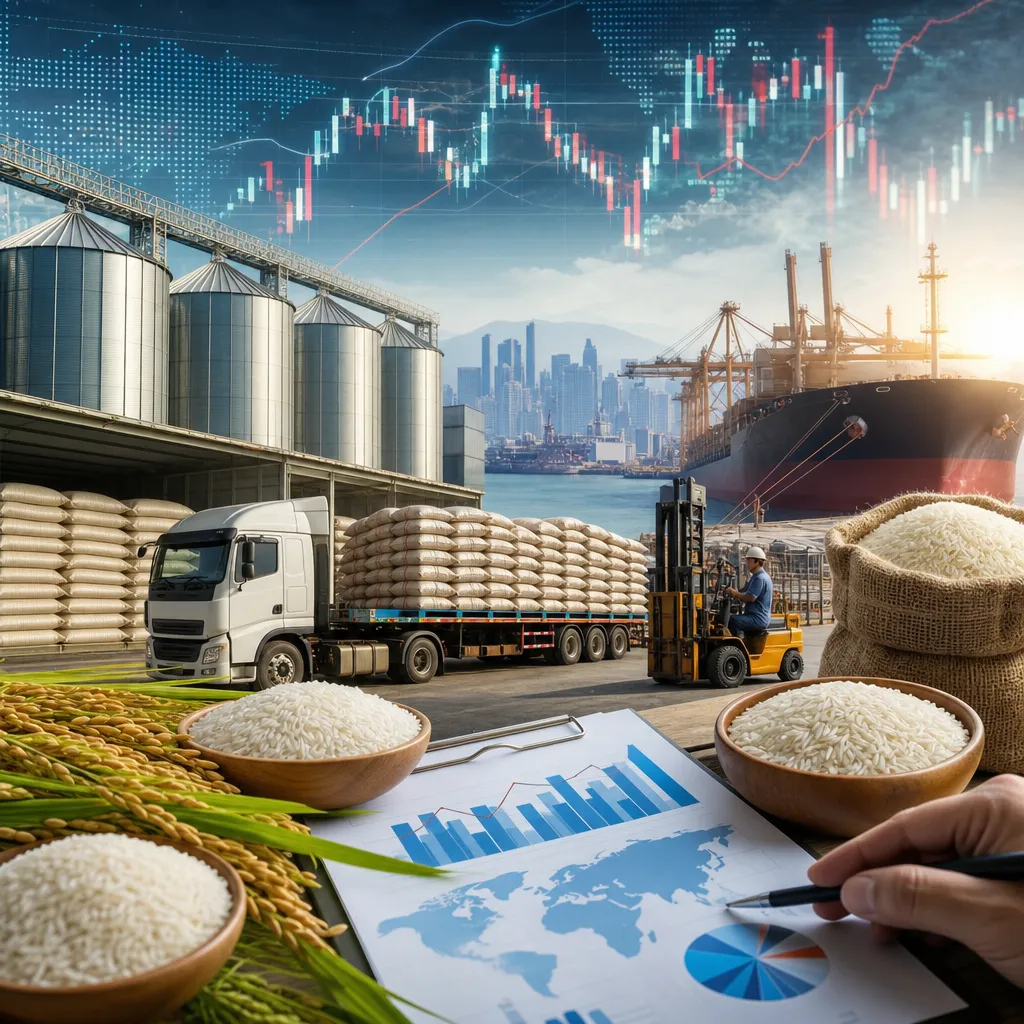

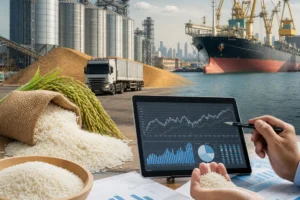


Rice price trends are shaped by a mix of global benchmarks, local cash markets, weather, trade policy, currency movements, and logistics. For most readers, the key practical point is that there is no single “rice price” that applies everywhere: exchange-traded benchmarks, export quotes, wholesale prices, and local mill or farmgate bids can differ materially. To follow rice prices properly, you need to know which market you are looking at, what quality and origin it refers to, and whether it is a futures indicator or a physical transaction price. In practice, farmers, merchants, importers, mills, food companies, and traders use different price references for different decisions.
Rice is also less centralized than markets such as corn or wheat. Physical trade often matters more than exchange activity, and many transactions are negotiated directly between exporters, importers, mills, traders, cooperatives, processors, and government buyers. That means understanding rice price trends requires looking at both public market information and the real physical trade chain.
What rice price trends actually mean
Rice price trends refer to the direction and behavior of rice prices over time, whether daily, seasonal, or multi-year. In practice, readers may be tracking one of several different things: an export benchmark from a major origin, a wholesale market quotation, a local cash bid from a mill or trader, or a futures-based reference where available.
The first step is to distinguish between benchmark prices and transaction prices. Benchmark prices are used as market signals. Transaction prices are the actual numbers agreed in a contract, often adjusted for quality, moisture, broken percentage, freight, bagging, delivery point, insurance, payment timing, and inspection terms.
For example, a headline about stronger Asian export rice prices does not automatically mean a farmer in another country receives more at the farm gate that day. Local prices can lag, rise faster, or move differently depending on currency, transport capacity, government policy, or domestic stocks.
Where rice prices are quoted and how to check them
Rice prices are typically checked through a combination of official reports, exchange data where relevant, cash-market reporting, and direct commercial quotes. Unlike some other grains, rice pricing is often highly origin-specific and quality-specific.
Common places where rice prices are checked
- Government market reports: Ministries of agriculture, marketing boards, or statistical agencies may publish farmgate, wholesale, or retail rice prices.
- USDA reports: USDA provides international rice market analysis, trade estimates, and U.S. rice market information through reports such as WASDE and Rice Outlook.
- Export price assessments: Traders and analysts often follow origin-based export quotations from major supplying countries.
- Commodity exchange websites: Where rice futures exist, exchange data provides a transparent reference price, but not the same thing as a local physical bid.
- Local mills, elevators, cooperatives, and merchants: In the physical market, these are often the most relevant daily sources for a producer or nearby buyer.
- Commercial market-data services: Used by professional traders, importers, brokers, and analysts for faster or more detailed price discovery.
For U.S. readers, rice prices may be checked through USDA market news and regional industry contacts. For importers and exporters, international benchmark discussions usually focus on origin, grade, and shipment basis rather than a single global screen price.
| Price type | What it shows | Where it is normally found | Main limitation |
|---|---|---|---|
| Futures price | Exchange-traded benchmark for a standardized contract | Commodity exchange data and broker platforms | May not match local cash rice or different qualities |
| Cash bid | Actual local buying price from a mill, elevator, or merchant | Direct buyer quotes, cooperative bids, local market reports | Highly location- and quality-specific |
| Export quote | Indicative price for shipment from an origin | Trade reports, exporters, market intelligence services | May exclude destination costs and deal-specific adjustments |
| Wholesale market price | Price in a domestic trading hub or terminal market | Government market reporting systems or wholesale trade channels | Not the same as farmgate or export value |
Futures prices versus local cash rice prices
This distinction is essential. A futures price is the price of a standardized contract traded on a regulated exchange. A cash price is the physical price for actual rice in a specific place, quality, and delivery period.
In the United States, readers may follow rough rice futures listed by CME Group as a benchmark. That contract can be useful for price discovery and hedging, especially for commercial participants and market observers. But it is not automatically the exact price a producer receives from a local buyer. The local cash market reflects basis, meaning the difference between the futures price and the local physical bid.
Basis can widen or narrow because of freight, export demand, milling margins, storage pressure, harvest movement, quality, and regional supply concentration. In rice, basis can be especially important because varieties, milling yield, and local demand structures matter significantly.
For a farmer or merchandiser, the practical process is usually:
- Check the relevant benchmark if one is used in that market.
- Check local bids from mills, cooperatives, elevators, or merchants.
- Confirm grade and quality specifications.
- Adjust for drying, storage, freight, and delivery timing.
- Compare nearby sale versus later delivery or storage.
How the physical rice market works
Most rice is bought and sold through the physical trade rather than by retail-style online trading. The actual chain varies by country, but common participants include farmers, collectors, cooperatives, mills, wholesalers, grain merchants, exporters, importers, food processors, and government procurement agencies.
A typical physical transaction may involve the following:
- Seller offers rice at farm level, warehouse level, mill gate, or port position.
- Buyer evaluates specifications such as variety, moisture, broken percentage, milling quality, foreign matter, and bagging.
- Price is negotiated on an agreed basis such as farm pickup, delivered mill, warehouse, truck scale, or export loading point.
- Inspection or grading may be done internally, by a warehouse, or by an independent inspection service depending on the trade.
- Freight and delivery terms are assigned to either seller or buyer.
- Payment terms are agreed, ranging from prompt payment to documentary trade finance in export business.
Where these trades take place depends on the market structure. In domestic markets, rice often moves through local mills, cooperatives, assemblers, and wholesalers. In export markets, cargoes are handled by exporters, merchants, shipping agents, port terminals, and importers. In some countries, government procurement can strongly influence prices by setting support levels or controlling trade flows.
Key physical-market variables
- Quality and grade: Small changes in milling recovery or broken percentage can materially affect value.
- Delivery point: Farmgate, mill gate, warehouse, rail siding, river terminal, and port all imply different net prices.
- Freight: Rice is bulky, and transport costs can sharply alter local pricing.
- Storage: Holding rice may improve selling flexibility, but adds cost and quality risk.
- Counterparty risk: Buyers and sellers need to assess payment reliability and contract performance.
Main drivers of rice price trends
Rice prices can move for reasons that differ from other grains. Global rice trade is smaller relative to production than for corn or soybeans, so policy decisions by major exporters or importers can have a strong effect. Weather and yield still matter, but so do export restrictions, public stockholding, and consumer food policy.
| Driver | How it affects rice prices | Where to monitor it |
|---|---|---|
| Weather | Affects yield, quality, harvest timing, and irrigation demand | National weather agencies, crop reports, field updates |
| Government policy | Export bans, tariff changes, support purchases, or stock releases can shift market balance quickly | Government notices, trade ministries, official market bulletins |
| Currency moves | Changes export competitiveness and local-currency farm returns | Central banks, FX markets, trade analysis |
| Freight and logistics | Port congestion, truck shortages, or vessel costs can widen regional spreads | Freight markets, port conditions, merchant updates |
| Stocks and trade flows | Tighter available supply usually supports prices; larger carry stocks can limit rallies | USDA, FAO, customs data, official stock reports |
Seasonality also matters. Harvest pressure can weaken nearby local bids when supply floods into mills and warehouses, especially where drying and storage are limited. Later in the season, basis may strengthen if marketable stocks tighten or logistics improve.
How farmers, buyers, and traders use rice price trends
Different users rely on price trends for different operational decisions.
Farmers
Farmers use price trends to time sales, compare spot versus forward contracts, evaluate storage, and estimate margins against seed, fertilizer, water, fuel, labor, and finance costs. The practical place to act is usually a local buyer network: cooperative, mill, merchant, or aggregator.
Mills and processors
Mills track paddy procurement costs, outturn, by-product values, and demand for milled rice. Their interest is not only the rice price itself, but also processing margin. They normally buy through direct procurement, agents, local collection systems, or contracts with producers and merchants.
Exporters and importers
These participants compare origin prices, freight, quality, destination demand, and currency exposure. Transactions are often negotiated directly rather than placed on a public exchange screen. Documentation, inspection, and shipment timing are central.
Traders and hedgers
Where futures are relevant, commercial users may hedge price exposure through a regulated futures broker. This is financial risk management, not the same as buying truckloads of physical rice. A hedge can reduce exposure to adverse price moves, but it does not remove basis risk, quality risk, or contract-performance risk in the physical chain.
Forecasting rice prices: what to watch
No forecast is certain, especially in rice. A practical rice outlook is usually built using scenarios rather than fixed price targets.
Important variables include planted area, monsoon or irrigation conditions, yield prospects, carry-in stocks, government stock policy, export availability from major suppliers, import tenders from major buyers, and currency changes. Energy costs and freight can matter indirectly by affecting milling, transport, and export parity.
A useful framework is:
- Bullish scenario: weather problems, tighter export availability, restrictive trade policy, logistical disruption, or stronger import demand.
- Neutral scenario: normal harvest, steady stocks, manageable freight, and stable policy environment.
- Bearish scenario: good production, larger domestic availability, slower import demand, or a weaker local milling margin that reduces aggressive buying.
Analysts typically verify these scenarios through recurring reports and field intelligence rather than relying on one headline. In rice, trade policy can overturn an otherwise normal supply-and-demand setup, so official government announcements deserve close attention.
Best reports and data sources for rice market analysis
Reliable rice analysis depends on mixing public data with market-specific commercial information. Public reports are essential for structure and comparability, even when they are not fast enough for day-to-day negotiation.
- USDA WASDE: broad supply, demand, stocks, and trade outlook across major crops, including rice.
- USDA Rice Outlook: more focused discussion of U.S. and global rice market developments.
- USDA market news and related reporting: useful for physical market context in the U.S.
- CME Group data: exchange information for rough rice futures where relevant as a benchmark and hedging tool.
- FAO: international food and agricultural market context, including rice as a staple commodity.
- National agriculture ministries and statistics agencies: domestic production, procurement, planting, and price reporting.
- Customs and trade databases: useful for import and export flow analysis, though often reported with a time lag.
Professional users often combine these with private merchant intelligence, shipping information, survey work, and direct buyer-seller conversations. That matters because rice quality differentials and policy shifts are not always visible in headline datasets immediately.
Practical risks, costs, and limitations
Rice price tracking looks simple until a transaction is attempted. The quoted market is only one part of the decision.
Important practical limitations include:
- Quality mismatch: one quoted price may refer to a grade or variety different from your rice.
- Location mismatch: an export or terminal price can be far above a farmgate price because of transport and handling.
- Time mismatch: a nearby cash sale and a forward delivery contract can price differently.
- Currency exposure: international rice prices may rise in one currency while local prices remain flat in another.
- Storage cost: carrying rice forward only works if expected price improvement exceeds storage, finance, shrink, and risk.
- Hedging complexity: futures reduce some risks but introduce margin calls and basis uncertainty.
For physical trade, always verify quantity, inspection method, delivery terms, payment schedule, dispute process, and who bears freight or loading risk. For futures trading, confirm contract specifications, tick value, expiry, delivery terms, margin treatment, and whether the contract is truly relevant to the physical rice exposure you want to hedge.
Where can I check current rice prices?
Check official agricultural market reports, USDA publications, exchange data where a rice futures benchmark exists, and direct cash bids from local mills, cooperatives, merchants, or elevators. The most relevant price depends on whether you need a global benchmark or an actual local buying bid.
Is a rice futures price the same as the cash price paid to a farmer?
No. A futures price is a standardized exchange benchmark, while the cash price reflects local demand, basis, quality, freight, and delivery point. A farmer is normally paid the local cash bid, not the screen futures price.
Where does physical rice buying and selling usually happen?
Physical rice is usually traded through mills, cooperatives, grain merchants, collectors, wholesalers, exporters, importers, and food processors. Transactions may be arranged directly, through local market networks, or through commercial brokers in larger trade flows.
How do I evaluate whether rice prices are likely to rise or fall?
Watch crop conditions, government policy, export restrictions, import demand, stocks, freight, and currency moves. Use scenario analysis rather than assuming a single forecast will be correct.
Can rice be hedged like corn or wheat?
In some markets, yes, through regulated futures contracts where available. But hedging rice can be more complicated because physical qualities and local market structures may not match the exchange contract closely, increasing basis risk.
What matters most in a physical rice sales contract?
Quality specifications, quantity, delivery point, freight responsibility, inspection method, payment terms, and timing. These items often matter as much as the headline price itself.
Why do rice prices differ so much between countries or regions?
Differences in variety, milling quality, domestic policy, transport costs, currency, taxes or tariffs, export availability, and buyer demand all create regional price gaps. Rice is not a perfectly uniform global commodity.
Sources
- USDA World Agricultural Supply and Demand Estimates
- USDA Rice Outlook
- CME Group