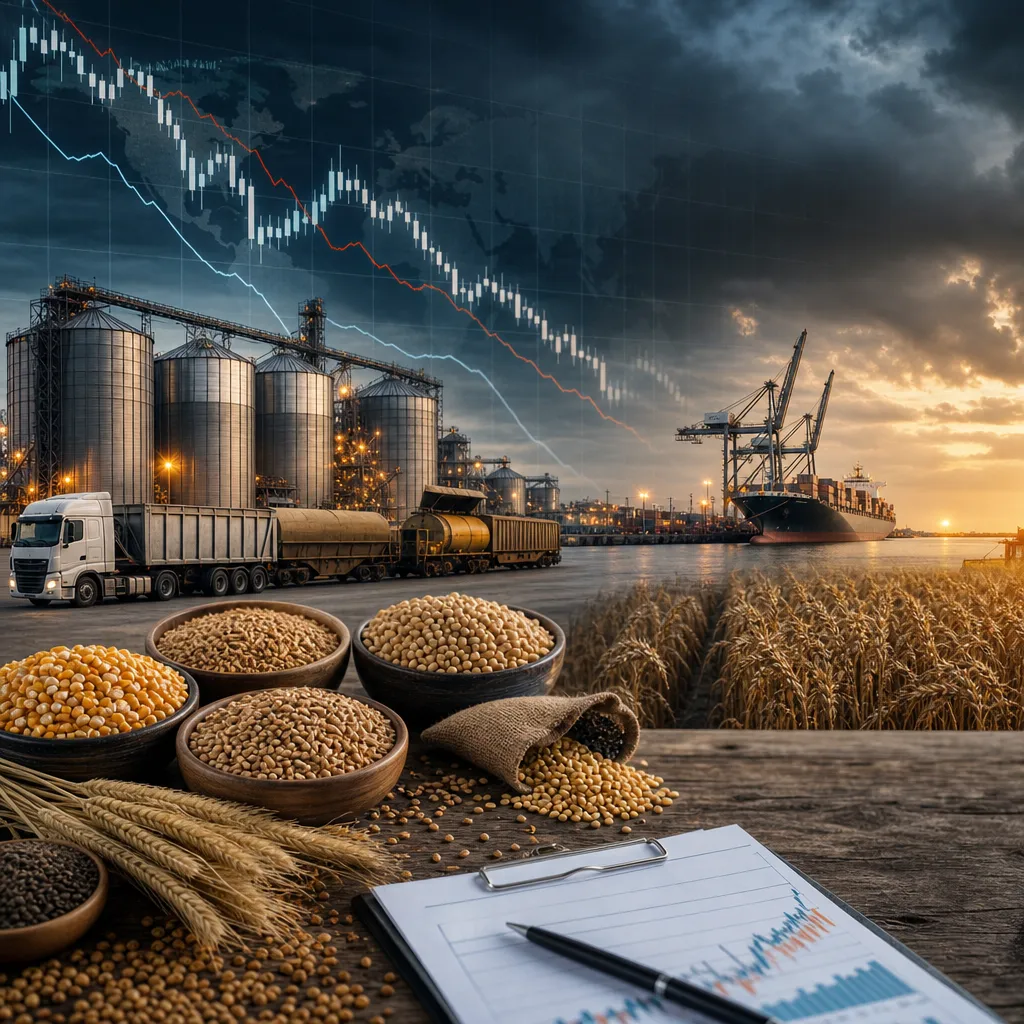








The Black Sea grain market is not a single exchange or one port. It is a regional export system centered on the countries that produce, move, and ship grain through the Black Sea basin, especially Russia, Ukraine, Romania, and Bulgaria, with Turkey playing a major import, processing, and transit role. In practice, when traders talk about “Black Sea grain,” they usually mean export wheat, corn, barley, and sometimes sunflower products priced for shipment from ports on the Black Sea or nearby connected routes. This market matters because it links some of the world’s largest grain surplus areas to importers in the Middle East, North Africa, Europe, and Asia.
For readers trying to understand supply and demand, the key point is that Black Sea prices are formed from both global benchmarks and local realities. Futures markets in Chicago or Paris may set the broader direction, but actual Black Sea trade is negotiated in physical export terms such as FOB or CIF, adjusted for quality, freight, crop size, currency, logistics, and political risk. The result is a market that is highly influential globally, but still very local in how grain is sourced, moved, hedged, and sold.
What the Black Sea grain market means
The term Black Sea grain market usually refers to the physical grain supply chain and export trade flowing from grain-producing areas around the Black Sea. The most important exporting origins are:
- Russia, a major wheat exporter
- Ukraine, an important exporter of wheat, corn, and barley when logistics permit
- Romania, a major EU-origin grain exporter through Black Sea ports
- Bulgaria, a smaller but relevant regional exporter
Turkey is also essential, but in a different role. It is a large importer of grain, an important flour and feed market, and a strategic maritime gateway through the Turkish Straits. So while Turkey is not always the main grain surplus origin, it is central to the regional trade structure.
The market operates mainly in metric tons. Export offers are commonly discussed in U.S. dollars per metric ton, especially for international trade. Domestic cash trade may also be priced in local currencies, such as rubles, hryvnia, Romanian leu, Bulgarian lev, or Turkish lira, depending on the country and transaction point.
Where the market operates and why geography matters
The Black Sea grain system depends on inland crop production connected to export terminals, river systems, rail, roads, and seaborne freight. Grain is grown far from the coast in many cases, then assembled and moved to export positions.
Geography matters because the Black Sea export market is not only about production. It is also about whether grain can reach port efficiently, whether vessels can load on time, and whether freight routes remain commercially and politically workable.
| Market area | Main role | Typical commodities | Common pricing context |
|---|---|---|---|
| Southern Russia | Large export origin | Wheat, barley, corn | Domestic cash in rubles; export offers often in USD/ton FOB |
| Ukraine | Export origin affected by logistics and policy conditions | Corn, wheat, barley | Cash and export pricing shaped heavily by logistics risk |
| Romania | EU-origin export hub | Wheat, corn, barley | Local cash linked to EU market and export parity |
| Bulgaria | Regional exporter | Wheat, corn, sunflower-related trade | Cash and export prices influenced by regional buyer demand |
| Turkey | Importer, processor, transit gateway | Wheat, corn, feed grains | Import pricing often discussed in CIF terms |
In practical terms, inland grain values and port values are connected but not identical. A wheat price in an interior Russian or Romanian region is not the same as a vessel-ready export value. The difference includes transport, handling, storage, financing, quality segregation, and the exporter’s margin.
How Black Sea grain prices are formed
Black Sea grain prices are usually formed by combining a global price signal with a regional physical premium or discount. The global signal often comes from benchmark futures and major export competition. The regional adjustment comes from local basis and export conditions.
Readers should separate several price types:
- Futures price: a standardized exchange-traded benchmark, such as wheat or corn futures on CME Group or milling wheat futures on Euronext
- Local cash bid: the price offered by a domestic buyer such as an elevator, crusher, mill, feed producer, or merchant
- Delivered price: the value for grain delivered to a named destination, such as a processor or port
- FOB price: free on board, meaning the price of grain loaded onto a vessel at the export port
- CIF price: cost, insurance, and freight included to the destination port
- Basis: the difference between local physical value and the futures benchmark
In the Black Sea market, export trade is often discussed in FOB USD per metric ton. But a farmer or inland merchant may actually transact in local currency and on a delivered-truck or delivered-rail basis.
Basis can strengthen or weaken for many reasons:
- port congestion or smooth logistics
- crop quality and protein levels
- short local supplies after harvest
- aggressive exporter buying
- currency moves against the U.S. dollar or euro
- government restrictions, licensing, or tax changes
- changes in freight or insurance costs
This is why futures may rise while local cash values do not rise by the same amount, or why local prices can move sharply even when futures are relatively stable.
Supply and demand drivers in the region
The Black Sea is one of the world’s most important surplus grain regions, especially for wheat. Supply begins with acreage, weather, yield, harvest pace, and crop quality. But in this region, usable export supply can differ from total production because logistics and policy can change what is actually available to world buyers.
On the supply side, the main drivers are:
- winter and spring weather in producing regions
- soil moisture and temperature during key crop stages
- harvest conditions and quality outcomes
- farmer selling pace after harvest
- storage capacity and financing conditions
- export infrastructure, inspections, and vessel access
On the demand side, Black Sea grain competes into import tenders and private trade across North Africa, the Middle East, and beyond. Demand is influenced by feed use, flour milling demand, government procurement, currency affordability for importing countries, and competition from other exporters such as the European Union, the United States, Argentina, and Australia.
| Factor | Effect on supply and demand | Why it matters in the Black Sea |
|---|---|---|
| Weather | Changes crop size and quality | Large export volumes make regional weather globally relevant |
| Currency | Changes local farm returns and export competitiveness | Export sales are often dollar-based while farm costs and payments may be local |
| Logistics | Affects what grain can physically reach port | Rail, river, storage, port access, and vessel conditions are critical |
| Government policy | Can slow or redirect trade | Taxes, quotas, licensing, and trade procedures can alter export flow |
| Importer demand | Sets buying interest and tender activity | The region depends heavily on foreign demand for exportable surplus |
How grain is actually bought and sold
Physical grain trade in the Black Sea region usually begins with farmers or local collectors selling to merchants, exporters, processors, feed mills, or cooperatives where they exist. Grain is purchased according to quantity, quality, moisture, test weight, protein where relevant, delivery point, and payment terms.
Typical physical trade channels include:
- farm to local elevator or merchant
- farm to domestic processor or feed buyer
- merchant accumulation for export programs
- inland delivered contracts to port-linked buyers
- export cargo assembly for vessel loading
Exporters generally buy grain inland or at port, accumulate cargo-size positions, arrange quality control, book terminal space, and sell to overseas buyers. The overseas buyer may be a state grain agency, private miller, feed manufacturer, or trading company.
Contracts may be spot, forward, or formula-based. In a forward physical contract, a seller commits grain for future delivery, sometimes linked to a pricing window. Counterparty risk matters. So do quality claims, discharge terms, and documentary requirements in export trade.
Black Sea export business often revolves around tenders and negotiated cargoes rather than transparent exchange settlement prices. That is why many local participants watch global futures online but still make physical decisions based on direct bids from merchants and exporters.
Futures, hedging, and the link to benchmarks
There is no single dominant Black Sea grain futures market that replaces global wheat or corn benchmarks for the whole region. Instead, merchants, exporters, importers, and financial traders often reference major international exchanges to manage price risk.
The most relevant benchmarks commonly followed are:
- CME Group futures for wheat and corn
- Euronext milling wheat and corn futures, especially for EU-connected flows such as Romania and Bulgaria
Futures and options are financial tools, not the same as owning physical grain. A trader can hedge export exposure with futures while still buying and selling actual cargoes in the physical market. A farmer may monitor futures online and then sell grain to a local buyer at a cash bid that reflects local basis.
Anyone using futures normally needs a broker, a trading account, and margin capital. Futures involve leverage, daily mark-to-market, contract expiry, and basis risk. Basis risk is especially important in Black Sea trade because local physical values can move independently from Chicago or Paris futures due to freight, sanctions risk, export rules, or port conditions.
Where to check prices and market information online
There is no single official screen showing all Black Sea cash prices in real time. Readers should use several types of sources and understand what each one actually represents.
- CME Group: benchmark futures for wheat and corn
- Euronext: European futures benchmarks relevant to EU-origin grain
- USDA: global supply, demand, export competition, and periodic market context
- European Commission: EU grain market and trade context, useful for Romania and Bulgaria
- National ministries or official statistics agencies: crop, export, and market information where available
- Merchants, brokers, and local buyers: actual spot and forward bids in the physical market
- Port and trade market reporting services: FOB and destination market indications where available commercially
When checking prices, always confirm:
- the commodity: wheat, corn, barley, sunflower-related products, or another grain
- the origin: Russia, Ukraine, Romania, Bulgaria, or another source
- the basis: farm gate, ex-warehouse, delivered, FOB, or CIF
- the currency: local currency, U.S. dollars, or euros
- the unit: almost always metric ton in regional trade
- the date and shipment period
Do not assume a Chicago wheat futures quote is the same as Black Sea export wheat. Futures give a benchmark. The actual price depends on class, protein, logistics, and origin-specific conditions.
Export, import, and logistics reality
The Black Sea matters because it is a seaborne export gateway. Grain moves from inland surplus zones to port terminals, then to importing countries by vessel. Ports and marine access are therefore central to price formation.
FOB values reflect the grain loaded at the export port. CIF values reflect the landed cost into the buyer’s destination. The difference between those values includes ocean freight and related shipping costs. Inland farm prices sit lower in the chain because grain still must be assembled, transported, stored, and loaded.
For importers, procurement may happen through government tenders, private tenders, or direct negotiated trade. For exporters, competitiveness often depends on whether their origin can ship reliably and whether quality specifications match buyer demand.
For example, if inland grain supplies are plentiful but port capacity is constrained, local cash prices can weaken relative to export benchmarks. If buyer demand is strong and logistics are open, inland values may rise quickly as exporters compete for nearby physical grain.
Supply and demand outlook: practical scenarios
Black Sea supply and demand is best understood through scenarios rather than fixed predictions. The region is too weather-sensitive and logistics-sensitive for certainty.
Bullish scenario: adverse weather cuts production or quality, logistics tighten, competing exporters are also short, and import tender demand stays firm. In that case, FOB values and inland procurement competition may strengthen.
Neutral scenario: production is adequate, exports flow normally, and global benchmarks remain balanced. Prices still move, but mainly with seasonal harvest pressure, basis shifts, and normal tender competition.
Bearish scenario: large harvests coincide with aggressive farmer selling, smooth port logistics, weak importer margins, or stronger competition from other exporting origins. Then export offers may soften and inland basis can weaken if buyers are not forced to chase grain.
Watch the following variables first:
- crop condition and harvest progress by country
- export policy changes or trade restrictions
- currency moves against the dollar and euro
- tender activity from major importing regions
- freight and insurance conditions
- price spreads versus EU, U.S., and other exporters
FAQ
What does “Black Sea grain” usually refer to?
It usually refers to wheat, corn, barley, and related export flows from Russia, Ukraine, Romania, and Bulgaria, traded through Black Sea export routes and competing in international import markets.
Which benchmark matters most for Black Sea wheat prices?
There is no single perfect benchmark. CME wheat futures and Euronext milling wheat futures are both widely watched, but the actual Black Sea export price is a physical market value adjusted for basis, quality, and logistics.
Are Black Sea grain prices quoted in dollars or local currency?
International export trade is commonly discussed in U.S. dollars per metric ton, especially on an FOB or CIF basis. Domestic cash transactions may be settled in local currency depending on the country and delivery point.
Where can I check Black Sea grain prices online?
You can check benchmark futures on CME Group and Euronext, broader crop and trade context through USDA and the European Commission, and actual physical bids through merchants, exporters, brokers, and local buyers. Physical prices are often less transparent than futures prices.
Why is the local cash price different from futures?
Because cash prices include basis. Basis reflects location, quality, transport, storage, currency, buyer competition, and local supply and demand. Futures are only the benchmark component.
How is Black Sea grain physically traded?
Farmers and collectors usually sell to merchants, exporters, mills, feed companies, or processors. Exporters then assemble larger lots, manage quality and logistics, and sell cargoes to foreign buyers under physical trade contracts.
Can traders hedge Black Sea grain exposure with futures?
Yes, many traders use futures and options on major exchanges to hedge price risk. But they still face basis risk because the physical market in the Black Sea can move differently from exchange futures.
Why do ports matter so much in this market?
Because the Black Sea is an export-driven grain region. Port access, loading capacity, vessel availability, marine insurance, and shipping conditions directly affect whether inland grain can reach world buyers and at what price.
Sources
- USDA Foreign Agricultural Service
- Euronext
- European Commission