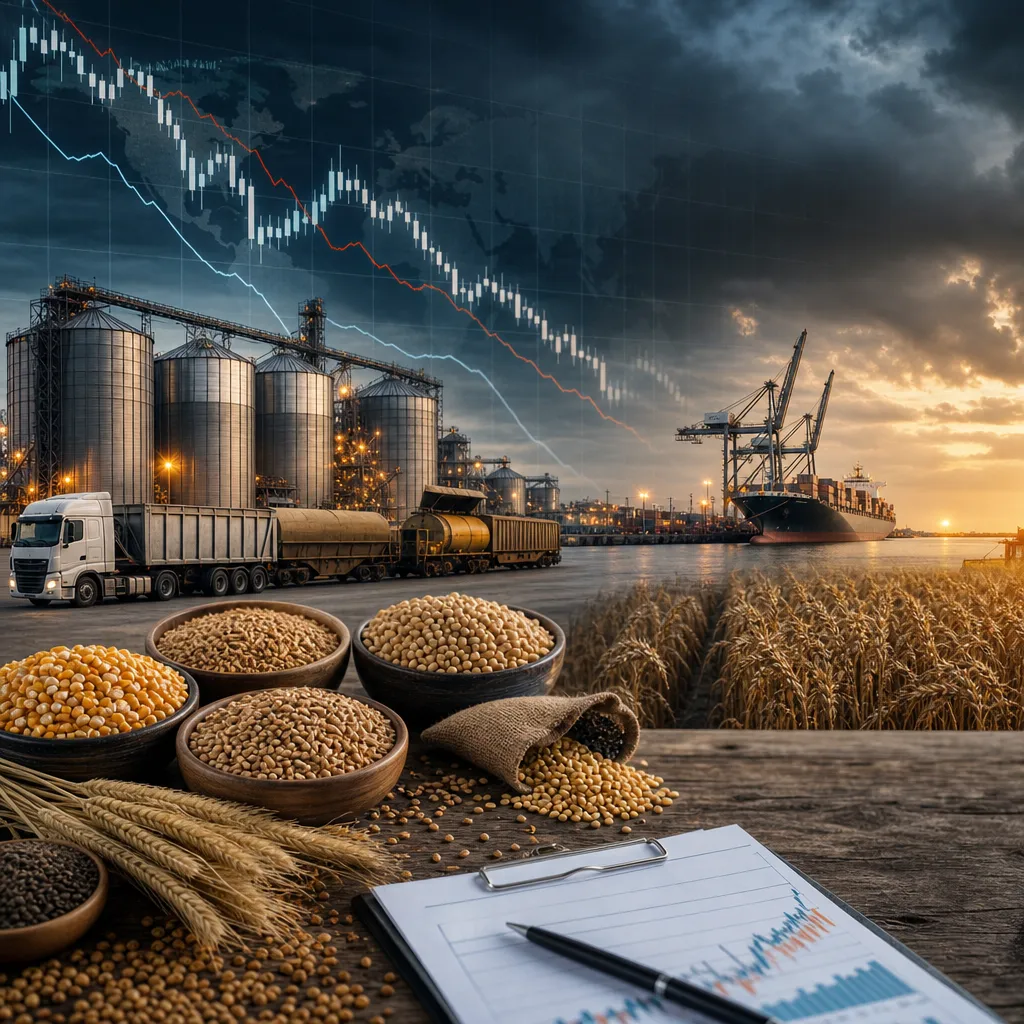





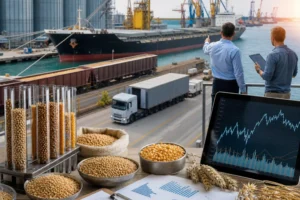

The Black Sea grain futures market is not a single exchange in one city. It is a regional pricing and risk-management concept tied to the major wheat, corn, barley, and oilseed export flows of the Black Sea basin, especially Russia, Ukraine, Romania, and Bulgaria, with nearby demand from Turkey and other Mediterranean importers. In practice, participants in this market use a mix of physical export bids, port prices, international tenders, currency markets, freight, and global futures benchmarks rather than relying on one dominant local futures contract. Understanding the market therefore means understanding both the export corridor around the Black Sea and the international futures exchanges that traders use to hedge it.
For most readers, the key point is simple: grain in the Black Sea region is usually bought and sold physically in metric tonnes, often priced as inland delivered, port delivered, FOB, or CIF cargo values, while futures risk is commonly managed through larger benchmark exchanges such as CME Group in Chicago or Euronext in Paris. Local cash prices can move very differently from benchmark futures because basis, logistics, quality, policy, and currency risk are especially important in this region.
What the Black Sea grain futures market means
When market participants refer to the Black Sea grain futures market, they may mean one of three related things.
- The physical export market for grain loaded from Black Sea ports and sold into world trade.
- Futures or derivative pricing tied to Black Sea-origin grain, whether listed directly in the past on regional contracts or managed indirectly through global wheat and corn futures.
- The broader price-discovery system linking Black Sea cash grain values to international benchmarks, freight, currency, and import demand.
The region matters because the Black Sea basin is one of the world’s most important wheat export zones. Russia is a major wheat exporter, Ukraine remains a major producer and exporter despite wartime disruption, and Romania and Bulgaria are important European Union exporters into Mediterranean and global markets. Turkey is also central as a large importer, processor, and regional trade hub.
Where the market operates
Geographically, the Black Sea grain market spans the countries with grain production and export access to the Black Sea and nearby sea lanes. The most relevant physical trade points are inland collection zones, rail and truck routes, river systems where applicable, storage networks, and export ports. The futures side, however, is often managed outside the region on major international exchanges.
| Market area | Role in Black Sea grain trade | Typical pricing context |
|---|---|---|
| Russia | Major wheat producer and exporter | Physical export bids, port prices, FOB offers, ruble-sensitive farm and inland values |
| Ukraine | Major grain and oilseed producer; exports shaped by corridor, border, and logistics conditions | Physical bids, delivered port values, export parity, hryvnia-sensitive local pricing |
| Romania | EU producer and exporter with major port relevance | Cash trade in tonnes, euro or local-currency referencing, Euronext-linked hedging |
| Bulgaria | Regional exporter into Mediterranean and world trade | Physical grain bids, export-linked values, EU benchmark influence |
| Turkey | Large importer, processor, and buyer through tenders and private trade | Import parity, CIF values, domestic policy and currency effects |
Physical grain is usually quoted in metric tonnes. Export trade is commonly discussed in FOB terms for grain loaded at port, or CIF terms for grain delivered to the buyer’s destination including freight and insurance. Local inland grain can be priced in domestic currencies such as the Russian ruble, Ukrainian hryvnia, Romanian leu, Bulgarian lev, or Turkish lira, but export business is frequently referenced in U.S. dollars per metric tonne.
How prices are formed in the Black Sea market
Black Sea grain pricing is built from several layers. The first layer is the global benchmark for the commodity, especially wheat or corn. The second is the regional export value in the Black Sea. The third is the local basis, which reflects distance to port, quality, local supply, drying or storage cost, and buyer competition.
For wheat, traders often watch CME wheat futures and Euronext wheat futures. Euronext is especially relevant for European Black Sea countries such as Romania and Bulgaria, while CME also matters because it remains a global reference point for international grain risk. These futures do not equal the local Black Sea cash price. They provide a benchmark against which merchants, exporters, mills, and trading houses assess value.
Key price concepts include:
- Futures price: the exchange-traded benchmark for a future delivery month.
- Cash bid: the price a local buyer offers for physical grain at farm, elevator, warehouse, or inland delivery point.
- Delivered price: the price for grain delivered to a specified destination, such as a mill or port terminal.
- FOB price: free on board at port; the seller delivers loaded grain onto the vessel.
- CIF price: cost, insurance, and freight included to the destination port.
- Basis: the difference between local cash value and the benchmark futures price.
In the Black Sea region, basis can be highly volatile because local conditions can change quickly. Port congestion, vessel availability, war risk, export policy, sanctions effects, inspection regimes, rail bottlenecks, river levels, and insurance costs can all move basis independently of futures.
| Price type | Where quoted | What it means in practice |
|---|---|---|
| Benchmark futures | Exchange screen | Financial reference used for hedging and price comparison |
| Inland cash bid | Farmer, elevator, merchant, processor | Actual local buying price for physical grain |
| Port delivered bid | Terminal or exporter | Value of grain delivered to export location |
| FOB export offer | Export market or broker report | Price for grain loaded onto vessel at the named port |
| CIF import price | Importer tender or destination market | Landed cost to the importing buyer |
What futures are actually relevant
There is no single universally dominant Black Sea grain futures contract that functions for all regional participants in the way CBOT corn does for the U.S. Corn Belt. Instead, hedging is often done through proxy futures.
For Black Sea wheat, the most watched contracts are often:
- Euronext milling wheat futures, particularly because they are relevant to European trade flows and euro-denominated grain business.
- CME wheat futures, including major U.S. wheat benchmarks used by global funds and commercial risk managers.
- CME corn futures for corn exposure where Black Sea corn competes with other origins in world feed markets.
This means a trader handling Black Sea wheat might hedge price direction on Euronext or CME while separately managing basis risk in the physical market. If freight, local policy, or port access changes, the hedge may offset only part of the risk.
That is why the Black Sea market is best understood as a physical export market with futures overlays, not as a self-contained derivative venue with perfect local delivery alignment.
How grain is bought, sold, exported, and imported
Physical grain trade in the Black Sea region usually begins with producers selling to local collectors, elevators, cooperatives where relevant, merchants, crushers, feed mills, flour mills, or exporters. In some cases, a merchant assembles grain inland and moves it by truck, rail, barge, or a combination of these to port storage and loading terminals.
The practical chain often looks like this:
- Farmer harvests grain and stores or markets it.
- Local buyer or merchant posts a bid based on quality, moisture, protein, test weight, and delivery point.
- Grain is contracted either ex-farm, delivered to an inland warehouse, or delivered to port.
- Exporter aggregates volume that meets shipment specifications.
- Cargo is sold on FOB terms to an international buyer, or directly on CIF terms to an importer.
- Importer may be a state buyer, private miller, feed manufacturer, or trading company.
In the Black Sea export business, quality clauses matter. Wheat protein, moisture, foreign matter, and other contract terms can strongly affect final value. A futures contract cannot fully capture these quality differences, which is one reason basis remains so important.
Turkey is frequently relevant on the import side, both through private trade and official tender structures at times. North Africa, the Middle East, and Mediterranean destinations are also important end markets for Black Sea grain, especially wheat.
How hedging works versus physical trade
It is important not to confuse buying grain with trading futures. These are related but separate activities.
Physical grain market
In the physical market, ownership of actual grain changes hands. The buyer cares about origin, quality, loading terms, transport, documentation, inspection, and counterparty performance. Payment terms and contract enforcement matter as much as price.
Futures and options market
In futures trading, market participants gain financial exposure through a broker and a regulated exchange. They post margin, face mark-to-market profit and loss, and usually close the position before delivery. A hedger might sell futures to protect against falling grain prices or buy futures to protect against rising replacement cost. An options user may buy puts or calls to manage downside or upside risk with defined premium cost.
Because Black Sea basis risk can be large, a hedge using Chicago or Paris futures is only a partial hedge. It may help manage world price movement while leaving local logistics and origin-specific price risk unhedged.
Where to check prices and market information online
Readers looking for current Black Sea grain prices should be careful about what type of price they are viewing. A screen quote for wheat futures is not the same as a Russian port FOB offer, a Romanian elevator bid, or a Ukrainian delivered port bid.
Useful places to check include:
- CME Group for benchmark wheat and corn futures quotes, contract months, and settlement information.
- Euronext for milling wheat futures and other European agricultural benchmarks relevant to EU Black Sea exporters.
- USDA, especially global supply-demand reports and export competition context through WASDE, PSD, and FAS reporting.
- European Commission for EU grain market context, trade developments, and policy background relevant to Romania and Bulgaria.
- National ministries, statistics offices, and grain agencies where available for crop, trade, and domestic market updates.
- Local merchants, processors, elevators, and exporters for actual cash bids and delivered prices.
- Broker and market reporting services for indicative FOB and CIF values, tender results, and regional trade commentary.
If a reader wants the most actionable local number, the best source is usually the actual buyer at the delivery point. Export parity may imply one value, but storage shortages, truck rates, rail delays, or quality issues can produce a very different local bid.
Main drivers of Black Sea grain prices
The Black Sea market is especially sensitive to a combination of agricultural and geopolitical factors. Prices can move on crop size expectations, but also on exportability and trade access.
- Weather: drought, winterkill, spring moisture, and harvest conditions affect wheat and corn output.
- Export logistics: port operations, vessel access, rail flows, inland freight, and border throughput matter heavily.
- Policy and regulation: export taxes, quotas, licensing, inspections, and trade restrictions can alter effective supply.
- Currency: local currency weakness can support export competitiveness while changing farm-level economics.
- Freight and insurance: shipping cost directly affects FOB-to-CIF relationships and buyer demand.
- Competing exporters: EU, U.S., Argentina, Australia, and others influence global destination buying decisions.
- Import tenders: large state or private tenders can quickly reset nearby trade values.
Forecasting this market is therefore best done through scenarios. In a favorable crop and smooth logistics environment, Black Sea export pressure can weigh on global wheat prices. In a disrupted shipping or poor-yield environment, basis can strengthen sharply and global importers may shift to other origins.
Practical reading of the market
For a farmer, merchant, miller, or importer, the most practical way to read the Black Sea grain market is to separate three questions:
- What are benchmark futures doing? This shows global price direction.
- What is Black Sea export basis doing? This shows regional competitiveness and logistics pressure.
- What is my local physical bid? This shows the real transactable price at the point of sale or purchase.
A seller in Romania may monitor Euronext wheat futures online but still sell to a local merchant on a cash basis in lei or euro per tonne. A global trading house may buy Russian-origin or Romanian-origin wheat for export while hedging on an exchange and managing basis separately. An importer in Turkey may focus less on futures and more on CIF replacement cost, tender timing, and currency exposure.
That is the core of the Black Sea grain futures market: it is a region where physical grain trade is central, but futures remain an essential tool for risk management, valuation, and timing.
FAQ
Is there one single Black Sea grain futures exchange?
No. The region is mainly a physical export market linked to several international futures benchmarks rather than one universally dominant regional futures exchange.
Which benchmarks matter most for Black Sea wheat?
Euronext milling wheat futures and major CME wheat contracts are the most commonly watched international benchmarks, depending on the participant and trade flow.
Are Black Sea grain prices usually quoted in dollars or local currency?
Export trade is often discussed in U.S. dollars per metric tonne, especially for FOB or CIF cargo values. Inland physical grain may be priced in local currency depending on the country and buyer.
Where can I check current Black Sea grain prices?
For futures, check CME Group and Euronext. For actual cash or export prices, use local merchants, processors, exporters, government or institutional market reports, and recognized broker reporting services. Remember that futures prices are not the same as local cash bids.
What is the difference between Black Sea FOB and a local farm price?
FOB is the export price for grain loaded onto a vessel at port. A farm price must deduct transport, handling, storage, margin, quality adjustments, and other local costs from that export value.
How do importers buy Black Sea grain?
Importers may buy through private negotiation, brokers, trading houses, or formal tenders. The contract is often priced on FOB origin or CIF destination terms, with detailed quality and shipment clauses.
Can a farmer or local trader hedge Black Sea grain with futures?
Yes, but usually indirectly. They can use relevant wheat or corn futures through a broker, understanding that the hedge manages benchmark price risk but may not fully offset local basis and logistics risk.
Why do Black Sea cash prices sometimes move differently from Chicago or Paris?
Because local prices reflect more than global futures. They also depend on quality, export taxes or restrictions, war and insurance risk, freight, port access, currency changes, and local buyer competition.
Sources
- CME Group
- Euronext
- USDA Foreign Agricultural Service