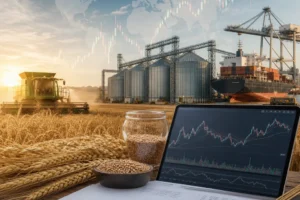







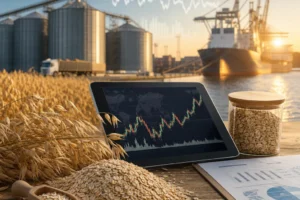


Minneapolis wheat futures prices refer to the futures market centered on spring wheat traded in Minneapolis, Minnesota, in the United States. In practice, this market is the main North American benchmark for hard red spring wheat, a high-protein wheat used heavily in bread flour and milling blends. The contract is now part of CME Group’s U.S. grain complex, but market participants still commonly call it the Minneapolis wheat market or “MGEX wheat” because of its historic link to the Minneapolis Grain Exchange. For farmers, merchants, millers, exporters, and traders, these futures prices are a reference point for hedging and price discovery rather than a direct farm-gate cash price.
Geographically, the market is tied to the northern U.S. spring wheat belt, especially Minnesota, North Dakota, Montana, and nearby areas, but its influence extends into Canada and international wheat trade. Prices are usually quoted in U.S. cents per bushel for futures, while many physical wheat transactions are negotiated in U.S. dollars per bushel, dollars per short ton, or dollars per metric ton depending on the buyer and shipment point. Because hard red spring wheat is a quality-sensitive crop, Minneapolis futures often react not only to general grain market conditions but also to protein availability, milling demand, and weather in the northern Plains.
If a reader is looking for the “current” Minneapolis wheat price, the key point is that there is no single universal price. There are different futures contract months, different cash bids by elevator or processor, and different export values depending on location, freight, and quality. A futures quote seen online is a benchmark for a standardized exchange contract, while a local cash bid is the amount a real buyer offers for wheat delivered to a specific place under specific quality terms.
What Minneapolis wheat futures actually are
Minneapolis wheat futures are standardized exchange-traded contracts for hard red spring wheat. They are used primarily to manage price risk and to provide a transparent benchmark for a wheat class that differs from soft red winter wheat and hard red winter wheat. This is why the Minneapolis market is discussed separately from Chicago wheat or Kansas City wheat.
The contract is relevant because hard red spring wheat tends to have higher protein and stronger baking characteristics than many other wheat classes. Millers often use it to improve flour blends, and exporters may market it into destinations that value protein and milling quality. As a result, Minneapolis futures can behave differently from other wheat futures when protein supply is tight or when weather threatens the northern Plains crop.
Most participants do not use futures to acquire physical wheat for consumption. Instead, they use them to hedge revenue, hedge purchase costs, or take a financial market view. The physical wheat trade still happens through elevators, cooperatives, grain merchants, mills, processors, or exporters.
| Market item | How it is quoted | What it means |
|---|---|---|
| Minneapolis wheat futures | Usually U.S. cents per bushel | Exchange benchmark for standardized hard red spring wheat futures contracts |
| Local cash bid | Often U.S. dollars per bushel | A specific buyer’s price at a local elevator, processor, or mill |
| Delivered mill price | Often dollars per bushel or per ton | Price for wheat delivered to the buyer, including freight to that location |
| Export value | Often U.S. dollars per metric ton | Price for wheat sold into export channels, commonly tied to port position and quality specs |
Where this market operates and why Minneapolis matters
The exchange benchmark is associated with Minneapolis, Minnesota, but its economic footprint is much broader. The core physical supply comes from the northern spring wheat belt of the United States, especially North Dakota and Minnesota, with Montana also important. These regions are key producers of hard red spring wheat, and their crop conditions often have an outsized effect on Minneapolis wheat pricing.
Minneapolis matters because hard red spring wheat is not a generic wheat stream. Buyers care about protein, test weight, moisture, falling number, damage, and other milling factors. In years when quality is mixed, the spread between ordinary wheat and top-quality spring wheat can widen significantly. That makes the Minneapolis benchmark especially useful for sectors exposed to premium wheat quality.
The market also interacts with Canadian spring wheat values, although Canadian physical wheat is marketed through its own commercial channels and pricing structures. Internationally, Minneapolis futures help participants gauge the value of premium milling wheat relative to other global wheat benchmarks.
How Minneapolis wheat futures prices are formed
Futures prices are formed on the exchange through bids and offers from commercial firms, hedgers, and speculative traders. The market reflects expectations about future supply and demand, not just today’s physical wheat availability. Weather forecasts, crop condition ratings, acreage expectations, export competitiveness, broader grain market sentiment, and macroeconomic factors can all influence prices.
For Minneapolis wheat, weather in the northern Plains is especially important. Late planting, drought, heat during grain fill, excessive rain at harvest, or disease pressure can all affect both yield and quality. Because the market is tied to a wheat class with premium baking traits, protein availability can matter as much as total production.
Spreads between Minneapolis, Chicago, and Kansas City wheat futures can also be informative. They may reflect changes in relative wheat quality, regional crop stress, substitution among wheat classes, or differences in feed and milling demand. A trader watching Minneapolis wheat should not look only at the outright price; relative values across wheat classes can be just as important.
Futures price versus cash price, basis, and export price
A common mistake is to treat the Minneapolis futures quote as the exact cash value of wheat in the countryside. That is not how grain pricing works. A local cash bid typically starts with a futures reference and then adds or subtracts a basis.
Basis is the difference between the local cash price and the relevant futures price. It can be positive or negative. Basis reflects transportation cost, storage demand, quality premiums or discounts, local supply pressure, buyer competition, and the urgency of nearby demand. In harvest periods when grain is abundant and storage is tight, basis may weaken. When mills or merchandisers need high-quality wheat quickly, basis may strengthen.
Export prices add another layer. An exporter may buy wheat inland, move it by rail or truck, arrange elevation and terminal handling, and then quote a value at port or on an FOB basis. That export value is not the same as the interior elevator bid because it includes location and logistics. Likewise, an importer looking at a CIF price is seeing wheat value plus ocean freight and related delivery costs into the destination market.
| Price type | Where used | Why it differs from futures |
|---|---|---|
| Exchange futures price | Broker screens, trading platforms, market news | Standardized financial benchmark, not a local delivery quote |
| Country elevator cash bid | Farm-level merchandising | Includes basis, local demand, freight, and quality terms |
| Processor or mill bid | Direct grain procurement | Often reflects stronger quality requirements and nearby usage needs |
| FOB export price | Export trading | Reflects port position, elevation, logistics, and export quality specs |
| Delivered buyer price | Mill, feed, or processor delivery contracts | Includes cost to transport wheat to the buyer’s facility |
Where to check Minneapolis wheat prices online
For futures prices, the most relevant official source is CME Group, which lists Minneapolis Hard Red Spring Wheat futures and related contract information. Professional traders also monitor futures through brokerage platforms, market data terminals, and regulated futures brokers that carry CME products. Financial media may display delayed quotes, but users should confirm the contract month and whether the data is delayed.
For broader market fundamentals, USDA is essential. The USDA publishes reports on crop conditions, acreage, production, stocks, exports, and world supply-demand balances. These reports are widely used because Minneapolis wheat often reacts to U.S. spring wheat production prospects and to international wheat market changes.
For local cash prices, readers should check the bid sheets or online bid pages of country elevators, cooperatives, grain merchants, mills, and processors operating in the northern Plains. Those bids are often more relevant to a producer than the headline futures price because they show the actual local buying level and the applied basis. A farmer or merchandiser may monitor Minneapolis futures online all day but still make a physical sale to a nearby elevator based on that elevator’s cash bid.
For physical export-oriented information, USDA market reporting and grain transportation reporting can also help users understand how export demand, freight, and interior movement affect basis and delivered values.
How grain is actually bought and sold in this market
In the physical market, hard red spring wheat is bought and sold through ordinary commercial grain channels. Farmers typically deliver to a local elevator, cooperative, processor, flour mill, or merchant. The contract may be a spot cash sale, a forward contract, a basis contract, a hedge-to-arrive contract, or another commercially negotiated format depending on buyer offerings and the seller’s risk preferences.
Quality matters more here than many non-specialists expect. Buyers may test protein, moisture, test weight, falling number, vomitoxin risk where relevant, and other quality factors. A posted bid may only apply to wheat meeting a standard quality schedule, with premiums or discounts applied afterward. In spring wheat, protein premiums can be particularly important in some market conditions.
Export trade usually involves merchants or exporters aggregating wheat from inland origins and shipping it through terminal systems. The inland cash market and export market are linked, but they are not identical. Export demand can strengthen interior basis if exporters need supply, while weak export competitiveness can reduce pull through the system.
How futures and options are used for hedging and trading
Futures and options trading takes place through regulated brokerage accounts that provide access to CME Group markets. A hedger does not need to own a grain elevator to use the market. A farmer, grain merchant, miller, or food company can use futures to reduce price risk, although each participant must understand margin requirements, contract months, liquidity, and basis risk.
Hedging with futures is different from selling physical grain. A producer might sell Minneapolis wheat futures to protect against a price decline, then later offset that futures position when the physical wheat is sold locally. A miller might buy futures to protect against rising spring wheat costs before making physical purchases. In both cases, the futures position manages benchmark price exposure, while the physical transaction still depends on local basis and quality.
Options add another layer by allowing market participants to define price floors or ceilings with limited downside premium cost, though they can be complex in practice. Speculators also trade Minneapolis wheat futures and options without any intention of owning wheat, providing liquidity but also adding short-term volatility.
Main factors that drive Minneapolis wheat futures trends
The strongest recurring driver is weather in the northern Plains during planting, vegetative development, and harvest. Spring wheat is sensitive to timing. Delayed planting can reduce yield potential, while summer heat and dryness can sharply alter outlooks. Excessive rain later in the season can damage quality even when yields are acceptable.
Other major drivers include U.S. acreage shifts, relative profitability versus corn or soybeans, fertilizer and energy costs, rail logistics, export competition, and global wheat supply. Minneapolis wheat can also respond to conditions in Canada, the Black Sea region, and other major exporters because world buyers compare substitute origins based on quality and landed cost.
Demand-side factors matter too. Flour milling demand, premium protein blending needs, feed substitution when wheat becomes cheap relative to corn, and importer buying patterns all influence value. Currency movements can affect U.S. export competitiveness even though Minneapolis futures themselves are denominated in U.S. dollars.
| Factor | Typical market effect | Why it matters in Minneapolis wheat |
|---|---|---|
| Northern Plains weather | Can move futures sharply | Directly affects spring wheat yield and quality |
| Protein availability | Can widen premiums | Spring wheat is valued for milling strength and protein |
| Export competitiveness | Affects interior demand pull | Exporters compare U.S. wheat with other origins |
| Rail and freight conditions | Mainly affects basis and delivered values | Northern Plains wheat often moves long distances to users or export channels |
| USDA reports and global balances | Can reset market expectations | Spring wheat trades within the broader global wheat complex |
Practical points for readers watching the market
If you are following Minneapolis wheat for a live price, first identify the contract month. Nearby, deferred, and new-crop months can trade at different values. Then check whether the quote is delayed or real time.
If you are pricing actual wheat, always compare the futures benchmark with a local cash bid from an elevator, cooperative, mill, or merchant. Ask what quality assumptions are included and whether protein premiums or discounts apply. Also confirm delivery period, storage terms, and payment terms.
If you are hedging, remember that futures protect against benchmark price movement, not against all local pricing risk. Basis can still change, and quality outcomes can still affect the final cash price. In spring wheat, that distinction is especially important because not all bushels are equal in milling value.
What is the main benchmark behind Minneapolis wheat futures prices?
The benchmark is the hard red spring wheat futures contract traded through CME Group and historically associated with the Minneapolis Grain Exchange. It is the main U.S. futures reference for spring wheat rather than a direct country elevator cash price.
Where can I check current Minneapolis wheat prices?
The most relevant official source is CME Group for futures quotations and contract information. For actual buying prices in the countryside, check local elevator, cooperative, processor, or mill bid sheets in Minnesota, North Dakota, Montana, and nearby spring wheat regions.
Are Minneapolis wheat futures the same thing as cash wheat prices in Minnesota or North Dakota?
No. Futures are a standardized exchange benchmark quoted in U.S. cents per bushel. Cash prices are local buyer bids that reflect futures plus or minus basis, quality adjustments, freight, and local supply-demand conditions.
Why do Minneapolis wheat prices differ from Chicago wheat prices?
They represent different wheat classes and therefore different demand uses and quality characteristics. Minneapolis is focused on hard red spring wheat, while Chicago wheat is a different benchmark with different regional and end-use dynamics.
How is physical spring wheat usually sold in this market?
Most physical grain is sold through elevators, cooperatives, merchants, processors, mills, or exporters using cash contracts, forward contracts, basis contracts, or other negotiated arrangements. The seller is paid according to delivery location, timing, and measured quality.
Can international traders use Minneapolis wheat futures?
Yes, if they have access to a broker or trading platform that offers CME products and they comply with applicable regulations and account requirements. But trading futures gives financial exposure; it does not automatically mean taking delivery of physical wheat.
What units and currency are normally used?
Minneapolis wheat futures are normally quoted in U.S. cents per bushel. Physical domestic transactions may use dollars per bushel, while export trade often uses U.S. dollars per metric ton.
What usually moves Minneapolis wheat the most?
Northern Plains weather, crop quality and protein availability, USDA reports, export competitiveness, and broader wheat market conditions are usually the most important drivers. Basis can also move independently because of local freight, storage, and buyer demand.
Sources
- CME Group
- USDA Agricultural Marketing Service
- USDA World Agricultural Outlook Board