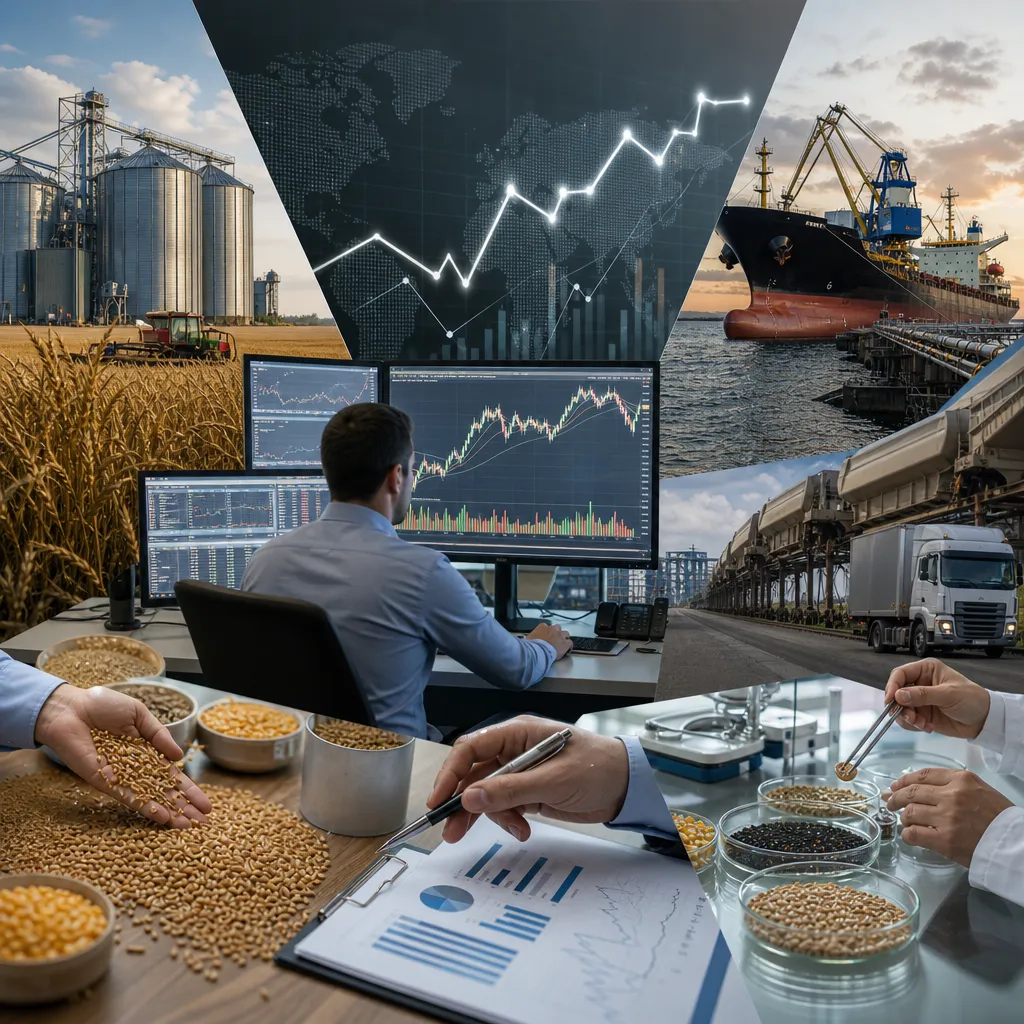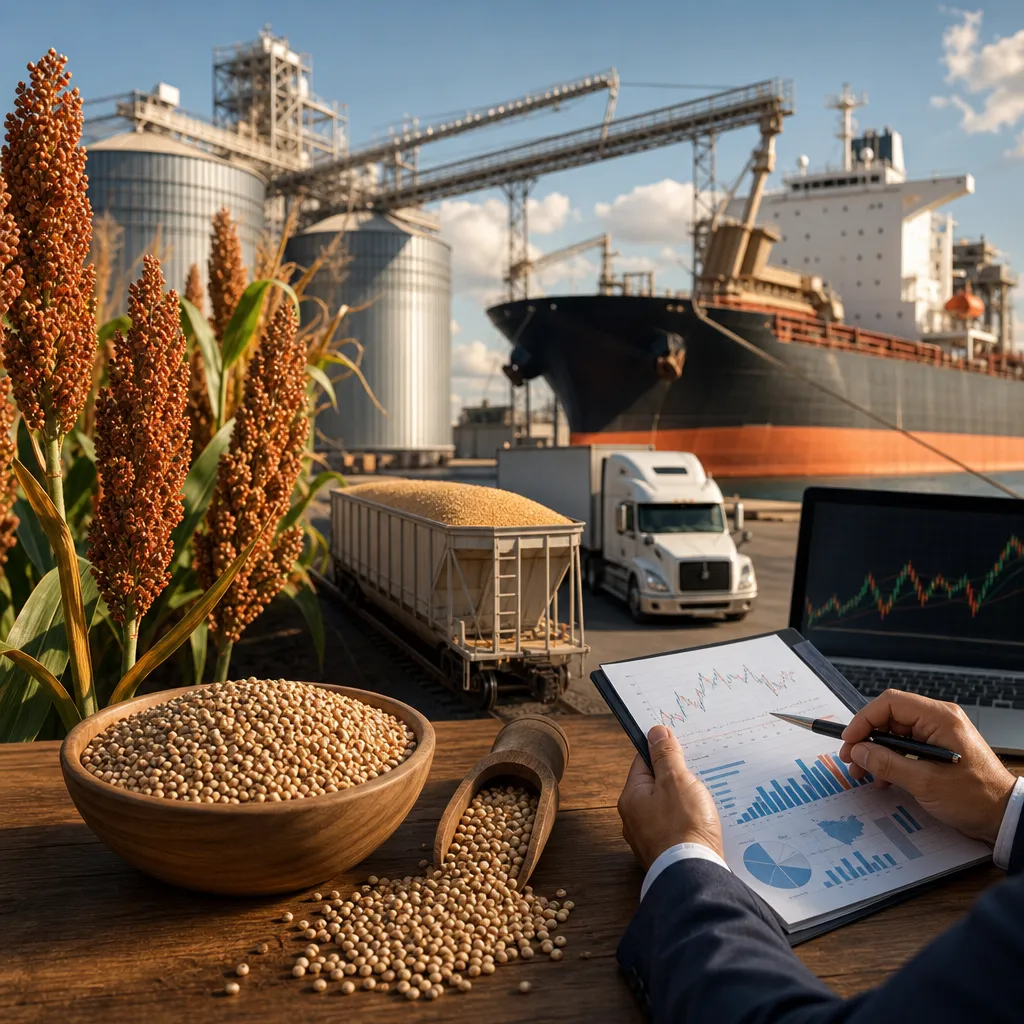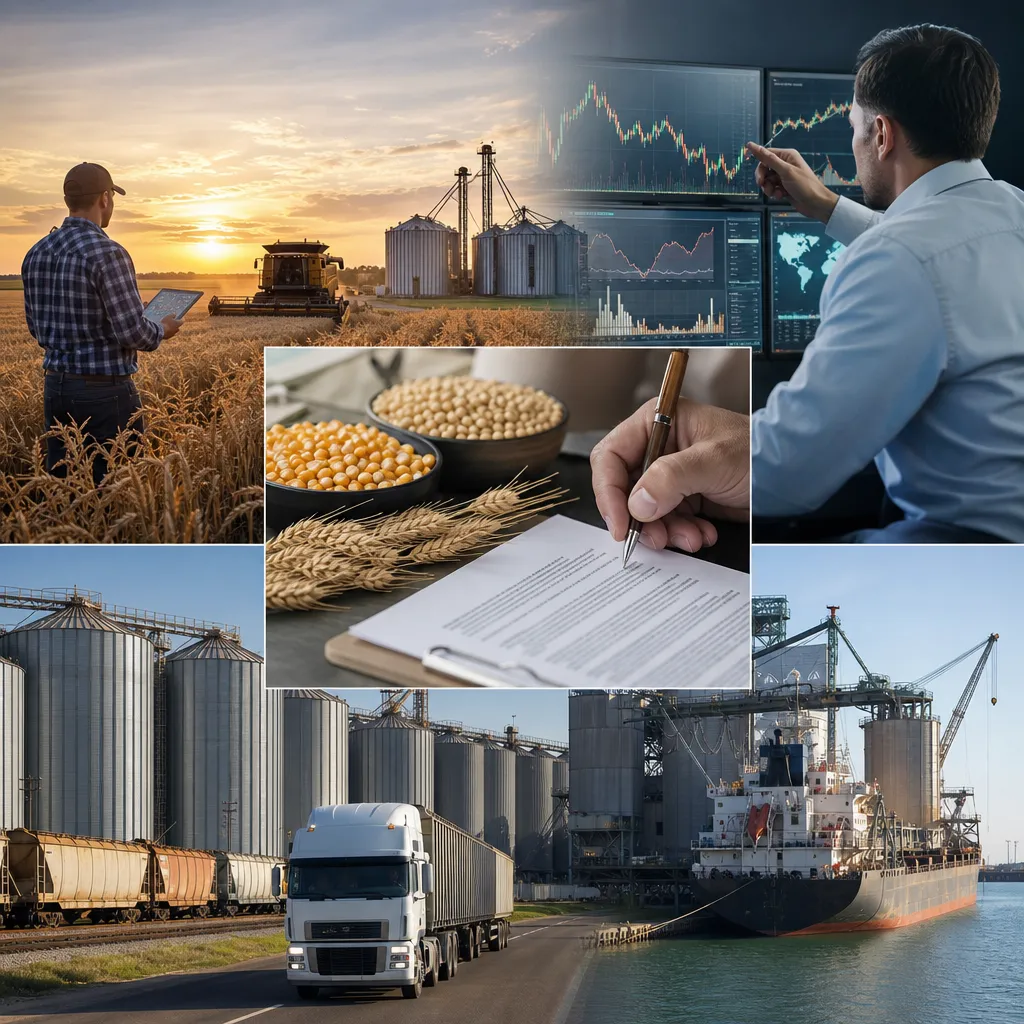

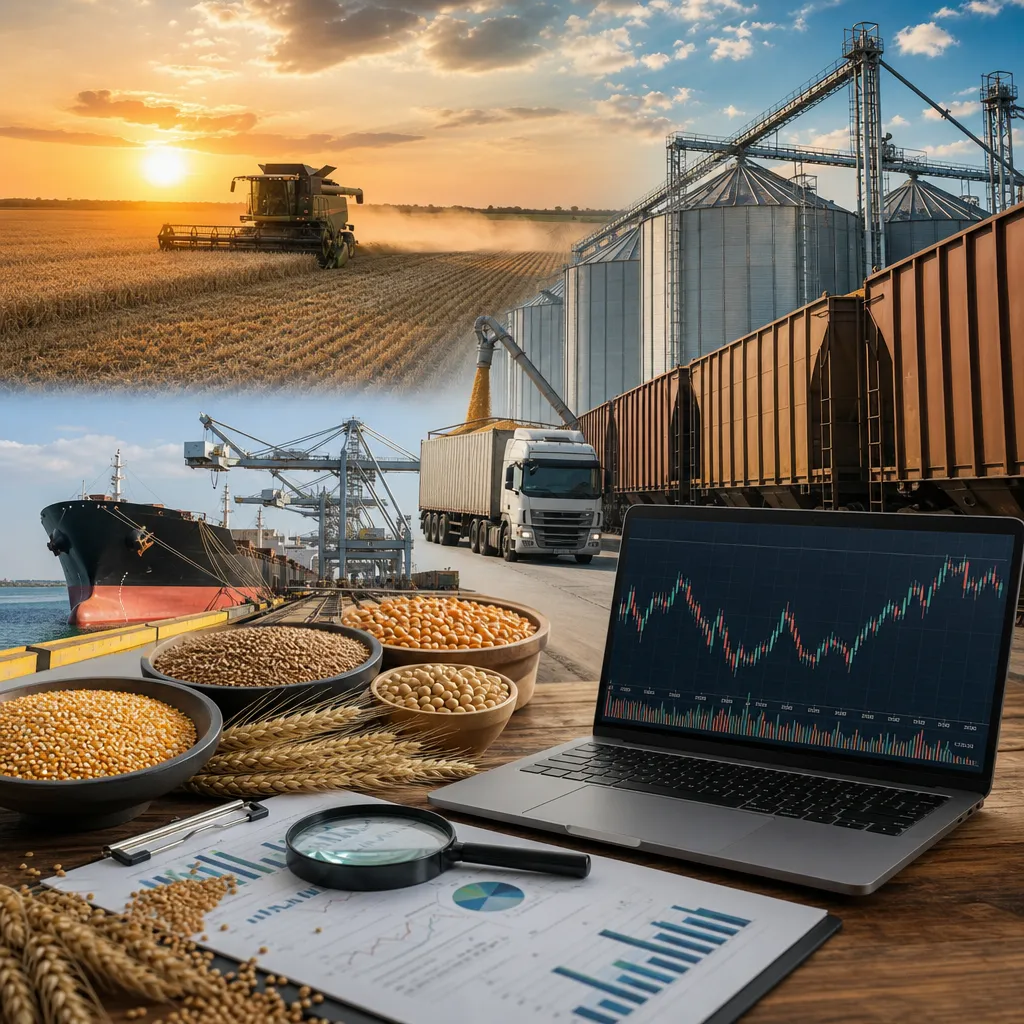
Grain prices and harvest size are tightly linked, but the relationship is not as simple as “big crop equals low prices” or “small crop equals high prices.” Prices react to harvest size through supply, quality, storage pressure, export capacity, and expectations about what remains available after domestic use and trade. In practice, the price a farmer sees at a local elevator can move very differently from a futures contract on an exchange because basis, freight, and local demand matter just as much as headline production. To understand grain prices properly, readers need to separate exchange benchmarks from physical cash markets and follow the reports, logistics, and quality signals that connect harvest size to actual trade.
How harvest size affects grain prices
Harvest size matters because it changes the balance between available supply and expected demand. If a region produces more wheat, corn, soybeans, rice, barley, oats, rye, sorghum, canola, rapeseed, or sunflower seed than the market expected, nearby physical prices often weaken during harvest as elevators fill and sellers compete for space. If production falls below expectations, buyers may bid more aggressively to secure supply.
But total volume is only one part of the picture. Markets care about usable supply. A large crop with poor test weight, low protein, high moisture, falling number problems, or mycotoxin issues may not satisfy milling, crushing, malting, or feed demand equally. That means harvest size can be large on paper while effective supply for a premium market remains tight.
Timing also matters. Futures prices often move before harvest because traders price in crop conditions, acreage, weather, export demand, and government reports. By the time combines roll, part of the crop’s price effect may already be reflected in the market.
| Harvest outcome | Typical price effect | Why it happens |
|---|---|---|
| Large crop, normal quality | Often pressures nearby cash prices | More grain is available, storage fills, harvest selling increases |
| Small crop | Often supports prices | Buyers compete for limited supply and carryout may shrink |
| Large crop, uneven quality | Weak low-grade prices, stronger premium grades | Not all grain can meet end-user specifications |
| Crop loss in key exporting region | Global benchmark prices may rise | Importers need alternative origins and exporters reprice offers |
| Big crop but weak demand | Bearish overall | Stocks build when feed, export, crush, or milling demand slows |
Futures prices versus local cash grain prices
A common mistake is to treat a futures quote as the exact price of physical grain. It is not. Futures are standardized exchange contracts, while cash grain is a physical commodity sold at a specific place, with a specific quality, for a specific delivery period.
For example, corn, wheat, soybean, soybean meal, soybean oil, oats, rice, canola, rapeseed, and related products may have exchange-traded benchmarks, but the farmer’s or buyer’s actual transaction usually depends on basis. Basis is the difference between the local cash price and the relevant futures price. It reflects freight, local supply pressure, handling costs, storage congestion, quality, and nearby demand from mills, crushers, feed plants, ethanol plants, maltsters, exporters, or livestock producers.
Where readers check futures prices depends on the crop and region. In many global grain markets, benchmark futures are followed through exchange data from CME Group and, for some oilseeds and rapeseed-related contracts, through other major derivatives exchanges where relevant. Traders and analysts may use broker platforms, exchange websites, commercial terminals, charting software, or market data APIs. These tools show contract month, unit, and currency, but they do not automatically show what a local elevator will pay.
Local cash prices are usually checked through grain elevators, cooperatives, merchants, processors, crushers, mills, ethanol plants, feed manufacturers, or port buyers. In some countries, official agricultural market reporting services publish representative spot prices or bid ranges. In others, cash trade is more private and must be checked directly with buyers.
| Market type | What it shows | Where it is used | Main limitation |
|---|---|---|---|
| Futures market | Standardized exchange benchmark price | Hedging, speculation, price discovery | Not the same as local physical bid |
| Local cash market | Actual bid or negotiated price for physical grain | Farm sales, processor buying, feed procurement | Can vary sharply by location and quality |
| Export market | FOB or port-linked offer values | Merchants, exporters, importers | Includes logistics and shipment considerations |
| OTC forward contract | Private contract between buyer and seller | Farm marketing, processor supply, merchant trade | Counterparty and contract-performance risk |
Where grain prices are actually found and checked
If a reader wants a practical price check, the first question is: which market?
For exchange futures and options
Futures and options are normally accessed through a regulated futures broker or introducing broker connected to an exchange-cleared market. The user needs a brokerage account approved for derivatives trading. The platform typically provides real-time or delayed quotes, contract specifications, margin requirements, and order entry. This is financial trading, not the same as buying truckloads of grain.
Relevant exchange information is commonly checked on exchange websites and broker platforms. CME Group is a core reference for major agricultural futures used globally in price discovery. Market participants also use charting packages, professional data terminals, and exchange-authorized data feeds or APIs where available.
For local cash bids
Farmers and physical buyers normally check bids directly with local elevators, cooperatives, country merchants, river terminals, crushers, flour mills, maltsters, feed mills, and exporters. These bids may be posted online, published in a mobile app, sent by text or email, or quoted by phone. In many regions, the best available bid depends on haul distance, moisture, protein, grade, unloading hours, and delivery slot availability.
For public market reporting
Government agencies and official market reporting systems are often the best source for regional cash market transparency. In the United States, USDA reports are especially important for national grain fundamentals and some cash market intelligence. Outside the United States, readers should look to agriculture ministries, statistical agencies, customs data, and exchange clearing data relevant to their country.
How physical grain trade works after harvest
Physical grain trade begins with actual ownership and movement of grain. A seller may be a farmer, cooperative, collector, elevator, or merchant. A buyer may be a local feed mill, flour mill, oilseed crusher, maltster, ethanol plant, exporter, or another trader.
The transaction usually includes these practical elements:
- Commodity and quality: crop type, variety where relevant, grade, moisture, protein, oil content, test weight, damage, foreign material, falling number, and contamination limits.
- Quantity: truckload, railcar, barge lot, container lot, or vessel cargo.
- Delivery point: farm pickup, elevator, warehouse, processor, rail terminal, river terminal, inland depot, or export port.
- Delivery period: spot, harvest delivery, deferred shipment, or named contract window.
- Price mechanism: flat cash price, futures plus or minus basis, minimum-price contract, or later-priced agreement where permitted.
- Freight: seller-paid, buyer-paid, or incorporated into a delivered price.
- Inspection and weighing: by buyer, independent inspector, public grading authority, or warehouse receipt system depending on the market.
- Payment terms: immediate on delivery, after grade confirmation, or according to contract terms.
Most farm-level sales do not happen on a public exchange. They happen through private contracts with elevators, cooperatives, merchants, and processors. Export trade may involve merchants assembling grain inland, moving it by truck, rail, or barge to port, and then selling under international trade terms to overseas buyers.
Why storage and logistics change the price effect of a large harvest
Harvest size affects price most visibly when the supply chain is under stress. A big crop can create a harvest-time price dip not because grain has no value, but because local storage, drying, trucking, rail, barge, or port capacity becomes scarce.
When storage is short, elevators widen basis or lower bids to slow deliveries. If on-farm storage exists, some farmers hold grain and wait for basis improvement after the harvest rush. That strategy can work when nearby logistics are congested and later demand from exporters or processors improves, but it also introduces risks: spoilage, shrink, quality downgrade, financing cost, and the chance that futures or basis weaken further.
Storage economics depend on more than the crop itself. Interest rates, energy cost for drying, carry in the futures curve, warehouse charges, and expected post-harvest demand all matter. A market with enough storage and efficient transportation may absorb a large crop with less price disruption than a market where grain piles up outdoors.
Where storage is arranged
Storage may be on-farm in bins or silos, at commercial elevators, cooperative facilities, warehouse operators, river terminals, port silos, or processing plants offering delayed-delivery arrangements. The right option depends on location, crop condition, and whether the grain is already sold or remains open-priced.
Reports and data that connect harvest size to price
To understand whether harvest size is truly bullish or bearish, market participants track a mix of production, stocks, weather, and trade reports.
USDA WASDE is one of the most widely followed reports for grains and oilseeds because it updates supply, use, exports, imports, and ending stocks. Futures traders, elevators, merchants, processors, and farm marketers use it to compare current estimates with prior expectations.
USDA Crop Production and Crop Progress reports help translate field conditions into yield expectations and harvest pace. During the growing season, condition ratings can move markets because they influence anticipated harvest size before combines start.
USDA Export Sales gives an ongoing view of foreign demand, especially important when a large crop needs export channels to clear the domestic market.
CFTC Commitments of Traders does not measure crop size, but it shows how major futures market participant categories are positioned. It helps readers judge whether speculative money is heavily long or short around a harvest story.
Globally, FAO and national agricultural ministries provide broader supply and trade context. Customs and statistical agencies help verify import and export trends, which can explain why a large crop still finds price support if global buyers need it.
| Report or source | What it provides | How it is used |
|---|---|---|
| USDA WASDE | Supply, demand, trade, and ending stocks estimates | Benchmark for balance-sheet analysis and price expectations |
| USDA Crop Production | Production and yield estimates | Tracks likely harvest size by crop and region |
| USDA Crop Progress | Condition ratings and harvest pace | Monitors changing crop outlook during the season |
| USDA Export Sales | Weekly export commitments and shipments | Shows whether demand is strong enough to absorb supply |
| CFTC Commitments of Traders | Futures and options positioning by trader category | Helps interpret market sentiment and positioning risk |
How hedging works when harvest size is uncertain
Hedging is the main tool used to manage price risk when crop size and post-harvest prices are uncertain. A farmer expecting a large corn or wheat crop may sell futures, forward-contract with a local buyer, or use options to protect against a harvest price decline. A processor worried about a short crop may buy futures or call options to protect input costs.
Futures contracts are standardized and traded on regulated exchanges. They involve margin, daily mark-to-market, and contract expiration rules. A hedge does not remove all risk because local basis may move differently from futures. That difference is called basis risk.
Options provide the right, but not the obligation, to buy or sell a futures contract at a set strike price. They can reduce some downside risk while preserving upside participation, but they require paying a premium and still demand a clear understanding of expiry and volatility.
Physical forward contracts are common at the farm level because they are simple and fit actual delivery. But they create production risk: if harvest size disappoints and the seller cannot deliver contracted volume or quality, the contract may become costly to resolve.
Hedging is usually arranged through either:
- a futures broker for exchange-traded futures and options, or
- a local elevator, cooperative, merchant, or processor for cash and forward contracts.
These are not interchangeable. A broker handles financial market access; an elevator or merchant handles physical grain purchasing and delivery arrangements.
What traders, farmers, and buyers should watch during harvest
During harvest, price direction often depends on the interaction of several variables rather than yield alone.
- Yield versus expectations: the market reacts to surprises, not just large numbers.
- Quality distribution: premiums and discounts may widen sharply.
- Storage availability: weak basis often signals local congestion.
- Export competitiveness: currency moves and freight can offset a big crop.
- Nearby demand: crushers, ethanol plants, feed mills, and flour mills can support local bids.
- Government policy: export restrictions, biofuel rules, and trade measures can change pricing quickly.
- Carryout stocks: a large harvest matters less if beginning stocks were already tight.
For analysis, the most practical workflow is to compare exchange futures, local basis, and official supply-demand reports at the same time. Looking at only one of them gives an incomplete picture.
FAQ
Where can I check current grain prices?
Check futures prices through exchange data and broker platforms, and check actual sell or buy prices through local elevators, cooperatives, merchants, mills, crushers, or processors. Official market reporting services may also publish regional cash indicators. The local cash price can differ materially from the futures quote because of basis and freight.
Does a larger harvest always mean lower grain prices?
No. A large harvest often pressures prices, especially at harvest time, but the final effect depends on demand, export pace, stocks, quality, storage capacity, and logistics. If the market expected an even larger crop, prices may not fall much at all.
Where does grain futures trading take place?
Grain futures trading takes place on regulated commodity exchanges and is accessed through a licensed futures broker or introducing broker. The trader uses a brokerage account and trading platform. This is separate from buying or selling physical grain to an elevator or processor.
How do I sell physical grain after harvest?
Most sellers use a local elevator, cooperative, merchant, processor, or direct contract with an end user. The sale normally requires agreement on quantity, quality, delivery point, delivery window, and price mechanism. Before delivering, sellers should confirm discounts, freight terms, weighing, grading, and payment timing.
What is the difference between futures price and cash price?
The futures price is a standardized exchange benchmark for a specific contract month. The cash price is the actual local price for physical grain at a specific location and quality. The difference between them is basis, which changes with supply, demand, freight, and handling conditions.
Which reports are most useful for understanding harvest-size impact?
USDA WASDE, USDA Crop Production, USDA Crop Progress, and USDA Export Sales are key for many grain markets. CFTC Commitments of Traders helps interpret futures positioning. For international context, national agricultural ministries, customs data, and FAO publications are also useful.
Can farmers hedge price risk without delivering on a futures contract?
Yes. Most hedgers offset futures before delivery and do not make exchange delivery. They use futures or options to manage price exposure while selling the physical crop separately in the cash market. However, margin risk and basis risk still remain.
Why do local bids weaken during harvest even if futures stay firm?
This usually reflects local basis pressure. Elevators may be full, trucking may be tight, drying demand may be high, or nearby buyer demand may be temporarily satisfied. In that case, the exchange price stays relatively stable while the local cash market absorbs the logistical burden of a large crop.
Sources
- USDA World Agricultural Supply and Demand Estimates
- CME Group agricultural futures contract specifications and market data
- CFTC Commitments of Traders