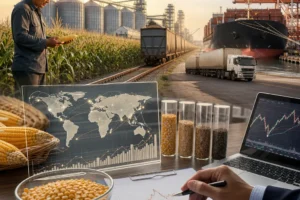
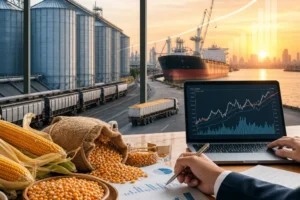

Germany grain prices today usually refers to the current market value of wheat, barley, corn, rapeseed, and other grains traded in Germany’s domestic cash market and in export-linked channels. Germany is one of the European Union’s key grain producers and consumers, so local prices are influenced both by conditions inside the country and by broader European and global benchmarks. In practice, there is no single national “Germany grain price” for every crop on every day, because values differ by region, quality, delivery point, and buyer. For that reason, anyone looking for today’s price needs to distinguish between exchange futures, interior cash bids, delivered processor prices, and export market indications.
Geographically, the market operates across Germany’s major arable regions, with meaningful price differences between inland crop areas and locations connected to ports, feed demand, or processing demand. Grain is priced mainly in euros per metric tonne. For milling wheat and feed grains, the most relevant financial benchmark for Germany is usually Euronext grain futures, especially the Paris wheat contract often still referred to as MATIF by market participants, while physical prices are negotiated through merchants, cooperatives, mills, feed manufacturers, and exporters.
What “Germany grain prices today” actually means
In Germany, the phrase can refer to several different price types at the same time. A farmer in Lower Saxony may mean a local buyer’s cash bid for feed wheat collected from farm or delivered to a warehouse. A trader may mean a prompt export parity value at a German port. A risk manager may be looking at Euronext futures as the benchmark used to hedge physical positions. A feed mill may focus on delivered prices for corn or feed barley into its plant.
That is why current price discussions should always specify five things:
- Commodity: milling wheat, feed wheat, barley, corn, rye, rapeseed, or another crop.
- Market type: futures, farm-gate cash, ex-warehouse, delivered mill, or export market.
- Location: inland region, processor, terminal area, or port.
- Quality: protein, test weight, moisture, and other contract terms.
- Timing: spot, nearby delivery, harvest, or forward shipment period.
Without those details, a quoted number can be misleading. A futures settlement is not the same as a local farm sale price, and a port export value is not the same as an inland price after transport and handling are deducted.
Where the German grain market operates
Germany has a large and regionally varied grain market. Production is spread across major cropping areas in the north, east, west, and south, while demand comes from flour mills, feed compounders, livestock sectors, bioenergy users, and exporters. The market is integrated into the wider EU single market, so grain moves not only within Germany but also across borders to neighboring countries and to seaborne export destinations when economics allow.
Ports matter because they connect inland grain values to international trade. At the same time, many German grain transactions never reach export channels at all and instead move domestically to mills, feed plants, starch processors, maltsters, or livestock operations. As a result, local prices may be more strongly influenced by nearby demand than by export conditions in some regions.
| Market area | Role in pricing | Typical users |
|---|---|---|
| Inland cash market | Reflects local supply, storage, transport, and buyer demand | Farmers, cooperatives, merchants, feed mills, flour mills |
| Delivered processor market | Adds haulage and buyer-specific quality requirements | Mills, maltsters, feed compounders, starch users |
| Port or export-linked market | Tracks export demand, vessel logistics, and international competitiveness | Exporters, traders, terminals, overseas buyers |
| Euronext futures market | Provides benchmark price discovery and hedging reference | Traders, cooperatives, processors, funds, hedgers |
How grain prices are formed in Germany
German grain prices are formed through the interaction of benchmark futures, local basis, physical quality, freight costs, currency movements, and buyer competition. For many crops, especially wheat, Euronext futures serve as the most relevant regional benchmark because Germany trades within the same broad European pricing system. But the local cash price is always a separate physical market value.
The simplest way to understand price formation is this:
- A benchmark futures market gives a transparent reference price for a standard contract.
- The German physical market adds or subtracts a basis, which reflects location, logistics, quality, and local supply-demand conditions.
- The final paid price depends on contract terms such as moisture, protein, falling number, delivery period, storage, and payment terms.
For example, milling wheat in a deficit area close to strong processor demand can trade differently from feed wheat in a surplus region. Grain near export channels may be priced against export parity, while grain in a livestock-heavy area may be tied more closely to feed demand.
Key price concepts
| Price type | What it means | Why it differs from other prices |
|---|---|---|
| Futures price | Exchange-traded benchmark for a standard contract month | Does not include local freight, quality premiums, or buyer-specific terms |
| Cash bid | Price offered by a local buyer for physical grain | Varies by region, timing, and competition among buyers |
| Delivered price | Price for grain delivered to a named destination | Includes transport to the buyer and often stricter quality terms |
| FOB price | Free on board export value at port | Linked to shipping position and export competitiveness |
| CIF price | Delivered import value including cost, insurance, and freight to destination port | Used more in import trade than farm marketing |
| Basis | Difference between local cash price and benchmark futures | Moves with logistics, quality, storage, and regional supply-demand |
Where to check Germany grain prices online
If you need today’s German grain market information, the most reliable approach is to combine exchange data with physical market sources. No single public screen captures every local German cash bid in real time.
Useful places to check include:
- Euronext: for benchmark futures used widely in European grain pricing, especially wheat and rapeseed references relevant to Germany.
- European Commission market information: for EU-level cereals and oilseeds market context, including price reporting and trade background.
- USDA Foreign Agricultural Service and WASDE-related materials: for broader global supply-demand context that affects German prices through world trade.
- German cooperatives, agricultural merchants, mills, and feed buyers: for actual local cash indications and contract offers.
- Broker and market information services: commonly used by traders for futures, spreads, and basis discussions, though access terms vary.
For a farmer or physical buyer, the most actionable “today” price is often not an exchange quote but a current bid from a cooperative, merchant, or processor in the relevant region. For a trader or analyst, today’s benchmark usually starts with Euronext and then adjusts to German port or inland basis.
Readers should also note that some online values may be delayed, indicative rather than tradable, or tied to specific contract months. A milling wheat futures contract can be useful for direction, but it should not be treated as the exact farm-gate price available in a specific German district on the same day.
Germany’s role in production, consumption, and trade
Germany is an important producer of cereals and oilseeds within the EU. Wheat and barley are central crops, while corn is also relevant in feed and certain regional markets. Rapeseed is important in oilseed rotations and processing. Domestic demand is broad: food use for flour and bakery products, feed use for livestock, industrial use, and export flows when surplus quality and international competitiveness align.
Because Germany both produces and consumes large volumes, pricing is not driven by exports alone. Some years and regions feel export pressure more strongly; in others, domestic processing demand dominates. Weather, protein quality, and harvest timing can sharply change whether grain is best valued into milling channels, feed use, or export streams.
As part of the euro area, Germany prices grain mainly in EUR per metric tonne. But international trade still exposes the market to currency effects, especially through the euro’s relationship with the US dollar because global grain trade is often referenced in dollar terms. A weaker euro can improve EU and German export competitiveness, while a stronger euro can weigh on export demand if all else is equal.
How grain is actually bought and sold in Germany
Physical grain trade in Germany is mostly conducted through established commercial channels rather than through a public retail-style market. Farmers usually sell to cooperatives, local merchants, producer organizations, processors, or exporters. Contracts can be spot, harvest delivery, forward, minimum price, or other commercially structured agreements depending on the buyer and the seller’s risk preference.
Physical market process
- Seller: farmer, farm business, cooperative pool, or merchant holding inventory.
- Buyer: trader, cooperative, flour mill, feed mill, maltster, starch processor, crusher, or exporter.
- Price basis: current market bid for stated quality and delivery period.
- Quality terms: moisture, protein, test weight, impurities, falling number, and other crop-specific specifications.
- Delivery terms: ex-farm, delivered warehouse, delivered plant, or port position.
- Settlement: payment terms depend on the contract and counterparty.
Storage matters. A farmer with on-farm storage may choose to delay immediate sale, but that decision adds carrying costs, quality risk, and exposure to price changes. Buyers may offer different values for prompt movement versus later delivery windows.
For importers or buyers sourcing into Germany, transactions may also be arranged on delivered terms, particularly for feed or processing demand. In those cases, the landed or delivered economics can matter more than local benchmark futures alone.
How futures and hedging fit the German market
German physical grain users often manage price risk through Euronext futures and, where relevant, options available through brokerage access. This is separate from owning or moving physical grain. A mill can buy physical wheat locally and hedge price exposure with futures. A merchant can buy grain from farmers, sell export cargoes, and offset risk through futures positions. A farmer may watch futures online as a pricing reference even if the eventual transaction is a local cash sale.
It is essential not to confuse financial exposure with physical ownership:
- Physical grain trade means actual grain changes ownership and must meet quality and delivery conditions.
- Futures trading means taking a financial position in a standardized exchange contract through a broker, using margin and facing daily mark-to-market.
Hedging reduces exposure to adverse price moves but does not eliminate basis risk. If the futures hedge performs as expected but the local basis weakens, the final physical outcome can still differ from the original expectation. That is why German merchants and processors watch both benchmark futures and local basis carefully.
Main drivers of German grain prices today and in the near term
Short-term and seasonal price direction in Germany usually depends on a combination of domestic and international factors. No forecast should be treated as certain, but the main scenarios are straightforward.
| Driver | Potential effect | Why it matters in Germany |
|---|---|---|
| Weather and harvest quality | Can tighten or expand supply of milling-grade grain | Quality differences strongly affect milling versus feed values |
| Euronext futures direction | Moves benchmark values up or down | Widely used for pricing and hedging in the German trade |
| Local basis changes | Can strengthen or weaken cash prices independently of futures | Reflects freight, storage, regional supply, and buyer demand |
| Euro exchange rate | Affects export competitiveness and import economics | Germany trades within a globally connected EU market |
| Feed and processing demand | Supports or limits local cash bids | Domestic use is large and regionally important |
| Competing exporters and world supply | Influences export parity and futures sentiment | German grain competes within EU and global trade flows |
In a bullish scenario, crop problems, strong domestic processor demand, tighter old-crop stocks, or supportive export demand can lift prices. In a bearish scenario, a large harvest, weak export competitiveness, limited feed demand, or pressure from global supply can weigh on bids. Often the benchmark futures market reacts first, while cash basis moves later according to local logistics and commercial needs.
Practical guidance for readers following the market
If you need an actionable view of Germany grain prices today, start by defining whether you care about price indication, physical execution, or risk management.
- For price indication: check Euronext for benchmark direction, then compare with local buyer bids.
- For physical selling: ask multiple cooperatives, merchants, or processors for bids tied to your quality and delivery point.
- For export-linked values: follow market commentary related to EU wheat and German port competitiveness.
- For hedging: use a regulated broker for futures or options, while understanding margin, expiry, and basis risk.
Readers should also keep contract wording in focus. The apparent “best price” may not be best once haulage, quality discounts, drying charges, late-delivery penalties, or payment terms are considered.
Where can I check Germany grain prices today?
For benchmark pricing, Euronext is the main public reference for European grain futures. For actual German cash prices, the most practical sources are local cooperatives, grain merchants, mills, feed manufacturers, and other physical buyers in the relevant region.
Are German grain prices quoted in euros or dollars?
German domestic grain prices are usually quoted in euros per metric tonne. International comparisons may involve US dollar references, especially in export trade analysis, but local transactions are mainly in euros.
What benchmark matters most for German wheat prices?
The most relevant benchmark is usually Euronext wheat futures in Paris, commonly still called MATIF in everyday trade language. However, the final German cash price depends on basis, location, and quality.
Why is the futures price different from the price a farmer receives?
Futures are standardized financial contracts, while a farmer sells physical grain with location, transport, moisture, protein, and timing differences. The gap between local cash and futures is the basis, and it can change independently of the benchmark.
How is grain physically sold in Germany?
It is normally sold through cooperatives, merchants, processors, exporters, or direct commercial contracts. The buyer specifies quality standards, delivery terms, and payment conditions, and the grain is sampled and settled under those terms.
Can international traders hedge German grain exposure online?
Yes, many traders and commercial firms hedge through Euronext futures and options using brokerage access. That provides financial price protection, but it does not replace managing physical quality, logistics, and basis risk.
Does Germany mainly export or import grain?
Germany does both, depending on crop, region, quality, and market year conditions. It is a major producer with substantial domestic use, so some flows are export-oriented while others are driven by internal demand or selected imports.
What are the main drivers of Germany grain prices in the short term?
Weather, harvest results, grain quality, Euronext futures, local processor demand, export competitiveness, freight, and the euro exchange rate are among the most important short-term drivers.
Sources
- Euronext
- European Commission
- USDA Foreign Agricultural Service