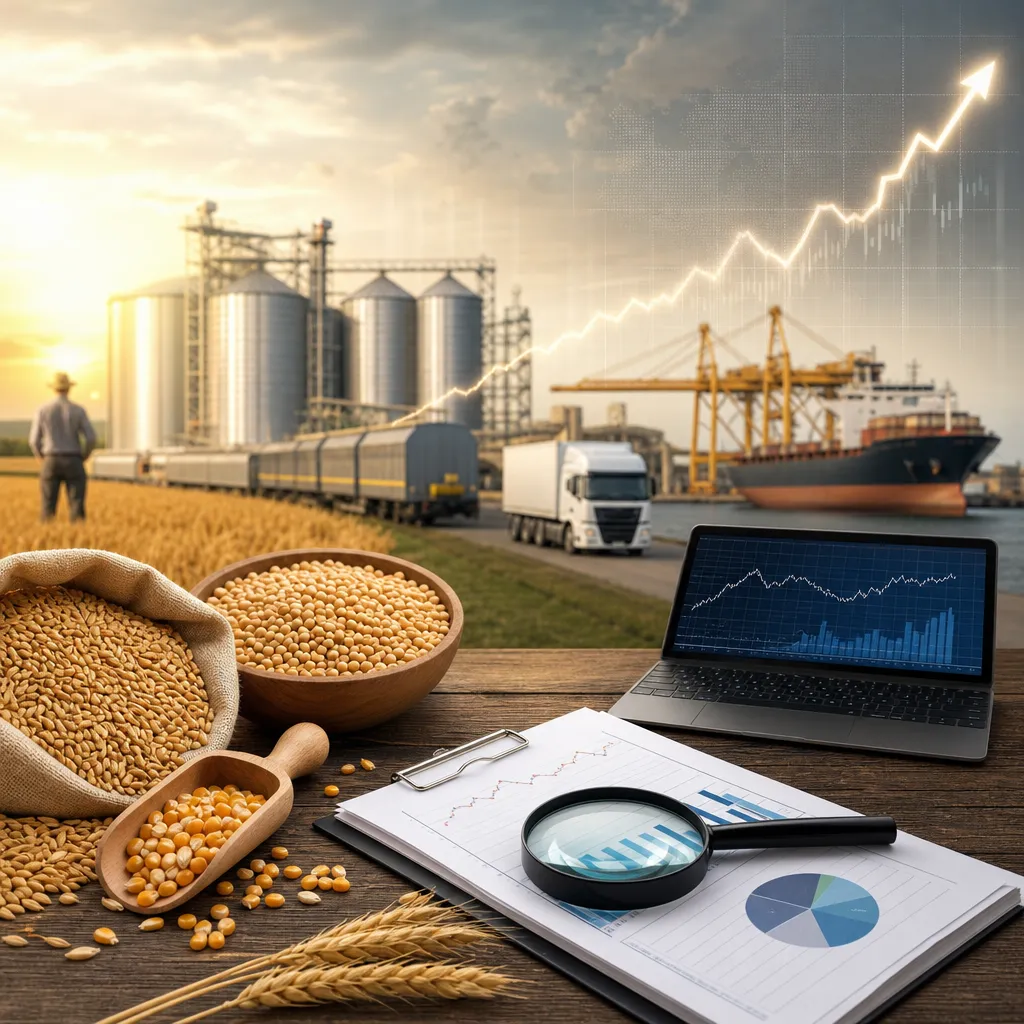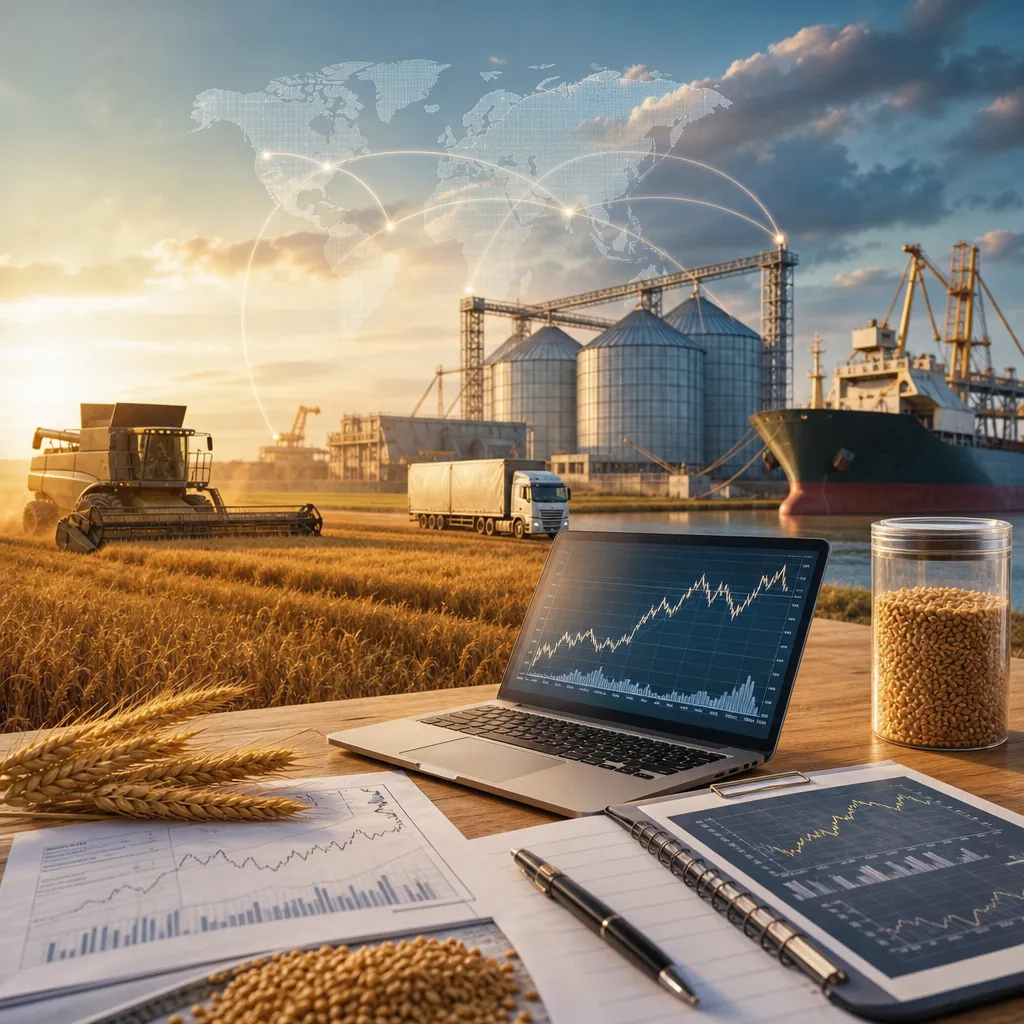
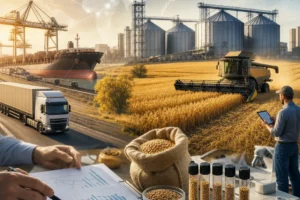
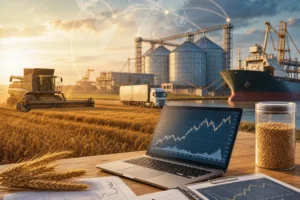
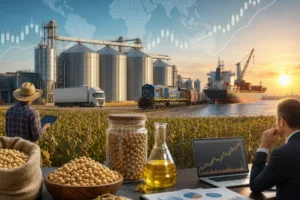
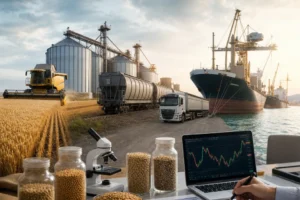
The EU wheat market is the wheat market of the European Union, not a single warehouse or exchange. It combines farm-gate, inland, mill-delivered, export, and futures pricing across major producing countries such as France, Germany, Poland, Romania, and others. In practice, the benchmark financial price most market participants watch is milling wheat futures on Euronext, while physical wheat is bought and sold in euros per metric tonne through merchants, cooperatives, mills, feed users, and exporters. Any outlook for this market therefore needs to separate the exchange benchmark from the many local cash markets that depend on quality, location, logistics, and export demand.
The EU is one of the world’s largest wheat producing and trading regions, with soft wheat especially important for milling, feed, and export. Some member states are structural exporters in normal crops, while others are more focused on domestic use or intra-EU trade. Because the EU trades heavily with world markets, the outlook depends not only on crop size and quality inside Europe, but also on Black Sea competition, global freight, currency movements, and import demand in North Africa, the Middle East, and other destinations.
What the EU wheat market includes
When people refer to the “EU wheat market,” they usually mean soft wheat, especially common wheat used for flour, feed, and export. Durum wheat is a separate market with different quality requirements and trade flows. The most visible benchmark for soft wheat price discovery in Europe is Euronext milling wheat futures, often still called MATIF by many traders.
Geographically, the market operates across all EU member states, but the most influential price centers tend to be major surplus and export-oriented origins. These include inland collection areas, river points, processors, and seaports. Wheat may be priced at the farm, ex-store, delivered to a mill, delivered to a feed compounder, or on an export basis such as FOB.
The usual currency is euro, and the usual pricing unit is euro per metric tonne. International comparison often involves Black Sea wheat offers, U.S. wheat futures, or broader global tender prices, but the practical benchmark for much of the EU soft wheat trade is still Euronext milling wheat futures plus or minus a local basis.
Why the EU matters in global wheat trade
The EU is both a large producer and a large consumer. Wheat is consumed by flour mills, feed users, starch and industrial processors, and in some years by exporters shipping to third countries outside the EU. Trade also flows significantly within the Union, so a country can be a seller into neighboring member states even when it is not an important overseas exporter.
That dual role matters for outlook analysis. In a large-crop year with acceptable milling quality and competitive export offers, the EU can become a major world exporter. In a poorer crop year, or when quality is downgraded into feed channels, internal consumption and substitution patterns become more important. A strong euro can reduce export competitiveness, while a weaker euro can support EU-origin wheat in world tenders.
| Market segment | Where it operates | Main users | How it is quoted |
|---|---|---|---|
| Futures benchmark | Euronext | Hedgers, merchants, mills, funds, brokers | EUR per metric tonne |
| Farm-gate cash market | Local collection zones across EU member states | Farmers, cooperatives, merchants | EUR per tonne, quality and location dependent |
| Delivered domestic market | Mills, feed plants, industrial users | Processors, traders, feed buyers | Delivered EUR per tonne |
| Export market | EU ports and export terminals | Exporters, importers, international traders | FOB or other shipment terms |
How EU wheat prices are formed
EU wheat prices are formed through a combination of benchmark futures, local basis, physical supply and demand, and quality. The benchmark gives the market a reference point. The basis reflects the premium or discount at a specific place and quality relative to that benchmark. A farmer in inland France, a mill in Germany, and an exporter loading at a Romanian port may all use the same futures screen as a reference, but their physical prices will differ.
It is important to distinguish the main price types:
- Futures price: the exchange-traded benchmark, used for price discovery and hedging.
- Cash bid: the local physical buying price offered by a cooperative, merchant, or processor.
- Delivered price: the price including transport to a buyer such as a mill or feed plant.
- FOB price: the export price for grain loaded on board a vessel at port.
- CIF price: an import-side price including cost, insurance, and freight to the destination port.
- Basis: the difference between the local cash price and the benchmark futures price.
Local cash prices can trade above or below futures for many reasons: protein and other quality factors, storage availability, truck and rail costs, barge conditions, port congestion, local buyer competition, farmer selling pace, and export parity. Currency effects also matter. Even if Euronext futures are unchanged, a move in the euro against the dollar can alter the competitiveness of EU wheat in export tenders.
The role of Euronext milling wheat futures
Euronext is the key exchange benchmark for EU wheat. The milling wheat contract is widely used by grain merchants, cooperatives, mills, compound feed makers, exporters, and financial traders. It does not mean every participant intends to make or take physical delivery. In most cases, the contract is used to manage price risk or to express a market view.
For example, a merchant buying wheat from farmers may sell futures to hedge falling prices before the wheat is resold. A mill may buy futures to protect against rising wheat costs before it physically purchases tonnage. A speculative trader may trade the same contract without owning grain at all. That is why a futures market is not the same thing as the local cash market.
Access to Euronext futures normally takes place through a regulated broker or trading platform connected to the exchange. Trading futures requires a margin account and carries leverage and expiry risk. It gives price exposure, not automatic ownership of truckloads of wheat. Physical grain, by contrast, is traded in real supply chains through contracts covering quality, delivery window, payment terms, and logistics.
| Price or market type | What it tells you | What it does not tell you |
|---|---|---|
| Euronext wheat futures | Market benchmark and hedge reference | Exact farm-gate bid in a specific local market |
| Local cash bid | What a buyer may pay for physical grain locally | Broader market direction on its own |
| Port export bid | Export competitiveness at shipment point | Net farmer value after inland logistics in every region |
| Delivered mill price | Value to a domestic processor with freight included | Export value for all qualities and locations |
How wheat is physically bought and sold in the EU
Most physical wheat in the EU is not sold on the exchange. It is sold through local and regional commercial channels. Farmers typically sell to cooperatives, grain merchants, collectors, mills, feed manufacturers, or exporters. Contracts can be spot, forward, or formula-based. A contract may specify quantity, quality tolerance, delivery period, moisture, protein, Hagberg or falling number where relevant, and whether the price is fixed now or linked to a futures month plus basis.
Inland trade often begins with collection from farms into storage, followed by resale into domestic consumption or export channels. In export-oriented countries, merchants assemble parcels that meet shipment quality requirements and move grain toward port. In deficit areas, domestic users may pay a premium to attract supply from other regions or other member states.
For a practical seller, the key questions are usually:
- Who is bidding locally: cooperative, merchant, mill, feed user, or exporter?
- What quality specification is being paid for?
- Is the quoted price ex-farm, delivered, or collected?
- What are the payment terms and counterparty risks?
- Is the price fixed, or is it futures-linked with basis to be set?
Export trade is more specialized. International merchants and exporters price cargoes on shipment terms such as FOB, while importers may compare those offers with competing origins. Inland cash markets then adjust depending on whether export channels are pulling wheat strongly or whether domestic users are the main buyers.
Where to check EU wheat prices and market information online
If you need a current market view, the first rule is simple: do not assume a futures quote is the exact local wheat price. The most practical way to monitor the EU market is to combine a benchmark source with local buyer indications and official supply-demand reporting.
Useful places to check include:
- Euronext: for the benchmark milling wheat futures contract and exchange information.
- European Commission, Agriculture and Rural Development: for EU market dashboards, trade context, and agricultural monitoring material.
- European Commission, MARS bulletins: for crop condition and yield-related monitoring.
- Eurostat: for production, trade, and structural agricultural data.
- USDA: for global wheat balance sheets and international context affecting EU trade competitiveness.
- Local cooperatives, merchants, mills, and grain buyers: for actual cash bids and delivery terms in a specific region.
For local farm-level decision making, buyer bid sheets and direct commercial quotes often matter more than the screen alone. A farmer may see Euronext futures online, but the sale itself is usually concluded physically with a local or regional counterparty. A commercial trader may hedge via futures while separately negotiating the basis and quality differential in the physical market.
Main drivers in the EU wheat outlook
An EU wheat outlook should be built with scenarios, not certainty. The main drivers usually include weather during planting, winter survival, spring development, flowering, and harvest; crop quality; domestic feed demand; milling demand; export competitiveness; and currency movement.
Other important variables include energy and fertilizer costs, which can influence production decisions and farm selling behavior. Competing exporter supply matters a great deal, especially from the Black Sea region and other major origins. If world importers can source cheaper wheat elsewhere, EU export values may soften even if the domestic crop is not burdensome. If rival origins face weather, logistics, or policy problems, EU values can strengthen.
Harvest quality can be as important as crop size. A large crop with disappointing milling quality may pressure feed wheat while helping domestic feeders. A smaller but high-quality crop may support milling premiums and export capability. Logistics also matter: river conditions, trucking availability, rail efficiency, and port execution can all widen or narrow basis levels.
| Outlook factor | Why it matters | Typical market effect |
|---|---|---|
| EU weather and yields | Drives crop size and quality | Can shift both futures sentiment and local basis |
| Milling quality | Determines suitability for food use and export specs | Changes milling premiums versus feed wheat |
| Euro exchange rate | Affects export competitiveness | Can strengthen or weaken FOB values |
| Black Sea competition | Sets global tender pressure | Often influences EU export demand and basis |
| Domestic feed and milling demand | Absorbs supply inside the Union | Supports regional differentials and delivered prices |
How to think about forecast scenarios
A constructive scenario for EU wheat usually involves normal-to-good yields, acceptable milling quality, and enough export competitiveness to move surplus through ports. In that setting, inland basis in surplus regions still depends on logistics and farmer selling, but shipment demand can support port values.
A heavier scenario might involve a large crop alongside intense competition from other exporters and weak overseas demand. That can pressure port bids and ripple inland through weaker basis, especially in surplus zones with storage pressure after harvest.
A more supportive scenario could emerge if EU production disappoints, quality is strong but scarce, or competing origins face production or logistics setbacks. In that case, milling premiums can improve, domestic buyers may compete more intensely, and exporters may regain pricing power in key destinations.
None of these outcomes should be treated as guaranteed. The market is highly sensitive to weather, policy developments, and trade flows. For that reason, EU wheat outlook analysis is most useful when updated regularly through the crop year rather than treated as a fixed annual forecast.
Practical guide to trading and hedging EU wheat
Physical grain trade takes place through actual commercial relationships. A seller typically negotiates with a cooperative, merchant, processor, or exporter. Important points include quality specification, delivery location, weighing and testing, payment timing, and legal contract terms. This is where ownership of real grain changes hands.
Futures and options trading takes place on the exchange through a broker. This is suitable for hedging price risk or taking a market position. It involves margin, daily mark-to-market, leverage, and expiry management. It does not replace the need to arrange physical delivery, storage, or trucking unless a participant is specifically operating in the delivery system.
A common commercial approach is to separate futures and basis. For example, a grain merchant may fix a futures level on Euronext, then later negotiate or lock the local basis against a domestic or export buyer. A farmer may choose a forward cash contract with a local buyer, while the buyer manages its own hedge on the exchange. That is how online financial pricing and the real-world grain trade connect in practice.
FAQ
What is the main benchmark for EU wheat prices?
The main benchmark is Euronext milling wheat futures, quoted in euro per metric tonne. It is a financial and commercial reference point, not the exact farm-gate price in every EU region.
Where can I check current EU wheat prices online?
For benchmark pricing, check Euronext. For broader market context, use European Commission agricultural market information, Eurostat, and USDA global grain reports. For an actual local selling price, check bids from cooperatives, merchants, mills, or exporters in your area.
Why does my local cash bid differ from the futures market?
Because local bids include basis. Basis reflects quality, transport cost, storage, buyer competition, local supply-demand balance, and export logistics. Futures show the broad market benchmark, while cash bids show what a physical buyer is willing to pay in a specific place.
Is the EU wheat market mainly an export market or a domestic market?
It is both. The EU is a major producer with large domestic milling and feed demand, but in many seasons it is also a major exporter of soft wheat to world markets. The balance changes by crop year and by member state.
How is wheat usually bought and sold in the EU?
Most wheat is sold physically through cooperatives, merchants, mills, feed users, and exporters using contracts that specify quality, quantity, delivery, and payment terms. Exchange trading is mainly used for hedging or speculation, not as the normal way farmers sell truckloads of grain.
Can an individual trade EU wheat futures?
Yes, usually through a broker that offers access to Euronext products, subject to account approval and margin requirements. But futures trading brings leverage and risk, and it is different from owning or delivering physical wheat.
What currency and unit are standard in the EU wheat market?
The standard convention is euro per metric tonne. Commercial contracts may also refer to delivery terms such as ex-farm, delivered, or FOB depending on the transaction.
What are the biggest drivers of the EU wheat outlook?
The main drivers are EU weather and crop quality, global wheat supply, Black Sea competition, the euro exchange rate, domestic feed and milling demand, and the strength of export demand through EU ports.
Sources
- Euronext
- European Commission, Agriculture and Rural Development
- USDA Foreign Agricultural Service