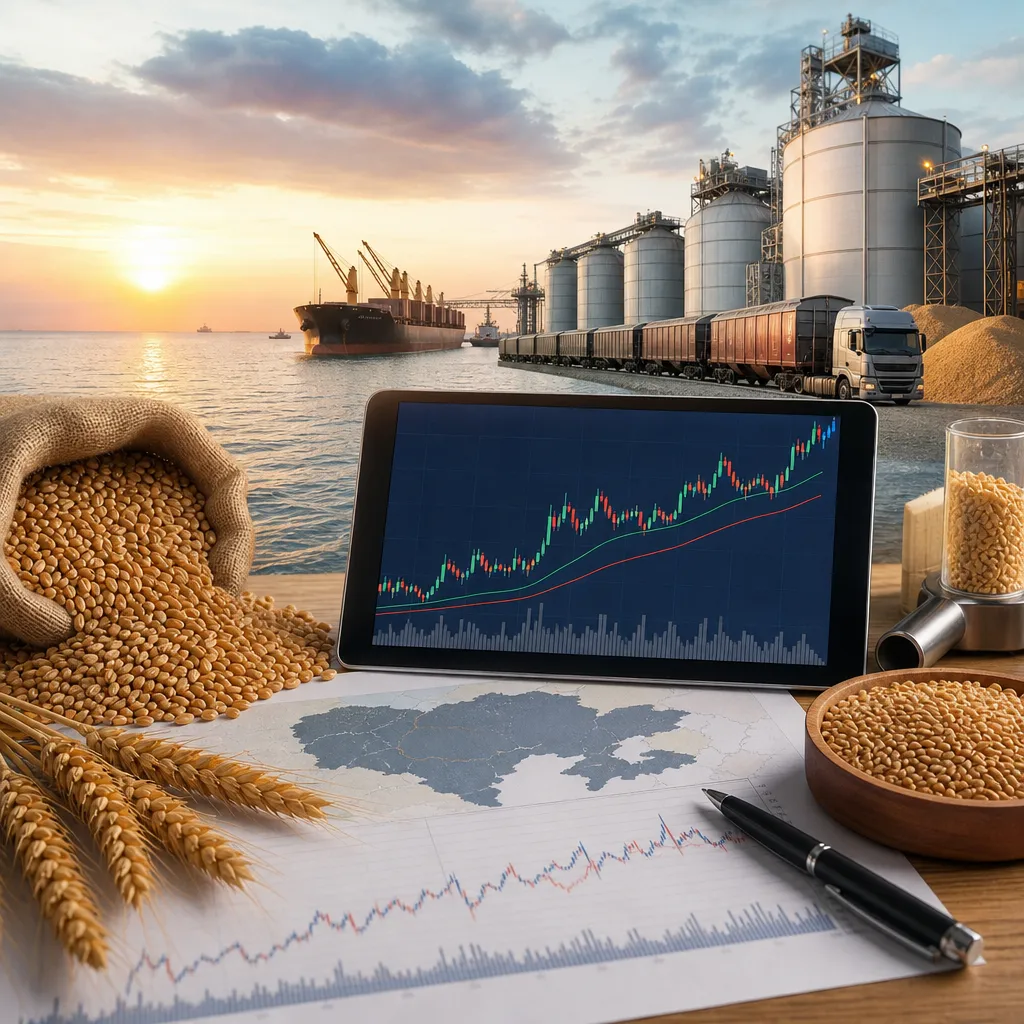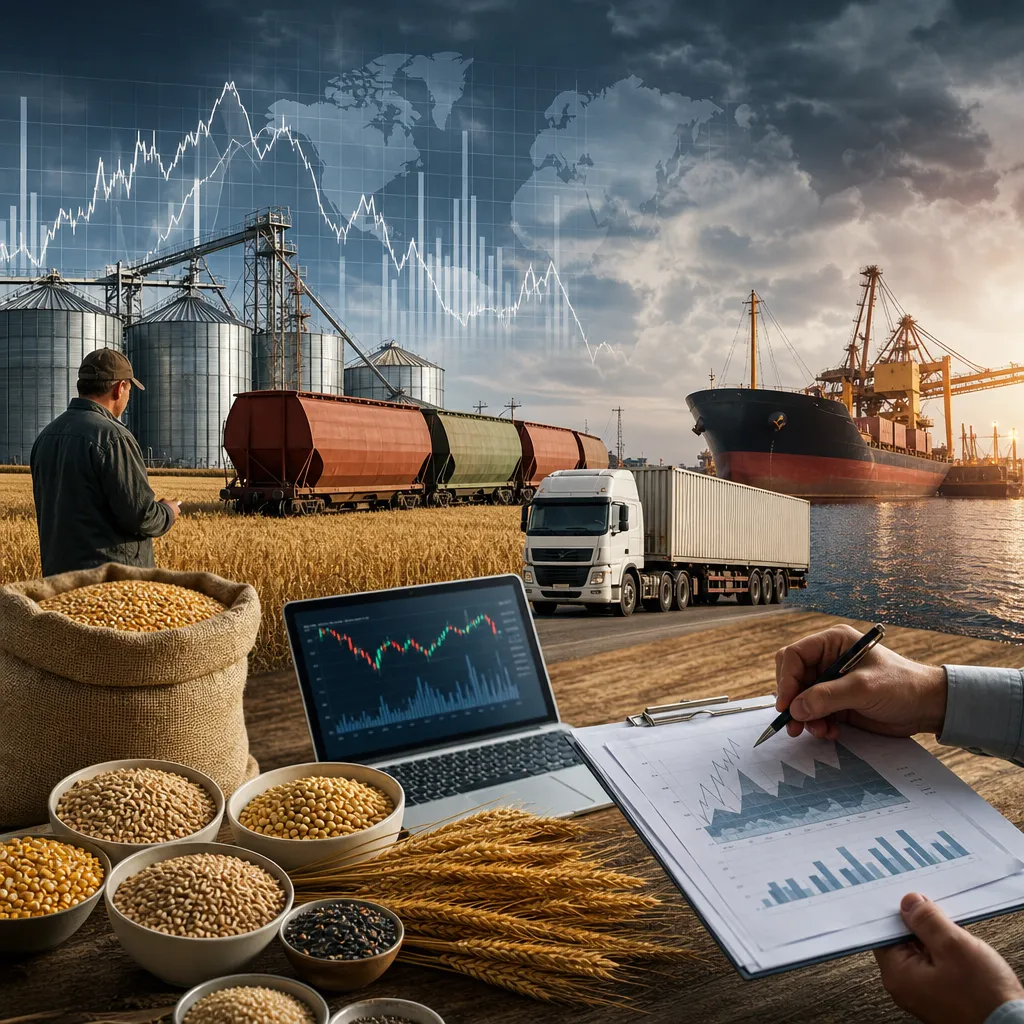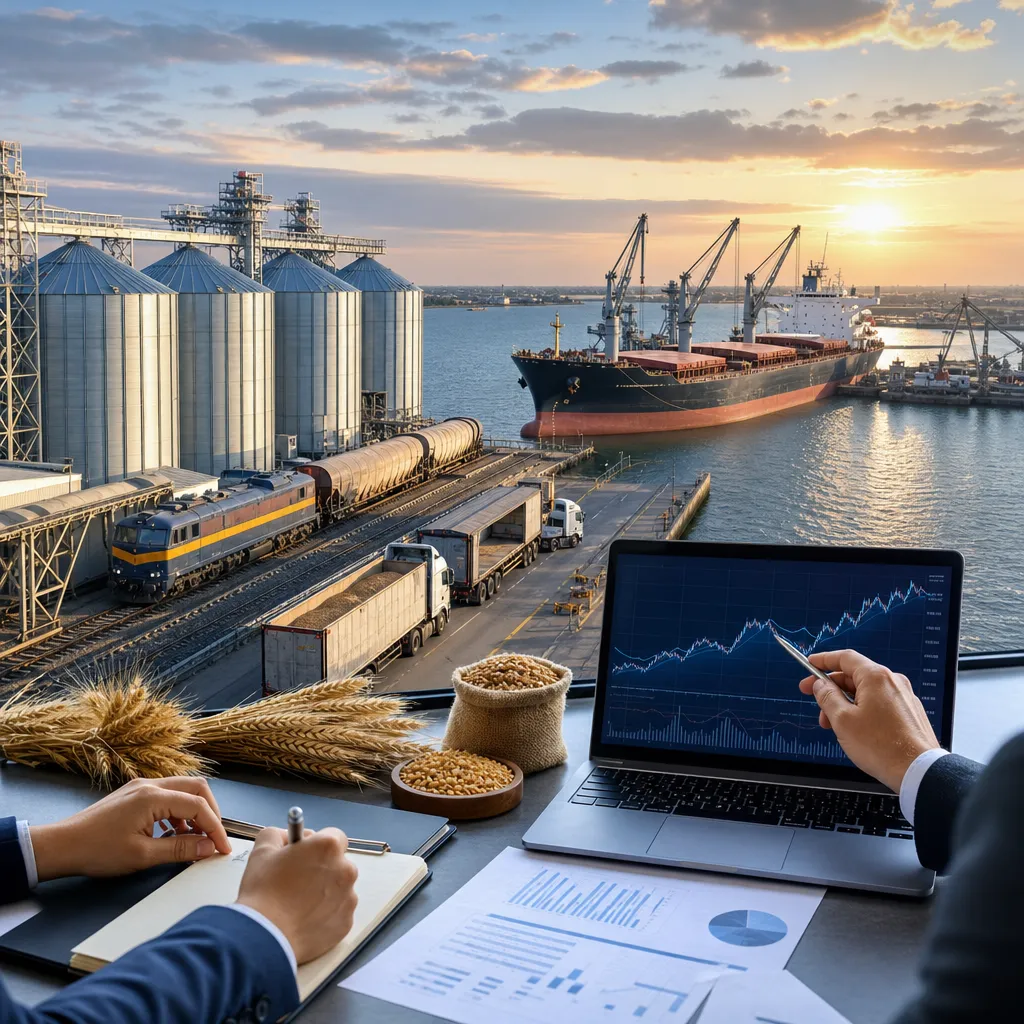
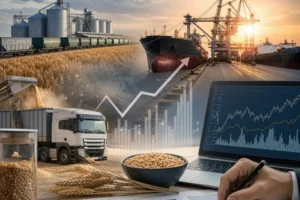
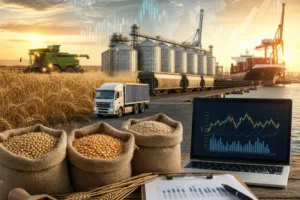
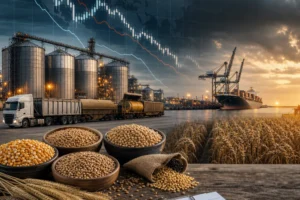
Grain prices usually rise, become more volatile, and disconnect from normal local patterns when shipping crises disrupt ocean freight, river transport, rail flows, or port operations. The key reason is simple: grain is bulky, seasonal, and heavily dependent on logistics, so any interruption changes who can move grain, who must store it, and who can still reach export or domestic buyers. In practice, the price reaction is not one single market move but a chain of changes across futures, cash basis, freight premiums, storage values, and quality discounts. To understand grain prices during a shipping crisis, readers need to separate exchange prices from physical grain prices and then follow how logistics costs and delivery bottlenecks reshape both.
A shipping crisis can begin with war risk in a major export corridor, low water on inland rivers, canal delays, port strikes, vessel shortages, rail congestion, container disruptions, or sanctions and insurance restrictions. Wheat, corn, soybeans, barley, canola, rapeseed, rice, sorghum, oats, rye, and sunflower seed can all be affected, although the impact depends on each crop’s export share, storage life, and alternative routes. The most important practical point is that a headline about “grain prices surging” often refers to benchmark futures or export offers, not necessarily the local bid at a country elevator or feed mill.
How a shipping crisis changes grain prices
Grain prices react to logistics because transport is part of the delivered value. If export capacity falls, grain near an export terminal may become more valuable to buyers who still have vessel slots, while grain trapped inland may become less valuable because it cannot move efficiently. The same crop can therefore rise in one location and weaken in another.
During a serious disruption, the market usually reprices four things at once: freight, timing, location, and risk. Freight costs can rise because vessels, barges, railcars, trucks, insurance, and handling become scarcer or slower. Timing becomes more valuable because delayed shipments can trigger contract penalties, force rerouting, or miss seasonal demand windows. Location matters more because grain close to a functioning port, crusher, mill, or feed plant gains logistical advantage. Risk increases because counterparties worry about force majeure, quality deterioration in storage, delayed payment, or inability to perform export contracts.
| Disruption | Typical price effect | Why it happens |
|---|---|---|
| Port closure or congestion | Export basis may rise at working ports, inland cash bids may weaken | Export channels narrow and local surpluses build where grain cannot move |
| River restrictions or low water | Barge freight rises, river terminal bids often weaken upstream | Less tonnage can move, increasing cost per delivered bushel or tonne |
| Ocean freight shock | Importers may pay more delivered, exporters may lower origin bids | Higher vessel and insurance costs reduce net-back values at origin |
| Rail disruption | Local basis becomes highly uneven across regions | Processors and exporters compete only in areas that still have service |
| War risk or sanctions | Benchmark futures may rally, but origin markets can behave differently | Supply risk rises globally while local execution risk also rises |
Futures prices versus local cash grain prices
The most common mistake in a shipping crisis is assuming that a move in futures equals the price paid in the physical market. Futures are standardized contracts traded on regulated exchanges. Local cash prices are physical bids or offers for real grain at a named location, with specific quality, delivery timing, and freight assumptions.
For globally followed benchmarks, many market participants watch futures on CME Group, especially Chicago wheat, corn, soybeans, soybean meal, soybean oil, and some related contracts. In Europe, wheat and rapeseed futures on Euronext are widely used. These exchange prices can be checked on exchange websites, through brokerage platforms, on financial market terminals, or via commercial market-data services. Some delayed futures data is publicly visible, while full depth, historical detail, and API access are often commercial.
Farmers and commercial grain buyers usually do not sell physical grain directly “into the screen” just because they see a futures quote. Instead, they check local elevator bids, cooperative bids, processor bids, feed mill bids, export house bids, or merchant bids. Those local bids are normally quoted as futures plus or minus basis. Basis reflects local supply and demand, freight, handling, storage, quality, and delivery point. During a shipping crisis, basis can move far more dramatically than futures.
Where can readers check physical grain prices? In practice, they usually use local grain elevator bid sheets, cooperative mobile apps or websites, processor procurement pages, merchant bid lists, broker indications, or official agricultural market reporting services where available. In the United States, USDA Agricultural Marketing Service publishes many regional cash market reports. Other countries may have agricultural ministries, commodity boards, exchange-linked reporting systems, or private reporting agencies.
Where and how physical grain trade happens during a disruption
Physical grain trade still happens through the normal chain, but the bottleneck moves. Farmers may sell to elevators or cooperatives. Elevators may sell to domestic mills, feed manufacturers, ethanol plants, crushers, exporters, or larger merchants. Exporters may tender cargoes at port or resell positions to international trading houses. Importers may buy through tenders, direct contracts, or local distributors.
In a shipping crisis, the most important commercial terms become more sensitive than usual. Buyers and sellers focus closely on delivery point, loading window, moisture, protein, test weight, damage, foreign material, phytosanitary requirements, and freight responsibility. Incoterms matter in international trade because they determine which party pays for freight, insurance, and risk transfer. Payment terms and counterparty strength also matter more because delays increase financing pressure.
A farmer or local seller usually cannot solve a shipping crisis by finding an overseas buyer online. Cross-border grain trade normally requires logistics capability, quality certification, documentation, trade finance, vessel or container access, and experience with inspections and sanctions compliance. Most physical participants therefore work through elevators, cooperatives, grain merchants, processors, brokers, or exporters who already have those systems.
| Market type | Where it is accessed | What price it shows | Main users |
|---|---|---|---|
| Futures exchange | Exchange data feeds, broker platforms, market-data services | Standardized contract price | Hedgers, traders, funds, analysts |
| Local cash market | Elevators, cooperatives, processors, merchants, AMS reports | Bid or offer for grain at a specific location | Farmers, commercial buyers, merchandisers |
| Export market | Trading houses, tender systems, brokers, port merchants | FOB, CIF, or other shipment-based price | Exporters, importers, governments, feed buyers |
| OTC forward contract | Direct negotiation with buyer or merchant | Custom delivery and quality price | Farmers, processors, merchants |
How hedging works when logistics break down
Futures and options can help manage price risk during shipping crises, but they do not remove physical execution risk. A wheat grower, corn producer, soybean crusher, feed mill, or exporter can hedge the futures component of price exposure through a regulated futures broker. That usually requires a brokerage account, margin funding for futures, and understanding of contract size, expiry, and delivery rules. Options provide a right, not an obligation, and can be used to protect against adverse price moves while keeping some upside, but the option premium is a real cost.
The main limitation is basis risk. If freight surges or a river closes, the local cash market can diverge sharply from the futures market. A good futures hedge can therefore still leave a disappointing cash outcome if the basis collapses at the delivery point. That is why many commercial firms hedge price on the exchange but manage logistics separately through freight contracts, diversified routing, storage planning, origin flexibility, and customer contract clauses.
Physical grain ownership also creates carrying and quality risk. If sellers hold grain longer because shipments are delayed, they may face storage losses, insect pressure, moisture problems, shrink, financing cost, and operational bottlenecks at bins or warehouses. A futures hedge does not pay those costs directly. It only addresses part of the price exposure.
Which data and reports matter most
Readers trying to assess grain prices during a shipping crisis should combine futures data, cash market information, freight signals, and official supply-demand reports. No single feed is enough.
USDA provides several core reports used globally. WASDE gives broad supply-demand balance sheets for major crops and countries. Crop Progress helps monitor planting, development, and harvest pace in the United States. Export Sales shows weekly U.S. export commitments, useful for seeing whether buyers are shifting origin during a disruption. USDA Agricultural Marketing Service adds regional cash market reporting, transportation snapshots, and selected freight indicators.
CME Group provides contract specifications, settlement information, and futures market references. The CFTC publishes Commitments of Traders, which helps analysts see how commercial hedgers and speculative funds are positioned. FAO is useful for international context, especially food security and broad commodity trends. National agriculture ministries, customs agencies, and statistical offices are important for production, stocks, imports, exports, and policy changes in local markets.
For logistics specifically, traders also monitor port lineups, vessel tracking services, river gauge data, rail service updates, canal advisories, and maritime insurance developments. Some of that information is public; much of it is commercial or fragmented by region. Commercial grain merchants often rely on internal logistics desks and shipping brokers because public data can lag real conditions.
Practical buying and selling decisions during a shipping crisis
If you are selling grain, the first question is not only “What is the futures market doing?” but also “Which nearby buyer can still take delivery, and at what basis?” Sellers should compare local elevator bids, processor bids, and cooperative bids across multiple delivery points if possible. In some disruptions, a domestic crusher or feed mill may offer a better net price than an export-linked elevator because it avoids the congested route.
If you are buying grain, focus on delivered cost rather than benchmark price alone. A lower origin price can become expensive once freight, demurrage, rerouting, inspection, and delay risk are added. Buyers should confirm quality parameters, available shipment windows, substitute origins, and whether the contract allows for delays or route changes.
For stored grain, timing matters. A shipping crisis can temporarily improve deferred basis in some regions because buyers need nearby inventory once logistics reopen. But holding grain longer also raises operational and financing costs. Good decisions require comparing the storage return against interest expense, shrink, conditioning, and quality risk.
What drives different crops in a shipping crisis
Not all grains and oilseeds react the same way. Wheat often responds strongly because it is a major internationally traded food grain and many importers depend on seaborne supply. Corn and soybeans are also heavily exposed to export logistics, but domestic feed, ethanol, and crushing demand can soften or amplify the effect depending on the country. Rice markets may react differently because government intervention, stocks policy, and regional trade rules can be especially important. Canola, rapeseed, and sunflower seed are influenced not only by seed trade but also by vegetable oil and meal markets.
Crop quality can become more important during logistics stress. If buyers face limited vessel space or strict quality requirements, they may prefer higher-grade grain that travels better or meets destination specs without blending. That can widen premiums for protein, low moisture, or cleaner lots.
Common mistakes when interpreting grain prices during shipping crises
- Confusing futures with farmgate price. Futures may rally while local cash bids weaken because basis collapses.
- Ignoring freight. Delivered grain value depends on transport cost, not just flat price.
- Assuming all regions are affected equally. Nearby basis can strengthen in one corridor and weaken sharply in another.
- Using only one data source. A balanced view needs exchange data, cash bids, official reports, and logistics intelligence.
- Overestimating hedge protection. Futures protect against some price risk, not against physical non-performance or quality deterioration.
- Underestimating storage risk. Delays can turn a market opportunity into a quality or financing problem.
FAQ
Where can I check grain prices during a shipping crisis?
Check both exchange futures and local cash bids. Futures can be monitored on exchange websites such as CME Group or through brokerage and market-data platforms. Local cash grain prices are usually found through elevator bid sheets, cooperative websites or apps, processor procurement pages, merchants, and official reporting services such as USDA Agricultural Marketing Service where available.
Why can wheat futures rise while my local wheat bid falls?
This usually happens when global supply risk supports futures but local logistics weaken basis. If grain cannot move efficiently from your region, buyers reduce local bids to cover extra freight, delay, or storage pressure even when benchmark futures are stronger.
Can I trade grain prices online during a shipping crisis?
You can trade futures or options online through a regulated futures broker if those products are available in your jurisdiction. That is financial trading, not the same as selling physical grain from a farm or buying a cargo. Physical trade normally takes place through elevators, cooperatives, merchants, processors, exporters, or negotiated OTC contracts.
What reports are most useful for following these markets?
USDA WASDE, USDA Export Sales, USDA Crop Progress, USDA Agricultural Marketing Service cash and transportation reports, CME contract information, and CFTC Commitments of Traders are among the most useful public sources. FAO and national agriculture or statistical agencies add international and regional context.
How do importers and exporters handle shipping disruptions?
They may reroute cargoes, switch origins, pay higher freight or insurance, delay loading, substitute buyers or sellers, or renegotiate shipment windows and contract terms. In practice, this is managed through grain merchants, shipping desks, brokers, port operators, inspectors, and trade finance providers rather than through exchange trading alone.
Is storing grain during a shipping crisis usually profitable?
Not automatically. Storage can create value if basis improves later or if nearby logistics normalize, but it also adds financing, shrink, conditioning, and quality risks. The decision should be based on local bid structure, expected carrying return, and the physical condition of the grain.
Do options work better than futures in a shipping crisis?
Options can be useful when volatility is high because they define downside in a different way than a futures hedge, but the premium can be expensive in stressed markets. They still do not remove basis risk or physical logistics risk, so “better” depends on the user’s objective and cost tolerance.
Sources
- USDA Agricultural Marketing Service
- CME Group
- U.S. Commodity Futures Trading Commission