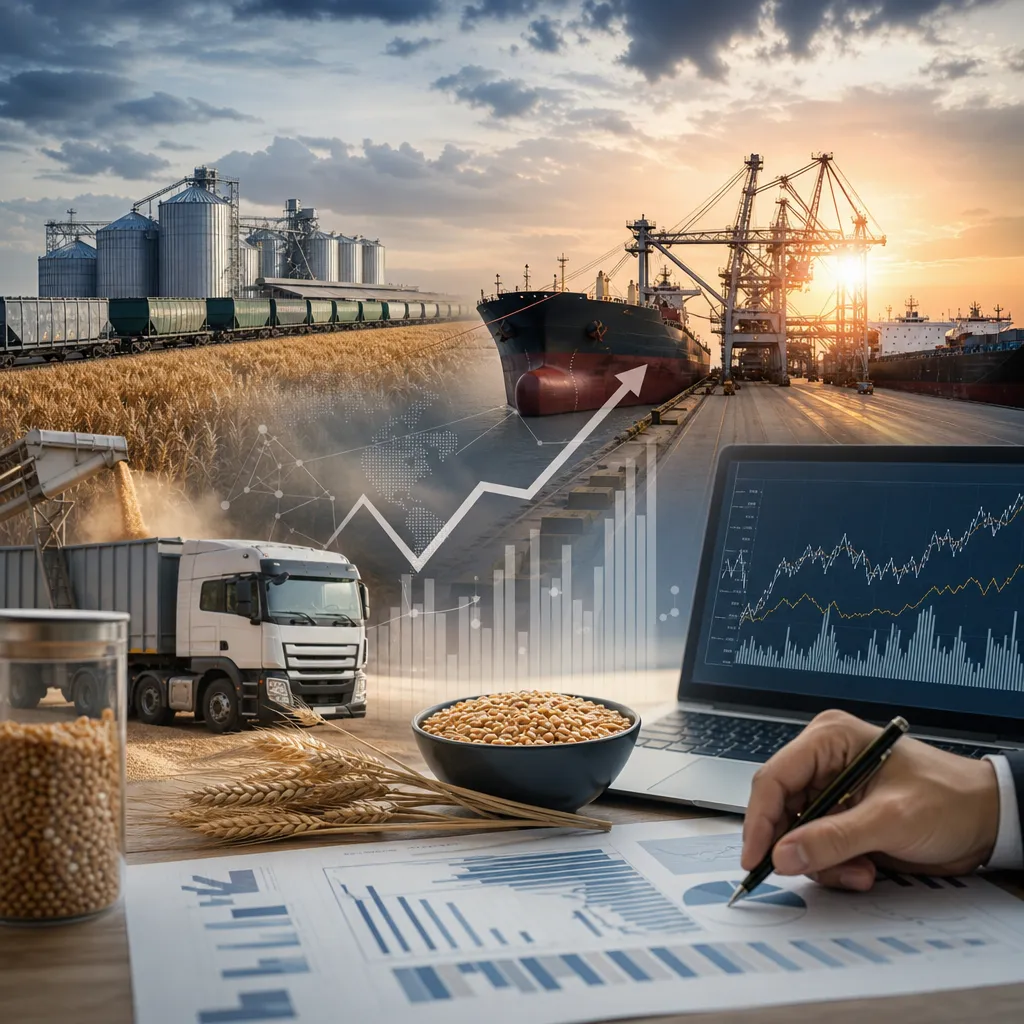

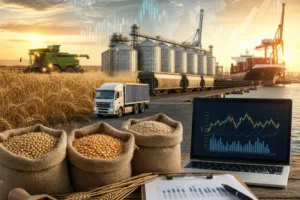

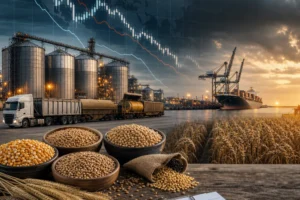
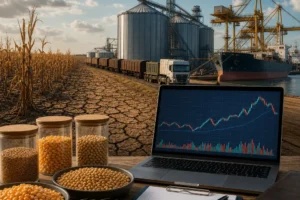
Grain prices can move violently when supply shocks hit, but the move is rarely caused by one headline alone. A drought, war, export restriction, flood, transport failure, or crop disease changes expected supply, and the market immediately starts repricing both the amount of grain available and the risk that conditions could worsen. In practice, that means futures prices on major exchanges may jump within minutes, while local cash bids at elevators, mills, feed plants, and export terminals adjust according to basis, freight, storage, and quality. To understand grain prices during supply shocks, readers need to separate global benchmark prices from real physical-market prices and know where to verify both.
What a supply shock means in grain markets
A supply shock is a sudden change in expected or actual grain availability. It can come from production problems, policy decisions, or logistics disruptions. The market reacts not only to the size of the loss, but also to uncertainty about how long the disruption will last and which regions or grain qualities are affected.
Common examples include poor weather during planting or pollination, winterkill in wheat, disease pressure, flooding at harvest, sanctions, export bans, low river levels, railway disruption, port congestion, or a sharp cut in fertilizer use that threatens yields. A shock may be local, such as hail damage in one state or province, or global, such as a major Black Sea export interruption.
The key point is that grain prices are forward-looking. The market does not wait for all grain to be harvested and counted. It reprices expected stocks, exportable surplus, and import needs as new information arrives.
How grain prices react during a supply shock
The first reaction is usually strongest in exchange-traded futures because they are liquid and continuously repriced. Benchmark contracts for wheat, corn, soybeans, soybean oil, soybean meal, canola, and rough rice are widely followed. Futures traders respond to weather models, export news, government reports, and risk sentiment long before every local buyer changes a physical bid sheet.
After the initial futures move, the cash market adjusts through basis. Basis is the difference between the local cash price and the relevant futures contract. During a supply shock, futures and basis do not always move in the same direction. For example, futures may surge on global concern, while a local area with weak demand or high transport costs may see little improvement in farm bids. The opposite can also happen: a regional shortage near a mill or feedlot can sharply strengthen basis even if futures are relatively calm.
Quality matters too. In wheat, protein, falling number, test weight, and damage can become more important during a shock. In corn and soybeans, moisture, damage, and storage condition may affect discounts. A broad headline about “grain prices” may hide very different values for feed grain, milling grain, oilseed quality, or export grade cargoes.
| Shock type | Typical price effect | Why it matters |
|---|---|---|
| Drought or heat in a major producing region | Futures often rally first; local basis may later strengthen in deficit areas | Lower yield reduces expected production and ending stocks |
| Export ban or trade restriction | World benchmark prices may rise; domestic prices in the restricted country may diverge | Importers must replace supply, while blocked exporters may face local oversupply |
| Port, rail, river, or trucking disruption | Basis can move sharply by location | Freight and delivery access change the real value of grain at each point |
| Poor crop quality | Wide price spread between grades | End users may compete for specific quality, not just volume |
| Currency shock in an exporting country | Export competitiveness changes even if local farm prices do not mirror futures | Importers compare offers in traded currencies, often U.S. dollars |
Where grain prices are actually quoted
There is no single “grain price.” Readers usually need to check at least two layers of pricing: exchange futures and local physical bids.
Exchange futures prices
Futures prices are quoted on regulated commodity exchanges. For globally followed benchmarks, CME Group is a primary reference for Chicago wheat, corn, soybeans, soybean products, and rough rice. ICE Futures is important for canola and some other agricultural contracts depending on region. These prices are standardized financial and delivery contracts, not automatic local farmgate prices.
Readers can normally find delayed quotes on exchange websites, through futures brokers, market terminals, financial news services, and agricultural media. A quote must always be checked for contract month, unit, and currency. A corn futures quote for December is not the same thing as a spot elevator bid for immediate delivery.
Local cash prices
Cash prices are what physical buyers are willing to pay at a specific location under specific terms. Farmers and merchants often check these through local grain elevators, agricultural cooperatives, processors, feed mills, ethanol plants, crushers, exporters, or grain merchants. In some countries, agricultural market reporting services or government price reporting systems publish regional cash indications.
Cash prices depend on local supply and demand, freight, quality, unloading capacity, storage space, and payment terms. During a supply shock, this local layer can change as much as or more than the futures rally, especially if the disruption is logistical rather than purely production-related.
| Market type | Where it is checked | What it shows | Main limitation |
|---|---|---|---|
| Futures market | Exchange data, broker platforms, market data services | Benchmark price for a standardized contract month | Not the same as a local farm or delivered cash price |
| Local cash bid | Elevators, cooperatives, merchants, processors, direct buyer bid sheets | Actual buying price at a named delivery point | Highly location- and quality-specific |
| Export market indication | Trade reporting, merchant indications, port bids, tender results | Value for shipment from a port or export corridor | May not translate directly to inland prices after freight and handling |
| Government market reports | Agriculture ministries, USDA reporting services, statistical portals | Regional cash trends, grades, volumes, or delayed summaries | Often not real-time and may use specific report methodologies |
How supply shocks move the physical grain trade
Physical grain does not move because of a chart alone. It moves through contracts, storage, trucks, rail, barges, and vessels. During a supply shock, participants focus on whether grain can still be sourced, transported, financed, and delivered to specification.
A farmer may sell to an elevator or cooperative for spot delivery, deferred delivery, or storage. A grain merchant may accumulate grain inland and resell to a processor, feed manufacturer, mill, crusher, or exporter. An importer may buy cargoes through an international merchant, tender process, or direct negotiated contract. Each step can reprice during a shock.
The practical issues are often basis, delivery point, freight, grade, and counterparty performance. If a drought cuts local wheat production, a nearby flour mill may raise basis to pull wheat from a wider radius. If a port closes or a river draft falls, inland buyers may discount grain because export routes are less efficient. If quality deteriorates, grain may be redirected from milling to feed channels, changing the relevant price benchmark entirely.
For readers buying or selling physical grain, the transaction normally takes place with an elevator, cooperative, merchant, broker, processor, or end user rather than through a retail futures account. The contract should specify quantity, grade or quality terms, delivery period, delivery location, pricing formula, and payment terms. During volatile periods, cancellation clauses, force majeure language, and inspection terms deserve extra attention.
Futures, options, and hedging during a shock
Futures and options are tools for managing price risk, not substitutes for trucks, bins, or grain quality control. A futures contract represents a standardized quantity and delivery specification listed on an exchange. It is usually accessed through a regulated futures broker. To trade, the user normally needs a brokerage account, risk disclosures, and margin capacity.
Hedgers use these markets differently from speculators. A farmer holding corn in storage may sell futures to protect against a price drop while keeping flexibility over the physical sale date. A feed manufacturer may buy futures to protect against rising input prices. An exporter may hedge both flat price and, separately, manage basis and freight exposure. None of these actions removes basis risk, quality risk, or logistics risk.
Options add another layer. Buying a put option can establish downside price insurance for a seller while preserving upside if the market rallies further. Buying a call can help a buyer cap risk in a shortage market. But option premiums can become expensive when volatility rises, which is common during supply shocks.
It is important not to confuse financial access with physical ownership. Buying a wheat futures contract on an exchange does not automatically give a buyer a truckload of local milling wheat. Likewise, a farmer can receive a low local cash bid even when exchange futures look high on screen if basis is weak or freight is expensive.
Which reports and data matter most
During supply shocks, the most useful information usually comes from a mix of official reports, exchange data, and direct physical-market feedback.
USDA reports are central for global grain markets. The WASDE report is used to track supply, demand, and ending stocks by crop and country. Crop Progress gives regular updates on planting, condition, and harvest for major U.S. crops. Export Sales helps traders monitor demand pace. These reports are widely used because they affect expectations for balance sheets and trade flows.
CME Group provides contract specifications and futures market information. Traders use this to verify what exactly is being priced: contract month, unit of trade, tick size, delivery terms, and expiration timing. CFTC data, especially Commitments of Traders, helps analysts see how commercial hedgers and speculative funds are positioned, although positioning alone does not predict price direction.
For broader international context, FAO and national statistical agencies help readers assess crop production, food security concerns, and trade trends. Customs and trade databases can also show where import demand is shifting, but they are often lagged compared with market action.
In a fast-moving shock, official reports are necessary but not sufficient. Users should also follow weather agencies, satellite or crop condition services where available, local elevator bid changes, port lineups, river conditions, and merchant commentary from the physical trade.
Storage, logistics, and quality: why local prices can disconnect
Supply shocks often expose the difference between grain existing on paper and grain being deliverable in the right place, at the right time, in the right condition. Storage and logistics can either cushion the shock or amplify it.
If on-farm storage or commercial warehouse space is available, sellers may delay movement and wait for better basis. If storage is tight, harvest pressure can still force sales even in a bullish global market. If inland transport is disrupted, surplus grain may pile up away from demand centers and local cash prices can weaken despite firm futures.
Quality can create its own market within the market. In wheat, a weather-damaged crop may leave ample feed wheat but little milling-quality wheat. In oilseeds, damaged seed can alter crush value and handling risk. During supply shocks, spreads between grades, protein levels, or moisture categories may widen significantly.
In practice, grain can be stored on farm, at country elevators, in cooperative facilities, at commercial warehouses, or in port systems. The relevant questions are handling losses, aeration, spoilage risk, insurance, quality monitoring, financing cost, and the ability to issue warehouse receipts or transfer title. Those factors shape whether a supply shock results in higher local bids or just higher visible benchmark prices.
Practical ways to analyze grain prices during a shock
A disciplined approach works better than reacting to a headline. Start by identifying the crop, the region affected, and whether the issue is production, logistics, or policy. Then check the benchmark futures market for the nearest relevant contract and compare that move with local basis or delivered bids.
- Check the benchmark contract on the relevant exchange and note contract month, unit, and currency.
- Check local cash bids from elevators, cooperatives, merchants, processors, or official market reporting systems.
- Measure basis changes rather than looking only at flat price.
- Verify the shock through USDA, national agencies, weather services, export announcements, or logistics reports.
- Assess substitution between crops and grades, such as wheat versus corn in feed demand.
- Review stocks and stocks-to-use because tight carryout makes shocks more explosive.
- Watch freight and currency because they shape import and export competitiveness.
For deeper work, commercial users often combine exchange data, government reports, broker research, and farm or grain merchandising software. Market-data tools are designed for charts and contract monitoring; broker platforms are for order execution; grain management software is for inventory, contracts, logistics, and settlements. They serve different purposes and should not be treated as interchangeable.
FAQ
Where can I check grain prices during a supply shock?
Check both exchange futures and local cash bids. Futures can be viewed on exchange websites, broker platforms, and market data services. Local cash bids are normally checked with grain elevators, cooperatives, merchants, processors, mills, feed companies, or regional market reporting services.
Why is the futures price different from the price a farmer receives?
Because the farmer is paid a local cash price, not just the benchmark futures value. The difference is basis, which reflects location, freight, storage, local demand, quality, and handling costs.
Can I buy physical grain through a futures exchange?
Most users do not buy physical grain that way. Futures exchanges list standardized contracts mainly used for hedging and speculation. Physical grain is usually bought through merchants, elevators, cooperatives, processors, brokers, or direct negotiated contracts.
Which reports are most useful when supply is suddenly threatened?
USDA WASDE, Crop Progress, and Export Sales are widely used for major grain and oilseed markets. CFTC Commitments of Traders helps with positioning analysis, while exchange contract information from CME Group helps readers interpret what futures are actually pricing.
How do exporters and importers respond to supply shocks?
They look for replacement origin, adjust freight routes, hedge price exposure, and renegotiate timing or quality when needed. Tender activity, port bids, and merchant offers often reveal whether an importing market is becoming more aggressive.
Is storing grain during a supply shock always profitable?
No. Storage only helps if the later price improvement exceeds storage cost, shrink, spoilage risk, financing cost, and any basis deterioration. Quality loss can erase the expected benefit.
Are options safer than futures during volatile grain markets?
Options can limit downside to the premium paid for the buyer, which can make them more defined-risk than outright futures. But they can still be expensive during high volatility, and they do not eliminate basis or physical-market risk.
What is the biggest mistake when reading grain markets during a shock?
Treating a headline or a futures rally as if it automatically applies to every local market. Real grain value depends on where the grain is, what quality it is, how it can be moved, and who needs it.
Sources
- USDA World Agricultural Supply and Demand Estimates (WASDE)
- CME Group agricultural futures contract specifications and market information
- U.S. Commodity Futures Trading Commission Commitments of Traders