
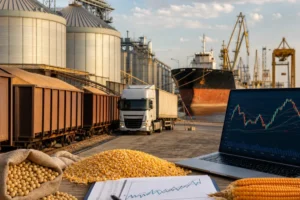
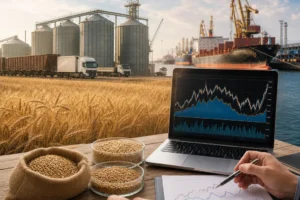
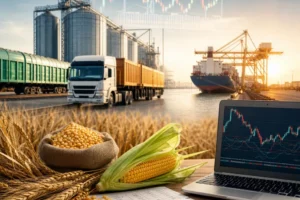
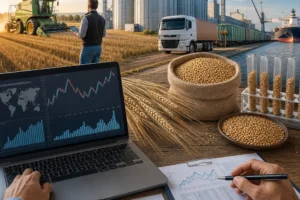
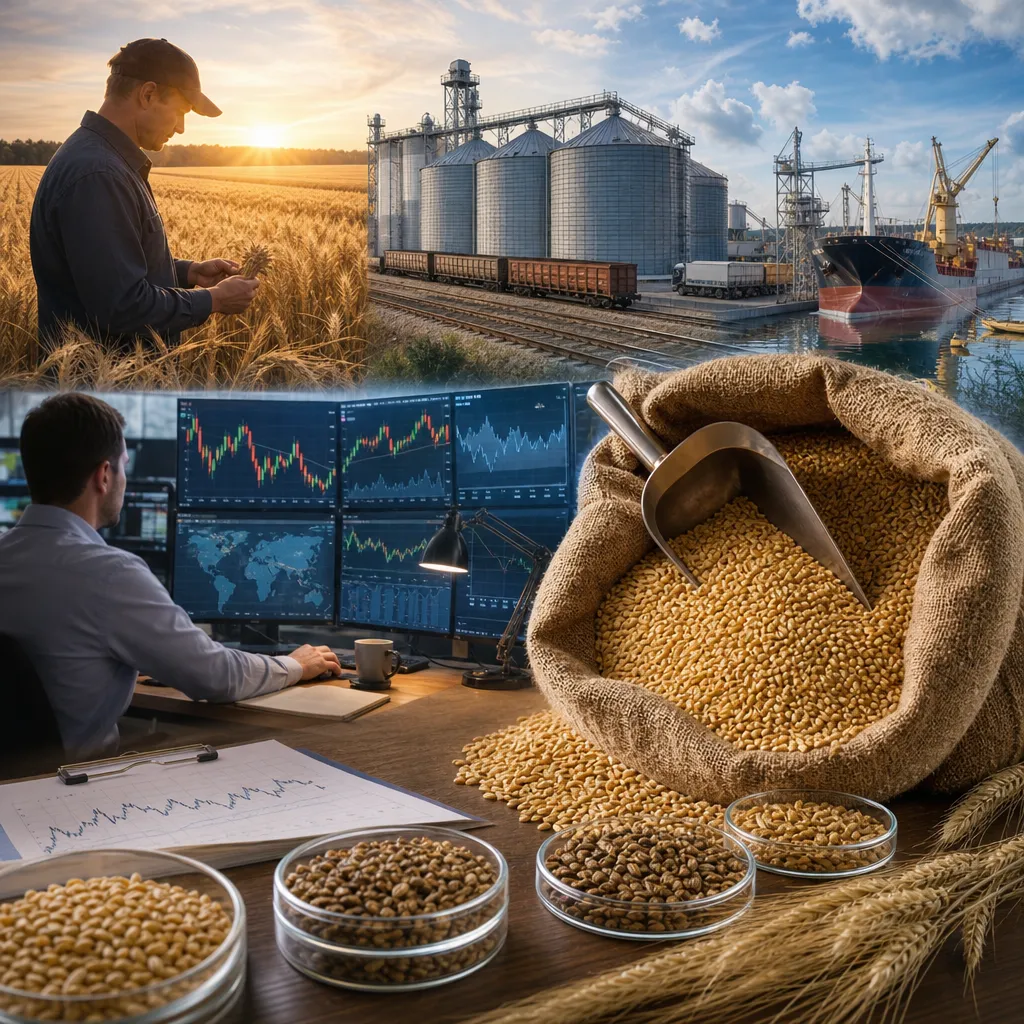
The EU barley futures market is primarily a European price-discovery and risk-management market linked to feed grain and malting barley trade across the European Union. In practice, when market participants refer to an EU barley futures benchmark, they usually mean the feed barley futures contract traded on Euronext, the major agricultural derivatives exchange used by European grain merchants, processors, exporters, and financial traders. The market matters well beyond the exchange itself because physical barley prices in France, Germany, Spain, the Benelux region, and other EU member states are often discussed in relation to futures, basis, logistics, and export competitiveness. It is therefore important to separate the online futures quote from the actual cash price paid for barley at a farm, inland silo, feed mill, maltster, or export terminal.
Geographically, this is a European market rather than a single-country market. The futures benchmark is associated with the EU grain trade and especially with western European merchandising flows, while physical barley is produced and consumed across many member states. Prices are commonly discussed in euros per metric tonne, and the market competes with other feed grain benchmarks such as wheat and corn futures, Black Sea export prices, and local cash offers. The exchange quote is only one layer of pricing; the actual tradeable value of barley depends on quality, delivery location, timing, currency, and local supply-demand conditions.
What the EU barley futures market means
The EU barley futures market is a standardized derivatives market used to reference and hedge barley price risk. Instead of negotiating a separate forward price for every local transaction, market participants can use a listed futures contract to manage exposure to price moves. A seller of physical barley may sell futures to protect against a decline in market values, while a buyer such as a feed manufacturer may buy futures to reduce the risk of rising prices.
In Europe, the relevant exchange is Euronext. The contract is not the same as a local farm contract or a truckload sale. It is a standardized financial and commercial instrument with fixed contract terms set by the exchange. That standardization is what allows large numbers of market participants to trade a common benchmark.
The market mainly serves four functions:
- Price discovery: creating a visible benchmark for forward values.
- Hedging: allowing physical grain firms to offset price risk.
- Spreading and arbitrage: comparing barley with wheat, corn, or other grain markets.
- Liquidity for commercial trade: supporting export and domestic merchandising decisions.
Where the market operates
The exchange component operates on Euronext, which is the main venue for several important European grain futures contracts. Although barley is grown and consumed across the EU, the practical center of price formation is often western Europe, especially where major merchants, exporters, feed compounders, and port logistics are concentrated.
The physical market operates across many locations:
- Farm-gate transactions in producing regions.
- Inland elevator and cooperative buying programs.
- Feed mill and maltster procurement.
- Domestic delivered contracts by truck, rail, or barge.
- Export sales through port terminals on an FOB basis.
France has a particularly important role in EU barley pricing because it is a major barley producer and exporter, especially into North African and Middle Eastern demand channels. Other EU countries matter as producers, consumers, or importers depending on crop size, feed demand, and quality. Spain, for example, is an important feed grain demand market in years when domestic output is smaller or when imported grain is competitively priced.
How prices are formed
An EU barley price is rarely just one number. The visible futures quote is only the benchmark. The final cash price paid in the physical market is usually built from several components.
| Price type | Where quoted | What it means |
|---|---|---|
| Futures price | Exchange screen on Euronext | Standardized contract value for a future delivery month; benchmark, not a farm-gate price. |
| Local cash bid | Cooperative, merchant, elevator, feed mill, or maltster | Actual bid for physical barley at a specific location with specific quality and delivery terms. |
| Delivered price | Domestic buyer contract | Price including transport to the buyer’s facility. |
| FOB export price | Port export market | Value of grain loaded at the exporting port, before ocean freight. |
| CIF import price | Import destination market | Cost including freight and insurance into the importing market. |
| Basis | Calculated from futures and local cash | The difference between local cash value and the relevant futures benchmark. |
Basis is especially important. If futures stay unchanged but inland transport becomes tight, export demand improves, or feed buyers become aggressive, the local cash market can strengthen relative to futures. The opposite can happen when harvest pressure is heavy, storage is full, or quality is below buyer requirements.
Cash barley prices in the EU are commonly shaped by:
- Relevant Euronext grain futures levels.
- Competition from wheat and corn in feed rations.
- Malting versus feed quality premiums or discounts.
- Regional harvest size and quality.
- Export demand, especially from traditional barley importers.
- Port logistics, freight, and inland transport costs.
- Euro exchange rate against major trading currencies.
- Domestic livestock feed demand.
Futures versus the physical barley market
The easiest way to understand the EU barley market is to keep the financial benchmark and the physical grain trade separate.
Physical grain involves actual barley changing ownership. Farmers sell to cooperatives, private merchants, maltsters, feed mills, or exporters. Contracts may specify protein, moisture, screenings, specific weight, germination quality for malting barley, delivery window, and payment terms. Grain moves by truck, rail, barge, or vessel depending on destination.
Futures and options are exchange-traded instruments. A trader can buy or sell a futures contract through a broker without owning a single tonne of barley. Some participants close their positions before expiry, using the contract purely for price exposure. Commercial firms may maintain futures positions against physical inventory or forward sales.
| Market | Main users | Purpose | What changes hands |
|---|---|---|---|
| Physical cash market | Farmers, cooperatives, merchants, maltsters, feed mills, exporters | Procurement and sale of real grain | Actual barley |
| Futures market | Commercial hedgers, brokers, proprietary traders, funds | Hedging and trading price risk | Standardized contract exposure |
| Options market | Commercial firms and financial traders | Managing upside or downside risk with defined option structures | Option rights on futures |
How barley is bought, sold, exported, and hedged in the EU
In day-to-day trade, barley is usually marketed first through local collection and merchandising channels. A farmer may sell at harvest for spot movement, place grain into storage and sell later, or sign a forward contract before harvest. Cooperatives and private merchants aggregate volume, manage quality segregation, and direct grain either into domestic consumption or export channels.
Domestic users include feed manufacturers and maltsters. Feed barley competes with wheat and corn depending on relative prices and nutritional economics. Malting barley is a more quality-sensitive market; even when futures or feed barley values decline, malting premiums may behave differently because the buyer needs a tighter quality specification.
Export trade normally works through grain merchants and port terminals. Exporters may buy barley inland, move it to port, and sell it FOB to overseas buyers. Importers then compare that origin with rival suppliers and ocean freight alternatives. The spread between inland procurement costs and export selling values helps determine whether the export program is active.
Hedging typically works like this:
- A merchant buys physical barley from origin.
- The merchant sells futures to protect the flat-price risk.
- If the cash market later weakens, the physical sale may be offset by gains on the futures hedge.
- If the cash market strengthens relative to futures, the result depends on basis and execution quality.
This means a hedge reduces exposure to broad market moves but does not eliminate basis risk. A company can be correct on futures direction and still face problems if local premiums, discounts, freight, or quality move unexpectedly.
Where to check EU barley prices and market information online
Readers looking for the current or live EU barley futures price should check the official exchange and regulated market data providers. The most relevant starting point is Euronext, which publishes contract information and market data for its listed agricultural products. Depending on the level of detail needed, users may also monitor prices through brokerage platforms and market terminals that carry Euronext data.
For physical cash and trade context, the futures screen is not enough. Useful sources include:
- Euronext: benchmark futures and contract information.
- European Commission, Agriculture and Rural Development: EU market context, cereals information, and policy background.
- EU trade and statistics sources such as Eurostat: production, trade, and usage context.
- USDA Foreign Agricultural Service and PSD data tools: comparative global supply-demand and trade perspective.
- Local cooperatives, merchants, maltsters, and feed buyers: actual regional cash bids and contract terms.
- Agricultural market services and specialist brokers: day-to-day commentary on basis, spreads, and export demand.
If a reader cannot find a single “EU barley price,” that is normal. There is no one universal farm-gate number for the entire EU. A French export-surplus region, a Spanish feed-deficit area, and a malt-focused procurement zone can all trade at very different cash values on the same day, even if the same futures contract is being used as the benchmark.
Main drivers and practical market scenarios
The EU barley futures market responds to both European and global factors. Barley does not trade in isolation. It competes as a feed grain and as an export-origin commodity, so values can move with broader grain sentiment even when barley-specific news is limited.
| Factor | Likely market effect | Why it matters |
|---|---|---|
| EU weather and yields | Can tighten or loosen supply expectations | Barley prices react to production size and quality. |
| Malting quality outcomes | Can separate malting and feed values | A crop can be ample overall but still short of malting specification. |
| Feed grain competition | Changes relative barley demand | Buyers compare barley with wheat and corn formulations. |
| Export demand | Can support inland prices and port premiums | A strong export program pulls grain toward terminals. |
| Euro exchange rate | Affects export competitiveness | A weaker euro may improve competitiveness in world markets. |
| Freight and logistics | Changes basis and delivered economics | Transport costs directly affect local cash values. |
Forecasting should be done in scenarios rather than certainty. If EU harvest conditions are favorable and competing feed grains are abundant, barley prices may face pressure. If weather harms quality, export demand improves, or other feed grains rally, barley values can strengthen quickly. The same broad futures move may produce different local outcomes depending on whether the region is surplus, deficit, feed-oriented, or export-oriented.
How market participants access the market in practice
For physical barley, access is usually through existing grain trade relationships. Farmers and commercial holders deal with cooperatives, merchants, processors, or exporters. Key practical issues are quality specification, delivery period, storage, payment security, weighing, moisture adjustment, and counterparty reliability.
For futures and options, access is through a broker or trading member connected to Euronext. Users need an account and must understand margining, mark-to-market exposure, contract months, expiry, and liquidity. Futures provide financial exposure to price movements, but they do not automatically arrange the purchase or sale of physical barley. A trader can exit the position before delivery and never handle grain at all.
This distinction matters because many newcomers wrongly assume that buying a barley futures contract is the same as buying a truckload of grain. It is not. One is mainly a price-risk instrument; the other is a commercial grain transaction with real logistics and quality obligations.
FAQ
What is the main benchmark for EU barley futures?
The main benchmark used in the European market is the barley futures contract traded on Euronext. It is used for price discovery and hedging, not as a direct farm-gate cash quote.
In what currency and unit are EU barley prices usually discussed?
EU barley futures and many regional cash discussions are typically expressed in euros per metric tonne. Physical contracts may still differ by delivery basis, quality terms, and whether transport is included.
Where can I check the current EU barley futures price?
The most reliable place to start is Euronext. Many brokers and market-data platforms also display Euronext agricultural futures. For actual local cash barley bids, readers should check cooperatives, merchants, feed mills, maltsters, or regional market services.
Why is the futures price different from the local cash barley price?
The futures quote is a standardized benchmark. Local cash prices include basis, freight, handling, quality adjustments, delivery timing, storage conditions, currency effects, and local buyer competition.
How is barley physically traded in the EU?
It is bought and sold through farmers, cooperatives, merchants, feed manufacturers, maltsters, and exporters. Grain can move to domestic users or export terminals depending on quality and market economics.
Does the EU barley futures market cover malting barley too?
The futures benchmark is mainly a feed-grain pricing tool. Malting barley often trades with its own quality premiums or discounts, so malting values may diverge from feed barley futures when specification becomes critical.
Can a trader use EU barley futures without taking delivery?
Yes. Many participants use futures only for hedging or speculation and close positions before expiry. Taking or making delivery is not necessary for most financial traders.
What are the biggest drivers of EU barley prices?
The main drivers are EU crop size and quality, feed demand, competition with wheat and corn, export demand, euro exchange rate, and inland plus port logistics.
Sources
- Euronext
- European Commission, Directorate-General for Agriculture and Rural Development
- USDA Foreign Agricultural Service