
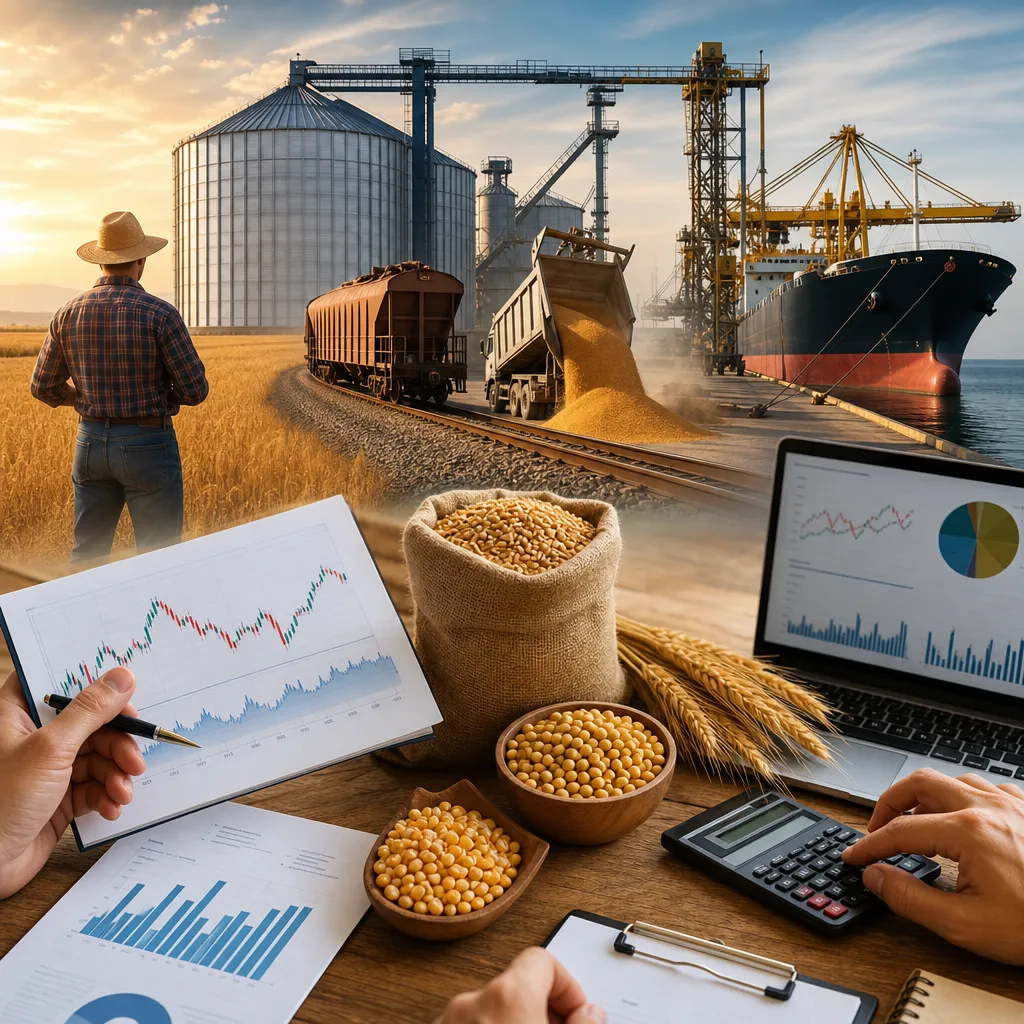
Grain carry trade is the practice of buying or holding grain now, storing it, and selling it later if the market pays enough to cover storage, interest, shrink, and risk. In practical terms, it links three markets at once: the physical cash market, the futures market, and the storage/logistics system. Farmers, elevators, cooperatives, merchants, processors, and speculative traders all use some version of carry, but they do not all use it the same way. The key question is simple: does the market pay you enough for time?
When it works, carry trade converts storage capacity and balance-sheet strength into a potential return. When it fails, the market may not cover costs, basis may weaken, grain quality may deteriorate, or futures spreads may collapse. Understanding where to see the signals and how to calculate them is more important than memorizing theory.
What grain carry trade means
In grain markets, carry usually means the premium of a later delivery period over a nearby delivery period. That premium may appear in futures spreads, in cash bids, or in both.
Example: if December corn futures are below March corn futures, the market is paying something for time. If a local elevator also bids more for later delivery than for spot delivery, that is a cash-market form of carry. A trader or farmer may then ask whether storing corn from harvest into winter or spring makes economic sense.
The term is used in two closely related ways:
- Physical carry: owning grain in a bin, elevator, warehouse, or commercial storage facility and selling later.
- Paper carry: trading futures calendar spreads, such as buying a nearby contract and selling a deferred contract, or the reverse, depending on the strategy and market structure.
These are not identical. A futures spread can move in your favor even if local basis worsens. Likewise, local basis can improve while futures carry shrinks. Good grain merchandising separates these two components instead of treating them as one price.
How it works in practice
A grain carry trade starts with grain ownership or with access to a futures account. In the physical market, the holder stores grain after harvest or after purchase, waits for a later marketing window, and then sells into a cash market, processor, feed mill, export channel, or elevator bid. In the futures market, a trader may express a view on spread structure without ever owning physical grain.
The economic logic usually looks like this:
- Buy grain or keep harvested grain unsold.
- Store it in on-farm bins or commercial storage.
- Finance the grain value or tie up working capital.
- Monitor futures carry, local basis, freight, and quality.
- Sell later only if the later price improvement exceeds total holding cost.
Total holding cost normally includes:
- Storage charges or on-farm ownership cost
- Interest on grain value
- Insurance
- Aeration, drying, handling, and inventory loss
- Shrink and quality risk
- Opportunity cost of bin space
This is why carry trade is often strongest when harvest pressure is heavy, storage is available, and deferred demand is visible. It tends to weaken when nearby supplies are tight and buyers want grain now, which can create an inverted market instead of a carrying market.
| Element | What it means | Why it matters |
|---|---|---|
| Nearby cash price | What you can sell for now at a local delivery point | Sets the immediate sell alternative |
| Deferred cash bid | Bid for delivery in a later month | Shows cash-market carry if later bid is higher |
| Futures spread | Price difference between contract months | Measures exchange carry or inversion |
| Basis | Local cash price minus relevant futures price | Can improve or weaken during storage |
| Holding cost | Storage, interest, shrink, and risk | Must be covered for carry trade to make sense |
Where carry exists: futures market versus physical market
Carry exists both online and in the real grain pipeline, but readers should keep the two separate.
In the futures market, grain carry is visible on regulated exchanges such as CME Group, which lists major grain and oilseed futures including corn, soybeans, wheat, oats, soybean meal, soybean oil, and some related products. Futures are accessed through a futures broker and trading platform. These are financial contracts with standardized delivery terms, months, contract sizes, and exchange rules. Most participants offset before delivery.
In the physical market, carry exists at country elevators, cooperatives, grain merchants, feed manufacturers, crushers, millers, maltsters, exporters, and warehouses. A farmer may see it in posted harvest bids versus January, March, or summer delivery bids. An exporter may see it in flat prices or basis offers for shipment windows at a port. A processor may use carry to secure pipeline coverage over time.
Important distinction: a futures quote is not the same as a local grain bid. The local bid depends on basis, freight, handling cost, quality, and local supply-demand conditions. A strong futures carry does not guarantee a profitable physical carry if basis weakens or storage costs are high.
| Market type | Where it is accessed | What is traded | Main users |
|---|---|---|---|
| Futures market | Regulated exchange through a futures broker platform | Standardized contracts and spreads | Hedgers, merchants, funds, traders, processors |
| Cash grain market | Elevators, cooperatives, merchants, processors, exporters | Physical grain with grade and delivery terms | Farmers, buyers, feed users, millers, exporters |
| Commercial storage market | Warehouse, elevator, terminal, port storage network | Storage capacity and logistics timing | Merchants, elevators, processors, shippers |
How to calculate whether carry is worth it
The practical test is whether the expected revenue gain from selling later is greater than total carry cost.
A basic physical carry decision can be framed as:
Net carry return = later expected sale price – current sale price – total holding cost
The later expected sale price may come from:
- A posted deferred cash bid from an elevator or processor
- The current futures carry plus an expected future basis
- A forward contract for future delivery
Suppose a farmer can sell at harvest today or store grain until spring. The farmer compares:
- Harvest cash bid now
- Spring forward bid or expected spring cash price
- Cost of drying, aeration, handling, insurance, interest, and shrink
- Risk that quality discounts appear later
Elevators and merchants do the same, but often at larger scale and with more formal spread and basis management. They may buy cash grain, hedge it with futures, earn storage or merchandising margin, and redeliver to processors or export channels later.
For futures spread traders, the calculation differs. They are not storing physical grain, but they are trading changes in contract-month relationships. That avoids physical quality and warehouse risk, but introduces margin calls, spread volatility, and execution risk.
Who uses grain carry trade and why
Farmers use carry to avoid harvest lows, especially when on-farm storage is available. They may store unpriced grain, hedge with futures, or use cash forward contracts for later delivery.
Country elevators and cooperatives use carry as a merchandising business. They buy grain during harvest pressure, store it, hedge price exposure, then attempt to earn from carry, basis appreciation, origination margin, and logistics timing.
Processors such as flour mills, feed mills, ethanol plants, crushers, maltsters, and rice mills may bid for later delivery to secure future supply. Their deferred bids help create cash carry in local markets.
Exporters and merchants use carry when port demand is seasonal, freight windows matter, or they expect basis at origin or destination to improve.
Speculators and spread traders use futures calendar spreads when they expect market structure to widen or narrow. This is a financial trade, not a grain ownership strategy.
Where to check carry signals, bids, and market data
For exchange carry, traders usually check the futures curve on the exchange website, broker platforms, or commercial charting/data systems. For major US grain contracts, CME Group is the primary benchmark source for listed futures contract months and specifications.
For local cash carry, farmers and buyers usually check:
- Posted elevator or cooperative bids
- Processor bids from mills, crushers, ethanol plants, feed plants, or maltsters
- Merchants and exporters for specific delivery windows
- Regional agricultural market reporting services where available
In the United States, USDA market reporting and transportation information are useful for understanding regional cash relationships, export demand, and logistics. In other countries, equivalent agriculture ministries, grain boards, statistical agencies, or commodity exchanges may publish cash, production, or trade information.
Key official sources commonly used in grain carry analysis include:
- USDA WASDE for supply, demand, stocks, and balance sheet changes
- USDA Grain Transportation Report for barge, rail, and export logistics context
- USDA Export Sales for demand pace in exportable crops
- CFTC Commitments of Traders for futures positioning
- CME Group for contract specifications and futures month relationships
Commercial software and farm-management systems may combine cash bids, hedge positions, storage inventories, and basis history. Those tools are designed more for operational decisions than for public market price discovery. A broker platform is for futures execution; a grain merchant or elevator is for physical grain; a market-data service is for analysis. They often work together, but they are not substitutes for each other.
Main risks and limitations
Carry trade is often described as conservative compared with flat-price speculation, but it still carries real risk.
- Basis risk: local basis may weaken enough to erase futures carry.
- Storage risk: spoilage, insects, moisture migration, shrink, or grade loss can create discounts.
- Financing risk: interest costs rise when capital is tied up longer.
- Logistics risk: rail, truck, barge, or port disruptions can delay movement or widen basis.
- Spread risk: futures carry can collapse if nearby demand strengthens.
- Margin risk: hedged positions and spread positions may require variation margin through a futures broker.
- Counterparty risk: private forward contracts and deferred payment arrangements require credit review.
In some years, selling at harvest is better than storing. That usually happens when the market is inverted, storage is expensive, nearby basis is unusually strong, or bin space has a higher-value use.
Practical ways to use grain carry trade
For a farmer with on-farm storage
- Collect nearby and deferred bids from local elevators, cooperatives, processors, or feed buyers.
- Compare current cash sale versus later-delivery cash contract.
- Estimate true storage cost, including interest and expected shrink.
- Check basis history and futures spread structure.
- Consider whether to stay unpriced, hedge futures, or lock a deferred cash contract.
- Monitor grain condition throughout storage.
For a commercial elevator or merchant
- Buy or originate cash grain during periods of pressure.
- Hedge flat-price risk using the relevant futures contract.
- Track carrying charges, storage income, and expected basis behavior.
- Manage delivery commitments to processors, domestic users, or port channels.
- Roll hedge months or liquidate positions as grain is sold out.
For a futures spread trader
- Open a regulated futures account with a broker that supports calendar spread trading.
- Study contract specifications, first notice dates, last trade dates, and liquidity by month.
- Trade the spread rather than outright flat price when that matches the thesis.
- Monitor seasonal patterns, stocks, delivery conditions, and fund positioning.
- Control leverage carefully because spreads can still move sharply.
When carry tends to appear or disappear
Carry tends to be more common when supplies are comfortable, harvest pressure is heavy, and the market needs grain stored for later use. It often appears in corn, soybeans, wheat, barley, and other storable crops when inventories are ample.
Carry tends to shrink or invert when nearby demand is urgent, stocks are tight, logistics are constrained, or weather threatens immediate availability. In an inverted market, the nearby month trades above deferred months, signaling that the market wants grain now rather than later. That is generally unfriendly to storage trades.
Seasonality matters, but it is not enough on its own. A large crop can still produce weak carry if storage is already full or transportation is blocked. A smaller crop can still show some carry if nearby demand is soft and deferred demand is stronger. The structure follows supply timing, working capital, and logistics as much as headline production.
FAQ
Where can I check grain carry in the market?
Check futures spreads on exchange or broker platforms, and check deferred cash bids from local elevators, cooperatives, processors, and merchants. Both are needed because futures carry and local basis can move differently.
Is grain carry trade the same as buying grain futures?
No. Buying grain futures is a financial position on exchange. Physical carry means owning actual grain in storage. A futures spread trade is also different from holding physical grain because it avoids storage and quality risk but still carries margin and spread risk.
Where does a farmer normally sell grain in a carry strategy?
Usually through a local elevator, cooperative, processor, feed mill, crusher, miller, or grain merchant. The transaction is based on a local bid, delivery point, grade, moisture, and timing, not just the futures board.
How do I know whether storing grain is profitable?
Compare the current cash sale option with the later expected sale price, then subtract all holding costs. Include storage, interest, shrink, handling, and quality risk. If the market does not pay enough to cover those costs, carry is unattractive.
Can carry trade be done entirely online?
Futures spread trading can be executed online through a regulated broker platform. Physical grain carry cannot be done entirely online because it requires actual storage, handling, and a real delivery outlet, even if bids and contracts are viewed electronically.
What reports are most useful for grain carry analysis?
USDA WASDE is central for stocks and supply-demand shifts. USDA Export Sales and transportation reports help explain demand timing and logistics. Exchange contract information from CME Group helps interpret futures spreads and delivery structure.
What is the biggest mistake in grain carry analysis?
Using futures carry alone and ignoring basis, storage cost, and grain condition. Many poor decisions come from assuming the deferred futures premium automatically becomes profit in the local cash market.
Sources
- USDA World Agricultural Supply and Demand Estimates
- CME Group grain and oilseed futures contract specifications
- U.S. Commodity Futures Trading Commission Commitments of Traders