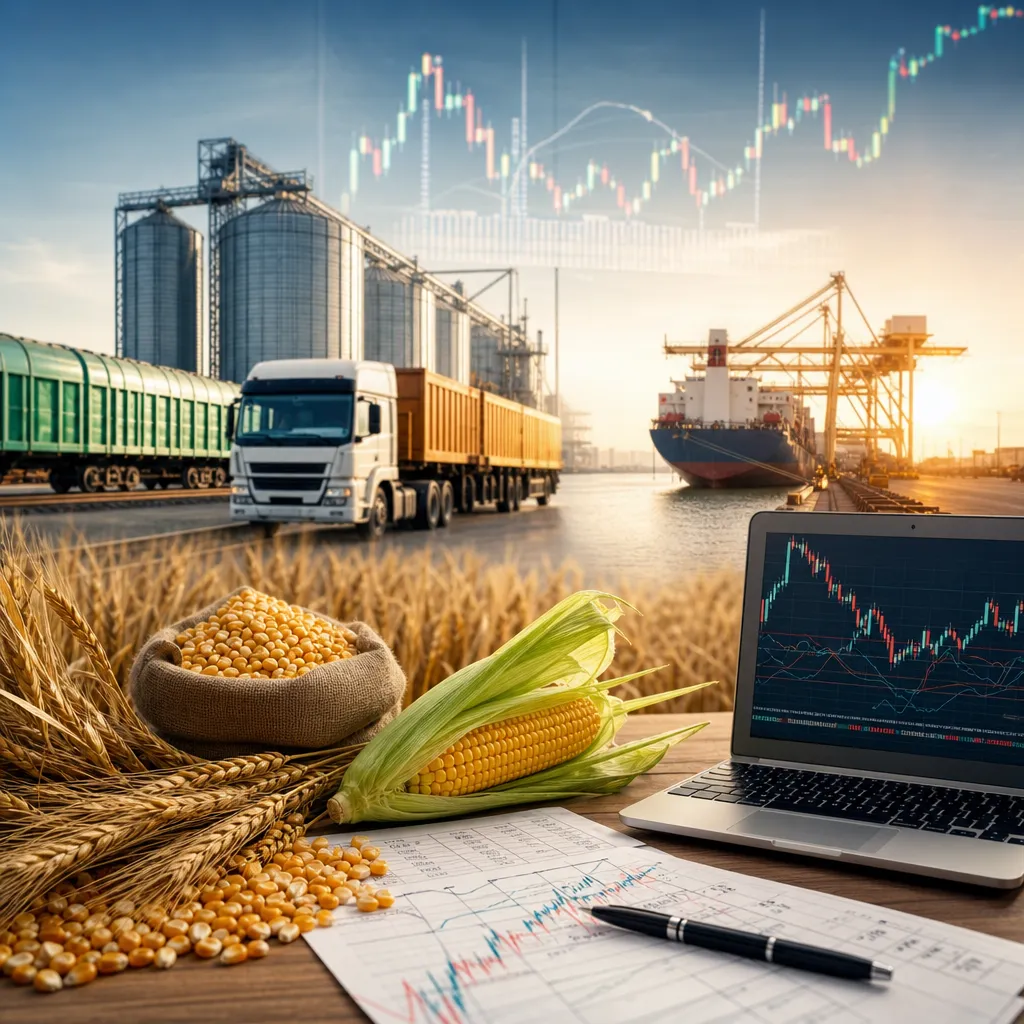









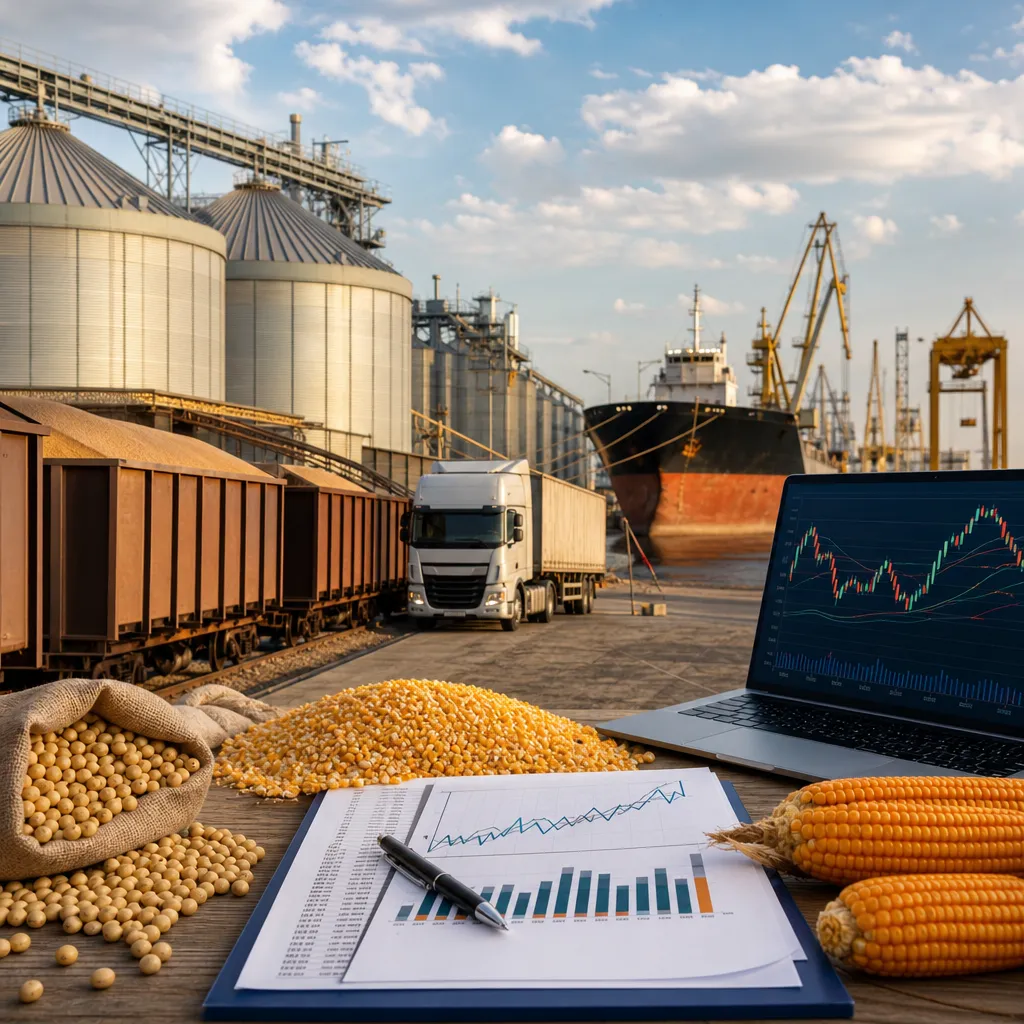
The corn-soybean spread is one of the most watched inter-commodity relationships in agricultural markets. In practice, it usually means trading the price difference or ratio between corn and soybeans, most often through CME Group futures, to express a view on relative value rather than on the outright direction of all grain prices. Traders, farmers, merchandisers, and analysts use it to compare planting incentives, feed-versus-oilseed economics, and seasonal supply-demand shifts. It is useful both as a speculative spread and as a decision tool, but it only works well when the trader clearly separates exchange futures pricing from local cash grain values.
Most spread trading in this market takes place online through a regulated futures broker offering access to CME Group contracts. Physical corn and soybeans are bought and sold separately through elevators, cooperatives, grain merchants, processors, and exporters, not as a packaged “spread” transaction. That distinction matters: a corn-soybean spread quote on a trading screen is a financial market relationship, while a farmer’s local elevator bid depends on basis, freight, quality, and delivery point.
What corn soybean spread trading means
At its core, corn soybean spread trading compares corn futures with soybean futures. A trader buys one market and sells the other at the same time, aiming to profit if the relationship between the two changes in the expected direction.
There are two common ways market participants discuss this relationship:
- Price spread: the arithmetic difference between soybean futures and corn futures, after adjusting for the fact that the contracts are quoted in cents per bushel.
- Price ratio: the soybean price divided by the corn price, often used to judge relative crop economics and acreage incentives.
In farm economics, the ratio is especially important because it helps explain whether producers may favor corn or soybeans in the next planting season. If soybeans are relatively more valuable versus corn, soybean acreage may become more attractive, all else equal. If corn strengthens relative to soybeans, corn acres may be encouraged instead.
In trading, the spread is often used because the two crops share some macro drivers, such as weather, acreage competition, freight, fund activity, and US export conditions. A spread trader is often trying to isolate the difference between the two markets rather than make a pure bullish or bearish bet on agriculture as a whole.
Where spread trading happens and what contracts are used
Most financial corn-soybean spread trading is done using futures listed by CME Group, specifically CBOT corn and CBOT soybean futures. These are regulated exchange-traded contracts accessed through a futures commission merchant or broker. Trading is typically done on an electronic platform provided by the broker or through institutional trading software connected to the exchange.
A trader does not usually buy physical grain to trade this spread. Instead, the trader opens a futures account, deposits margin, and enters two linked positions:
- Long corn futures and short soybean futures, or
- Short corn futures and long soybean futures.
The exact contract months matter. Many traders compare old-crop with old-crop or new-crop with new-crop months, such as December corn against November soybeans, because those months align more closely with US harvest timing and acreage decisions. Mismatched months can introduce extra calendar and seasonality effects that may not reflect the intended trade idea.
| Market type | Where it exists | What it represents | Who uses it |
|---|---|---|---|
| Futures spread | CME Group via futures brokers and trading platforms | Relative value between corn and soybean futures | Speculators, hedgers, analysts, commercial firms |
| Cash grain market | Elevators, cooperatives, crushers, feed mills, exporters | Actual price for physical grain at a location | Farmers, merchandisers, processors, end users |
| OTC physical contracting | Direct negotiation with merchants or processors | Delivery agreement with quality, freight, and payment terms | Producers, buyers, commercial grain firms |
How the spread works in practice
A spread trader starts with a market view about relative performance. For example:
- If the trader believes corn will strengthen relative to soybeans, they may buy corn futures and sell soybean futures.
- If the trader believes soybeans will strengthen relative to corn, they may buy soybean futures and sell corn futures.
Because this is a two-leg position, profit and loss depend on how the relationship changes, not just whether grain markets rise or fall in absolute terms. If both markets fall but soybeans fall more than corn, a long-corn/short-soybean spread may still make money.
Execution can be handled manually or through spread order functionality offered by some brokers and professional platforms. Even so, the position is still exposed to:
- different contract specifications,
- different seasonal patterns,
- changes in volatility between the two markets,
- margin calls if the spread moves adversely.
Although spread positions are often less directional than outright futures trades, they are not low-risk by default. Weather shocks, export surprises, biofuel policy changes, and fund flows can alter one leg much more than the other.
Why the corn-soybean relationship moves
The spread is driven by both shared grain-market forces and crop-specific fundamentals. The most important factor is often acreage competition in major producing regions, especially the US Midwest. Corn and soybeans compete for land, inputs, storage, and farmer attention.
Key drivers include:
- Planting economics: expected returns per acre, seed and fertilizer costs, and rotation decisions.
- Weather: delayed planting, summer heat, dryness, and harvest disruptions can affect one crop more than the other.
- Stocks and stocks-to-use: tighter ending stocks in one crop may support that leg of the spread.
- Export demand: Chinese soybean buying, corn export competitiveness, and Black Sea feed grain supplies can all matter.
- Biofuels: ethanol affects corn demand, while renewable diesel and vegetable oil markets can influence soybeans through crush economics.
- Crush and feed demand: soybean meal, soybean oil, livestock feed needs, and substitution across feed ingredients can shift relative pricing.
- Currency and freight: US competitiveness versus Brazil, Argentina, and other origins depends partly on exchange rates and logistics.
This is why spread traders closely watch not only CBOT prices but also crop reports, export sales, weather maps, and processor margins.
| Driver | More likely to affect | Why it matters to the spread |
|---|---|---|
| US acreage intentions | Both | Shows how farmers may divide land between corn and soybeans |
| Summer weather stress | Often corn first, but both | Yield risk can be different because crop development timing differs |
| Chinese buying patterns | Soybeans | Soybeans are highly sensitive to import demand from major buyers |
| Ethanol demand | Corn | Changes in fuel demand and biofuel policy affect corn usage |
| Soybean crush margins | Soybeans | Processor demand links soybean values to meal and oil markets |
How farmers and commercial grain firms use the relationship
Farmers do not usually “trade the spread” in the same way speculative futures traders do, but they use the relationship constantly. The soybean-to-corn price ratio is part of acreage planning, crop budgeting, and marketing discussions with lenders, agronomists, and grain merchandisers.
Commercial grain firms, feed manufacturers, ethanol plants, soybean crushers, and exporters may use futures spreads as part of broader hedge books. For example, a merchandiser exposed to shifting values between feed grains and oilseeds may use relative hedges while separately managing basis and freight risk in the cash market.
Important practical point: a strong soybean futures market does not automatically mean a strong local soybean cash bid, and the same is true for corn. Local basis may widen or narrow because of:
- storage congestion,
- river conditions,
- rail availability,
- processor demand,
- quality discounts,
- local harvest pressure.
So a farmer may watch the spread for planning, but actual selling decisions still happen through local buyers such as country elevators, cooperatives, feed mills, processors, or exporters.
Where to check prices, reports, and analysis
For futures prices, the primary reference point is CME Group, which lists CBOT corn and soybean contracts and contract specifications. Many brokers, market terminals, and charting platforms distribute these exchange prices in real time or delayed form, depending on the data package.
For local cash prices, producers and physical buyers usually check:
- elevator and cooperative bid sheets,
- processor bid pages,
- merchant offers and export bids,
- regional agricultural market reporting services.
In the United States, key public data sources include:
- USDA WASDE: global and US supply-demand balance sheets for corn and soybeans.
- USDA Crop Progress: planting, condition, and harvest updates during the season.
- USDA Prospective Plantings and Acreage reports: important for acreage competition between corn and soybeans.
- USDA Grain Stocks: helps reassess tightness or abundance.
- USDA Export Sales: useful for soybean and corn demand tracking.
- CFTC Commitments of Traders: shows how futures and options positions are distributed among participant categories.
Analysts often combine these public reports with weather services, satellite vegetation tools, broker research, and commercial cash market color from elevators, crushers, and export channels.
How to start trading the corn soybean spread
For a financial trader, the process is usually straightforward in structure, even if execution and risk management are not simple.
- Open a futures brokerage account with a firm that offers access to CME agricultural contracts.
- Understand the contract specifications for corn and soybean futures, including contract size, tick value, listed months, delivery mechanism, and first notice or expiry timing.
- Choose the spread structure, such as old-crop versus old-crop or new-crop versus new-crop months.
- Decide whether you are trading the ratio or the differential. Different traders size positions differently depending on their method.
- Check margin requirements and available liquidity before entering.
- Monitor both futures and fundamentals, especially USDA reports, weather, export pace, and managed-money positioning.
- Define the exit plan, because spread trades can drift for long periods and then move sharply on new information.
For a farmer or physical buyer, “using the spread” usually means something different: tracking the relationship as an input into acreage, forward contracting, storage, and hedge timing decisions. That can be done without placing a speculative spread trade.
Main risks, costs, and limitations
Spread trading reduces some outright market exposure, but it introduces a different set of risks.
- Leg risk: one side can move faster than expected, especially during weather markets or major reports.
- Liquidity differences: nearby and deferred months do not always trade equally well.
- Contract mismatch: comparing the wrong delivery months can distort the trade idea.
- Margin risk: losses still require funding, and leverage can magnify mistakes.
- Model risk: historical ratios do not guarantee future behavior.
- Basis disconnect: the futures spread may not match what happens to local cash values.
- Event risk: USDA surprises, policy changes, export restrictions, or a South American crop shock can rapidly reprice the relationship.
Costs depend on the broker and data arrangement, but traders should always check commissions, exchange and clearing fees, market-data charges, and overnight financing implications where relevant. Physical market users should separately check freight, drying, storage, insurance, shrink, quality discounts, and counterparty terms, because those are cash-market issues rather than futures spread costs.
Futures spread versus physical grain decision-making
The biggest mistake is to assume that a corn-soybean futures spread is the same thing as a decision to buy one physical grain and sell another. In the physical market, each crop is handled through its own logistics chain.
Physical corn and soybeans are stored, graded, and moved separately. A processor may bid aggressively for soybeans because of strong crush margins while a nearby ethanol plant weakens its corn basis, or the reverse may happen. River freight, export lineups, and warehouse capacity can change local economics independently of the board spread.
That is why commercial firms often use both tools:
- Futures spreads for exchange-traded price risk management, and
- Cash contracts for actual merchandising, delivery, and procurement.
Understanding that separation is essential for anyone moving from market analysis into real trading or grain merchandising.
Where can I check the corn soybean spread price?
You normally check it through CME corn and soybean futures quotes on a broker platform, market-data terminal, or exchange-provided contract information. The spread itself may be displayed directly by some platforms, but many users calculate it from the two futures legs. Local elevator websites do not usually quote a “corn-soybean spread” as a tradable instrument.
Is the corn soybean spread the same as local cash bids?
No. The futures spread is an exchange-market relationship between CBOT corn and soybean futures. Local cash bids are physical grain prices at a specific delivery point and include basis, freight, quality factors, and local demand conditions.
Can farmers use the corn soybean spread without becoming futures traders?
Yes. Many farmers use the soybean-to-corn ratio or relative futures values for acreage planning, budgeting, and timing discussions with elevators or merchandisers. They may never place a spread trade, but the relationship still helps guide decisions.
What reports matter most for this spread?
USDA WASDE, Prospective Plantings, Acreage, Grain Stocks, Crop Progress, and Export Sales are among the most important. CFTC Commitments of Traders can also help explain speculative positioning in both corn and soybeans.
Where do physical corn and soybeans get bought and sold?
Normally through grain elevators, agricultural cooperatives, merchants, soybean crushers, feed manufacturers, ethanol plants, exporters, and sometimes direct farm-to-end-user contracts. Those transactions are negotiated around delivery location, quality, timing, basis, and payment terms.
Is spread trading safer than outright futures trading?
It can reduce some broad market exposure, but it is not inherently safe. Relative-value trades can still produce large losses if one market reprices sharply versus the other, especially during weather scares or major USDA report days.
What contract months are commonly compared?
Traders often compare seasonally aligned months, such as December corn against November soybeans for new-crop analysis. The best choice depends on the purpose of the trade and whether the focus is acreage, harvest, storage, or nearby demand.
Sources
- CME Group
- USDA Office of the Chief Economist, World Agricultural Supply and Demand Estimates
- U.S. Commodity Futures Trading Commission, Commitments of Traders