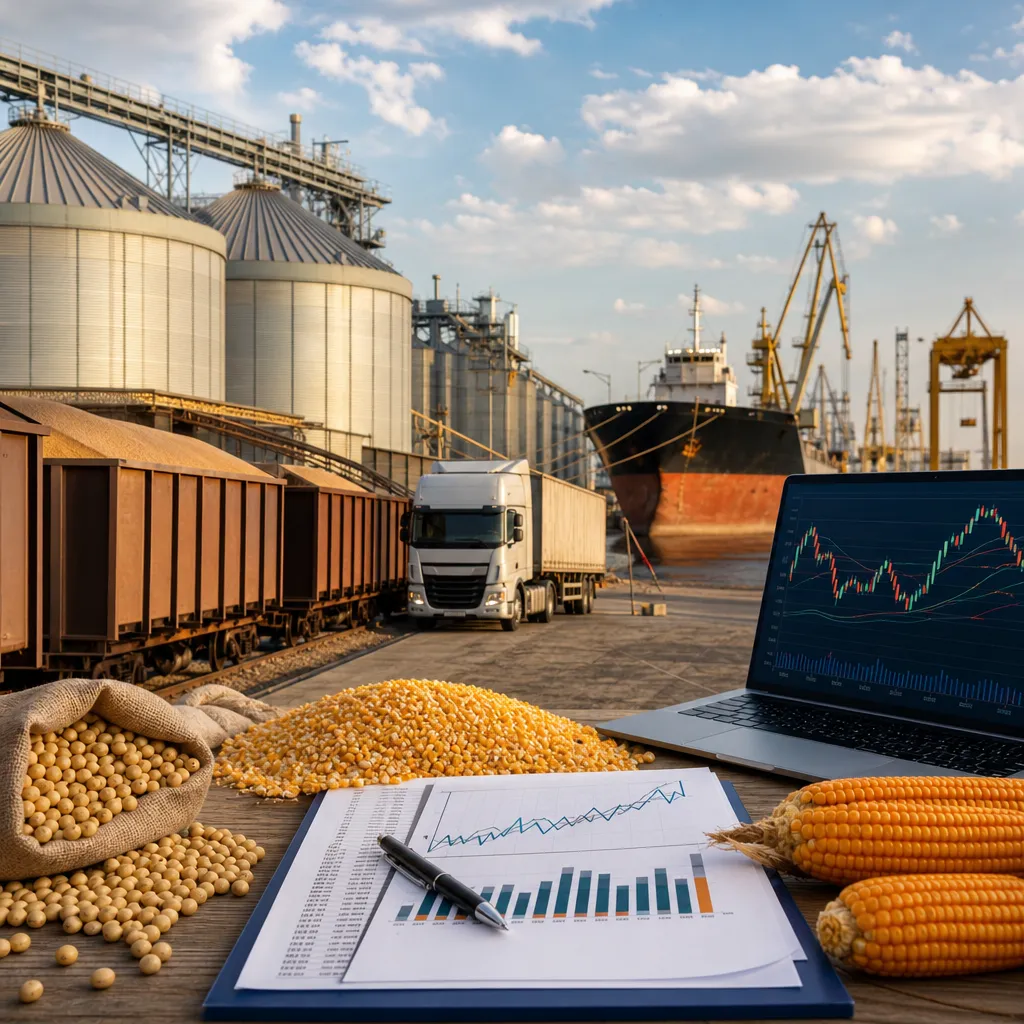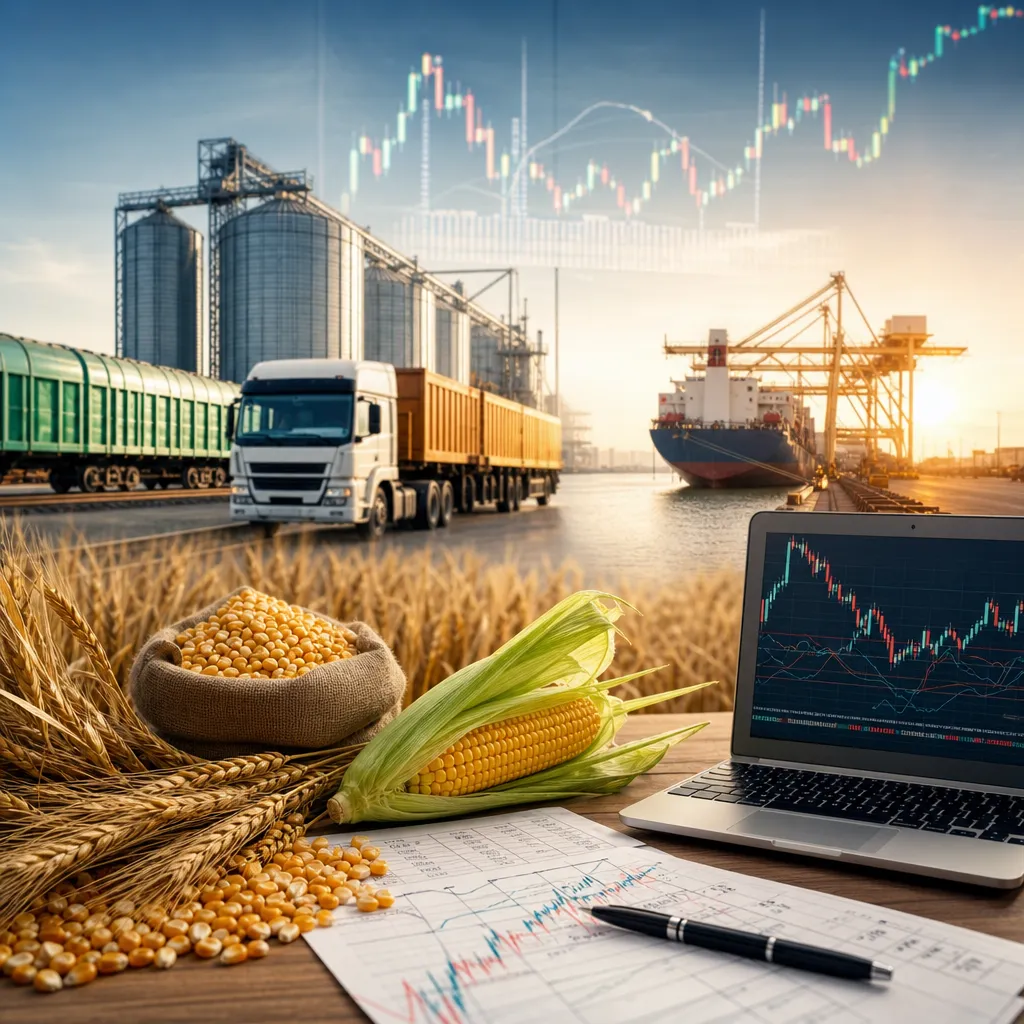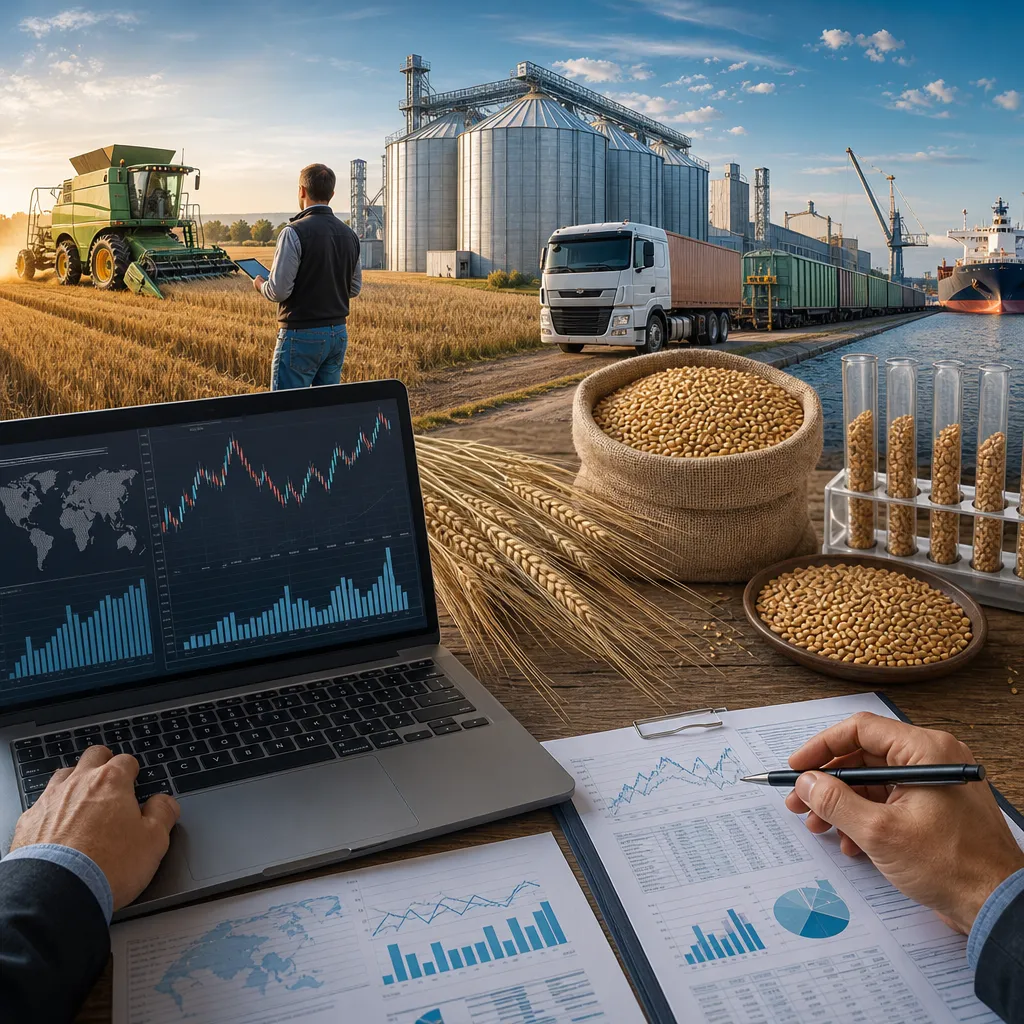

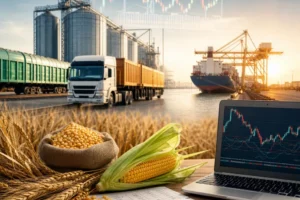
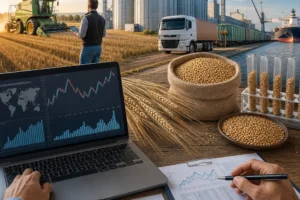
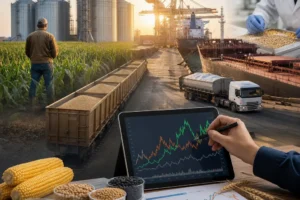
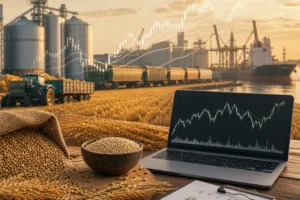

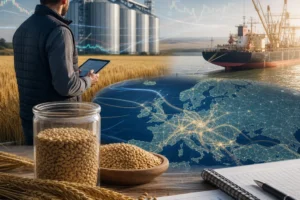
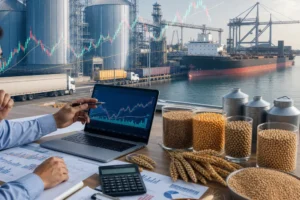


The EU barley export market is the physical and commercial system through which barley produced across the European Union is sold into international trade. It is not a single exchange or one port market: it is a network of inland grain origination areas, merchants, storage and logistics operators, export terminals, feed buyers, maltsters, and shipping routes linked to global grain benchmarks. In practice, the market is centered on major producing and exporting member states such as France, Germany, Romania, and, in some seasons, the Baltic countries and other origins depending on crop size and quality. Prices are usually discussed in euros per metric tonne, but export business may also be negotiated against international values in U.S. dollars per tonne, especially in FOB or destination trade.
For most market participants, the key point is that “EU barley export market” means both a physical export market and a risk-management market. Physical barley is bought and sold through merchants, cooperatives, exporters, feed compounders, and malt houses. Price risk is often monitored or hedged indirectly through grain futures such as Euronext wheat contracts, because barley itself is less liquid on exchanges than wheat and corn.
What the EU barley export market covers
The European Union is one of the world’s major barley-producing regions and, in many years, one of the largest barley exporters. The crop serves two main demand channels: feed barley for livestock and malting barley for the brewing and malting industry. That distinction matters because export demand, pricing, and quality standards can differ sharply between the two.
The export market operates wherever EU barley can be assembled, certified, transported, and loaded for foreign buyers. In practical terms, the market connects:
- farmers and cooperatives in producing regions,
- country elevators and inland silos,
- merchants and international trading houses,
- malting companies and feed buyers,
- port terminals in exporting member states,
- importers in North Africa, the Middle East, and other destinations.
Some buyers purchase barley for feed use, especially in deficit livestock regions. Others buy malting-quality barley under stricter quality requirements involving protein, germination, moisture, screenings, and variety acceptance.
Where the market operates inside the EU
The EU barley export market is geographically dispersed. France is particularly important because it is a major producer and often a leading exporter, with access to Atlantic and Channel export routes. Germany also plays a large role in production and domestic use, especially in feed and malting chains. Romania is important because of Black Sea access, while other EU countries can become active exporters depending on harvest size, internal demand, and freight economics.
Export activity is shaped by where barley is grown and how easily it can move to ports. Inland prices in producing regions do not equal export prices at the port. Grain must be collected, dried if necessary, stored, transported by truck, rail, or barge, and loaded through export infrastructure. That creates location spreads and quality spreads within the EU market.
| Market layer | Where it operates | Main function | Typical users |
|---|---|---|---|
| Farm and local cash market | Producing regions across EU member states | Origination of physical barley | Farmers, cooperatives, local merchants |
| Inland trade market | Storage and logistics networks near rail, river, or truck routes | Aggregation, conditioning, and redistribution | Traders, feed mills, maltsters, logistics firms |
| Port export market | Major EU export terminals | FOB pricing, vessel execution, export loading | Exporters, shipping interests, overseas importers |
| Risk-management market | Exchange-traded and brokered platforms | Hedging price exposure | Merchants, processors, funds, commercial hedgers |
How EU barley export prices are formed
Barley prices in the EU are not formed from one official “EU barley price.” Instead, trade values are built from several layers: international grain values, local supply and demand, quality, logistics, and currency.
The most common price references include:
- Local cash bid: the price offered by a cooperative, merchant, maltster, or feed buyer at a farm, silo, or inland delivery point.
- Delivered price: a value including transport to a specified destination, such as a feed mill or port terminal.
- FOB price: free on board at an export port, meaning the barley is priced loaded onto the vessel at the named port.
- CIF price: cost, insurance, and freight to the destination, more relevant to importers than to an inland seller.
- Benchmark futures: futures used as a pricing or hedging reference rather than an exact barley cash value.
- Basis: the difference between the local cash price and the relevant benchmark.
Because barley futures are less central than wheat futures in Europe, barley prices are often assessed relative to broader grain markets. Euronext milling wheat futures are widely watched in the EU because wheat is the deepest exchange benchmark in the region. Corn futures and Black Sea grain values may also matter when feed users compare substitute grains.
Malting barley pricing can diverge significantly from feed barley. A malting premium may appear when quality is good and malt demand is strong, but feed pricing can dominate if quality is downgraded by weather, low germination, or unsuitable protein.
Cash market, export market, and futures: what is the difference?
This distinction is essential for anyone trying to understand or trade the EU barley market.
| Price type | What it means | How it is used | Why it differs from other prices |
|---|---|---|---|
| Local cash bid | Physical barley bid at a local point | Farmer selling and domestic trade | Reflects transport, quality, moisture, local competition, and storage |
| Delivered inland price | Price at a named inland destination | Feed mills, maltsters, processors | Includes inland freight and destination demand |
| FOB export price | Price loaded at export port | International export tenders and trader comparisons | Includes port elevation, handling, and export margin |
| Futures price | Exchange-traded derivative value | Hedging and speculation | Does not equal local barley cash values and may reference another grain |
| CIF destination price | Delivered import price in destination market | Importer buying decisions | Includes ocean freight and destination-related costs |
An exporter assembling barley in France or Romania may look at a benchmark grain futures market online, but the actual purchase from a farmer or cooperative is a physical cash transaction. Likewise, an investor trading grain futures through a broker does not necessarily own any physical barley and usually closes the position before delivery concepts matter.
How barley is actually bought, sold, and exported
Physical EU barley trade usually starts with origination. Farmers sell at harvest or later from storage to cooperatives, grain merchants, feed manufacturers, or maltsters. Contracts may be spot, forward, minimum-price, or quality-based. The buyer checks the commercial terms carefully, especially moisture, test weight, screenings, protein where applicable, and delivery timing.
Exporters then aggregate parcels into larger lots suitable for vessel shipment. This stage may include blending within specification, arranging phytosanitary documentation where required, booking inland freight, reserving storage, and scheduling port loading windows.
In export trade, the following commercial steps are typical:
- Originate grain from farms or cooperatives.
- Assess whether the grain is feed or malting quality.
- Price against domestic alternatives and export parity.
- Move grain to inland store or directly to port.
- Sell to an overseas buyer, often on FOB terms.
- Coordinate vessel loading and shipping documents.
- Manage price risk and currency risk during the execution period.
Imports into the EU can also occur in some situations, but the EU is better known as a barley exporter than a structural importer. Internal trade between member states is also important. A barley movement from one EU country to another may be commercially significant even if it is not viewed like overseas export trade.
How hedging works in the EU barley market
Hedging and physical trading are related but not identical. A merchant or processor with barley exposure may use exchange-traded grain futures or options to reduce flat-price risk. In Europe, Euronext is often the most relevant exchange reference for commercial grain participants, especially because its wheat futures are widely followed in EU grain merchandising.
However, hedging barley with a wheat contract creates cross-hedge risk. That means barley and wheat prices often move in the same broad direction, but not perfectly. The cash barley basis can widen or narrow depending on feed demand, quality, export tenders, and crop conditions. A hedge can reduce risk, but it does not eliminate local basis risk or quality risk.
Futures and options access normally takes place through a broker or trading platform, with margin requirements and mark-to-market exposure. This is financial risk management, not the same as taking physical delivery of export barley. Most market users close or roll futures positions before expiry rather than use exchange delivery mechanisms.
Where to check EU barley export prices and market information online
If you need a current view of the EU barley export market, avoid assuming that one public quote represents all EU cash values. The best approach is to combine official data, export market monitoring, exchange prices, and direct commercial bids.
Useful places to check include:
- European Commission: market dashboards, agricultural outlook materials, and trade-related information for EU agriculture.
- Eurostat: trade and production statistics useful for understanding export flows and country roles.
- Euronext: benchmark futures prices for related grains used by many commercial participants for price discovery and hedging.
- USDA Foreign Agricultural Service and PSD system: global supply-and-demand context, trade balances, and country-level grain outlooks.
- National agriculture ministries or statistical offices: crop estimates, harvest progress, quality reporting, and domestic market context in producing member states.
- Cooperatives, merchants, and processors: the place where physical bids are actually posted or negotiated.
For a real tradable barley price, the most relevant source is often a direct bid from a buyer in your location or a port-market indication from a merchant. Exchange prices are important, but they are not the same as a farm-gate barley bid. Port indications are also not the same as what a producer receives inland after freight, handling, storage, and quality adjustments.
Main drivers of EU barley export competitiveness
EU barley exports rise or fall according to a combination of crop, price, and logistics factors. The most important drivers are usually:
- Harvest size and quality: larger crops increase exportable surplus, but quality determines feed versus malting value.
- Competing exporters: barley from other major origins can cap EU export opportunities if offered more cheaply.
- Feed grain substitution: buyers compare barley with corn, feed wheat, sorghum, and other alternatives.
- Currency movements: a weaker euro can support EU export competitiveness, while a stronger euro can make exports less attractive.
- Ocean freight and inland logistics: port congestion, rail issues, or higher freight costs can reduce export parity.
- Policy and trade rules: sanitary requirements, trade policy, and tender terms can influence destination access.
- Malting demand: brewing and malt demand can pull higher-quality barley away from feed channels.
Weather is especially important around planting, grain filling, and harvest. Rain at harvest can damage malting quality, while drought can tighten supplies or change kernel characteristics. A large crop does not automatically mean strong exports if quality is unsuitable for key demand channels or if domestic feed demand absorbs more supply than expected.
Practical trading guide for market participants
For physical sellers, the first question is not “what is the futures price?” but “who is bidding for my barley, under what quality specification, for which delivery point, and for what timing?” Practical comparison should include moisture limits, quality discounts, delivery costs, payment terms, counterparty reliability, and whether the contract is for feed or malting barley.
For physical buyers and importers, the key questions are origin reliability, quality consistency, shipping execution, contract terms, and substitution economics versus other feed grains. FOB offers should be assessed against destination freight and timing, not in isolation.
For hedgers, the central issue is basis risk. A merchant buying inland barley and selling export may hedge broad grain price exposure on exchange, but must still manage cash premiums, quality spread risk, and logistics execution. Futures are useful for risk reduction, not as a perfect duplicate of cash barley.
For investors or speculators, the EU barley story is usually accessed indirectly through related grain futures, agricultural equities, or broader commodity views. That is a financial market position, not participation in the physical export chain.
Where is the EU barley export market located?
It operates across multiple EU member states rather than one place. The physical chain begins in producing regions and extends to export ports, especially in countries with strong barley production and efficient export logistics.
What currency and unit are usually used?
Within the EU, barley is commonly priced in euros per metric tonne. International export comparisons may also use U.S. dollars per tonne, especially in FOB or destination trade.
Is there a single live EU barley price online?
No. There is no single cash quote covering all EU barley. Readers usually need a combination of merchant bids, port indications, official market information, and benchmark futures to understand the market.
What benchmark matters most for EU grain price discovery?
Euronext grain futures are widely followed in the EU, especially milling wheat futures. Even though barley is the focus physically, wheat futures often serve as a benchmark or hedging reference because they are more liquid.
Why is my local barley bid different from an export quote?
Because export quotes are usually FOB port values, while local bids reflect inland freight, handling, storage, buyer margins, and quality adjustments. The difference between the benchmark and your local price is part of basis.
How is malting barley different from feed barley in the export market?
Malting barley must satisfy stricter quality and varietal criteria. If it meets specification, it may command a premium. If it fails, it can be downgraded into feed channels and priced accordingly.
Can I hedge EU barley directly on an exchange?
In practice, many participants hedge barley exposure indirectly with more liquid grain futures such as Euronext wheat. This can reduce price risk, but it leaves basis and correlation risk because barley and wheat do not move identically.
Who actually buys EU barley exports?
Typical buyers include overseas feed importers, state or private tender participants, livestock sectors in deficit regions, and malting-related buyers where quality and variety requirements are met.
Sources
- European Commission
- Euronext
- USDA Foreign Agricultural Service