


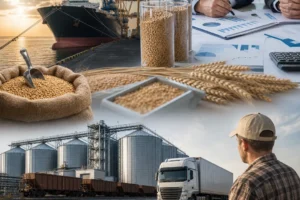







China’s wheat import market is the part of the grain trade through which overseas wheat is purchased for use inside the People’s Republic of China. It matters because China is one of the world’s largest wheat producers and consumers, yet in some years it also becomes a major importer when domestic quality, regional supply, feed demand, or state stock management create a need for foreign grain. The market operates at the intersection of global export pricing, Chinese import policy, domestic flour and feed demand, and port logistics. For anyone following it, the key is to separate international benchmark prices from the actual delivered cost of imported wheat into China.
In practice, imported wheat into China is usually discussed in US dollars per metric ton on a CIF or similar delivered basis at Chinese ports, while domestic wheat is commonly tracked in renminbi per metric ton. Internationally, market participants often watch benchmark wheat futures such as CBOT Chicago wheat, Kansas City wheat, or Euronext milling wheat, but those are not the same as the price a Chinese mill or trader ultimately pays. Import values are shaped by origin, freight, insurance, quality, exchange rates, import policy, and inland delivery costs after arrival.
What the China wheat import market means
China’s wheat import market refers to the commercial and state-linked buying of wheat from foreign origins for delivery into Chinese ports and use by domestic buyers. Those buyers may include flour mills, feed manufacturers, trading companies, and in some cases state-affiliated import channels or reserve-related entities, depending on policy and market conditions.
Imported wheat can serve different purposes:
- Milling: higher-protein or specific-quality classes may be purchased to improve flour blends.
- Feed: when wheat is competitively priced against corn or other feed grains, imports can support livestock demand.
- Supply balancing: imports can help offset weather-related quality losses, regional imbalances, or shifts in domestic inventories.
- Market management: policy decisions, quotas, and reserve considerations can influence import timing and volumes.
China is not structurally dependent on wheat imports in the same way as some Middle Eastern or North African buyers, because it has a very large domestic crop. Still, its import behavior matters globally because even moderate changes in Chinese buying can affect exporters and world price expectations.
Where the market operates inside China
The import market is coastal in its first stage and nationwide in its final use. Wheat arrives through major Chinese ports capable of handling bulk grain, then moves inland by truck, rail, or other domestic logistics channels to mills, feed users, and storage facilities. The most relevant commercial activity is therefore split between port markets and interior consuming regions.
Imported wheat competes with domestically produced wheat from major Chinese grain provinces, especially in northern and central producing areas. Domestic wheat may already be closer to flour mills in some regions, so imported wheat has to be competitive not just at the port but after inland transport and handling are included.
Geographically, the import market is most visible in:
- Coastal receiving zones: where cargoes are discharged, inspected, stored, and resold.
- Large milling regions: where mills compare imported quality and cost against domestic alternatives.
- Feed-consuming areas: where wheat may substitute for corn or other ingredients if price relationships change.
The market is therefore not a single exchange-traded location. It is a network of international tenders, bilateral sales, vessel shipments, port handling, customs procedures, and domestic resale into the Chinese cash grain market.
How China wheat import prices are formed
China wheat import prices are formed by stacking several layers of cost and market value. A futures quote alone does not tell you the import price, and a customs average value does not tell you the nearby spot replacement cost for a mill.
The process usually starts with the export market in the country of origin. A seller may price wheat relative to a local export cash market or to a benchmark futures market plus or minus a premium. From there, ocean freight, insurance, and shipment terms are added. Once the wheat is destined for China, import rules, inspection requirements, exchange-rate movements, port charges, and domestic transport also matter.
| Price type | Where quoted | What it means |
|---|---|---|
| Futures price | CBOT, Kansas City, Euronext and related exchanges | A standardized financial benchmark, not the exact delivered China import price |
| Export cash or FOB price | Origin export market | The value of wheat loaded or ready for loading at the exporter’s port |
| CIF China price | Import trade into Chinese port | Cost including freight and insurance to the destination port |
| Port resale price | Chinese physical market | The price paid by a domestic buyer after arrival, subject to quality and local demand |
| Inland delivered price | Mill or feed buyer location | Port price plus inland logistics, handling, and commercial margin |
A few practical price concepts matter:
- Basis: the difference between a local cash value and the relevant futures benchmark. Imported wheat can have a basis reflecting origin quality, freight, and destination demand.
- FOB: free on board, usually meaning the seller delivers wheat loaded at the export port.
- CIF: cost, insurance, and freight to the destination port.
- Delivered price: what the final Chinese user pays at the inland destination.
Because of this layered structure, imported wheat may be cheaper or more expensive than domestic wheat even when global futures are falling. A stronger US dollar, higher freight, tighter import policy, or expensive domestic transport can neutralize a decline in global benchmarks.
Main factors that move the import market
China’s wheat import market responds to both global and domestic drivers. The most important variables are usually relative price competitiveness and policy.
| Factor | Likely effect | Why it matters |
|---|---|---|
| Domestic crop quality | Can increase import demand | Poor quality domestic wheat may require imported blending wheat |
| Feed grain price spreads | Can pull wheat into feed channels | If wheat is competitive with corn, demand can shift |
| Import policy and quotas | Can expand or restrict flows | Administrative rules strongly affect actual trade |
| Global exporter supply | Changes origin availability and offers | Major exporters set the menu of qualities and prices available to China |
| Ocean freight | Moves landed import cost up or down | Freight can materially change competitiveness against domestic wheat |
| Exchange rate | Affects renminbi import cost | Imports are commonly priced in US dollars while domestic sales are in renminbi |
Seasonality also matters. After the Chinese domestic wheat harvest, local supplies may weigh on import demand if quality and logistics are adequate. At other times, imported wheat may gain interest when mills need particular specifications or when domestic wheat becomes expensive relative to world values.
How wheat is actually imported, bought, and sold
The physical import trade is a commercial chain rather than a screen-based retail market. A Chinese buyer does not usually click on an exchange and receive a shipload of wheat. Instead, grain is sourced through trading houses, exporters, state-related channels, or import-capable firms using negotiated contracts.
Physical grain trade
- Price discovery: the buyer compares domestic wheat values, imported replacement cost, and likely freight and processing economics.
- Offer and negotiation: sellers quote an origin, quality, shipment window, and commercial term such as FOB or CIF.
- Contracting: contract terms cover grade, protein or other quality parameters, weight, shipment timing, inspection, payment terms, and dispute procedures.
- Shipment: the wheat is loaded at the exporting port and shipped to China.
- Arrival and clearance: cargo is discharged, inspected, and moved into storage or onward delivery.
- Domestic resale or use: the wheat is sold to mills, feed users, or other commercial participants.
Counterparty reliability and quality specification are critical. In wheat, a small change in protein, test weight, or other milling characteristics can materially alter the value to the end user. That is why imported wheat often trades with quality premiums rather than as a single undifferentiated commodity.
Futures and hedging
Futures are used for price risk management, not for routine physical import execution into China. An importer, merchant, or processor may use overseas futures benchmarks to hedge exposure to world wheat prices while separately arranging the physical cargo. This is different from owning the cargo itself.
In a hedge, the firm still faces:
- Basis risk: the hedge may not move exactly with the physical import price.
- Freight risk: ocean freight can change independently of futures.
- Currency risk: dollar-priced imports versus renminbi revenues or sales.
- Policy risk: import administration can change the economics of the trade.
Financial access to futures normally happens through a regulated broker or clearing member, subject to margin requirements and exchange rules. That activity should not be confused with buying physical wheat at a Chinese port.
Where to check prices and market information online
If you need a current view of the China wheat import market, avoid relying on a single quote. There is no single universally public screen that gives the exact live price for every imported wheat cargo into every Chinese port. The practical approach is to combine benchmark futures, official trade data, and market reporting.
Useful places to check include:
- USDA Foreign Agricultural Service: country reports and global grain trade context, including China wheat supply and demand assessments.
- China customs and official statistical releases: import volumes and average import values, which help show recent trade direction.
- National Bureau of Statistics of China: broader domestic supply, processing, and price context.
- CME Group: for CBOT wheat and Kansas City wheat futures benchmarks watched by global traders.
- Euronext: for milling wheat futures relevant to some Black Sea and EU pricing relationships.
- Commercial market reporting services and brokers: for freight indications, export offers, and port market commentary where available through subscription channels.
When checking prices online, pay attention to:
- Which origin is being quoted
- Whether the quote is FOB, CFR, or CIF
- The protein and quality specification
- The shipment period
- The currency and unit, usually US dollars per metric ton internationally
A domestic flour mill in China may care more about the landed and inland delivered replacement cost than about the nearby futures board. So futures are a reference, not the final transaction price.
Relationship between the import market and domestic Chinese wheat prices
Imported wheat does not automatically set the whole Chinese wheat market, because China’s domestic crop is large and policy matters greatly. However, imports can influence the market in specific segments, especially quality wheat, coastal demand centers, and periods when feed demand shifts grain balances.
The relationship works in both directions:
- If domestic wheat is expensive and import access is workable, imported grain can cap local prices in some consuming regions.
- If global wheat is expensive, domestic Chinese wheat may become relatively more attractive, reducing import demand.
- If domestic quality problems emerge, high-quality imported wheat may still be needed even when headline world prices are not especially low.
For mills, the decision is usually economic and technical at the same time. A mill buying imported wheat is not only comparing price. It is also comparing flour performance, blending needs, consistency, timing, and logistics reliability.
Outlook: what to watch in the China wheat import market
Any forecast for China’s wheat import market should be treated as a scenario, not a certainty. The market can change quickly with policy, weather, and relative grain prices.
Key watchpoints include:
- Chinese wheat harvest quality: quality issues can support import demand even without a large production shortfall.
- Corn-wheat feed spread: if wheat becomes competitive in feed rations, imports may gain support.
- Global exporter supplies: conditions in major exporting countries affect both quality availability and offer prices.
- Freight and geopolitics: shipping disruptions can change landed costs and origin choices.
- Currency movements: renminbi weakness raises the local-currency cost of imports.
- Policy administration: import management remains central to how much wheat actually enters China.
A balanced outlook therefore depends less on one headline number and more on the spread between domestic Chinese value and imported landed replacement cost.
Frequently asked questions
What is the main benchmark for China wheat import pricing?
There is no single China-only benchmark. Market participants usually watch international wheat futures such as CBOT or Euronext, then add origin premiums, freight, insurance, and import-related costs to estimate a landed value into China.
Are China wheat import prices quoted in renminbi or US dollars?
International cargoes are commonly negotiated in US dollars per metric ton, especially on FOB or CIF terms. Once the wheat is resold inside China, renminbi per metric ton becomes more relevant.
Where can I check current China wheat import prices?
Exact live cargo values are not always publicly posted in one place. Use USDA market reports and supply-demand publications, official Chinese trade statistics, major futures exchange data, and professional market reporting services for current commercial indications.
Is CBOT wheat the same as the price of imported wheat at a Chinese port?
No. CBOT wheat is a futures benchmark. The actual Chinese port value also reflects basis, origin, protein and milling quality, freight, insurance, exchange rate, and local demand.
Who typically buys imported wheat in China?
Buyers can include flour mills, feed manufacturers, import-capable grain traders, and entities linked to reserve or policy channels, depending on the market environment and import administration.
How is imported wheat different from domestic Chinese wheat in the market?
The difference is usually about quality profile, location, and delivered cost. Imported wheat may be bought for specific protein or blending needs, while domestic wheat may have logistical or policy advantages in inland regions.
Can traders hedge China wheat import exposure online?
Yes, in principle, through relevant international futures and options markets accessed via a broker. But that hedges price exposure only; it does not replace the physical purchase, shipping, or handling of actual wheat cargoes.
Why can China import less wheat even when world futures fall?
Because import demand depends on more than futures. A lower board price can be offset by higher freight, weaker currency, adequate domestic supply, policy tightening, or reduced need for imported quality.
Sources
- USDA Foreign Agricultural Service
- General Administration of Customs of the People’s Republic of China
- CME Group